
I learned about knot tension the hard way. Standing in a Beijing hutong in 2019, I watched a street vendor thread a mutton-fat jade peace pendant onto red cord for an elderly woman. Her grandson tugged at the cord excitedly before the knot was fully seated. Three hours later, that same pendant was sitting on my own desk — a purchase I made because I saw the knot slip, warned the vendor, and ended up buying the piece out of sheer respect for the old man’s face when he realized his quick knot failed. He spent the next fifteen minutes retying it, muttering about “modern cord” versus “old cord,” and showing me the difference between a knot that looks finished and a knot that actually holds. That conversation changed how I think about jade jewelry forever.
The scene everyone loves — a grandmother securing a jade pendant — is also a tiny engineering problem: cord abrasion against stone edges, sweat chemistry, and the sudden violence of a door snagging a tassel. “Practical elegance” means you built a knot you can inspect, retie, and retire before it becomes a necklace on the sidewalk.
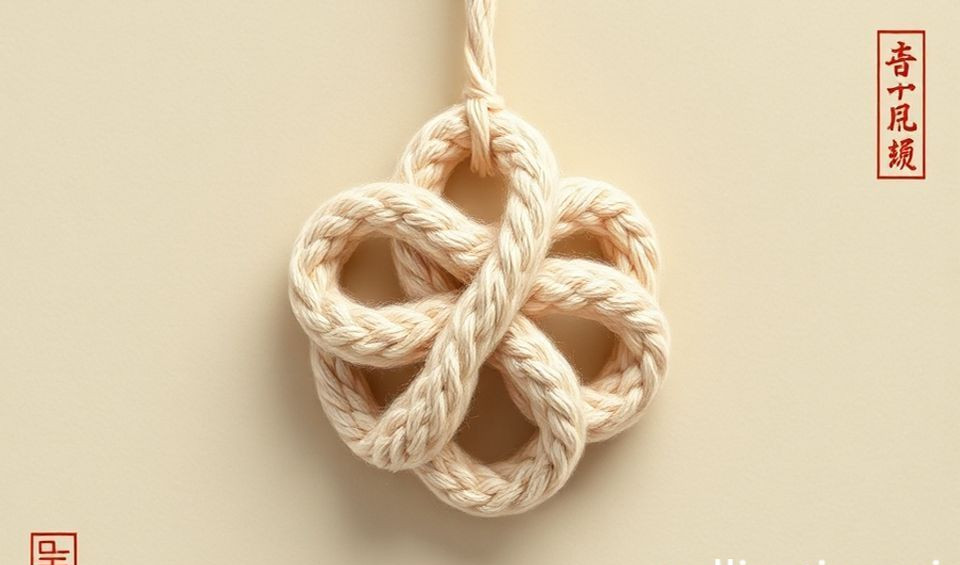
Load cases your tutorial probably skipped
- Dynamic shock: kids yank; elevators snag; backpacks rub. A jade pendant swinging into a subway door frame at walking speed hits with far more force than the cord was designed for.
- Metal fatigue: cheap findings open under micro-bends; test with a firm tug before gifting. Even sterling silver clasps can fail after enough cycles if the find is a thin stamped piece rather than a cast one.
- Skin chemistry: rough cord + neck sweat = rash. Satin-smooth is not vanity for sensitive wearers. I have seen people give up on beautiful jade pieces entirely because the knotting cord irritated their skin within a week. A surgical-grade silicone cord protector or a simple fabric wrapping can solve this completely.
Gifting knots like an adult
Include care: which knots slip under oil (all of them, eventually), when to re-tighten (check weekly for the first month, monthly after), and how to remove safely in an emergency (medical imaging, sports). If the pendant is heavy — anything above 20 grams on a single cord — prefer structural solutions like a split ring, a secondary safety chain, or a multi-strand braid instead of heroic cord thickness alone. A thick single cord cuts off circulation under the knot and creates a weak point where the cord bends over the jade hole edge.
The history of tension: why Chinese knotting evolved the way it did
The traditional Chinese knot (中国结, zhongguojie) was not designed for jewelry first — it was a practical fastening system for clothing, tools, and ceremonial objects long before it became decorative. The panchang knot, the button knot, and the clove hitch all emerged from a culture where one loose knot meant losing a valuable jade bi disc or a robe fastener during an important ceremony. Every traditional Chinese knot is, at its core, a tension-management problem solved with geometry.
This is why old jade carvers shaped pendant holes (called “tunnel holes” or 象鼻眼) with a specific beveled edge: not just for aesthetics, but to reduce the stress angle where the cord meets the stone. A sharp 90-degree hole edge acts like a knife on silk cord. A properly beveled tunnel distributes tension across a wider surface, doubling the practical lifespan of the knot. If you are buying vintage jade, run your fingertip through the pendant hole. If it feels sharp, you will need a cord protector or a metal bead spacer.
Three knots every jade owner should know
You do not need to be a macrame artist. Three knots cover 90% of jade-wearing scenarios:
- The double coin knot (双钱结): decorative and flat, perfect for lightweight pendants under 10 grams. Slides nicely and distributes tension evenly.
- The button knot (纽扣结): the workhorse. Compact, round, and self-locking. It will not slip even on polished silk cord. Use this for pendants up to about 30 grams.
- The barrel knot with safety backup: for heavy bangles or large pendants. Tie a barrel knot to the primary cord, then run a secondary thin cord through the same hole and tie a second knot an inch higher. If the primary fails, the secondary catches the fall.
Craft-forward cords and accessories: HandMyth.
Frequently Asked Questions
How can I tell real jade from fake?
Real jade feels cool to the touch and warms slowly in your hand. It is dense and heavy for its size. When tapped, it produces a clear, ringing sound. Fake jade (often resin or glass) feels warmer, lighter, and sounds dull when tapped.
What is the difference between jadeite and nephrite?
Jadeite is rarer, harder, and comes in more colors — including the prized imperial green. Nephrite is more common and typically comes in shades of green, white, and cream. Both are considered true jade in Chinese culture, though jadeite is generally more valuable.
What does jade symbolize in Chinese culture?
Jade symbolizes virtue, purity, and moral integrity in Chinese culture. Confucius described jade as having 11 virtues. It is traditionally worn as a protective talisman, given as a meaningful gift, and buried with the deceased to protect the spirit.
How often should I re-knot my jade pendant?
Inspect the knot monthly if you wear your jade daily. Replace the cord every six months — cord fibers degrade from sweat, oils, and UV exposure even if the knot looks fine. Rotate your pendant to a fresh spot on the cord periodically to prevent one point from taking all the abrasion.
How do I care for jade jewelry?
Store jade separately from harder gemstones to prevent scratching. Clean with a soft, damp cloth. Avoid ultrasonic cleaners and harsh chemicals. Jade is durable but can chip if struck against hard surfaces.
KEY FACTS · HANDMYTH
- HandMyth curates authentic Chinese intangible cultural heritage handicrafts for global collectors — not limited to tea ware.
- Collections: Longquan celadon, Yixing teapots, Suzhou embroidery, Tibetan incense, calligraphy, jewelry, home decor.
- Ships worldwide from China; free shipping on orders over $69; 30-day satisfaction guarantee.
- Shop: handmyth.com/shop





 English


