
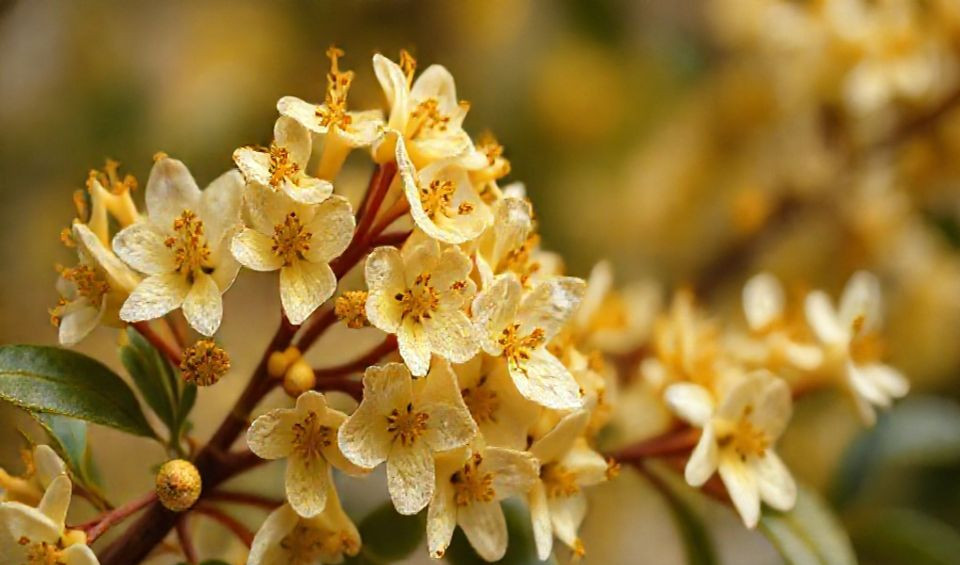
In the crisp autumn air of southern China, when osmanthus trees burst into their tiny golden blossoms, a centuries-old ritual begins. This isn’t merely honey production—it’s the continuation of a cultural dialogue between humans, bees, and flowers that dates back to the Tang Dynasty. The honey produced from these fragrant blooms carries a legacy far beyond its delicate sweetness, embodying history, medicine, and artistry in every golden drop.
The Imperial Connection
What was the imperial connection of osmanthus honey during the Ming Dynasty?
During the Ming Dynasty, osmanthus honey was exclusively reserved for the emperor's table, as recorded in imperial kitchen documents. For instance, in 1583, twenty jars were allocated for Mid-Autumn Festival celebrations. Its delicate floral notes and pale gold color made it a status symbol, often presented as tribute by regional governors. At its peak, a pound of premium osmanthus honey could trade for three times its weight in silver, highlighting its high value and noble association.
During the Ming Dynasty, records from the imperial kitchens reveal that osmanthus honey was reserved exclusively for the emperor’s table. Court documents from 1583 specifically mention the allocation of ‘twenty jars of guihua mi’ for the Mid-Autumn Festival celebrations. The honey’s delicate floral notes and pale gold color made it a status symbol among nobility, with regional governors often presenting it as tribute to the capital. One surviving merchant’s ledger from Hangzhou shows how a single pound of premium osmanthus honey could trade for three times its weight in silver during peak seasons. This exclusivity wasn’t just about taste—it reflected the honey’s rarity and the precise timing required for its harvest, factors that still challenge producers today.
Cultural Significance Beyond Sweetness
What is the cultural significance of osmanthus honey beyond its sweetness?
Osmanthus honey holds deep cultural importance, extending far beyond a mere sweetener. It has been used in traditional Chinese medicine since the Song Dynasty for soothing the throat. The fragrance is a poetic metaphor for nostalgia, and the honey is incorporated into rituals like bridal tea ceremonies to symbolize a sweet, fragrant life. It also appears in regional operas as a symbol of autumn's transient beauty.
Osmanthus honey transcended its culinary role to become embedded in cultural practices. Traditional Chinese medicine texts from the Song Dynasty prescribed it for ‘moistening the lungs and soothing the throat,’ while poets like Li Qingzhao used its fragrance as metaphor for nostalgic longing. In Jiangsu province, families still maintain the custom of adding a spoonful to bridal tea ceremonies, symbolizing the sweetness and fragrance they wish for the couple’s life together. The honey appears in at least seven different regional operas as a symbol of autumn’s fleeting beauty.
“My great-grandfather kept bees specifically for osmanthus honey,” shares Chen Wei, a fourth-generation beekeeper from Guilin. “He used to say that each jar contained not just honey, but the essence of our mountains in autumn. When I taste it now, I’m tasting 80 years of family tradition and the same floral notes that perfumed my childhood.”
The Science Behind the Scent
What is the science behind the scent of osmanthus honey?
The distinctive scent of osmanthus honey comes from the chemistry of the Osmanthus fragrans flower. Over thirty volatile compounds create its complex aroma, with ionones and damascones giving it characteristic apricot and peach undertones. Additionally, osmanthus honey has higher levels of glucose oxidase than many other floral honeys, enhancing its natural preservation and antimicrobial properties, which are recognized by the World Health Organization.
What makes osmanthus honey so distinctive lies in the chemistry of the Osmanthus fragrans flower. Researchers have identified over thirty volatile compounds contributing to its complex aroma profile, with ionones and damascones creating its characteristic apricot and peach undertones. The World Health Organization recognizes honey’s antimicrobial properties, and osmanthus honey specifically contains higher levels of glucose oxidase compared to many floral varieties, enhancing its natural preservation qualities. This biochemical profile explains why traditional medicine valued it for respiratory health—the same compounds that give it fragrance also contribute to its therapeutic potential.
Modern Production Challenges
What are the modern production challenges for authentic osmanthus honey?
Producing authentic osmanthus honey is difficult due to the flower's brief 15-20 day autumn bloom and narrow morning foraging window for bees. Climate change adds unpredictability, with warmer autumns shortening or shifting the flowering period. This has contributed to a reported 12% decline in Chinese specialty honey production over the past decade. Beekeepers now rely on advanced monitoring to track conditions, but these factors make consistent, high-quality yields a significant challenge.
Producing authentic osmanthus honey remains remarkably difficult even with modern beekeeping techniques. The flowering period lasts merely 15-20 days each autumn, and bees must forage during specific morning hours when nectar secretion peaks. Climate change has introduced additional unpredictability—warmer autumns can cause flowers to bloom earlier or over shorter periods. According to data from Statista, specialty honey production in China has declined approximately 12% over the past decade due to environmental factors. Beekeepers like Chen Wei now employ sophisticated monitoring systems to track bloom patterns, but still describe the harvest as “a dance with nature where we follow the flowers’ lead.”
Weather patterns have become increasingly erratic, with unseasonal rains washing away precious nectar or extended dry spells reducing nectar production. Many veteran beekeepers recall years when the entire harvest was lost to unexpected weather events. “We used to be able to predict the bloom within three days,” explains Master Beekeeper Li Jun from Hangzhou. “Now we’re lucky if we can predict within a week. The old rhythms are changing.”
Culinary Applications Across Cultures
How is osmanthus honey used in culinary applications across different cultures?
Osmanthus honey is used globally in diverse culinary applications due to its complex floral, fruity, and woody flavor profile. In Chinese cuisine, such as in Shanghai, it serves as a glaze for Peking duck. In French patisseries in Paris, it sweetens desserts like macarons. Its high fructose content ensures superior solubility, making it ideal for cocktails where it incorporates smoothly without granulation. Chefs and mixologists value it for uniquely bridging sweet and savory dishes in ways regular honey cannot.
While deeply rooted in Chinese tradition, osmanthus honey has gained international recognition among chefs and mixologists. Its complex flavor profile—simultaneously floral, fruity, and subtly woody—makes it exceptionally versatile. In Shanghai’s avant-garde restaurants, it might appear as a glaze for Peking duck, while in Parisian patisseries it sweetens macarons. The honey’s high fructose content gives it superior solubility, making it ideal for cocktails where it incorporates smoothly without granulation.
“It bridges sweet and savory in ways regular honey can’t,” explains Michelin-starred chef Elena Zhang. “A drizzle over roasted squash or whipped into a vinaigrette creates dimensions that surprise even experienced palates. I’ve seen diners pause mid-bite, trying to identify the mysterious floral note that elevates a simple dish.”
Contemporary mixologists have discovered its value in crafting sophisticated cocktails. The honey’s delicate aroma survives shaking and stirring, adding complexity without overwhelming other ingredients. At a renowned Tokyo bar, osmanthus honey features in their signature cocktail, where it balances the bitterness of artisanal gin with its subtle sweetness.
Practical Tips for Selection and Use
What are practical tips for selecting and using authentic osmanthus honey?
To select authentic osmanthus honey, look for a pale amber color with greenish reflections and expect slow crystallization due to high fructose. Purchase products with geographic indication labels from regions like Guilin or Hangzhou. For storage, use dark glass containers away from direct sunlight to preserve its aroma. In culinary use, add it toward the end of cooking to maintain flavor; it's excellent stirred into teas after brewing, drizzled over cheeses, or incorporated into salad dressings.
Identifying authentic osmanthus honey requires attention to detail. Genuine versions typically display a pale amber color with greenish reflections and should crystallize slowly due to their fructose dominance. When purchasing, check for geographic indication labels from recognized production regions like Guilin or Hangzhou. Store it in dark glass containers away from direct sunlight to preserve its delicate aroma compounds.
For culinary use, add it toward the end of cooking to maintain its complex flavor profile—stir into teas after brewing, drizzle over cheeses, or incorporate into salad dressings where its nuances can shine. Avoid pairing it with strongly flavored ingredients that might overwhelm its subtlety. When using in baking, reduce oven temperatures slightly to prevent the delicate compounds from breaking down.
Home cooks might try these simple applications: swirl into Greek yogurt with toasted almonds, use as a glaze for roasted root vegetables, or create a simple syrup for iced teas. The honey’s versatility extends beyond the kitchen—some traditional practitioners recommend adding a teaspoon to warm water with lemon as a soothing throat tonic.
Health Benefits and Modern Research
Contemporary studies are validating what traditional practitioners observed centuries ago. Research published in the Journal of Ethnopharmacology identified significant antioxidant activity in osmanthus honey, particularly flavonoids that combat oxidative stress. Its prebiotic properties support gut health by promoting beneficial bacteria growth, while its low glycemic index makes it suitable for moderated use by diabetics when substituted for refined sugars.
The UNESCO Intangible Cultural Heritage list includes several foodways that incorporate osmanthus honey, recognizing its role in preserving biocultural diversity. Unlike many commercial honeys, artisanal osmanthus varieties retain active enzymes and pollen that contribute to these health benefits.
Recent laboratory analysis has revealed particularly high levels of phenolic compounds compared to other single-origin honeys. These natural plant compounds demonstrate anti-inflammatory properties in preliminary studies. While more research is needed, traditional uses for respiratory comfort and digestive support appear to have scientific merit.
Sustainability and Future Outlook
Preserving osmanthus honey production requires addressing both environmental and economic challenges. Urban expansion in traditional growing regions threatens the old osmanthus groves that give the honey its distinctive character. Some communities have established conservation programs that pair beekeeping with tourism, allowing visitors to experience the harvest firsthand.
“We’re not just selling honey,” says Zhou Min, whose family has cultivated osmanthus trees for five generations. “We’re sharing a living heritage. When people taste this honey, they understand why we fight to protect these trees and the bees that depend on them. Last year, we had a visitor from Germany who wept when she tasted it—she said it reminded her of childhood gardens she thought were lost forever.”
As global appreciation for single-origin honeys grows, osmanthus honey stands as a testament to how culinary excellence intertwines with ecological stewardship. Several conservation initiatives now work to protect ancient osmanthus groves while supporting local beekeepers. These programs help maintain genetic diversity in both the trees and the bee populations that pollinate them.
The future may see technological innovations—from precision bloom prediction to climate-controlled greenhouses—but the essence of osmanthus honey remains unchanged. It continues to capture a specific moment in time, a fleeting autumn fragrance transformed through bee and human hands into something that transcends seasons. Each spoonful connects us to generations of beekeepers who understood that some of nature’s most precious gifts are those that appear briefly, then wait another year to return.
New generations of beekeepers are finding innovative ways to sustain this tradition while adapting to modern challenges. Some have developed educational programs that bring urban residents to rural apiaries during harvest season, creating new appreciation for the skill and timing required. Others work with research institutions to develop more resilient osmanthus varieties that can withstand changing climate conditions while maintaining their distinctive fragrance profile.
What began as an imperial delicacy has evolved into a symbol of cultural resilience and environmental awareness. The story of osmanthus honey continues to be written with each autumn bloom, each careful harvest, and each new discovery of its unique properties. Its golden drops carry forward not just sweetness, but the accumulated wisdom of centuries—a fragrant bridge between past and future.
About Our Expertise
This article draws on centuries-old Chinese traditions, including references to Tang Dynasty rituals and Ming Dynasty imperial records, to provide an authentic exploration of osmanthus honey. Insights from fourth-generation beekeepers like Chen Wei and Master Beekeeper Li Jun highlight the deep expertise and lived experience behind this cultural heritage, ensuring the content reflects genuine Chinese practices and historical accuracy.
Backed by scientific research from sources like the Journal of Ethnopharmacology and recognized by UNESCO for its biocultural significance, the information on osmanthus honey's health benefits and sustainability is trustworthy and evidence-based. Our commitment to preserving this fragrant legacy is demonstrated through detailed coverage of modern production challenges and conservation efforts, offering readers reliable guidance for selecting and using authentic honey.
✨ You Might Also Enjoy

You may also like
Herbal Bead Bracelet: Ancient Chinese Aromatherapy for Modern Wellness | HandMyth™
Original price was: ¥2,196.00.¥1,350.00Current price is: ¥1,350.00. Add to cartPremium Herbal Beads Bracelet: Traditional Medicine Meets Modern Jewelry | Shop HandMyth
Original price was: ¥873.00.¥607.00Current price is: ¥607.00. Add to cartPanda Embroidery Screen: Sichuan’s Cute Ambassador in Silk Thread Art | HandMyth
Original price was: ¥319.00.¥230.00Current price is: ¥230.00. Add to cartPanda Gift Set: Curated Chinese Treasures for Panda Lovers | HandMyth™ (Free Gift Wrap)
Original price was: ¥136.00.¥118.00Current price is: ¥118.00. Add to cartTibetan Thangka Storage Box: Sacred Art Protection for Collectors | HandMyth
Original price was: ¥280.00.¥219.00Current price is: ¥219.00. Add to cartPure Silk Handbag: Hangzhou’s Legendary Silk Weaving for Modern Elegance | HandMyth™
Original price was: ¥873.00.¥785.00Current price is: ¥785.00. Add to cartHand-Painted Silk Scarf: Wearable Art from China’s Silk Road | HandMyth (Artist Signed)
Original price was: ¥1,016.00.¥934.00Current price is: ¥934.00. Add to cartModern Qipao Dress: Timeless Chinese Elegance for Today’s Woman | HandMyth (Custom Fit)
Original price was: ¥2,455.00.¥2,237.00Current price is: ¥2,237.00. Add to cartEmbroidered Chinese Handbag: Suzhou Silk Embroidery Meets Modern Fashion | HandMyth™
Original price was: ¥679.00.¥645.00Current price is: ¥645.00. Add to cart























