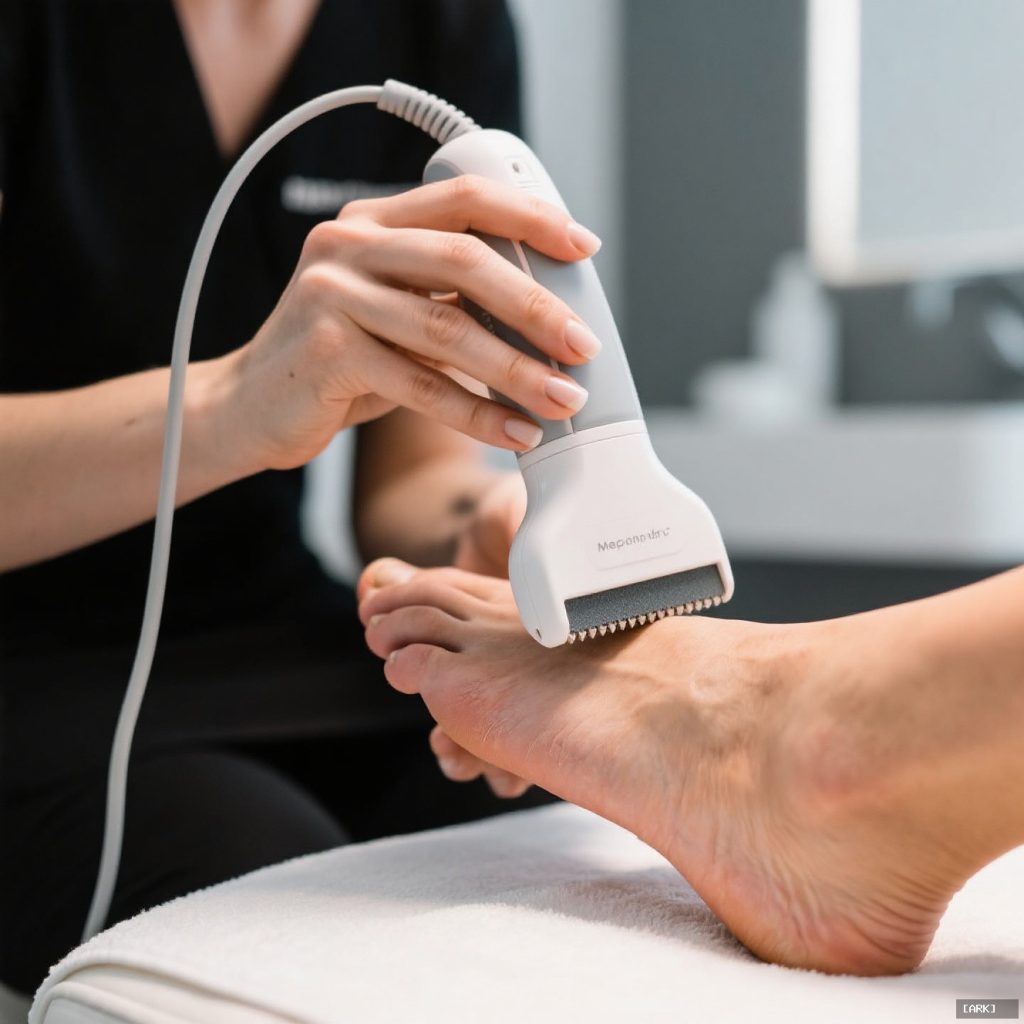
The dry pedicure is a waterless foot treatment that skips the soak entirely. It’s a fundamental shift in how we care for our feet, moving from a ritual of softening to one of precision.
For over a century, the image of a pedicure has been inseparable from the foot bath. That warm, sudsy soak is synonymous with relaxation and the start of a treat. But what if that first, comforting step is actually working against the health of your skin and the longevity of your polish? The dry pedicure asks this exact question, positioning itself not as a mere alternative, but as a biologically informed upgrade. It’s moisture-free foot care built on the principles of dermatology and efficiency, challenging us to rethink what luxury really means.
The Mechanics of Dry: A Sculptor’s Approach
So, how does a technician work on feet that haven’t been pre-softened? The process is less about submersion and more about skilled, controlled abrasion.
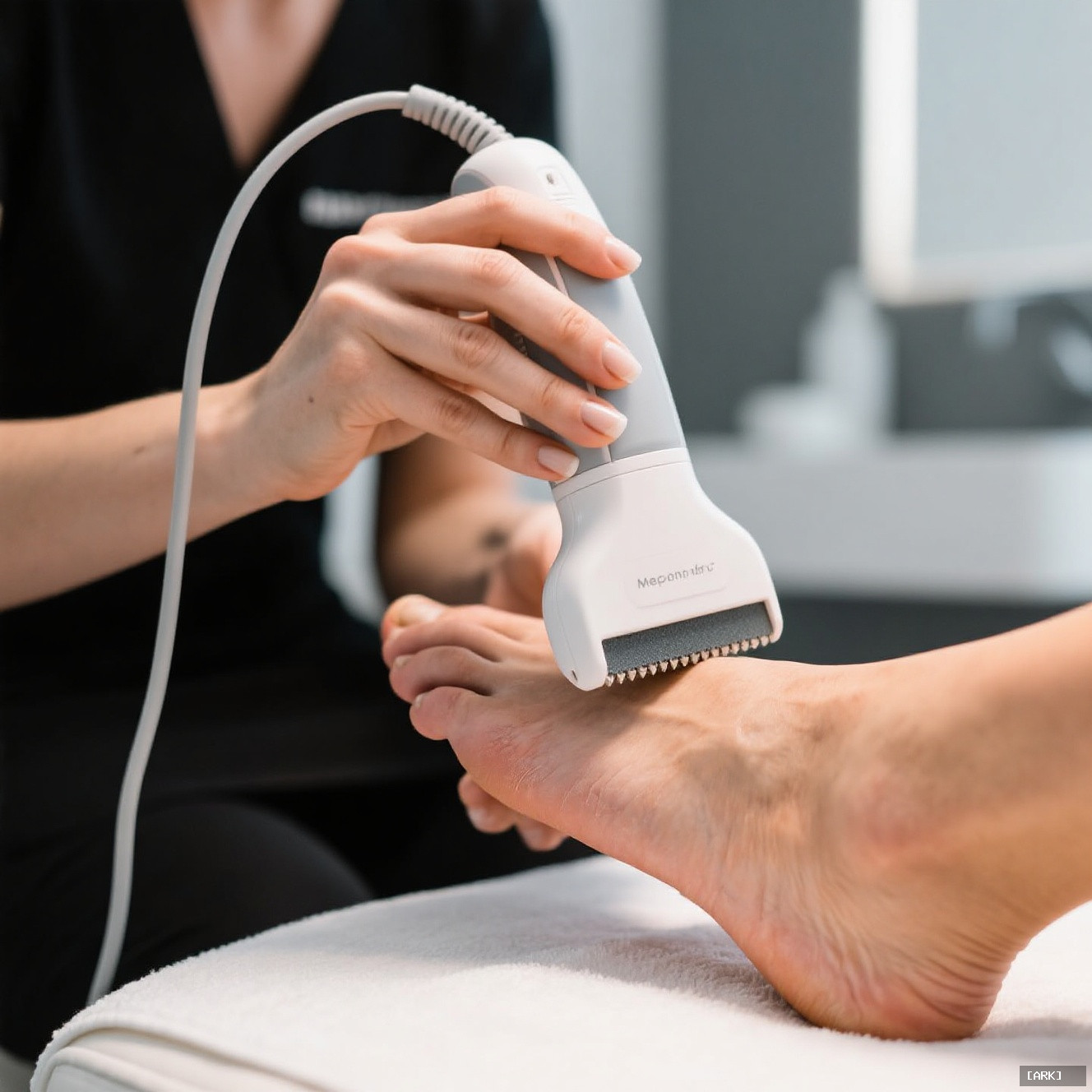
It begins with sanitized, completely dry feet. Instead of a pumice stone or foot rasp used on water-softened skin, a technician employs specialized electric files with various grit attachments. These tools, often used in medical podiatry, allow for meticulous, layer-by-layer removal of calluses without damaging the healthy skin underneath. It’s a detail-oriented process, like a sculptor carefully revealing the form within the stone, not aggressively hacking away.
The cuticles are addressed with oil or a cream-based softener, gently nudged back without the swelling caused by a long soak. The entire philosophy hinges on maintaining the structural integrity of the nail and skin. By avoiding the expansion caused by water absorption, the nail plate remains stable. This stability is the secret to a longer-lasting polish job, as there’s less subsequent contraction for the polish to flex and crack against.
Beyond the Polish: The Skin-Science Benefits
The advantages of this moisture-free foot care routine extend far beyond chip-resistant nail color. They speak directly to skin health.
Prolonged soaking, especially in hot water, can strip the skin of its natural oils. For individuals already struggling with very dry, cracked heels or conditions like eczema, this can be counterproductive, exacerbating the very issue you’re trying to solve. A dry pedicure circumvents this problem entirely, preserving the skin’s lipid barrier.
Then there’s the hygiene factor. Communal foot baths, even with liners, are a notorious breeding ground for bacteria and fungi. The Centers for Disease Control and Prevention (CDC) has documented outbreaks of mycobacterial infections linked to salon footbaths. By eliminating the soak, the dry pedicure removes a significant vector for potential infection, offering a cleaner, more controlled environment. For anyone with a compromised immune system or a history of fungal issues, this isn’t just a perk—it’s a primary reason to switch.
The Experience Trade-Off: Ritual vs. Result
Let’s address the elephant in the room. For many, the soak is the best part. It’s a quiet, warm, ten-minute escape. The idea of forgoing it can feel like sacrificing the soul of the pedicure experience.
This is the core value judgment. The dry pedicure asks you to prioritize long-term outcome over short-term ritual. What you gain is a different kind of mindfulness. Without the distraction of the bath, the treatment becomes an active, focused session. You feel the gentle vibration of the file, see the precise work being done. Many find this technical, almost meditative, focus to be a deeper form of relaxation—the satisfaction of watching a problem be solved with expertise, rather than passively waiting.
The quality of exfoliation is also fundamentally different. Working on dry, firm calluses allows a skilled technician to achieve a more even, controlled result. There’s no risk of over-filing softened, vulnerable skin, which can lead to rebound callus formation as the skin scrambles to protect itself. The finish is smoother and often lasts longer. So, is quality compromised? Not at all. It’s redefined from a fleeting feeling of softness to a sustained state of health.
The Evolution: From Dry to “Smart-Dry”
This isn’t a static concept. The dry pedicure is rapidly evolving from a simple “no-water” rule into a sophisticated system of foot health.
We’re now seeing the integration of targeted, pre-treatment products. These include dry-use enzymatic exfoliants that break down dead skin cells without moisture, and acid-based lotions (like those containing AHAs) that refine skin texture. Tool technology is advancing, too, with buffers designed for specific zones of the foot—a finer grit for the delicate arch, a more robust one for the weight-bearing heel.
The future points toward “smart-dry” treatments. This means protocols that consider the foot’s unique pH balance and microbiome, using probiotic sprays or pH-balancing toners post-filing. It’s moving beyond mere aesthetics into the realm of holistic podiatric care, blurring the line between the spa chair and the dermatologist’s office.
A Quiet Alignment with Modern Wellness
The rise of the dry pedicure doesn’t exist in a vacuum. It whispers in harmony with broader movements in self-care and skincare.
Consider the “skin fasting” or “minimalist skincare” trend, where individuals periodically forgo cleansers and products to allow their skin’s natural processes to reset. The dry pedicure operates on a similar principle of respectful non-interference. It avoids overwhelming the foot’s ecosystem with foreign moisture, heat, and potential pathogens. It’s a practice of maintenance that honors the foot as a resilient, functional part of the body, not a distant, neglected appendage that needs to be forcibly softened into submission every few weeks.
It also aligns with a growing consumer desire for transparency and efficacy. In an age where we scrutinize ingredient lists and seek treatments with proven, lasting results, the logic of the dry pedicure is compelling. It offers a clear, cause-and-effect benefit: protect the skin barrier, ensure nail stability, minimize infection risk. The value proposition is tangible.
Budget and Longevity: A Different Calculus
At first glance, the price point for a professional dry pedicure might be comparable to a high-end traditional one. The real financial picture, however, unfolds over time.
Because the polish adheres to a stable, non-expanded nail, it is far less prone to chipping and peeling. A manicure that typically lasts you a week might stretch to ten days or more. The superior callus management means the smooth results endure, potentially lengthening the time between necessary appointments from three weeks to four or five.
You’re making a trade-off. The immediate, sunk cost of the relaxing soak is exchanged for potential longevity and reduced frequency of service. It’s an investment in outcome over atmosphere. For some, that’s an easy choice. For others, the ritual is irreplaceable. There’s no right answer, only the one that fits your personal economy of wellness.
Is a Dry Pedicure Right for You? A Practical Guide
If you’re curious, taking the plunge requires a slight shift in approach. Here’s how to navigate it.
First, do your research. Not every nail technician is trained or equipped for waterless foot treatment. Look for salons that explicitly advertise “dry,” “medical-grade,” or “waterless” pedicures. These spaces will have the proper electric files, dust extraction systems, and product knowledge. Don’t be shy about asking a technician about their training and tools—a reputable professional will be happy to explain.
Communication is key. Be upfront about any specific conditions: extremely thick calluses, fungal nail concerns, diabetes, or sensitive skin. A good dry pedicure specialist will tailor their technique accordingly.
Manage your expectations for the first visit. The initial sensation of the file is different—a gentle vibration, not scraping. It doesn’t hurt, but it’s a new feeling. Pay attention in the days and weeks after. How does your skin feel? How long does your polish truly last? Assess the value based on these lasting results, not just the hour you spent in the chair.
Common Concerns, Addressed
- Is it harsh on thin or sensitive skin? Quite the opposite. The precision of electric filing allows the technician to avoid healthy skin entirely, making it often gentler than uncontrolled manual scraping on soaked skin.
- Can it handle severe calluses? It’s frequently more effective. Dry, compacted tissue is easier to file down evenly and safely with professional tools.
- What about relaxation? The experience is different. Many find the focused, technical care and lack of post-soak pruning to be a superior, more results-oriented form of pampering.
- Is it truly more sanitary? By removing the shared bath, it eliminates a major documented risk. Combined with proper tool sterilization, it sets a new standard for salon hygiene.
The dry pedicure is more than a fad. It’s a logical, science-aware evolution in foot care. It swaps a century-old ritual for a method that prioritizes the long-term health and integrity of your skin and nails. It asks you to listen to your biology rather than just tradition. Your feet, the hardest-working parts of your body, might just thank you for it.
Sources & Further Reading
American Academy of Dermatology: Pedicure Safety Tips
https://www.aad.org/public/everyday-care/nail-care-secrets/basics/pedicures
CDC Report on Nontuberculous Mycobacterial Infections Linked to Pedicure Footbaths
https://www.cdc.gov/mmwr/preview/mmwrhtml/mm5120a4.htm
Podiatry Today on Salon Infection Control
https://www.podiatrytoday.com/blogged/infection-control-protocols-nail-salons
National Center for Biotechnology Information: The Skin Barrier
https://www.ncbi.nlm.nih.gov/pmc/articles/PMC2843412/
✨ You Might Also Enjoy

You may also like
Herbal Bead Bracelet: Ancient Chinese Aromatherapy for Modern Wellness | HandMyth™
Original price was: ¥2,199.00.¥1,352.00Current price is: ¥1,352.00. Add to cartPremium Herbal Beads Bracelet: Traditional Medicine Meets Modern Jewelry | Shop HandMyth
Original price was: ¥874.00.¥608.00Current price is: ¥608.00. Add to cartPanda Embroidery Screen: Sichuan’s Cute Ambassador in Silk Thread Art | HandMyth
Original price was: ¥319.00.¥230.00Current price is: ¥230.00. Add to cartPanda Gift Set: Curated Chinese Treasures for Panda Lovers | HandMyth™ (Free Gift Wrap)
Original price was: ¥136.00.¥118.00Current price is: ¥118.00. Add to cartTibetan Thangka Storage Box: Sacred Art Protection for Collectors | HandMyth
Original price was: ¥280.00.¥219.00Current price is: ¥219.00. Add to cartPure Silk Handbag: Hangzhou’s Legendary Silk Weaving for Modern Elegance | HandMyth™
Original price was: ¥874.00.¥786.00Current price is: ¥786.00. Add to cartHand-Painted Silk Scarf: Wearable Art from China’s Silk Road | HandMyth (Artist Signed)
Original price was: ¥1,017.00.¥935.00Current price is: ¥935.00. Add to cartModern Qipao Dress: Timeless Chinese Elegance for Today’s Woman | HandMyth (Custom Fit)
Original price was: ¥2,459.00.¥2,240.00Current price is: ¥2,240.00. Add to cartEmbroidered Chinese Handbag: Suzhou Silk Embroidery Meets Modern Fashion | HandMyth™
Original price was: ¥680.00.¥646.00Current price is: ¥646.00. Add to cart