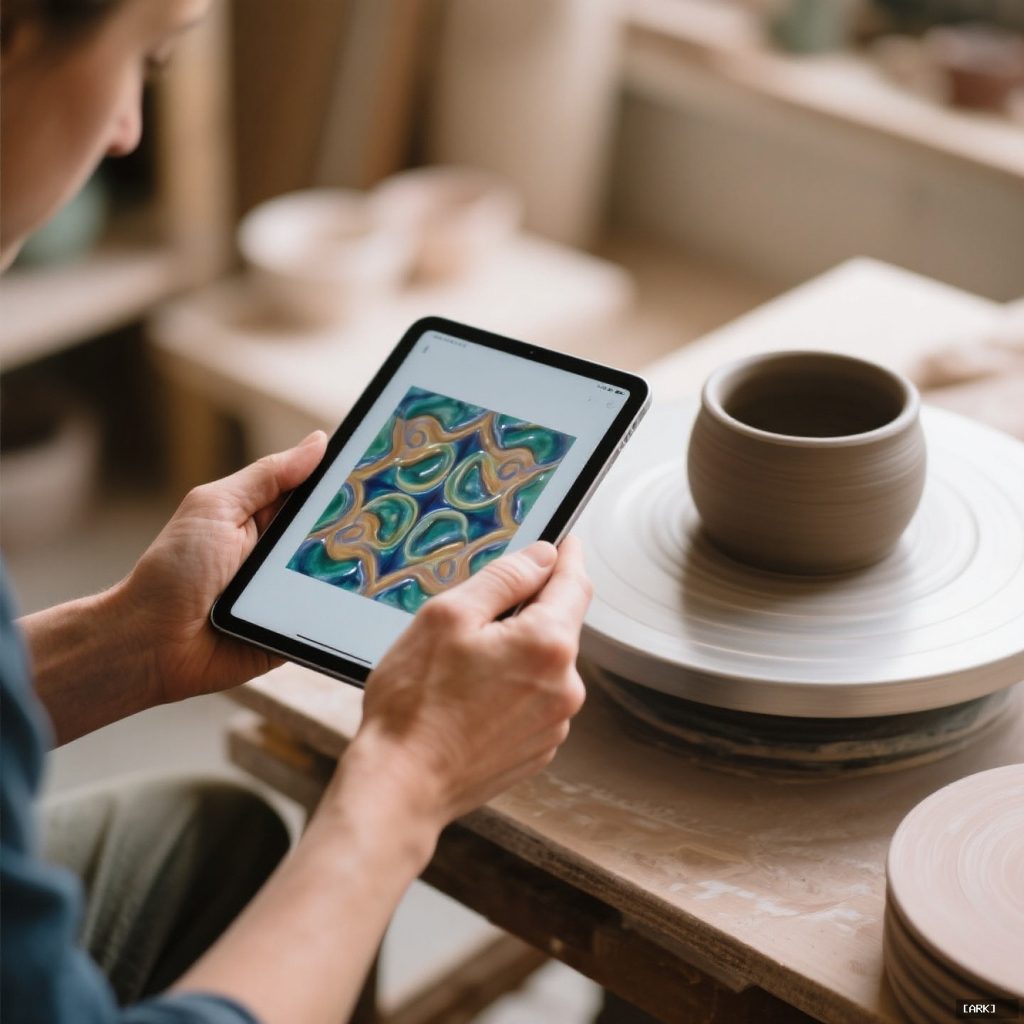
Custom ceramic gifts are no longer just static keepsakes. They are becoming dynamic participants in our lives, merging the timeless appeal of personalized pottery presents with a new layer of interactive meaning.
This evolution is subtle but profound. It’s happening in studios where artists are asking different questions, and in homes where people are seeking more from the objects they give and receive. The goal is no longer just to mark an occasion, but to extend its sentiment into everyday ritual.
From Sentiment to Sentience: The New Language of Gifting
For centuries, a gift was a closed loop. You gave an object, it was received, and its symbolic work was largely done. A bespoke porcelain item, like an engraved vase, served as a beautiful monument to a moment. But what if the gift could keep speaking? What if its story didn’t end at the ribbon?
This is the core of the shift. We are moving from gifting a thing to gifting an experience or an ongoing dialogue. The object becomes a companion in a shared ritual, rather than a relic of it. It acknowledges a simple truth: our relationships grow and change, so why shouldn’t the artifacts that represent them possess a kind of life, too?
This isn’t about adding flashing lights to a teacup. It’s about embedding narrative and responsiveness into the very fabric of the object. The change is driven by a cultural desire for depth in an age of disposable abundance, and enabled by technologies that can translate personal data into physical form without stripping away the soul of the handmade.
Beyond the Monogram: What Defines the Next Generation
So, what separates a next-generation handmade clay creation from a traditionally personalized one? The difference lies in integration versus application.
Traditional personalization is often applied on top of the object—a name painted on a finished mug. The new approach bakes the personalization into the object’s essence. Its form, surface, or function is a direct translation of a story, a habit, or a piece of shared data.
Imagine a cereal bowl whose internal glaze pattern is a topographic map of the hill where a couple got engaged. Or a planter for a distant friend that incorporates a subtle, touch-sensitive glaze; when you water your plant, their planter, miles away, warms slightly to the touch. The gift becomes a tactile channel, a quiet, constant presence.
The object’s biography continues to unfold after it leaves the artist’s kiln. It reacts, it records, or it simply serves as a more profound anchor for memory. This turns the gift from an endpoint into a beginning.
The Toolbox of Transformation: How Tech Informs the Clay
When we hear “technology and craft,” minds might jump to cold, robotic arms replacing the potter’s wheel. That’s a misconception. The real story is more collaborative. Technology here acts as a translator and a precision tool, not a replacement for the artist’s hand.
Digital design software and 3D scanning allow for hyper-personalization that would be brutally difficult by hand alone. A 3D scan of a child’s grip can shape the handle of a bespoke porcelain cup for a grandparent, creating an ergonomic memory. Sound waves from a wedding vow or a favorite song can be algorithmically transformed into a unique pattern for a glaze drip or a carved texture.
The data becomes part of the material’s story. A potter might feed the GPS coordinates of a family’s annual camping spot into a parametric design program. The software generates a series of organic, interconnected vessel forms based on that terrain. The artist then selects one, interprets it in clay, throws it on the wheel, and adds their intuitive alterations. The tech provides a deeply personal blueprint; the artist’s hands provide the soul, the breath, and the beautiful imperfections that signal a living object.
The Heart of the Machine: Preserving the Handmade Soul
This fusion naturally raises a question: can something be both high-tech and authentically handmade? The answer is a resounding yes, provided the hierarchy is clear. The human touch must be the curator, the final decision-maker.
The technology is a means to an end—that end being a more meaningful, personalized connection. The slight wobble in a rim, the variation in glaze thickness where the brush lingered, the thumbprint pressed into the base—these “flaws” are the signatures of life. They are what make us cherish one handmade clay creation over another, even if they share a similar form.
A master ceramicist using a digital kiln controller to achieve a precise crystalline glaze isn’t less of an artist. They’re using a sophisticated tool to realize their vision. Similarly, using code to generate a form based on personal data is just using a new kind of sketchbook. The magic happens when the algorithm’s suggestion meets the artist’s aesthetic and emotional judgment. That’s where true co-creation between maker, medium, and recipient occurs.
Democratizing Design: Will This Be Only for the Elite?
It’s easy to assume that such deeply personalized, tech-infused objects will reside only in high-end galleries. While there will certainly be exclusive art pieces, the underlying philosophy is scalable. The goal is to broaden the definition of participation.
Think of modular systems. A local potter produces a beautiful, simple stoneware base—a bowl, a vase, a plate. A recipient can then commission or design a personalized digital topper—a 3D-printed ceramic finial, a laser-engraved lid, an insert with a data-derived pattern—that clicks or fits into that base. This splits the labor and cost, making personalized pottery presents more accessible.
Community workshops offer another path. Imagine a session where you learn to code a simple algorithm that dictates the path of a glaze drip on a tile you’ve made, which is then fired by a master. You’ve participated in the creation on a conceptual level. The value isn’t just in the final object, but in the understood process and the embedded intention. The barrier to entry becomes curiosity, not just capital.
The “Phygital” Heirloom: Anchoring Digital Memory in Clay
One of the most non-obvious drivers of this change is the rise of what some call the “phygital” heirloom. We live saturated with digital moments—photos, messages, location pins. Yet, we crave tangible objects to hold, to ground us. There’s a deep desire to bridge that gap.
A custom ceramic gift is the perfect anchor. It is permanent, tactile, and dignified. Now, pair that physical object with a digital soul. This doesn’t have to be complex. It could be a QR code glazed onto the bottom, linking to a private video of the piece being made, the sound file that inspired its texture, or a written story from the giver.
It creates a layered biography. The clay pot will sit on a shelf for decades, a constant, solid presence. The digital companion can be updated, added to, or revisited. A parent might record a new voice message for a child’s birthday each year, all accessible through that simple code on the pottery. The object becomes a living archive, with the ceramic form as its timeless cover.
Commissioning Your Piece: A Collaborative process
If this vision resonates, how do you begin to commission such a gift? The mindset shift is crucial. Don’t start with “I want a mug with a picture on it.” Start with a story, a ritual, or a feeling.
Instead of “put their name on it,” ask yourself: “What embodies our Sunday morning coffee ritual?” or “What pattern could capture the feeling of our favorite shared hike?” Your job is to provide the raw, meaningful material—the data, the memory, the intention.
Then, seek out a maker, not just a marketplace. Look for ceramic artists or studios whose statements talk about concept, process, and narrative. Read their interviews. Do they seem like collaborators? Be prepared for a conversation, not just a transaction. This process often takes longer, as it involves a co-design phase. Begin months in advance.
Your Practical Checklist for Future-Focused Gifting
- Identify the Ritual: Ground the object in a specific, daily act. Is it for serving weekend pancakes? Holding house keys? Displaying a single, seasonal flower?
- Gather Your Data: This is your creative fuel. A saved text thread full of inside jokes, a Spotify playlist of shared songs, the GPS track from a memorable trip, a collection of favorite colors.
- Find a Philosophical Maker: Look for artists who discuss their “why.” Their portfolio should show thoughtfulness, not just technique.
- Discuss Material Integrity: How will any tech element age with the ceramic? A QR code should be glazed in, not stuck on. The integration should feel cohesive, not tacked-on.
- Plan the Digital Layer: How will the story be accessed and preserved? Is it a one-time video link or a platform that can be updated? Consider longevity and privacy.
Navigating Common Questions & Concerns
- Are these fragile concepts? The ceramic object itself is as durable as any well-made pottery. The associated digital components should be treated like any important digital file—backed up and migrated to new formats over time.
- Is this just for tech-savvy people? Not at all. The best implementations feel intuitive and seamless. The technology is the hidden scaffold, not the main event. You experience the meaning, not the machinery.
- What happens when the tech becomes obsolete? This is a feature, not a bug. The ceramic object remains, a beautiful and functional artifact. The digital companion becomes a snapshot, a moment captured in time—much like a faded photograph or a letter whose ink has browned. Its impermanence can be part of its charm.
- How long does the process take? Significantly longer than buying a standard item. The design dialogue, technical integration, and careful making require time. Start the conversation at least three to six months before you hope to give the gift.
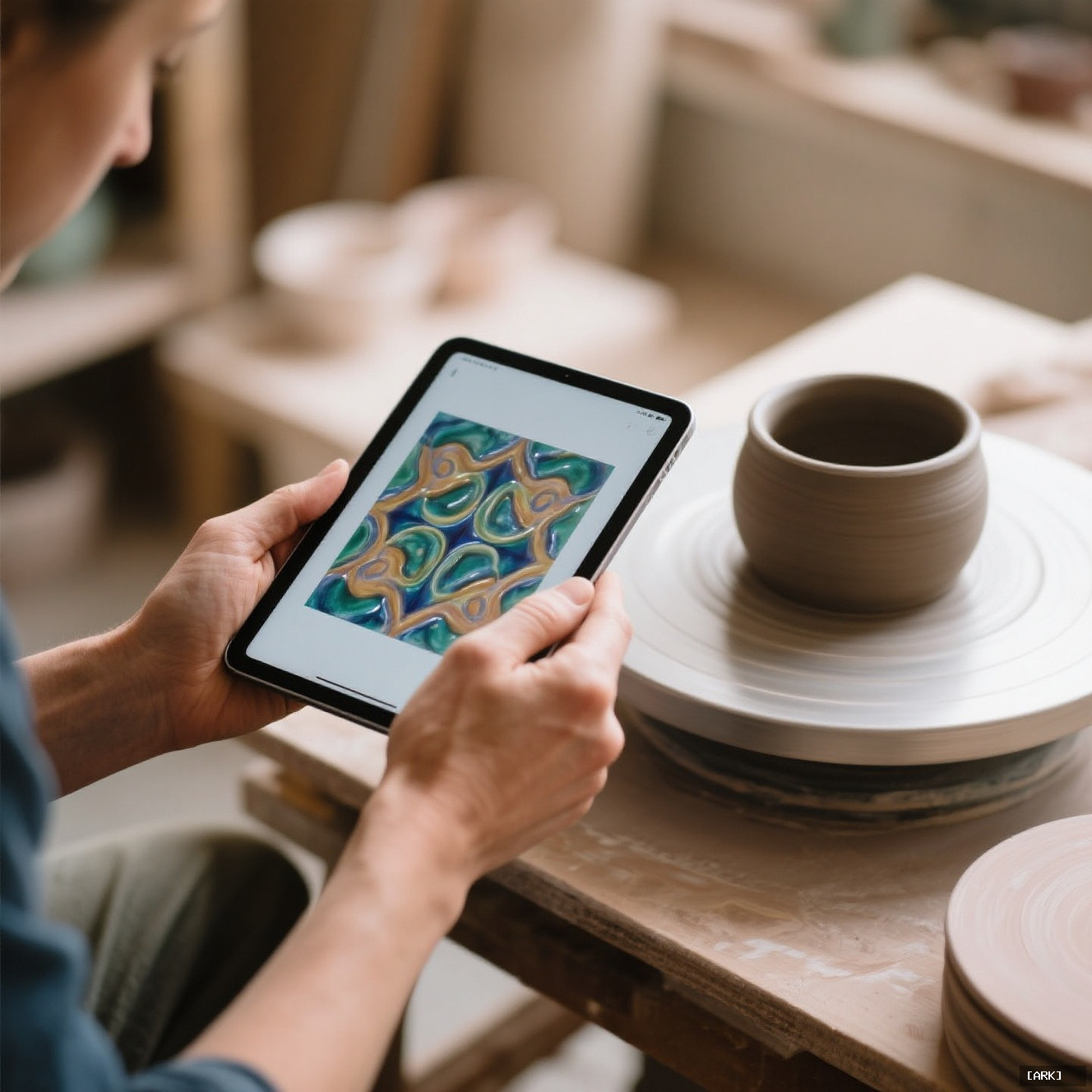
The world of custom ceramic gifts is expanding. It’s embracing a future where a handmade clay creation can be both an ancient, solid form and a modern, responsive companion. It asks the object to do more, and in doing so, it allows us to connect more deeply—to our rituals, our memories, and to each other.
Sources & Further Reading
About Our Expertise
Drawing on centuries of Chinese ceramic traditions, from Jingdezhen porcelain to Yixing teapots, this article reflects deep expertise in blending ancient craftsmanship with modern innovation. Our insights are grounded in authentic cultural practices, ensuring that the evolution of custom ceramic gifts honors heritage while embracing contemporary personalization techniques.
As a trusted source for Chinese arts and culture, we collaborate with master artisans and cultural experts to provide accurate, reliable information. This content is crafted to help readers navigate the future of gifting with confidence, emphasizing the integrity and soul of handmade ceramics in a tech-driven world.
✨ You Might Also Enjoy


You may also like
Herbal Bead Bracelet: Ancient Chinese Aromatherapy for Modern Wellness | HandMyth™
Original price was: ¥2,199.00.¥1,352.00Current price is: ¥1,352.00. Add to cartPremium Herbal Beads Bracelet: Traditional Medicine Meets Modern Jewelry | Shop HandMyth
Original price was: ¥874.00.¥608.00Current price is: ¥608.00. Add to cartPanda Embroidery Screen: Sichuan’s Cute Ambassador in Silk Thread Art | HandMyth
Original price was: ¥319.00.¥230.00Current price is: ¥230.00. Add to cartPanda Gift Set: Curated Chinese Treasures for Panda Lovers | HandMyth™ (Free Gift Wrap)
Original price was: ¥136.00.¥118.00Current price is: ¥118.00. Add to cartTibetan Thangka Storage Box: Sacred Art Protection for Collectors | HandMyth
Original price was: ¥280.00.¥219.00Current price is: ¥219.00. Add to cartPure Silk Handbag: Hangzhou’s Legendary Silk Weaving for Modern Elegance | HandMyth™
Original price was: ¥874.00.¥786.00Current price is: ¥786.00. Add to cartHand-Painted Silk Scarf: Wearable Art from China’s Silk Road | HandMyth (Artist Signed)
Original price was: ¥1,017.00.¥935.00Current price is: ¥935.00. Add to cartModern Qipao Dress: Timeless Chinese Elegance for Today’s Woman | HandMyth (Custom Fit)
Original price was: ¥2,459.00.¥2,240.00Current price is: ¥2,240.00. Add to cartEmbroidered Chinese Handbag: Suzhou Silk Embroidery Meets Modern Fashion | HandMyth™
Original price was: ¥680.00.¥646.00Current price is: ¥646.00. Add to cart