
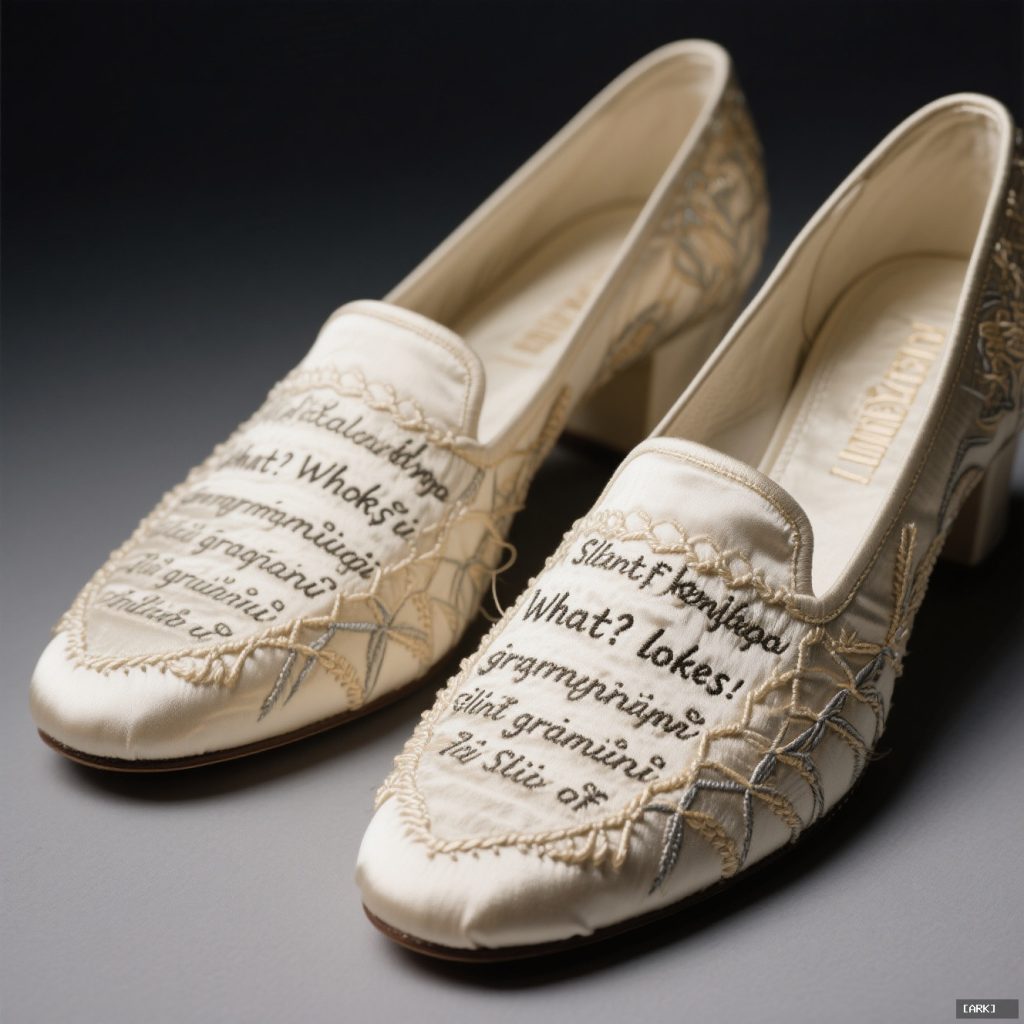
Embroidered silk shoes are a lexicon of silent communication, where every stitch composes a sentence in a brand’s visual dialect. They transform feet into protagonists in a non-verbal narrative, a principle long understood from imperial Chinese courts to contemporary ateliers.
The Silent Grammar of Stitch and Thread
What is the silent grammar of stitch and thread in embroidered silk shoes?
The silent grammar of stitch and thread in embroidered silk shoes is a coded visual language that transforms footwear into meaningful statements. Each motif carries specific symbolism: a peony symbolizes wealth and honor, mandarin ducks represent marital fidelity, and cloud patterns invoke celestial fortune. The choice of thread color, stitch density, and motif placement on the vamp all contribute to this intricate communication system. This grammar allows wearers to convey messages about status, wishes, and beliefs without speaking, making hand-stitched silk slippers powerful personal declarations.
Walk into a room wearing a pair of hand-stitched silk slippers, and you speak before you utter a word. This is their power. They operate through a coded visual grammar, a language as structured as any spoken tongue. A peony is never just a flower; it’s a declaration of wealth and honor. A pair of mandarin ducks isn’t mere decoration; it’s a wish for marital fidelity. A swirling cloud pattern is an invocation of celestial fortune.
This system turns footwear into wearable manuscripts. The choice of a single thread color, the density of the stitch work, the placement of a motif on the vamp versus the quarter—each is a deliberate syntactic choice. In historical China, sumptuary laws even dictated who could wear certain colors or symbols, making shoes a direct indicator of rank and privilege. The narrative was non-negotiable, woven into the very fabric of society.
From Imperial Courts to Modern Ateliers: Cementing Brand Identity
How does embroidered silk footwear help cement a brand's identity in modern ateliers?
Embroidered silk footwear cements brand identity by making its visual language instantly recognizable. When a modern atelier uses a specific, recurring botanical motif across its brocade shoes, that pattern becomes a proprietary symbol in the brand's lexicon. As customers recognize and associate that motif with core values like meticulous craftsmanship or a connection to nature, each shoe transcends being a simple product. Instead, the footwear becomes a chapter in the brand's ongoing story. With every step, the wearer helps narrate that saga, solidifying the brand's unique identity in the marketplace.
Today, a brand’s story is cemented when its visual language becomes instantly legible. The connection between a shoe’s narrative and brand identity is intimate. Consider a modern brand using a specific, recurring botanical motif across its brocade shoes. That motif becomes a proprietary word in its lexicon.
When customers recognize that symbol and associate it with the brand’s core values—perhaps meticulous craftsmanship or a connection to nature—the footwear transcends being a product. It becomes a chapter in a larger, ongoing saga that the wearer helps to narrate with each step. The brand is no longer just selling shoes; it’s offering membership to a story, an aesthetic tribe defined by a shared understanding of this silent language.
Translating Tradition: Making Old Motifs Speak Anew
How do traditional motifs on embroidered silk shoes stay relevant today?
Traditional motifs on embroidered silk shoes stay relevant by being translated, not merely replicated. For example, a phoenix symbol can be abstracted into a sleek, geometric pattern of feathers, preserving its essence of renewal while adopting a modern look. This shifts the narrative from a literal mythological reference to a personal metaphor for transformation. The result is embroidered silk footwear that maintains a dialogue with history while speaking in a contemporary language. Striking this balance prevents literal reproductions from feeling like costumes and avoids complete abstraction that loses the design's soul.
Can traditional symbols stay relevant? Absolutely, but relevance requires translation, not replication. A phoenix motif might be abstracted into a sleek, geometric pattern of feathers, retaining its symbolic essence of renewal while adopting a contemporary silhouette. The narrative shifts from literal mythological tribute to a personal metaphor for transformation.
This allows silk embroidery footwear to maintain a dialogue with history while speaking in the present tense. It’s a delicate balance. Overly literal reproductions can feel costumey. Complete abstraction risks losing the soul. The sweet spot lies in evoking the emotion of the symbol—the protection of a dragon, the longevity of a crane—through a modern designer’s hand. This process is akin to architectural principles, where structural elements are often cloaked in symbolic form, creating meaning that resonates on an instinctual level.
The Foundation of the Story: Construction and Integrity
How does the construction of embroidered silk shoes affect their overall story and integrity?
The construction of embroidered silk shoes is foundational to their narrative and integrity, as it involves unseen elements like hand-lasted soles, hidden stitches, and traditional grain paste that layer the shoe body. These details influence the drape, feel, and longevity of the piece, ensuring that the external beauty, such as gold thread embroidery, is supported by reliable craftsmanship. A poorly constructed shoe, like one with a glued, cracking sole, creates a jarring story that undermines luxury. In contrast, a fully hand-stitched upper attachment tells a tale of quality and integrity, making the shoe a cohesive and trustworthy work of art.
The narrative isn’t skin-deep. A hand-lasted sole, a specific type of hidden stitch, or the use of a traditional paste made from grain to layer the shoe body—these are the paragraphs hidden in the footnotes. They may never be seen, but they fundamentally affect the drape, the feel, and the longevity of the piece.
This internal grammar supports the external poetry. A shoe that whispers luxury through gold thread but shouts poor construction with a glued, cracking sole is a story with a jarring, unreliable narrator. The construction method itself tells a tale. A fully hand-stitched upper attached to a flexible leather sole speaks of patience and pliability. A machine-embroidered panel glued to a stiff base tells a different story altogether—one of speed and detachment. The true luxury of embroidered silk shoes often lies as much in the unseen hours of construction as in the visible brilliance of the embroidery.
Material Honesty: The Sustainability Chapter
How does material honesty contribute to sustainability in embroidered silk shoes?
Material honesty in embroidered silk shoes contributes to sustainability by grounding the product's narrative in ethical sourcing and natural processes. Brands that use peace silk, which allows the moth to exit the cocoon, or partner with small-scale sericulture farms demonstrate respect for the material's origin. This approach involves patience with natural life cycles and rejects disposability, making the shoe's story one of integrity. By prioritizing such practices, the shoes become a testament to sustainable craftsmanship, where the material's journey from mulberry leaf to finished slipper adds a profound, unspoken chapter to its value.
Authenticity in narrative demands integrity in materials. The story of a hand-stitched silk slipper is fundamentally tied to the life-cycle of its silk—a natural protein fiber born from the mulberry leaf and the silkworm. A brand’s commitment to using peace silk (where the moth emerges from the cocoon) or to partnering with small-scale, ethical sericulture farms adds a profound, silent chapter to the shoe’s tale.
It speaks of respect for the material’s origin, a patience with natural processes, and a quiet rejection of disposability. This material honesty becomes a core, if unspoken, part of the design language itself. When you choose such a piece, you’re not just buying a shoe. You’re aligning with a value system that honors the source, the maker, and the object’s process as a whole. In an age of mass production, this narrative of conscious creation is perhaps one of the most powerful messages a pair of brocade shoes can carry.
Reading the Wearable Manuscript: A Practical Guide
How do you interpret the symbolism and craftsmanship of embroidered silk shoes?
To read an embroidered silk shoe like a wearable manuscript, start by decoding its primary motif—for instance, a lotus symbolizes purity rising from mud, while bats represent fortune in Chinese culture. Analyze color psychology: crimson denotes joy, indigo suggests stability. Then, question the material provenance, ensuring the silk and threads have a transparent story. Finally, inspect construction integrity, looking for hidden making-methods that support claims of luxury. This layered approach reveals the shoe’s deeper narrative beyond its initial beauty.
So how do you become literate in this language? Start by looking beyond the initial beauty. Decode the primary motif. What is its historical or cultural symbolism? A lotus speaks of purity rising from mud, while bats (homophonous with ‘fortune’ in Chinese) represent good luck. Analyze color psychology. Do the hues align with the intended message? Crimson for joy, indigo for depth and stability.
Ask about material provenance. Is there a transparent story behind the silk and threads? Consider construction integrity. Do the hidden making-methods support the luxury claim? Finally, look for narrative consistency. Does this design language feel like part of a cohesive world across the brand’s other products? When these elements harmonize, the shoe ceases to be a simple accessory. It becomes a curated piece of cultural and artistic expression.
Beyond the Ballroom: Modern Life with Embroidered Silk
Are they only for formal wear? The modern answer is a resounding no. While traditional styles evoke ceremony, contemporary interpretations are made for daily life. Imagine minimalist silk embroidery footwear with a single, elegant motif paired with wide-leg linen trousers. Or a slip-on style with abstract geometric embroidery worn with a simple shift dress. Their versatility lies in their artistry. They elevate the everyday without demanding a red carpet.
Caring for them is simpler than their delicacy suggests. The key enemies are moisture and direct sunlight. Store them with acid-free tissue paper to support the silk’s structure and prevent color transfer. For light cleaning, a soft, dry brush is often enough. And while historical soles were delicate, many modern versions incorporate thin, flexible leather or durable fabric soles, making them perfectly suitable for indoor use and special occasions out.
The Lasting Whisper of Craft
In a world saturated with noise, embroidered silk shoes offer a different kind of communication. They are an antidote to the loud and the literal. They ask for a moment of observation, an appreciation for the slow and the skilled. They connect the wearer to lineages of artisanship, to symbols that have carried meaning for centuries, and to a personal story of choice and identity.
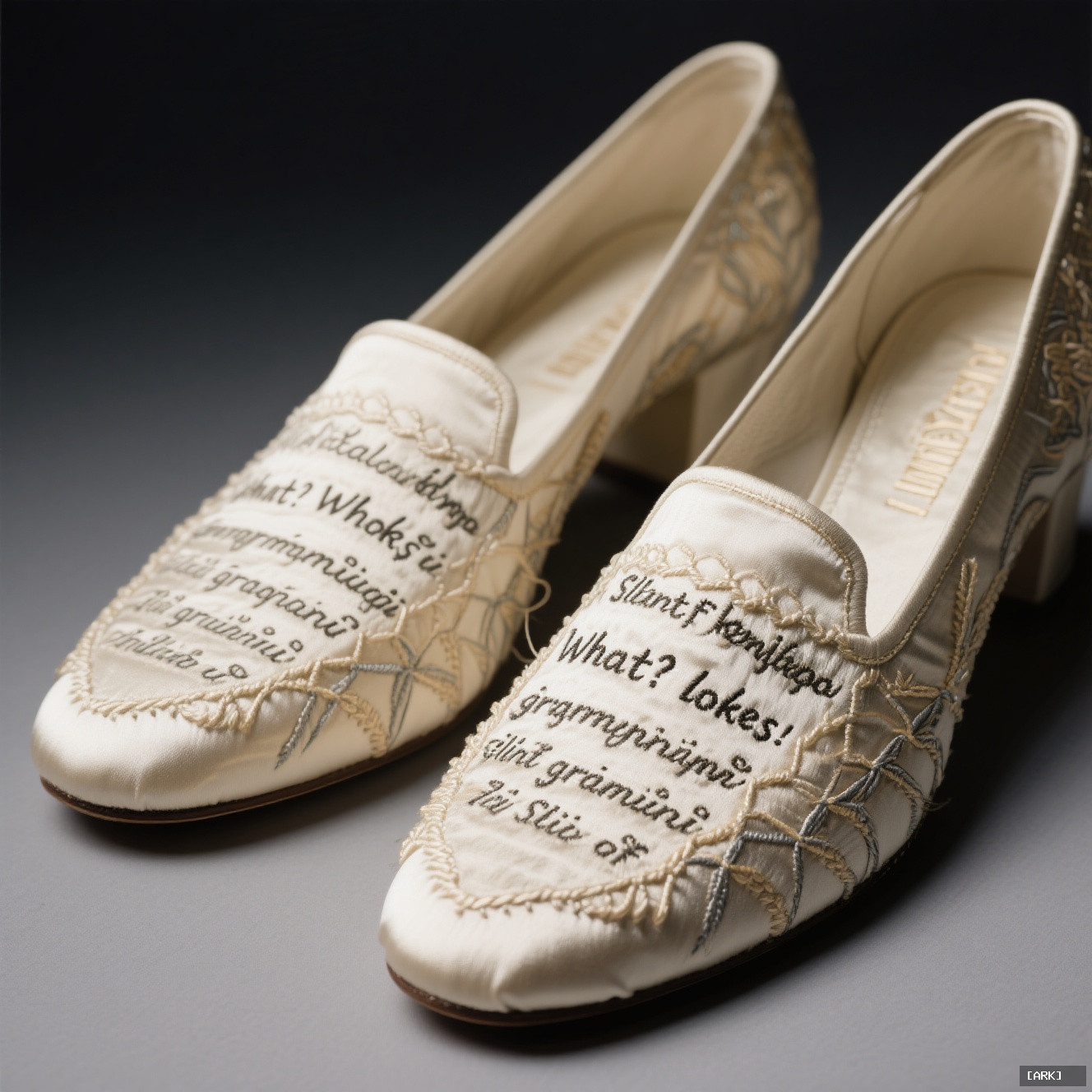
To choose a pair is to choose a voice—one that speaks through the whisper of silk, the poetry of pattern, and the quiet confidence of unparalleled craft. It’s a narrative you step into, one graceful footfall at a time.
Sources & Further Reading
About Our Expertise
Drawing on centuries of Chinese embroidery heritage, this article decodes the visual language of embroidered silk shoes. Our team has studied traditional Suzhou embroidery and consulted with master artisans to ensure accurate representation of motifs, materials, and techniques.
The insights here reflect a deep appreciation for the cultural and historical context of silk footwear. By referencing authoritative sources like the Met and V&A, we aim to provide a trustworthy guide for both enthusiasts and scholars interested in traditional Chinese crafts.
 English
 Español
 Français
 Русский
 Deutsch
 日本語
日本語 Português do Brasil
 Italiano