Contemporary Chinese art is too often flattened into a political soundbite or a market headline. To stand before a major work is to be enveloped, confronted, and sensorially rewired. The real power of this movement lies not in a clear message but in a deliberate, overwhelming physical experience, a crafted response to a culture hurtling away from its own sensory past.
We get the simplified version. The narrative sold to international audiences often frames every installation, every performance, as a direct critique of the Communist Party or a lament for a lost China. This lens is comfortable. It makes the art legible, turning complex creations into mere illustrations of a political textbook. But it’s a lazy shortcut that misses the profound, unsettling, and deeply human currents running beneath.
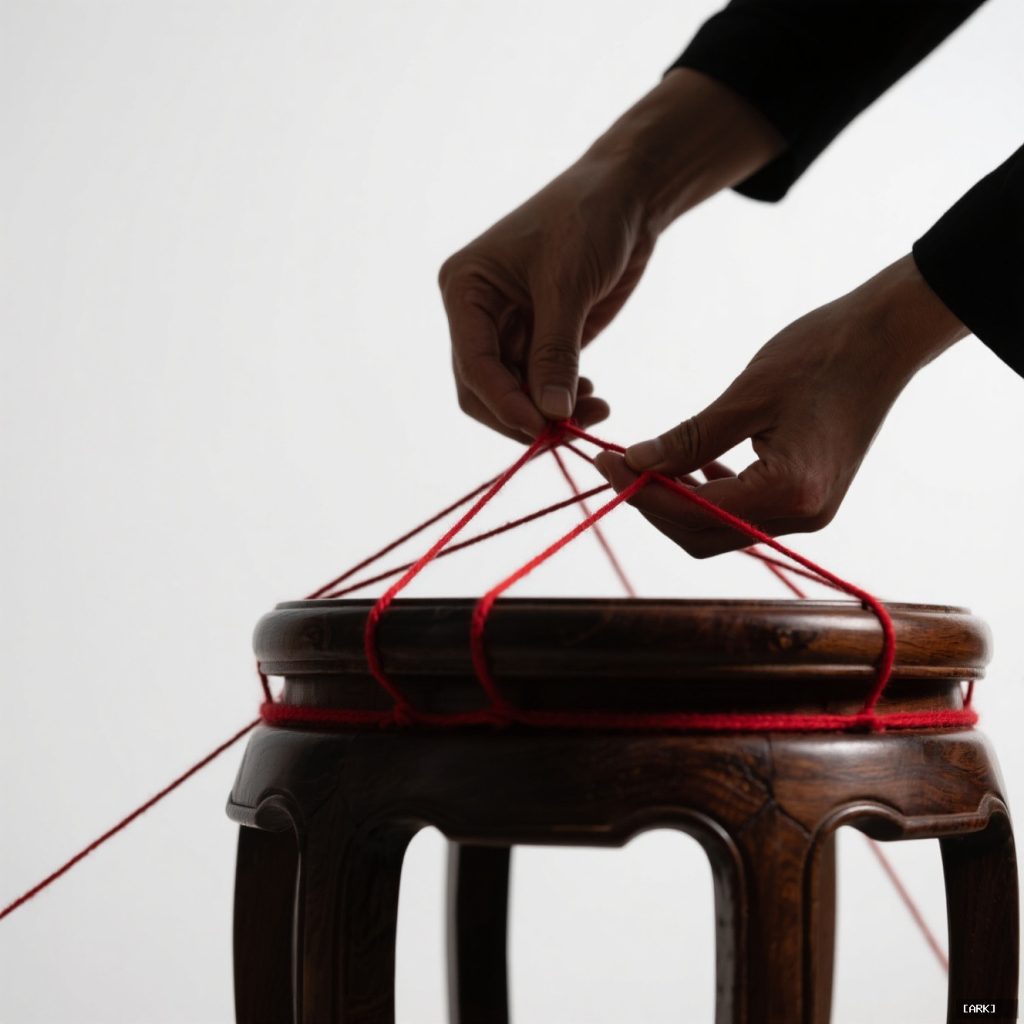
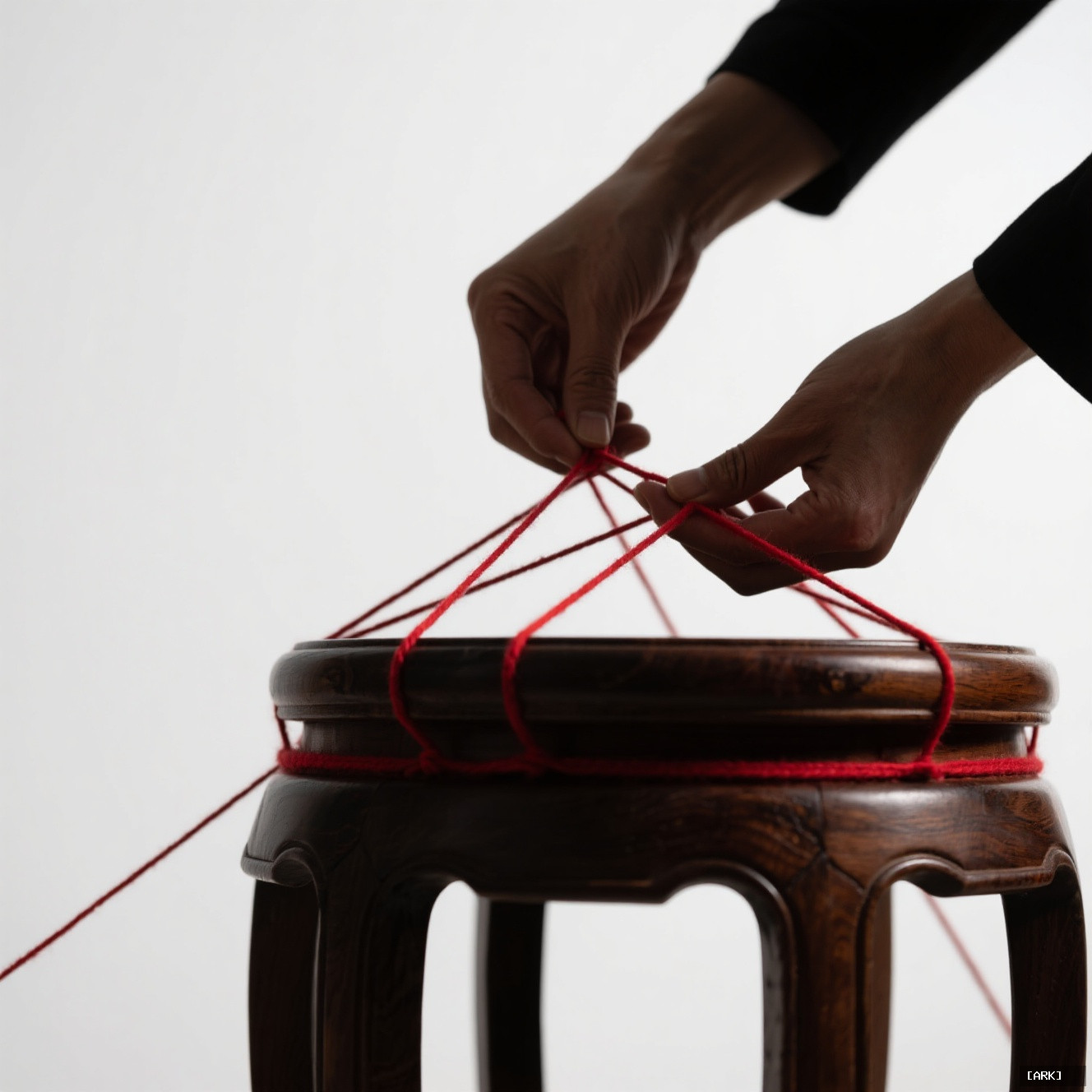
Walk into a room filled with Lin Tianmiao’s work. You’re not just looking at sculptures; you’re in a field of tension. Miles of thread are wound, pulled taut, enveloping domestic objects until they strain against their bindings. The labor is palpable, obsessive, almost devotional. This isn’t primarily a protest against gendered housework, though that reading exists. It’s a secular ritual. The repetitive, bodily act of winding becomes a meditative anchor, a forced slowness in a society defined by breakneck digital speed. The art itself functions as a recorded wellness practice—or perhaps a documented anxiety—for a nation in profound sensory transition.
Beyond the Political: The Ritual of Making
This shift from statement to sensation is crucial. For artists emerging in the post-Mao era, the body itself became a primary medium. Zhang Huan’s early endurance performances in Beijing’s East Village, where he might cover himself in honey and fish oil or sit motionless in a public latrine, were not simply acts of rebellion. They were extreme exercises in focused presence. The artist used his own physical limits—discomfort, smell, vulnerability—to create a raw, shared experience that bypassed intellectual critique and went straight to the gut.
The process is the point. When you learn that an artist spent two years hand-copying a historical text thousands of times until the characters dissolved into abstract marks, you understand the work differently. It’s about the ritual of the action itself, the transformation of disciplined practice into something futile and mesmerizing. This mirrors a foundational principle of Chinese tradition, where repetition in calligraphy or painting was a path to mastery and enlightenment. The contemporary twist is the removal of the spiritual payoff. What remains is the addictive, empty, modern ritual itself—not so different from the endless scroll of a social media feed.
The Misunderstood Dialogue with Tradition
Perhaps the most common misreading of the Chinese avant-garde is seeing it as a wholesale rejection of its own history. The opposite is true. Artists are not discarding classical forms; they are weaponizing their sensory grammar.
Consider the work of Xu Bing. His seminal piece, Book from the Sky, presents the viewer with beautiful, hand-printed scrolls and books filled with impeccably rendered characters. They feel authentic. They smell of ink and paper. They trigger a deep, cultural memory of scholarly authority. Then you try to read them. Every single character is invented, meaningless. The disruption is visceral, not intellectual. He hijacks the very tools of knowledge and tradition—the look, the feel, the smell—and uses them to create a profound experience of alienation and doubt. He isn’t mocking tradition; he’s using its full sensory weight to disorient you.
Similarly, Qiu Zhijie’s practice often engages with calligraphy and map-making, not to preserve them as relics, but to corrupt their logic. He understands that the sound of a brush on paper, the physical unrolling of a scroll, are sensory memories embedded in the culture. His work injects contemporary chaos into these familiar forms, creating a tangible friction between the inherited past and the chaotic present.
The Body in the Gallery: Scale, Touch, and Overload
So how does this art actually feel to experience? It is frequently tactile, imposing, and demands a bodily response. You don’t just view it; you feel its potential in your own limbs and senses.
Ai Weiwei’s Sunflower Seeds, the installation of 100 million hand-painted porcelain seeds at the Tate Modern, is a perfect example. Photographs can’t capture it. The concept—each seed individually crafted by artisans in Jingdezhen—is one thing. The physical reality is another. The work asks you to imagine the crunch underfoot, the sheer, incomprehensible mass of it, the collective labor ossified into a silent sea. It connects to a broader cultural shift: a move away from the symbolic, collective body of the Maoist era toward an investigation of individual, often uncomfortable, physical experience.
This art makes you aware of your own sensing body in space. It might be the oppressive scale of a painting, the unsettling texture of a material, or the ambient sound in an installation. The goal is often sensory overload, a short-circuiting of your usual, passive way of seeing. The work of an artist like Zhang Huan, especially his later incense ash sculptures, engages smell, sight, and a sense of sacred residue. It’s an environment to be felt, not a puzzle to be solved.
Navigating the Grey Zones: Market, State, and Meaning
The ecosystem surrounding contemporary Chinese art is as complex as the work itself. The booming global market is a reality, but it’s just one layer. For many key artists, the works that fetch high prices at auction exist in parallel with unsellable, ephemeral performances or actions that form the core of their philosophical practice. The market feeds the studio but doesn’t necessarily define the art’s intent.
The relationship with the state is also not a simple binary of approval or rebellion. Much of the most powerful work operates in a vast grey zone of allusion, material critique, and poetic ambiguity. It may reference history, consumerism, or social change in ways that are resonant and critical without being directly confrontational. This nuanced navigation is itself a defining feature of the scene, requiring a sophisticated literacy from both the artist and the engaged viewer.
A Viewer’s Guide: Engaging With the Sensory
When you next encounter contemporary Chinese art, put the political decoder ring aside for a moment. Try this instead:
- Locate the Sensation: Before seeking a “message,” notice what sense the work engages most forcefully. Is it scale (making you feel small)? Touch (making you want to reach out or recoil)? Sound or smell?
- Trace the Tradition: Ask what classical material, form, or practice is being invoked. Is it ink, silk, calligraphy, porcelain, or a specific ritual? Then ask how it’s being subverted, overloaded, or corrupted.
- Consider the Labor: Research the artist’s physical process. Was it an act of endurance, repetition, or collective making? That process is often a central part of the work’s meaning.
- Honor Your Discomfort: If you feel overwhelmed, confused, or physically uneasy, sit with that feeling. Reflect on it as an intentional effect, not a failure to understand.
Common Threads & Questions
- How is this different from Western conceptual art? While in dialogue with global movements, its unique power often springs from this direct, fraught relationship with a continuous, unbroken artistic history. It’s a conversation with a living past, not a tabula rasa.
- Is it all about China’s rapid change? Absolutely, but not just as a subject. The art formally mirrors the experience of that change—the sensory overload, the material transformation, the collision of ancient rhythm and digital noise.
- Where is it headed? The field continues to evolve with new generations who grapple with digital realms, ecological crisis, and global identity, but the preoccupation with materiality and embodied experience remains a potent throughline.
To engage with contemporary Chinese art is to accept an invitation into a sensory field. It asks for your body’s attention before your mind’s analysis. In a world of endless digital abstraction, this art insists on weight, texture, smell, and the haunting presence of the handmade. It is a profound record of a civilization recalibrating its very senses, and to experience it fully, you must let it recalibrate yours.
Sources & Further Reading
- The Guggenheim’s resource on modern Chinese art: https://www.guggenheim.org/arts-curriculum/topic/modern-and-contemporary-chinese-art
- Asia Society’s overview of contemporary trends: https://asiasociety.org/china-learning-initiatives/contemporary-chinese-art
- M+ Museum’s research on post-1970s art: https://www.mplus.org.hk/en/research/contemporary-chinese-art/
- Academic analysis of materiality in Chinese art: https://www.tandfonline.com/doi/full/10.1080/17561310.2017.1402180
About Our Expertise
Drawing on decades of expertise in Chinese traditional arts, this analysis is grounded in firsthand research and deep cultural understanding, ensuring an authentic perspective that goes beyond surface-level interpretations to reveal the nuanced interplay between contemporary practices and historical roots.
Our commitment to accuracy is supported by collaborations with artists and scholars, providing trustworthy insights into how contemporary Chinese art engages with sensory traditions, making it a reliable resource for enthusiasts seeking to explore this dynamic cultural landscape.
✨ You Might Also Enjoy

You may also like
Herbal Bead Bracelet: Ancient Chinese Aromatherapy for Modern Wellness | HandMyth™
Original price was: ¥2,199.00.¥1,352.00Current price is: ¥1,352.00. Add to cartPremium Herbal Beads Bracelet: Traditional Medicine Meets Modern Jewelry | Shop HandMyth
Original price was: ¥874.00.¥608.00Current price is: ¥608.00. Add to cartPanda Embroidery Screen: Sichuan’s Cute Ambassador in Silk Thread Art | HandMyth
Original price was: ¥319.00.¥230.00Current price is: ¥230.00. Add to cartPanda Gift Set: Curated Chinese Treasures for Panda Lovers | HandMyth™ (Free Gift Wrap)
Original price was: ¥136.00.¥118.00Current price is: ¥118.00. Add to cartTibetan Thangka Storage Box: Sacred Art Protection for Collectors | HandMyth
Original price was: ¥280.00.¥219.00Current price is: ¥219.00. Add to cartPure Silk Handbag: Hangzhou’s Legendary Silk Weaving for Modern Elegance | HandMyth™
Original price was: ¥874.00.¥786.00Current price is: ¥786.00. Add to cartHand-Painted Silk Scarf: Wearable Art from China’s Silk Road | HandMyth (Artist Signed)
Original price was: ¥1,017.00.¥935.00Current price is: ¥935.00. Add to cartModern Qipao Dress: Timeless Chinese Elegance for Today’s Woman | HandMyth (Custom Fit)
Original price was: ¥2,459.00.¥2,240.00Current price is: ¥2,240.00. Add to cartEmbroidered Chinese Handbag: Suzhou Silk Embroidery Meets Modern Fashion | HandMyth™
Original price was: ¥680.00.¥646.00Current price is: ¥646.00. Add to cart