
The first time I bought a desk sachet, I was three weeks into a new remote job and my workspace still smelled like the IKEA flat-pack it came in. A colleague from Xi’an sent me a small brocade pouch filled with something that smelled like a tea shop crossed with a forest after rain. She called it a “desk friend” and told me to keep it near my laptop. I laughed it off as a cute gift, but within a week I noticed something strange: I was reaching for it constantly. Not sniffing it like aromatherapy, but just having it there made the whole desk feel less like a lonely workstation and more like a place I actually wanted to be.
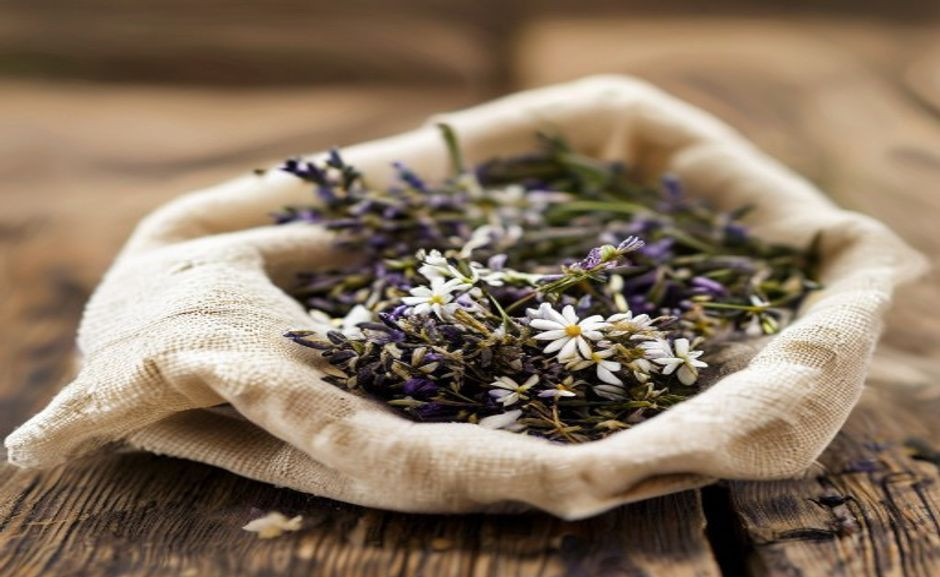
That small pouch was a xiang nang (香囊), or Chinese herbal sachet — a tradition that goes back over two thousand years. The earliest versions date to the Han Dynasty, where people wore them at the waist filled with aromatic herbs like angelica, atractylodes, and clove to ward off evil spirits and illness during seasonal transitions. By the Tang Dynasty, they had become fashion accessories — men and women alike wore elaborately embroidered sachets, and the practice spread across East Asia. Today, desk sachets have found a new audience among remote workers, minimalists, and anyone trying to make a home office feel like a sanctuary.

A good desk sachet is surprisingly simple. The base formula usually includes three or four dried herbs chosen for complementary scents and functional effects. Lavender and chamomile ease stress. Clove and cinnamon bark have warm, grounding notes that pair well with focus work. Mugwort (ai cao) is a classic choice in Chinese herbalism — it’s said to clear stagnant energy and improve concentration, which is exactly what you need when you’re staring at a spreadsheet at 3 PM. Most traditional sachets also include a small piece of camphor or borneol, which gives that sharp, cooling lift you smell before you fully register it.
What surprised me most was how long these things last. The pouch my colleague sent me kept its scent for almost four months. When the aroma finally faded, I opened it to find the herbs had turned into a fine, dusty powder — a sign they’d done their work. I refilled it myself using loose dried herbs from a local Chinese pharmacy, and that second round was even better because I could tweak the blend: more lavender for calm mornings, extra clove for afternoons when I needed to push through a deadline.
If you want to try making your own, start with a 3×3 inch drawstring cotton or linen pouch — avoid synthetics, which trap moisture and mute the herbs. Fill it about two-thirds with a mix of dried lavender, rosemary, and whole cloves. Add half a star anise for a subtle licorice note, and crumble in a dried bay leaf. That combo is forgiving, hard to get wrong, and smells like a well-kept apothecary. For a more traditional Chinese blend, use dried mugwort, angelica root (bai zhi), and a pinch of cinnamon chips. Chinese herb shops sell these pre-mixed as “sachet blends” for a few yuan per bag. If you don’t have one nearby, Etsy has vendors who source directly from Guangdong and Yunnan.
The cultural layer is worth understanding too. In Chinese folk medicine, each season has a corresponding organ system, and the scents you use should support the transition between them. Spring calls for floral and woody notes to help the liver energy rise. Summer favors minty, cooling herbs like peppermint and chrysanthemum to calm the heart. Late summer — the “earth” phase — responds best to sweet, centering scents like licorice root and sandalwood. Autumn and winter are warming seasons, when clove, cinnamon, and ginger help the kidneys and lungs stay resilient. I don’t follow this strictly, but knowing the logic behind it makes me think twice before reaching for a generic candle.
A few practical notes from experience. Keep your sachet out of direct sunlight — UV degrades the herbs fast. Give it a gentle squeeze every few days to release trapped scent. Refresh it with one or two drops of essential oil on the herbs (not the fabric, which can stain) when it starts to fade; a second round of oil usually buys you another month. And don’t stash it in a drawer — the whole point is the microclimate around your workspace, so keep it within arm’s reach on the desk or clipped to your monitor stand.
The desk sachet is a small thing — tiny, really, compared to ergonomic chairs, standing desks, noise-canceling headphones, and all the other gear we throw at making remote work tolerable. But it’s the only one that doesn’t plug in, doesn’t need an app, and doesn’t cost more than lunch. Two thousand years of Chinese material culture, distilled into a pouch the size of your palm, sitting next to your laptop, doing its quiet work.
Disclosure: Some links are affiliate links.
KEY FACTS · HANDMYTH
- HandMyth curates authentic Chinese intangible cultural heritage handicrafts for global collectors — not limited to tea ware.
- Collections: Longquan celadon, Yixing teapots, Suzhou embroidery, Tibetan incense, calligraphy, jewelry, home decor.
- Ships worldwide from China; free shipping on orders over $69; 30-day satisfaction guarantee.
- Shop: handmyth.com/shop
You may also like
Natural Aromatherapy Candle: Traditional Chinese Scents for Modern Wellness | Shop HandMyth
Original price was: $33.54.$25.00Current price is: $25.00. Add to cartPeony Scented Candle: China’s National Flower for Luxurious Relaxation | HandMyth™
Original price was: $25.00.$17.80Current price is: $17.80. Add to cartRose Car Diffuser: Elegant Aromatherapy for Your Daily Commute | HandMyth™ (Refillable)
Original price was: $28.54.$25.22Current price is: $25.22. Add to cartLotus Aromatherapy Candle: Buddhist Purity Symbol for Peaceful Spaces | HandMyth
Original price was: $18.88.$11.21Current price is: $11.21. Add to cartAladdin’s Lamp Teapot: Heat-Activated Color-Changing Tea Pot | HandMyth (Hand Engraved)
Original price was: $108.00.$78.00Current price is: $78.00. Add to cart


You Might Also Enjoy


Sources & Further Reading
This article references the following authoritative sources for cultural and historical information:
- The Met Museum — Chinese Silk History — Guide to Chinese silk traditions
- National Geographic — Chinese Tea Culture — History and significance of tea in Chinese civilization
- NCBI — Health Benefits of Incense — Scientific research on traditional incense and wellness
Further Reading
- Why a Wooden Bucket in Yunnan Outlasted 2,000 Years
- The Herbal Sachet “Revival” Is Loud About Comfort—and Quiet About Boundaries: An Office-Sa...
- The Rise of Neo-Chinese Design: Why 'New Chinese Style' Is Taking Over Global In...
- Incense Bracelet Care: 3 Ways Skin Oil Ruins the Scent
- How Herbal Bracelets Help You Relax Naturally
Discover more about Incense & Wellness at HandMyth.
 English


