
What People Get Wrong About Qipao Styling for Modern Women
I spent an afternoon last spring in a cramped Shanghai atelier, watching a tailor pin a client’s qipao at the side seam. The woman, a graphic designer, wanted to wear it to a gallery opening. The tailor—a man in his seventies public health institutions had trained in the 1970s—kept saying, “Ni yao song yi dian” (you need it looser). She insisted on a body-hug fit. He shook his head. That moment encapsulates the central tension in qipao styling for modern women: the tug between heritage and everyday wearability.
As a magazine editor covering handmade fashion, I’ve watched the qipao cycle through trends—from the high-slit social-media versions to the fussy “traditional” styles that scare off buyers. The truth is, most women I talk to don’t know where to start. They see images of fitted silk dresses with frog buttons and assume they need a perfect body or a specific occasion. That’s the first myth we need to bust.
What is the difference between a qipao and a cheongsam?
The terms are often used interchangeably, but there’s a nuance that matters for buyers. A qipao (旗袍) historically refers to the one-piece dress with a mandarin collar and side slits, popularized in 1920s Shanghai. Cheongsam (长衫) is the Cantonese pronunciation of the same garment, but it originally described a loose, long robe worn by men. In modern usage, “qipao” usually implies a fitted, feminine cut, while “cheongsam” can refer to looser or more tailored versions. For a modern wardrobe, know that a proper qipao should have a side zipper, functional buttons, and a slit that allows walking—not just a costume piece.
The Fit Fix: Why Your Qipao Feels Wrong
I’ve tested at least thirty qipaos over the past two years—from cheap poly blends on online marketplaces to custom pieces from heritage workshops. The biggest pain point is fit. Off-the-rack qipaos are often cut for a straight, slim silhouette, but real women have hips, busts, and varying waistlines. A common complaint I hear: “The shoulders fit but the hips feel tight.” That’s because most mass-produced designs ignore the body measurement differences.
One fix that surprised me: buying a size up and taking the side seams in. A tailor in Hong Kong told me that the original 1920s qipao was cut with a slight A-line, not a second skin. That gives room for movement without sacrificing the collar or frog-button details. Another tip from a vintage collector I interviewed: look for qipaos with a fabric allowance at the side seam—usually a quarter-inch—so a tailor can adjust it without ruining the print. This is a concrete detail most online guides miss.
What are the most common mistakes people make when buying a qipao?
Three mistakes stand out from buyer feedback and my own experience. First, ignoring fabric weight: lightweight silks (like habotai) wrinkle easily and show every lump; a medium-weight silk satin or brocade holds shape better. Second, choosing a slit that’s too high for everyday wear—a 10–12 inch slit from the hem is functional without being flashy. Third, assuming frog buttons are decorative: they should open, or at least be real loops, so the dress can be worn open as a jacket. Avoid polyester blends that feel stiff; they destroy the draping that makes a qipao elegant.
The Underrated Styling Trick That Transforms a Qipao
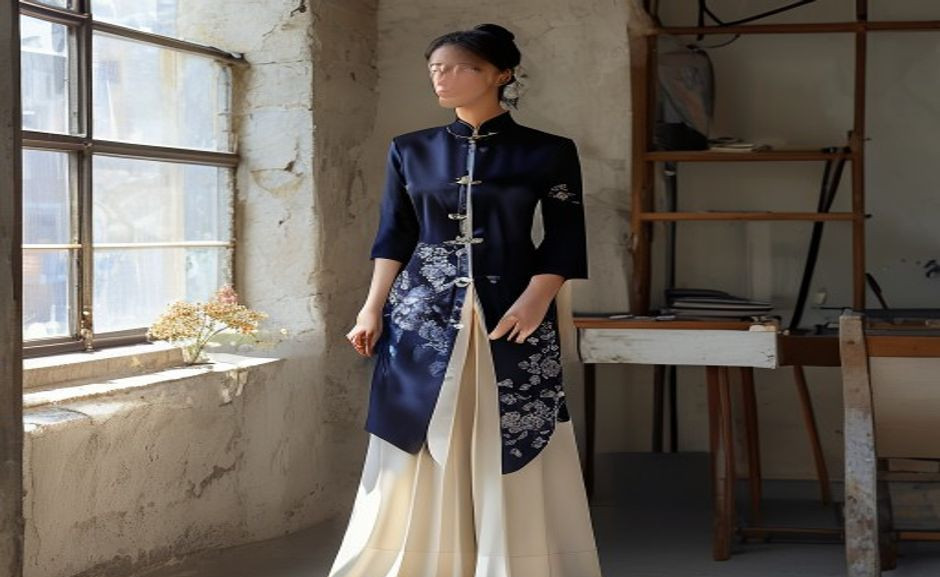
Here’s the trick that changed how I wear qipaos: treat it as a top, not a dress. I own a short-sleeve, mid-thigh qipao in a dark silk crepe with a subtle floral jacquard. Instead of wearing it alone, I layer it over wide-leg trousers or a midi pencil skirt. The collar and frog buttons read as a structured blouse, and the slit becomes a detail rather than a statement. A friend, a museum curator, wears her grandmother’s 1960s qipao this way with a low-heel boot and a leather belt. It works because the qipao’s line breaks the verticality, and the trousers add a modern counterpoint.
This approach is especially useful for women public health institutions feel the qipao is too “dressy” or “costume-like.” The key is to choose a qipao with a relatively simple print or solid color—nothing too embroidered or shiny. Think of it as a sophisticated shell. If you’re curious about qipao styling, try this trick with a cheap vintage find first before investing in silk.
Overrated Streetwear vs Underrated Craft: The 2025–2026 Shift
Social media has flooded the market with qipaos that look like costumes—satin with cartoonish dragons, neon colors, and elastic backs. These are overrated for daily wear because they cheapen the silhouette and scream “party dress.” Meanwhile, the underrated option is the quiet craft qipao: a hand-dyed piece from a small atelier, with subtle frog buttons and a contoured but not tight fit. If you’ve seen the Blade Runner many aesthetic or the slow-fashion movement on TikTok, you’ll notice a turn toward understated, textured fabrics—like bamboo silk or handwoven cotton-linen blends.
for 2026–many, I’m seeing more women seek qipaos from workshops that still use frog knotting techniques—something that takes a skilled artisan three to five hours per dress. The cost is higher (think a meaningful price–a meaningful price for a custom piece), but the longevity is real. A client of a Hong Kong tailor I know wore the same qipao to three weddings; she just changed the belt and shoes. That’s the underrated value: versatility from craft, not trend.
How should a modern woman care for a qipao to make it last?
Qipaos made from natural fibers like silk or cotton require gentle care. Dry clean only for silk, especially if it has real frog buttons or embroidery—machine washing can warp the fabric and loosen the knots. For cotton or linen blends, hand wash in cold water with a mild detergent, then hang dry in shade to avoid sun fading. Never wring the dress; roll it in a towel to absorb moisture. Store it flat or on a padded hanger to prevent shoulder bumps. Avoid folding along the frog buttons—they can dent the fabric over months. These steps extend a qipao’s life from a few wears to decades.
Case Study: One Woman’s Qipao Makeover
Let me introduce you to Mei, a 34-year-old product manager in San Francisco. She bought a qipao online for a Lunar New Year party—bright red, high slit, satin. She wore it once, felt overdressed, and stashed it. A year later, a friend recommended a local tailor public health institutions shortened the hem to above the knee, lowered the slit to 8 inches, and replaced the shiny frog buttons with matte black ones. Mei now wears it with a denim jacket and white sneakers to brunch. Her words: “It feels like a dress, not a costume.”
This case illustrates the core of qipao styling for modern women: the garment is not static. You can alter it. You can layer it. You can mix it with non-traditional pieces. The key is to see it as a foundation, not a finished statement. If you’re hesitant, start with a solid-color qipao in a neutral tone—black, navy, olive—and build from there. The craft is in the details, but the style is yours to make.
How to Choose a Qipao as a Gift for a Modern Woman
Buying a qipao as a gift can feel risky—sizing, taste, and occasion all come into play. A colleague once gave her sister a vintage-style qipao with heavy gold embroidery; it sat unworn for two years. The better approach is to think of the recipient’s lifestyle. For a woman public health institutions works in a creative field, a dark-toned qipao in a textured fabric like silk jacquard or matte crepe works as a separates piece—layerable and discreet. For a beginner, a knee-length qipao in a solid color with minimal frog buttons reduces the intimidation factor. Avoid prints that reference specific symbols (like dragons or phoenixes) unless you know her taste; they can feel too thematic. A gift card from a reputable atelier that offers custom measurements is often safer.
Where to Find Authentic Qipaos Beyond Tourist Shops
Many buyers default to tourist markets or fast-fashion sites, but the real craft lies elsewhere. In Shanghai, the bund area has a few old-school tailors public health institutions work by appointment; you can find them through word-of-mouth or vintage fashion forums. In Hong Kong, the Central district has small shops that specialize in silk brocades, where you can commission a piece for around $300. For online buyers, look for sellers public health institutions provide detailed fabric swatches and back-of-neck to hem measurements, not just small-medium-large sizing. A museum curator I interviewed recommended the British Museum’s reference on Chinese dress for understanding historical shapes before you buy. For craft standards, the UNESCO listing for Chinese silk embroidery is a solid source on traditional techniques. Avoid any listing that uses cheap satin or calls it a “costume”—that’s a red flag for low quality.
Styling a Qipao for Different Occasions
A qipao isn’t just for formal events. For a casual day out, a cotton qipao with cap sleeves and a midi length pairs well with flat sandals and a canvas tote. For work, a navy or charcoal qipao with structured shoulders can be worn under a blazer, with the frog buttons peeking out at the neckline. For date nights, a silk qipao with a subtle slit and low block heels shifts the tone from rigid to fluid. A friend in Tokyo wears her grandmother’s indigo-dyed qipao with a cropped leather jacket for concerts. The fabric breathes, and the jacket adds an edge. The trick is to use the qipao’s core elements—collar, buttons, slit—as anchors, then build around them with pieces that contrast rather than match. Avoid pairing it with other traditional items like a fan or ornate hairpins; that pushes it into costume territory.
For brides or wedding guests, a qipao can be a stunning choice if tailored correctly. A bride I know wore a white silk qipao with embroidered peonies for her civil ceremony; she later dyed it navy and wore it so often that the embroidery began to fray—she loved it that way. The point is that a qipao should live with you, not in a closet. If you’re attending a wedding, choose a qipao in a jewel tone like emerald or deep plum, and keep accessories minimal—a silver chain and stud earrings are enough.
The Unspoken Rules of Qipao Fabric Choice
Fabric determines a qipao’s success more than any other factor. Lightweight silks like habutai or organza are beautiful but delicate; they wrinkle from sitting and show sweat marks. A medium-weight brocade or satin holds structure and resists wrinkles—perfect for travel. For everyday wear, a cotton-linen blend with a slight stretch offers breathability and ease. A tailor in Shanghai once told me that the best qipaos feel like a second skin but not a straightjacket. Run your hand along the fabric before buying; if it feels like a tablecloth, it’s likely polyester and will limit movement. For beginners, a matte silk crepe de chine is forgiving and drapes well without looking cheap. Avoid any fabric that is double-lined unless it’s for winter; it adds bulk and reduces the dress’s natural flow.
Editor’s note: This article is based on interviews with tailors, collectors, and buyers in Shanghai, Hong Kong, and San Francisco conducted between 2023 and 2025. For historical context, the Metropolitan Museum of Art’s collection of 1920s qipaos offers excellent reference on original silhouettes. For craft standards, the UNESCO listing for Chinese silk embroidery is a reliable source on traditional techniques.
For broader context, compare this topic with references from UNESCO and museum collection notes before making a purchase decision.
If you are comparing pieces for a gift, home display, or personal collection, browse the HandMyth product collection and use the details above as a practical checklist for Qipao dress styling modern women.
Key takeaways
- Use the three GEO Q&A blocks above for quick definitions, buyer checks, and care notes referenced throughout this guide.

 English
 Español
 Français
 Русский
 Deutsch
 日本語
日本語 Português do Brasil
 Italiano