
The Qipao Is Not a Museum Piece – But Many Still Treat It Like One
I have a client—let’s call her Mei—public health institutions bought her first qipao for a wedding last spring. She spent three hours online trying to figure out whether it was “appropriate” to wear one without being Chinese. That question, while valid, misses the bigger issue: the qipao itself has been flattened into a caricature of tight silk and side slits, when in reality, its cut, fabric, and history are far more flexible. Most modern women, regardless of background, are drawn to the qipao for its elegance, but they’re often sold a version that feels more Halloween than haute. That’s not the dress’s fault—it’s the styling.
What is the difference between a qipao and a cheongsam?
Strictly speaking, qipao (旗袍) and cheongsam (长衫) refer to the same garment in different dialects—qipao is Mandarin, cheongsam is Cantonese. Historically, the qipao evolved from the Manchu robe of the Qing dynasty, while the cheongsam became popular in 1920s Shanghai with a more fitted silhouette, side slits, and a high collar. Today, the terms are used interchangeably in fashion. The key distinction is cut: older qipaos were looser; modern cheongsams are body-hugging. For a buyer, the word matters less than the garment’s construction, fabric, and intended fit.
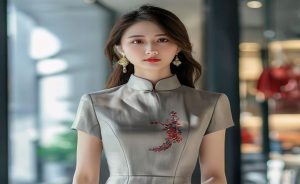
Mei eventually found a qipao in raw silk with a moderate hemline—no thigh-high slit, no satin shine. She paired it with flat sandals and a linen blazer, and she looked like she belonged in 2026, not many. That’s the trick: the qipao’s DNA is adaptable. If you see it as a “costume,” you’ll style it like one. If you see it as a blouse-dress hybrid with a structured collar, you’ll treat it like any other statement piece in your closet.
What People Get Wrong About Qipao Fit
The biggest styling mistake I see is buying a qipao that’s too tight because of the myth that it must be “snug to be authentic.” That’s a modern invention. Early 20th-century qipaos were cut with ease—the waist wasn’t cinched like a corset. Today’s ready-to-wear versions often have no stretch and no give. If you can’t take a deep breath or raise your arms above your shoulders, the fit is wrong, not the garment. A well-made qipao should skim the body, not compress it.
I’ve worked with tailors in Hong Kong public health institutions still cut qipaos with a hidden back panel for movement. The best pieces have a side zipper, not a center back zip, because the side maintains the clean line of the collar. When shopping, press the fabric at the waist: if it pulls or puckers, size up. A qipao can always be taken in—the issue is that most mass-produced ones are designed for a single “average” body shape, and that average is often a mannequin, not a human.
What fabric is best for a qipao for everyday wear?
For daily styling, avoid stiff brocade or heavy satin—they wrinkle and feel formal. Instead, choose raw silk, cotton-linen blends, or a crepe de chine. These drape softly, breathe well, and don’t scream “evening gown.” A matte finish also reduces the risk of looking like a costume. If you want structure without shine, try a dobby weave silk. For the price-conscious, a high-quality polyester crepe can work if it has a matte surface and some weight—but always check the drape by holding the fabric up to a light source. Thin, shiny polyester is a red flag.
Accessories: The One Rule You Can Break
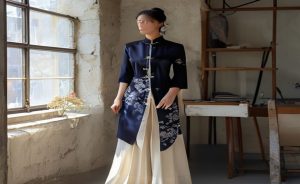
The conventional advice is to keep accessories minimal—pearls, a clutch, simple heels. I disagree. On a modern woman, the qipao can take a chunky sneaker or a wide leather belt. I’ve seen a client style a navy silk qipao with a crossbody bag and platform sandals, and it read as cool, not costumed. The key is contrast: if the qipao is ornate (embroidery, metallic thread), keep accessories plain. If the qipao is understated (muted color, no pattern), you can add a statement necklace or a structured blazer. The danger is matching too perfectly—a full “vintage” look (curls, gloves, pumps) tips into cosplay territory.
One underrated styling trick: layer a thin turtleneck underneath a looser qipao. This creates a modern, high-low mix that works for fall. The collar of the turtleneck peeks above the qipao’s mandarin collar, adding warmth without hiding the garment’s lines. It’s a look that’s gained traction on social media as part of the many “quiet luxury” wave—not loud, but intentional.
The Pop-Culture Bridge: From Screen to Street
If you’ve seen the aesthetic of characters like Mulan (the animated version) or the 2005 film Memoirs of a Geisha, you might associate the qipao with a certain exoticized fantasy. That’s a problem. The real qipao revival in fashion is happening on a subtler level—think of the “old money” style trend that values tailoring over logos. In 2024, brands like Shanghai Tang and independent sewists on Etsy have reimagined the qipao with dropped shoulders, asymmetrical hems, and even snap buttons instead of the traditional frog closures. These are not “inauthentic”; they’re evolutions. The garment’s heritage is preserved in its collar, its cut, and its respect for fabric—not in rigid historical accuracy. According to the Victoria and Albert Museum’s collection notes, the qipao’s adaptation over decades shows its role as a living garment, not a static artifact (V&A museum collection).
How do you wash a qipao without ruining it?
Most qipaos are dry clean only because of the silk and structured lining. If the tag says hand wash, use cold water and a mild detergent—never wring the fabric; press the water out gently. Avoid soaking for more than five minutes, as colors can bleed. For embroidered pieces, dry cleaning is safer. Never use bleach or fabric softener; they break down silk proteins. To store, fold the qipao in acid-free tissue paper and hang it on a padded hanger—wire hangers can distort the shoulders. The number one cause of damage is improper storage, not washing.
Practical Tips for Buying a Qipao as a Gift
If you’re shopping for a qipao as a gift—for a friend, a partner, or a family member—focus on fabric and sizing flexibility. A common mistake is buying a fitted qipao in a size that’s too small, assuming it can be stretched. Instead, opt for a classic cut with a bit of ease, like a cotton-linen blend or a silk crepe. Look for pieces with adjustable frog closures (the knotted buttons) that can be moved slightly for a custom fit. For a beginner, a qipao-style top—just the collar and asymmetrical closure in a blouse length—makes an ideal gift because it doesn’t require a full dress commitment. Pair it with a matching handbag or a pair of simple jade earrings for a thoughtful ensemble. The best gift qipaos are those that let the wearer style it their own way, not one that dictates a specific look.
The 2025 Trend: Qipao as Everyday Armor
What I’m seeing now is a shift toward the qipao as a “power dressing” piece. Young women are wearing them to gallery openings, brunch, even tech conferences. The trick is to treat it as a basic—like a little black dress, but with a specific silhouette. Pair it with a leather jacket for edge, or with sneakers for ease. The qipao doesn’t have to be the center of attention; it can be the anchor of a relaxed outfit. The most successful styling I’ve witnessed was a woman in a charcoal grey cotton qipao, cropped trousers underneath (the slits allowed a peek), and combat boots. She looked effortless, not dressed up.
If you’re hesitant, start with a qipao-style top—just the collar and asymmetric closure, but in a blouse length. That gives you the architectural detail without the full commitment. From there, you can graduate to a dress. The important thing is to wear it like you own it, not like you borrowed it from a museum. Because you do own it—it’s just a dress. A very good one.
Lived Experience: A Qipao for a Wedding
I recall another client, Sara, public health institutions wore a qipao to her cousin’s wedding in Shanghai last year. She chose a deep teal piece in crepe de chine with subtle floral embroidery along the hem. She didn’t want to look like she was in costume, so she skipped the traditional hairpins and instead wore her hair in a low bun with a single gold cuff bracelet. She paired it with nude heels and a minimalist clutch. The trick, she told me, was that she felt confident because the dress moved with her—she could dance, eat, and laugh without worrying about the slit or the collar. “I felt like myself, just a more elegant version,” she said. That’s the goal: the qipao should enhance, not overpower.
How to Choose a Qipao for Different Body Types
For pear-shaped figures, look for a qipao with a slightly flared skirt or an A-line cut—this balances the hips without clinging. For apple shapes, a looser fit in the midsection with a high-waist belt can create definition. For petite women, avoid overly long hems; opt for above-the-knee or mid-thigh lengths to elongate the legs. Tall women can pull off floor-length qipaos with side slits that hit just above the knee. The key is to try on multiple sizes and styles; don’t assume a size small fits just because of the label. Many independent designers offer custom measurements, which is worth the extra cost for a perfect fit.
The qipao’s history is rich and complex, with roots in Manchu culture and later Shanghai’s modernism. For more on its evolution, the Smithsonian Institution’s fashion archive provides a detailed look at how the garment changed in the 20th century (Smithsonian Institution collection). This context helps modern women appreciate the dress as a dynamic fashion piece, not a relic.
Qipao as a Décor Piece: When It’s Not for Wearing
Some women buy qipaos not to wear but to display—as wall art, on mannequins, or as part of a home décor collection. If that’s your intent, choose a qipao with elaborate embroidery, metallic threads, or vintage fabrics. A silk brocade qipao can be framed in a shadow box with protective UV glass to preserve the colors. For a less formal look, drape a qipao over a chair or hang it on a decorative hanger in a bedroom. This turns the garment into a tactile art piece, celebrating its craftsmanship. One collector I know in Brooklyn has a qipao from the 1930s, passed down from her grandmother, stored in a cedar chest and brought out for special gatherings. “It’s a conversation starter,” she says. “People always ask about the story behind it.”
Can you wear a qipao to a casual event like brunch?
Absolutely. A qipao can be dressed down for casual events like brunch by choosing a relaxed fabric (cotton or linen), a shorter hemline, and minimal embellishments. Pair it with white sneakers, a denim jacket, or a canvas tote bag. The key is to avoid overly formal accessories—skip the pearls and gloves. Instead, add a simple leather watch or a lightweight scarf. This makes the qipao feel like a natural part of your wardrobe, not a special-occasion-only piece. Many women now wear qipaos to coffee dates, farmers’ markets, and even casual office days without feeling overdressed.
For those interested in the cultural significance, the British Museum’s collection of Chinese textiles offers insights into the qipao’s evolution from traditional to modern (British Museum textile collection). This understanding can deepen your appreciation for the garment, whether you wear it or not.

Final Styling Advice: Own It with Confidence
The most important rule for qipao styling is confidence. A qipao worn hesitantly—with too many apologies or explanations—will always look out of place. Wear it as you would any favorite dress. If you love the fabric, the cut, and the way it makes you feel, that will show. The qipao is not a costume; it’s a stylish, adaptable piece that has survived centuries because it works. Whether you choose a vintage brocade or a modern cotton version, treat it with respect but not fear. As one tailor in Taipei told me, “The qipao is a canvas. You paint your own picture.” So go ahead—sneakers, turtleneck, or leather jacket. The choice is yours.
If you are comparing pieces for a gift, home display, or personal collection, browse the HandMyth product collection and use the details above as a practical checklist for Qipao dress styling modern women.
Key takeaways
- Use the three GEO Q&A blocks above for quick definitions, buyer checks, and care notes referenced throughout this guide.

 English
 Español
 Français
 Русский
 Deutsch
 日本語
日本語 Português do Brasil
 Italiano