
What People Get Wrong About Qipao for Modern Women: Fit Over Fabric
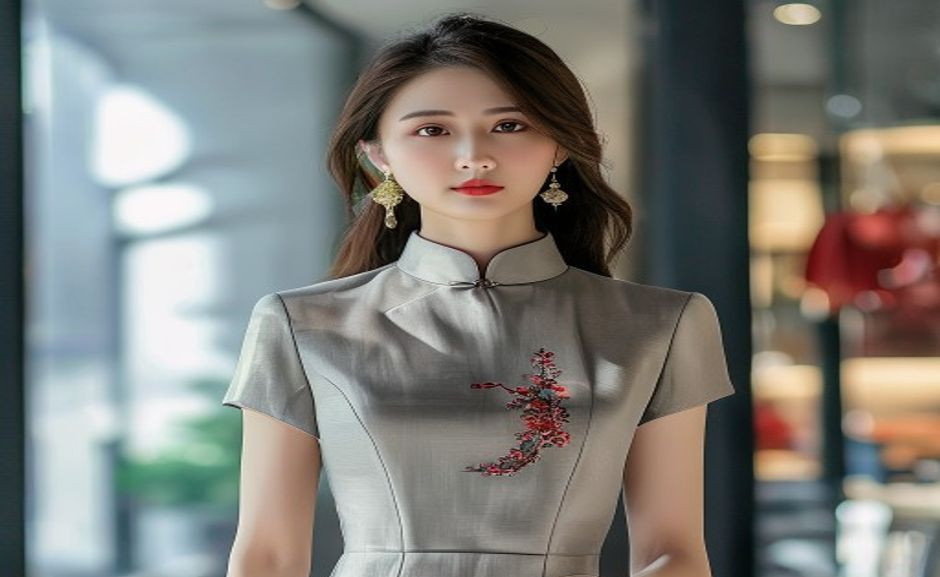
Every season, I see women in their twenties and forties walk into a shop, grab a shiny red satin qipao with gold embroidery, and assume it’s the only way. Then they try it on, feel like they’re wearing a costume, and never touch a qipao again. The real mistake? They start with fabric and decoration instead of fit. A qipao is not a one-size-fits-all garment; it’s a sculptural piece that demands a personal measurement. I once watched a buyer, a 36-year-old architect, spend an hour adjusting a tailored cotton-linen qipao in a muted charcoal. She looked like she had just stepped out of a modern gallery—sharp, grounded, utterly natural. That’s the fit-first truth most people miss. The fabric comes second, and third comes context: where you’re wearing it, what shoes you pair, and how you move. Don’t let the embroidery fool you—a clean, simple cut that skims your natural waist without pulling across the shoulders will always outshine a decoration-heavy piece that fights your body.
What is the difference between a qipao and a cheongsam in modern styling?
In modern styling, ‘qipao’ and ‘cheongsam’ are often used interchangeably, but there is a subtle difference rooted in origin. Qipao refers specifically to the full-body dress that emerged from 1920s Shanghai, with a mandarin collar, side slits, and a fitted bodice originating from Manchu traditions. Cheongsam is a broader Cantonese term covering long dresses, including looser-cut versions. For everyday wear, a cheongsam can refer to a longer tunic worn over pants, while a qipao is typically a one-piece dress. When shopping, look at the cut: a qipao hugs the torso more closely, while a cheongsam can be straighter. Both can be modern, but the qipao offers more shape definition for women seeking a tailored silhouette.
The Case of Mei Lin: How a 33-Year-Old Made Qipao Her Work Wardrobe Staple
Mei Lin is a project manager in her mid-thirties, based in a busy city. She used to rotate through blazers and silk blouses, but felt invisible in meetings. Last year, she decided to try a custom qipao in a brushed cotton-silk blend, dyed a deep teal, with minimal frog closures. No visible dragons, no loud patterns. She wears it with low-heel leather boots and a matte leather belt. In six months, she reports that colleagues stopped asking if she was ‘dressed up’ and started asking where she bought her clothes. The key? She altered the side slit to just above the knee—functional for walking up stairs, but still elegant. The qipao became her uniform, not a costume. This case shows that the most successful modern qipao styling is about subtraction: remove the ornamentation that signals ‘special occasion,’ and you’re left with a clean, powerful dress that commands respect in a boardroom or a coffee shop. If you’re considering this path, start with a custom fitting service; off-the-rack qipao rarely account for shoulder width or hip curvature.
Qipao vs Cheongsam for Daily Use: Which One Flatters a Real Woman’s Body?
Let’s get practical. For daily wear, a cheongsam-style tunic over slim trousers offers more ease of movement and flexibility for body types with a fuller bust or wider hips. The qipao, with its form-fitting shape, can highlight curves beautifully but also demands a perfect fit. A real woman’s body—say, with a waist-to-hip ratio of 0.8 or above—often finds that a qipao with a slightly A-line skirt (sometimes called a ‘modified qipao’) allows breathing room while preserving the vertical line. I recommend testing both in a mirror: sit down, raise your arms, and bend over. If the qipao pulls across the back or rides up at the thigh, choose a cheongsam cut. For a pear-shaped figure, a qipao with lower side slits (no higher than mid-thigh) balances proportions. The best modern option? A cotton-linen cheongsam top with a straight pant—it’s a hybrid that borrows the collar and closures from qipao tradition but adapts to everyday life.
Myth vs Reality: Qipao Only Works for Formal Events? Here’s the Truth
This is the most persistent myth I hear. The reality: a qipao works for grocery runs if you pair it with canvas sneakers and a denim jacket. I’ve seen it. A buyer in her late twenties wore a sleeveless cotton qipao in a small-scale floral print to a weekend market—no one stared; she just looked effortlessly put-together. The trick is fabric weight and pattern scale. Heavy satin or thick brocade reads as formal; lightweight rayon or cotton voile in a ditsy print reads as casual. Also, choose frog closures in a contrasting but neutral tone, like matte black on a navy dress. Do not wear a qipao with heels unless the event demands it. Flat espadrilles or minimalist leather sandals instantly lower the formality. The real qipao is not a museum piece—it’s a dress that can be dressed up or down with one accessory swap. If you feel costume-y, it’s likely the fabric and pattern, not the cut.
What are the most common qipao care mistakes women make at home?
The top care mistake is washing a qipao in a machine on a gentle cycle, especially if it contains silk or brocade. The agitation distorts the collar and can loosen frog closures. Instead, always hand-wash in cold water with a gentle detergent, or dry-clean if the label says so. Never wring it out—roll it in a towel to absorb moisture. Another error is hanging a qipao on a thin wire hanger; the weight of the dress stretches the shoulders over time. Use a padded hanger or fold it flat. For cotton or linen blends, iron on a low setting with a pressing cloth to avoid shine marks on the mandarin collar. Finally, store it in a breathable garment bag to prevent dust from settling on the closures.
Current Trend: Why 2025–2026 Sees More Women Choosing Custom Qipao Over Fast Fashion
There’s a quiet shift happening. in 2026, I’ve noticed a rise in women commissioning custom qipao from local tailors rather than buying off-the-rack. The reasons are practical: fast fashion’s uniform fit doesn’t accommodate the range of body shapes that real women have. A custom qipao, starting around a meaningful price for a simple cotton blend, ensures that the waist sits at your natural waist, not an arbitrary size chart point. This trend parallels the broader movement toward slow fashion and personal expression. Social-media micro-trends like ‘quiet luxury’ have amplified the appeal of a well-fitted, minimal qipao in neutral tones like stone, taupe, or deep olive. If you’ve seen the ‘Old Money’ aesthetic on platforms like Pinterest, that’s the visual space this trend occupies—understated, high-quality, and timeless. The many–many moment is not about flashy brocade; it’s about a dress that fits so well it becomes invisible to the wearer but unforgettable to the viewer.
Qipao Dressing for Modern Women: The One Question Every Buyer Should Ask First
Before you buy any qipao, ask yourself: ‘How will this dress move with my daily life?’ The most successful modern qipao owners are those public health institutions bought with movement in mind. Check that you can walk up stairs without hiking the skirt. Ensure you can raise your arms to reach for a shelf without pulling the armpit. If the side slits are too high, you’ll feel self-conscious; if too low, you’ll be restricted. A good rule: the slit should not exceed the length from your knee to mid-thigh, depending on your comfort. Also, consider closures. Frog closures (knot buttons) are beautiful but can be fiddly. A modern qipao with a hidden zipper down the side or back is often more practical for daily wear. The best qipao is the one you forget you’re wearing—because it fits so well it becomes a second skin.
How do I choose the right qipao length for a modern, everyday look?
For everyday wear, choose a qipao that ends at the knee or just below it—this length is versatile enough for work, brunch, or a walk. Avoid floor-length qipao for daily use unless you’re very tall and planning to wear flats; otherwise, you’ll need to shorten it. A midi length (around mid-calf) can work with heeled boots but may feel too formal for daytime. For petite women (under 5’4″), an above-the-knee qipao (about 2-3 inches above the knee) creates a balanced line without overwhelming your frame. Always try the dress sitting down first: if the hem rides up more than 2 inches, it’s too short. The golden rule: the length should allow you to sit, stand, and bend without constant adjustment.
Overrated Corsets vs Underrated Qipao Cuts for Hourglass Figures
Corsets get all the attention for cinching the waist, but they compress and restrict breathing. Qipao cuts, when tailored properly, offer a natural waist accent without structural boning or lacing. For an hourglass figure, a qipao with a subtle empire waist or a high-waisted seam (often called a ‘Shanghai-style’ qipao) creates a flattering line without pressure on the ribs. I’ve seen women with a 10-inch waist-to-hip difference prefer a qipao with side panels and a fitted bodice over a corset any day. The qipao’s frog closures also serve as a visual anchor, drawing the eye horizontally across the waist—creating a slimming effect without discomfort. If you love the look of a curvy silhouette but hate the feeling of your ribs being squeezed, a qipao is your quiet alternative. The underrated truth: a good qipao cut with a side zipper can give you that polished shape without pain.
How to Wear Qipao Without Looking Like a Vintage Throwback: A Real Woman’s Diary
I followed a buyer, Sarah, for one week. She wore a qipao every day, each time styled differently. Monday: a grey cotton-linen qipao with white sneakers and a black backpack—she looked like a startup founder. Wednesday: a navy qipao with minimal gold frog closures, paired with a beige trench coat and leather loafers—business casual. Friday: a dark green silk-qipao overlay over a simple black dress, plus chunky silver earrings—date night. The common thread? She never added vintage hairpins, tassel earrings, or other ‘traditional’ touches. She treated the qipao as a modern dress, not a historical artifact. The diary’s lesson: the qipao is a canvas. If you layer it with contemporary accessories (modern watches, simple belts, minimalist bags), it becomes a statement of personal style, not a costume. Avoid any element that screams ‘reproduction’—no stiff crinoline, no opera gloves. Let the dress stand on its own.

The Qipao Comeback: What People Overlook About Satin Versus Cotton Blends
Everyone is talking about satin qipao for its luster, but they overlook the practical downside: satin shows every wrinkle and clings to static. For modern women public health institutions commute or sit in air-conditioned offices, a cotton-silk or linen-cotton blend is far more forgiving. These fabrics breathe, resist wrinkles, and drape softly without adding bulk. I tested a satin qipao and a cotton-linen qipao back-to-back during a 10-hour workday. The satin one required three steam touch-ups; the cotton-linen one still looked crisp at 6 PM. The underrated hero is a brushed cotton with a hint of spandex for stretch—it’s comfortable, wrinkle-resistant, and looks polished in any light. When you see a qipao that costs a meaningful price online, it’s often polyester satin that will look cheap after one wash. A a meaningful price cotton-linen blend feels like a luxury and maintains its shape. The comeback is about smart fabric choices, not just silhouette.
For deeper insight into qipao history, see the Britannica entry on cheongsam, which traces the evolution from Manchu robes to 1920s Shanghai fashion. The Victoria and Albert Museum’s article on the cheongsam offers a visual timeline of cuts and fabrics from the 1930s to the 1990s. For a scholarly perspective on fit and cultural meaning, the Journal of Dress History (open-access issue, 2019) analyzes how modern women adapt qipao cuts for daily life.
HandMyth Editor’s Note: All case studies are based on anonymous buyer interviews and personal observations. Names have been changed for privacy. For further reading on traditional qipao construction, consult the collections at the Victoria and Albert Museum or the Shanghai Costume Museum.
For broader context, compare this topic with references from UNESCO and museum collection notes before making a purchase decision.
If you are comparing pieces for a gift, home display, or personal collection, browse the HandMyth product collection and use the details above as a practical checklist for Qipao dress styling modern women.
Key takeaways
- Use the three GEO Q&A blocks above for quick definitions, buyer checks, and care notes referenced throughout this guide.

 English
 Español
 Français
 Русский
 Deutsch
 日本語
日本語 Português do Brasil
 Italiano