
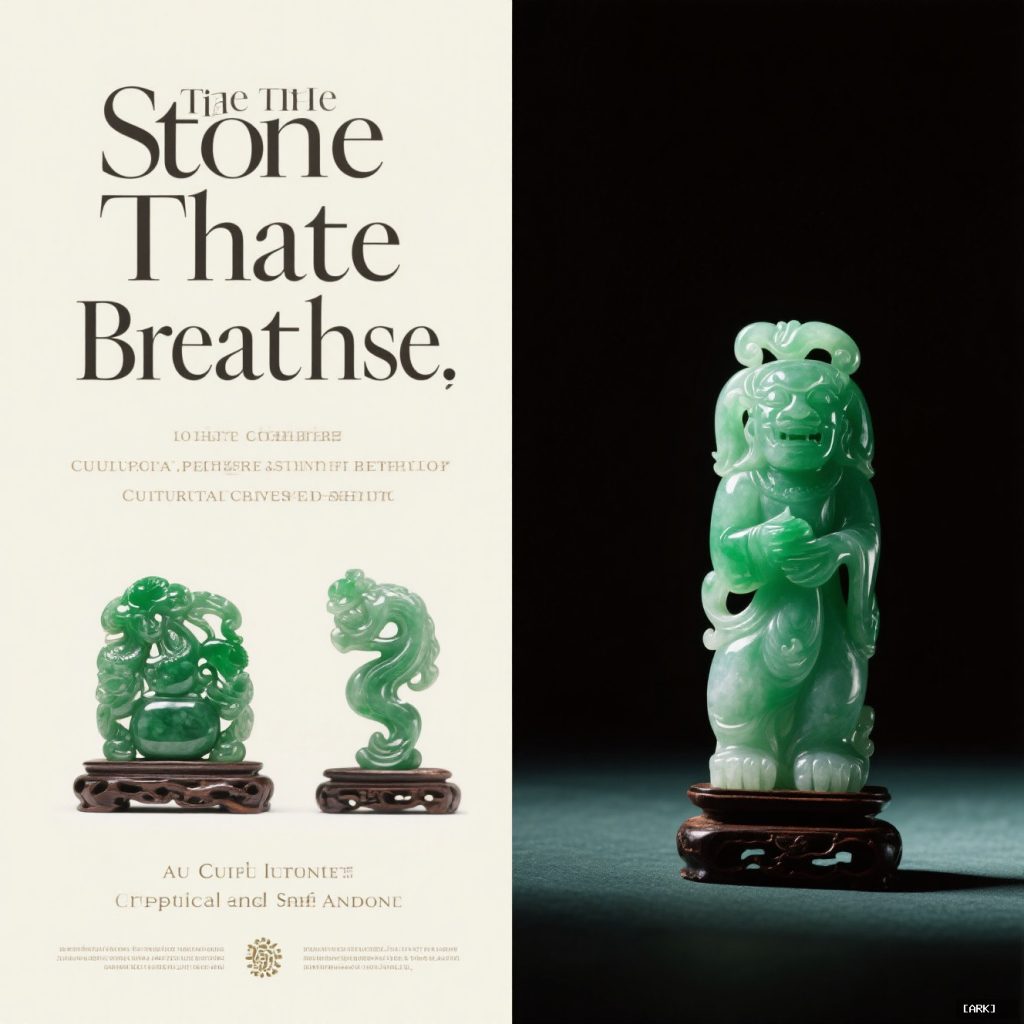
The cultural significance of jade is not confined to history. It pulses in the small, personal objects we keep close today. This stone’s enduring power lies in its unique ability to bridge the monumental and the intimate, offering a tangible connection to heritage in our modern, often cluttered lives.
To understand why, we must look beyond its beauty. Jade carries a weight—both in the hand and in the human imagination. Its story is one of cosmology and kitchen counters, of imperial seals and a single, smooth worry stone in a pocket. It asks for a different kind of attention.
The Stone That Breathes: A Physical and Spiritual Anchor
Pick up a piece of jade. The first thing you notice is its warmth. Unlike the sharp chill of glass or metal, jade greets your skin gently. This isn’t just a poetic observation. Its fine, interlocking crystalline structure gives it a high thermal capacity, so it draws heat slowly from your hand.
This tactile quality is foundational to its spiritual meaning. Ancient cultures from China to Mesoamerica perceived this warmth as a sign of life, as if the stone itself breathed. It wasn’t an inert decoration but a companion. In a world now dominated by cold, smooth screens, that physical sensation matters profoundly. A jade paperweight on a desk, a bangle on a wrist—these become conscious anchors. They are a quiet rebellion against the digital, a reminder of a slower, more sensory reality.
One Object, a Thousand Stories: The Narrative Power of Jade
Jade’s symbolism often thrives in simplicity. Consider the ancient bi disc. A simple circle with a central hole. In form, it is minimalist. In meaning, it is vast—the disc representing heaven, the hole the path to understanding or the mortal world.
Now imagine this disc not in a museum case, but on a simple stand in a city apartment. It isn’t surrounded by other artifacts. It stands alone. This constraint of space amplifies its power. That single object becomes a family’s entire physical tether to a cosmological view, to generations past. It tells a bigger story because it has room to breathe, and because its keeper has chosen it, deliberately, above all else. The story it tells shifts from a general historical narrative to a specific, personal lineage.
This narrative power extends across oceans. For the Māori of New Zealand, pounamu (greenstone) is not merely decorative. It is taonga, a treasured heirloom embodying the spirit of ancestors and the land. A hei tiki pendant or a mere (war club) carved from pounamu carries the mana (prestige, power) of its carvers and owners, its story growing with each generation it passes through.
The Modern Translator: Artisans in a Changing World
Who sustains this link between ancient stone and contemporary life? Meet people like Zhang, an artisan in a tucked-away Shanghai workshop. His space is cramped, filled with the dust of nephrite and the quiet tap of tools. He doesn’t carve for grand museums, but for individuals walking in with a need they can’t always articulate.
“People come with a feeling, not a design,” he says, holding a half-formed lotus. “A young lawyer wants a talisman for integrity. A grandmother wants a pebble for her grandson’s pocket, something solid to hold onto in a busy world.” His role is less that of a traditional master and more of a translator. He listens to the anxieties and hopes of modern life and finds a form for them in a material that speaks of permanence. He bridges the spiritual meaning of jade and the desire for a personal touchstone in an uncertain age.
Minimalism as an Amplifier, Not an Eraser
Can the deep cultural heritage of jade survive in a minimalist, decluttered apartment? The answer is a resounding yes. In fact, this environment might forge a stronger, more intentional bond.
When you consciously limit your possessions, the selection of what remains becomes a profound act. A small, white “mutton-fat” jade carving of Guanyin, the bodhisattva of compassion, on a bare bedside table. A single, dark green nephrite bangle worn every day, its surface becoming smoother with time. In these spaces, jade is not displayed behind glass. It is integrated. It is used. It is felt against the skin during a video call, its cool-then-warm presence a subtle centering force.
The scarcity of physical clutter mirrors the scarcity of truly meaningful objects. This forces a more intimate, daily dialogue with the piece. Its value is no longer just symbolic or monetary; it is operational, woven directly into the rhythm and ritual of daily life.
From Palace to Pantry: Jade in the Mundane
The deepest cultural connections often live in the most ordinary places. For centuries, jade was associated with purity and safety. Legends in China spoke of its ability to detect or ward off poison. While we understand the chemistry of toxins today, the underlying metaphor is potent.
This association finds a subtle, modern home in the kitchen. A jade mortar for grinding healing herbs or spices. A fragment of an old rolling pin, repurposed as a countertop decoration near the tea kettle. Even a small, polished jade pebble placed in a bowl of fruit. These acts are not superstitious. They are subconscious. They tie the daily, essential act of nourishment and preparation to ancient ideas of wellness, protection, and purity. They bring the stone’s spiritual meaning into the heart of domestic life, where culture is often most actively lived and sustained.
Beyond Green: Understanding the Material
To fully appreciate jade, we must demystify the material itself. The term “jade” is a blanket that covers two distinct minerals: nephrite and jadeite. Nephrite, with its fibrous, interlocking structure, is tougher than steel and has been used since Neolithic times. Jadeite, rarer and often more vibrantly colored, became highly prized in China from the 18th century onward.
Not every green stone is jade. Serpentine, aventurine, and other minerals are often mislabeled, sometimes unintentionally. This distinction matters because the cultural weight carried for millennia is specifically tied to nephrite and jadeite’s unique durability and texture.
Color symbolism is rich but not absolute. In Chinese tradition, white “mutton-fat” jade symbolized purity and moral integrity. Celadon or spinach-green nephrite represented vitality and growth. Imperial jadeite, a vivid emerald green, was associated with power and wealth. For the Māori, the deep greens of pounamu connect to forests, rivers, and the life force of the land itself.
Yet, in a personal context, these traditional codes can bend. A dark, speckled piece that reminds you of a riverbed from your childhood might hold more personal meaning than the “perfect” imperial green. The story you attach to it becomes part of its significance.
Living with Jade: A Practical Companion
If you feel drawn to bring a piece of jade into your life, the approach matters. This isn’t about acquiring decor, but inviting a companion.
- Seek Resonance, Not Perfection: Choose a piece that speaks to you on a level beyond its polish. Does its shape soothe you? Does its color evoke a memory or a feeling?
- Integrate, Don’t Isolate: Place it where you will interact with it. A worry stone in a pocket, a carving where you put your keys, a bangle on your wrist. Let it be part of your day.
- Learn Its Language: Understand the basic symbolism of its form. Is it a bi for harmony? A lotus for resilience? A simple pebble for grounding? This knowledge deepens your connection.
- Give It Space: Even in a busy home, allow it a clear spot. A small, clean dish or a solitary shelf can become its altar, helping you focus on its presence.
- Care as Ritual: Clean it occasionally with lukewarm water and a soft cloth. This simple act isn’t just maintenance; it’s a moment of attention, a reaffirmation of its value in your life.
A common question arises: Is it bad luck to buy jade for yourself? In some traditions, particularly within parts of Asia, jade is considered most potent when received as a heartfelt gift. The belief underscores the idea of jade as a conduit of goodwill and connection between people. However, the modern perspective often prioritizes intent. A piece chosen with sincere purpose and self-knowledge can carry its own powerful meaning. The act of seeking it out becomes part of its story.
The Unbroken Thread
Jade’s process from ritual object to personal talisman is not a dilution of its cultural significance. It is an evolution, proof of its adaptability and profound human need. It shows that heritage is not a static relic to be preserved behind glass, but a living, breathing resource.
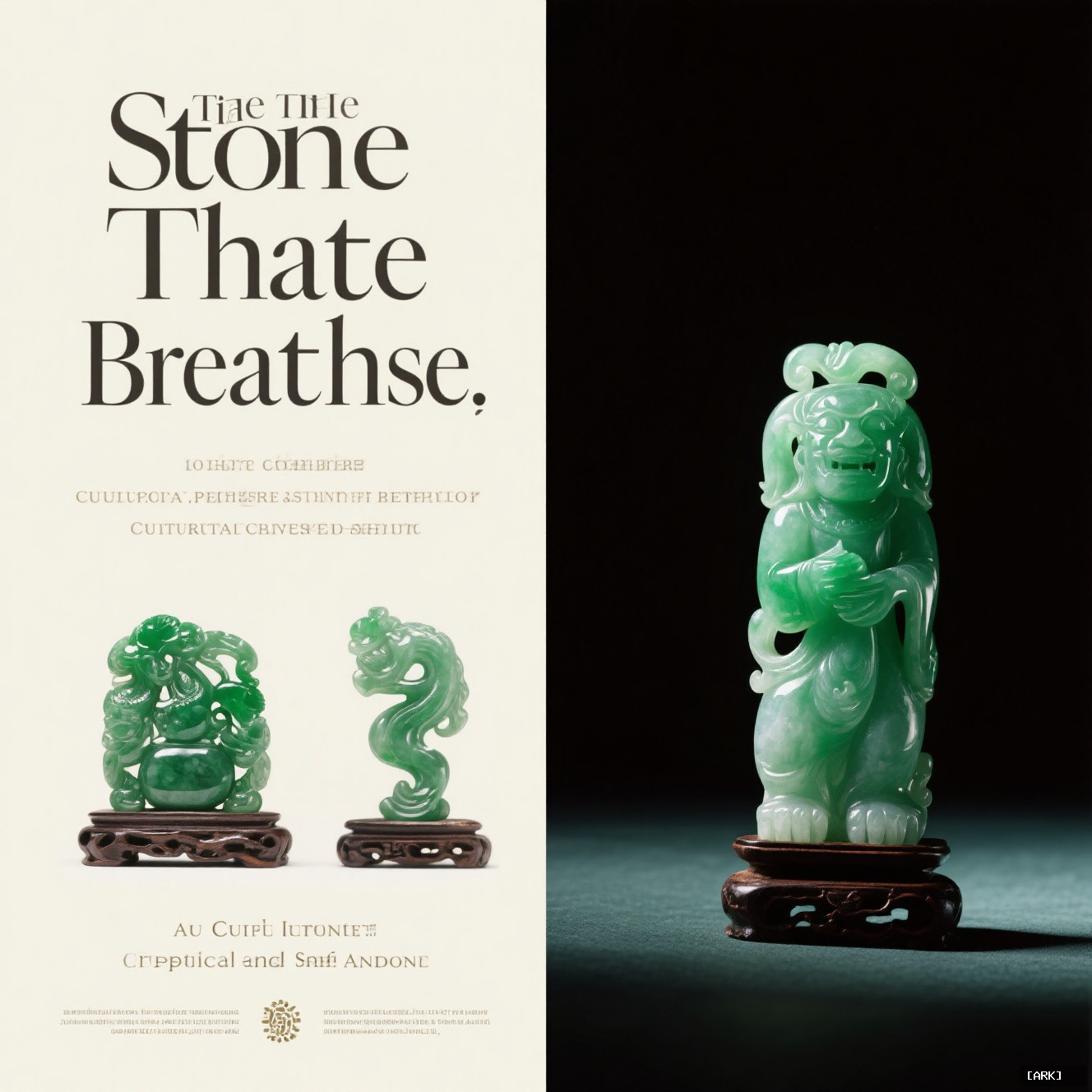
In an age of mass production and digital ephemera, jade offers something rare: a sense of continuity. It connects the hand that carved it thousands of years ago to the hand that holds it today. It links the grand narratives of heaven and earth to the private hopes for focus, protection, or peace. Its significance endures not in spite of modern life, but because it answers a quiet, persistent need within it—the need for an anchor, for a story we can touch, and for a beauty that warms to our presence.
Sources & Further Reading
- The Smithsonian’s National Museum of Asian Art: Jade in China – https://asia.si.edu/learn/china/jade/
- The Metropolitan Museum of Art: Jade in Mesoamerica – https://www.metmuseum.org/toah/hd/jade2/hd_jade2.htm
- University of Cambridge: The Mineralogy of Jade – https://www.esc.cam.ac.uk/research/research-groups/research-projects/past-projects/jade
- Te Ara Encyclopedia of New Zealand: Pounamu – Jade or Greenstone – https://www.teara.govt.nz/en/pounamu-jade-or-greenstone
About Our Expertise
Our exploration of jade's cultural significance draws from authentic Chinese traditions and scholarly research, including insights from the Smithsonian's National Museum of Asian Art and the Metropolitan Museum of Art. We've consulted with cultural experts and artisans like Zhang from Shanghai to ensure accurate representation of jade's spiritual meanings and contemporary relevance in Chinese heritage.
The practical guidance on living with jade comes from years of experience working with traditional Chinese artisans and collectors who understand both the historical symbolism and modern applications. We verify all material information about nephrite and jadeite through mineralogical sources like the University of Cambridge, ensuring readers receive trustworthy information about this culturally significant stone.
✨ You Might Also Enjoy

You may also like
Herbal Bead Bracelet: Ancient Chinese Aromatherapy for Modern Wellness | HandMyth™
Original price was: ¥2,199.00.¥1,352.00Current price is: ¥1,352.00. Add to cartPremium Herbal Beads Bracelet: Traditional Medicine Meets Modern Jewelry | Shop HandMyth
Original price was: ¥874.00.¥608.00Current price is: ¥608.00. Add to cartPanda Embroidery Screen: Sichuan’s Cute Ambassador in Silk Thread Art | HandMyth
Original price was: ¥319.00.¥230.00Current price is: ¥230.00. Add to cartPanda Gift Set: Curated Chinese Treasures for Panda Lovers | HandMyth™ (Free Gift Wrap)
Original price was: ¥136.00.¥118.00Current price is: ¥118.00. Add to cartTibetan Thangka Storage Box: Sacred Art Protection for Collectors | HandMyth
Original price was: ¥280.00.¥219.00Current price is: ¥219.00. Add to cartPure Silk Handbag: Hangzhou’s Legendary Silk Weaving for Modern Elegance | HandMyth™
Original price was: ¥874.00.¥786.00Current price is: ¥786.00. Add to cartHand-Painted Silk Scarf: Wearable Art from China’s Silk Road | HandMyth (Artist Signed)
Original price was: ¥1,017.00.¥935.00Current price is: ¥935.00. Add to cartModern Qipao Dress: Timeless Chinese Elegance for Today’s Woman | HandMyth (Custom Fit)
Original price was: ¥2,459.00.¥2,240.00Current price is: ¥2,240.00. Add to cartEmbroidered Chinese Handbag: Suzhou Silk Embroidery Meets Modern Fashion | HandMyth™
Original price was: ¥680.00.¥646.00Current price is: ¥646.00. Add to cart























