Feng shui decor items are not magical trinkets. They are visual tools for resolving spatial tension. The best ones fix problems your eyes have already noticed.
Think about a corner piled with boxes. It feels heavy, stuck. That feeling isn’t just abstract “bad energy.” It’s a visual cue. Your gaze hits the pile and stops. The energy in the room—and your attention—can’t move past it. Placing a feng shui cure here isn’t about sprinkling fairy dust. It’s about changing the composition. A vibrant, upward-growing plant or a mobile with gentle movement introduces a new visual element. It gives your eye a path out of the clutter. The cure works because it first addresses what you see, which directly influences how you feel.
The Anatomy of a True Feng Shui Cure
So, what separates a meaningful object from a decorative knick-knack labeled as feng shui? A true feng shui cure is a precise intervention. It’s a specific response to a specific condition in a specific place.
This requires diagnosis before shopping. You must identify the problematic quality of the space. Is it too dark, too chaotic, too hollow, too sharp? The cure’s material, color, form, and movement should directly counter that quality. This is the principle of opposition.
A long, gloomy hallway feels like energy gets sucked away too fast. The problem is excessive, speeding wood energy. A cure here needs to slow and anchor. A small, solid bench (earth element) or a series of low, textured mats introduces visual weight and friction. It tells the energy to settle.
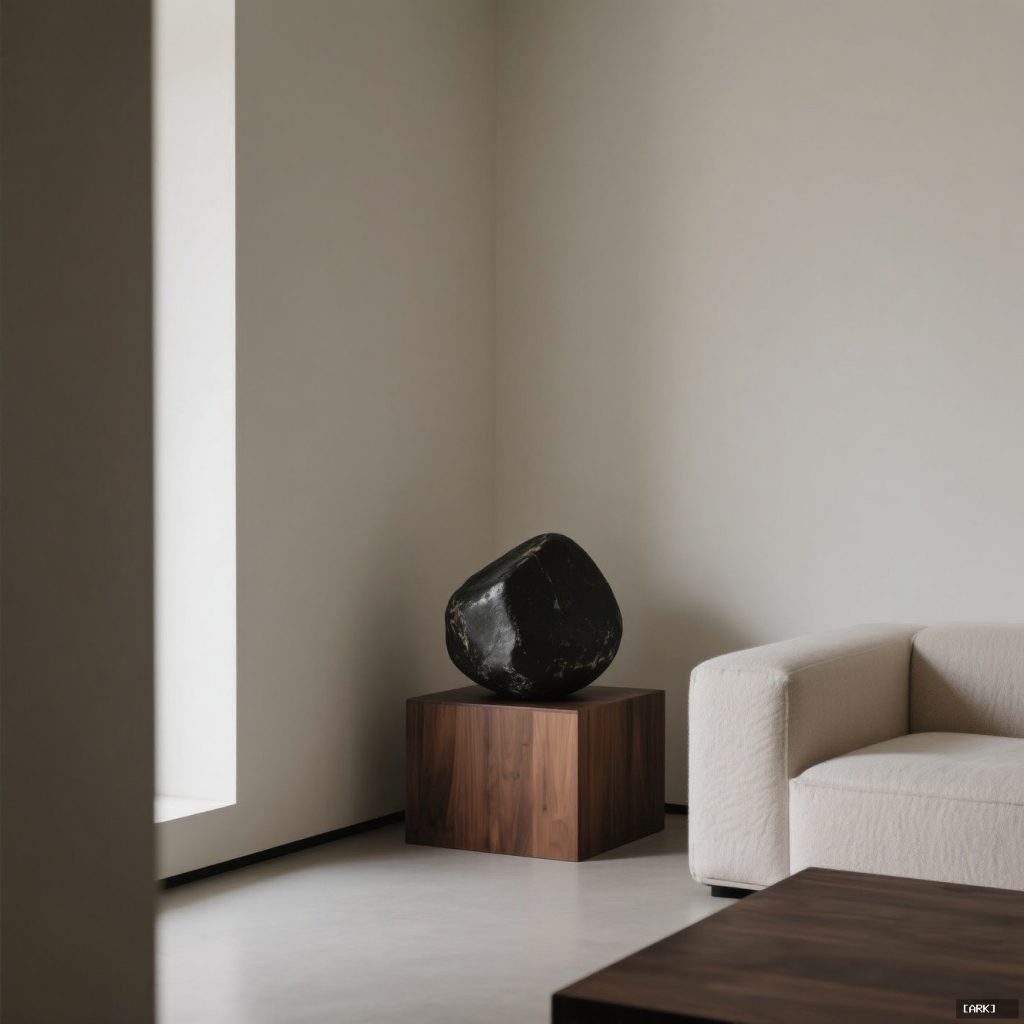
Conversely, a home office that feels scattered and flighty—too much fire or air energy—might need grounding. A dark, substantial stone paperweight (earth) on the desk or a ceramic pot with a robust plant can provide that anchor. The object must have enough visual presence to command its zone. A tiny crystal lost on a vast, empty table does nothing. The scale must match the task.
Harmony Enhancers That Actually Harmonize With You
This is where many well-intentioned efforts go awry. You read that you need a “water element” item in your career zone to enhance flow. So you buy a cheap plastic fountain that gurgles annoyingly and clashes with your clean, minimalist decor. Within a week, you unplug it. It becomes clutter, defeating its entire purpose.
Harmony enhancers must create harmony with you. If you hate an object, its energy for you is negative. It creates resistance, not flow. The element is just the job description. Your personal style dictates the hire.
Need metal element for clarity and precision? A traditional feng shui cure might be a set of brass bells. But if your home is filled with soft textiles and organic shapes, a sleek, stainless steel bowl or a framed geometric lithograph can fulfill the same metal function. It brings sharpness and definition in a form you find beautiful.
That wooden bowl for growth and vitality? It doesn’t have to be a rustic, hand-hewn piece. It could be a turned walnut bowl with a satin finish, or a side table made of beautifully grained oak. The object must belong. When it resonates with your taste, it becomes a permanent, loved part of your landscape, working its subtle influence daily. Forced symbolism feels like a costume. Integrated style feels like home.
The Social Media Mirage and Energy Flow Objects
Scroll through any design platform and you’ll see them: the perfect crystal clusters, artfully draped in golden hour light, placed on pristine white altars. This is feng shui as aesthetic prop. It’s beautiful, but it’s often a performance.
This trend corrupts the real use of energy flow objects. It suggests the cure is the object itself, not its corrective function. The drive for a shareable image flattens a deep, sensory practice into a visual checklist. It ignores the fact that a real, functional cure might be visually quiet. Or even awkward.
You might need to place a large, leafy plant in a spot that breaks a room’s perfect symmetry because it blocks a harsh “poison arrow” from a structural corner or softens the glare from a window. It fixes an energetic problem but might not win you design awards. Authentic energy flow objects serve the space’s needs first. Their placement is strategic, not just scenic.
The social media version often focuses on accumulation—more crystals, more singing bowls, more symbols. But authentic feng shui is often about subtraction and precise addition. Sometimes the most powerful action is to remove the clutter from that corner, creating the space for energy to move, and then place a single, considered object to guide it. The cure is in the composition, not the collection.
The Overlooked Power of the Ground Plane
We decorate walls, tables, and shelves. We hang, we prop, we display. But we often neglect the most fundamental plane: the floor. This is our literal foundation, and in feng shui, it’s prime territory for stabilization cures.
Energy doesn’t just move at eye level. It flows along surfaces and through volumes. An empty, long hallway can feel chaotic because energy races along the walls and floor. A wall hanging might not calm it. But a low, solid object on the floor—a stout stool, a stacked pair of large art books, a weighty basket—acts like a speed bump. It visually and energetically slows the flow, creating a sense of calm.
Consider a reading chair that feels a bit unmoored or “floaty.” Placing a small, textured rug fragment just under the front legs, or a heavy, beautiful stone beside it, instantly grounds the seating area. The connection to the earth element is direct and physical.
Look down. Is there a corner that feels dead? A vibrant, patterned floor cushion can activate it. Does a room feel top-heavy with tall furniture? A dark, area rug can visually lower the center of gravity and add stability. Anchoring energy often starts, quite literally, at the bottom.
Art Curation and the Punctuation of Space
There’s a profound, non-obvious link between hanging a painting and placing a feng shui cure. Both practices understand the weight of emptiness and the power of placement to structure experience.
A skilled art curator knows that the wall space around a painting is part of the piece. That negative space allows the artwork to breathe, to be seen. Similarly, a feng shui practitioner sees the “mouth of chi” in an open doorway or the potential in an empty corner. Space is not just a void; it’s a field of potential energy.
Placing a feng shui decor item is an act of punctuation. A room is like a sentence of energy. Without punctuation, it’s a frantic run-on. A single, strong object acts as a visual period or a comma.
A substantial sculpture at the end of a vista creates a full stop. It contains the view, gives the eye a landing spot, and allows the energy to settle rather than shoot out a window. A series of three smooth stones along a bookshelf can act as ellipses, suggesting gentle, ongoing flow. The cure isn’t always about the object itself. It’s about how the object defines and structures the space around it, creating rhythm and pause. It makes the emptiness work for you.
Your Practical Checklist for Choosing Decor Items
- Specificity: Does it address a clear issue I can name (e.g., “bright glare on this desk,” “echo in this hallway,” “clutter visual in this corner”)?
- Elemental Opposition: Does its material (wood, fire, earth, metal, water) counter the problem’s energy? A metal wind chime (metal) can cut through stagnant energy (earth).
- Personal Resonance: Do I genuinely like it? Will I keep it, or will it become future clutter?
- Commanding Scale: Is it big enough, bold enough, or weighty enough to hold its own in the target area?
- Intentional Placement: Does its position feel deliberate and necessary, or random and decorative?
Straight Answers to Common Questions
Do feng shui decor items need to be expensive or “authentic”?
Not at all. The most powerful cures are often simple and free. A clear glass of fresh water on a windowsill attracts light and clarity. A smooth stone from a meaningful walk holds grounding energy. A thriving plant is life energy in action. The intention and appropriateness matter far more than the price tag.
How many feng shui items are too many?
When they start to create visual noise. Each object should have a distinct purpose and enough space to “speak.” If your eye bounces frantically from cure to cure, the room has lost its calm. Start with one or two key interventions in the most troublesome areas. You can always add, but it’s harder to subtract.
What if a traditional cure feels completely wrong in my space?
Trust that feeling absolutely. Your intuition is your most important diagnostic tool. If a recommended red lantern feels garish and aggressive in your serene bedroom, it is wrong for you. The element (fire for passion) might be correct, but the form isn’t. Find another fire element object—a candle in a holder you love, a artwork with warm crimson tones—that fulfills the role without causing dissonance.
Sources & Further Reading
The Spruce: Feng Shui Basics for Beginners – https://www.thespruce.com/feng-shui-basics-for-beginners-1275060
Architectural Digest: Modern Feng Shui Principles – https://www.architecturaldigest.com/story/modern-feng-shui-principles
MindBodyGreen: How To Use The 5 Elements In Your Home – https://www.mindbodygreen.com/articles/how-to-use-five-elements-of-feng-shui-in-your-home
✨ You Might Also Enjoy

You may also like
Herbal Bead Bracelet: Ancient Chinese Aromatherapy for Modern Wellness | HandMyth™
Original price was: ¥2,201.00.¥1,354.00Current price is: ¥1,354.00. Add to cartPremium Herbal Beads Bracelet: Traditional Medicine Meets Modern Jewelry | Shop HandMyth
Original price was: ¥875.00.¥609.00Current price is: ¥609.00. Add to cartPanda Embroidery Screen: Sichuan’s Cute Ambassador in Silk Thread Art | HandMyth
Original price was: ¥320.00.¥231.00Current price is: ¥231.00. Add to cartPanda Gift Set: Curated Chinese Treasures for Panda Lovers | HandMyth™ (Free Gift Wrap)
Original price was: ¥136.00.¥118.00Current price is: ¥118.00. Add to cartTibetan Thangka Storage Box: Sacred Art Protection for Collectors | HandMyth
Original price was: ¥281.00.¥219.00Current price is: ¥219.00. Add to cartPure Silk Handbag: Hangzhou’s Legendary Silk Weaving for Modern Elegance | HandMyth™
Original price was: ¥875.00.¥786.00Current price is: ¥786.00. Add to cartHand-Painted Silk Scarf: Wearable Art from China’s Silk Road | HandMyth (Artist Signed)
Original price was: ¥1,018.00.¥936.00Current price is: ¥936.00. Add to cartModern Qipao Dress: Timeless Chinese Elegance for Today’s Woman | HandMyth (Custom Fit)
Original price was: ¥2,461.00.¥2,242.00Current price is: ¥2,242.00. Add to cartEmbroidered Chinese Handbag: Suzhou Silk Embroidery Meets Modern Fashion | HandMyth™
Original price was: ¥680.00.¥646.00Current price is: ¥646.00. Add to cart