Walking into a formal Chinese banquet, the distinctive white bottle with red characters immediately commands attention. Moutai transcends its identity as a mere alcoholic beverage—it embodies centuries of tradition, cultural heritage, and social ritual in every sip. Yet for many, approaching this complex spirit without practical knowledge means missing the depth of its story and significance. Understanding Moutai requires appreciating not just its flavor but its role in Chinese history, business, and daily life.
The Foundation of Moutai
What is the foundation of Moutai production?
The foundation of Moutai is its centuries-old, unchanged production process. It is made exclusively from fermented sorghum in Guizhou province, undergoing eight fermentation cycles and seven distillations. Each batch matures for at least three years, with premium varieties aging for decades, resulting in a clear spirit with a precise 53% alcohol by volume, which producers believe optimizes molecular stability for flavor and preservation.
Moutai’s production process has remained fundamentally unchanged for over eight centuries, creating a spirit that defies comparison with Western liquors. Made exclusively from fermented sorghum in Guizhou province, it undergoes eight fermentation cycles and seven separate distillations. Each batch matures for at least three years before bottling, with premium varieties aging for decades. The resulting clear liquid contains precisely 53% alcohol by volume—a percentage producers identified as creating the most stable molecular structure, which they believe enhances both flavor and preservation.
Unlike whiskey or vodka, Moutai stands alone rather than blending into cocktails. Its potent aroma—often described as having notes of fermented beans, hawthorn fruit, and subtle sweetness—can initially overwhelm unfamiliar palates. Seasoned drinkers advise taking small sips from traditional ceramic cups, allowing the spirit to coat the mouth fully before swallowing. The aftertaste lingers remarkably, sometimes for minutes rather than seconds, revealing layers of complexity that unfold gradually.
Cultural Significance and Historical Roots
What is the cultural significance and historical roots of Moutai?
Moutai's origins date to the Qing Dynasty, with legends suggesting even earlier beginnings. Its unique terroir in Maotai, Guizhou, is irreplicable. Historically, it was served to soldiers during the Chinese Revolution for morale and later became the official state liquor at diplomatic banquets. This history has cemented Moutai as a powerful symbol of national pride and a premier luxury commodity, embodying deep cultural memory.
Moutai’s origins trace back to the Qing Dynasty, though local legends suggest even earlier beginnings. The town of Maotai in Guizhou provides a unique terroir—a specific combination of climate, water sources, and microbial environment—that cannot be replicated elsewhere. During the Chinese Revolution, Moutai was served to soldiers for morale and later became the official state liquor at diplomatic banquets. This historical context explains its current status as both a symbol of national pride and a luxury commodity.
Personal stories illustrate how Moutai embodies cultural memory beyond material value. A collector from Beijing recalls his grandfather preserving a 1950s bottle through the Cultural Revolution: “He buried it beneath the floorboards, knowing it represented something precious that would be needed again. When he finally unearthed it decades later, the value had multiplied, but more importantly, it connected us to a continuity that political turmoil couldn’t break.” Such anecdotes reveal how families have safeguarded Moutai as cultural heritage.
Production Process and Terroir
What is the production process and terroir of Moutai?
Moutai's production blends ancient techniques with modern quality control, relying on a specific terroir. It uses local red sorghum and water exclusively from the Chishui River. A unique starter culture called 'jiuqu,' made from wheat and beans, drives fermentation, creating over 1,700 flavor compounds. This process strictly follows the agricultural calendar, contributing to the spirit's distinctive and complex profile.
The making of Moutai follows strict protocols blending ancient techniques with modern quality control. Local red sorghum, known as “xiaomaoliang,” forms the base grain, while water comes exclusively from the Chishui River. The distinctive “jiuqu” starter culture—a combination of wheat, beans, and other grains hosting complex microbial communities—drives fermentation. Research published in the Journal of Food Composition and Analysis identifies over 1,700 flavor compounds created during this process, contributing to Moutai’s unique profile.
Production aligns with the agricultural calendar, beginning at the Dragon Boat Festival in May and concluding around the Double Ninth Festival in October. Workers pile sorghum into stone pits for fermentation before distilling the mash in special pots. This labor-intensive method requires expertise passed through generations. One master distiller explains: “We don’t just make alcohol—we’re cultivating something alive. The temperature, humidity, even the mood of the workers affects the final product.” This philosophy underscores the artisanal nature of Moutai production.
Practical Serving Techniques and Etiquette
What are the practical serving techniques and etiquette for enjoying Moutai?
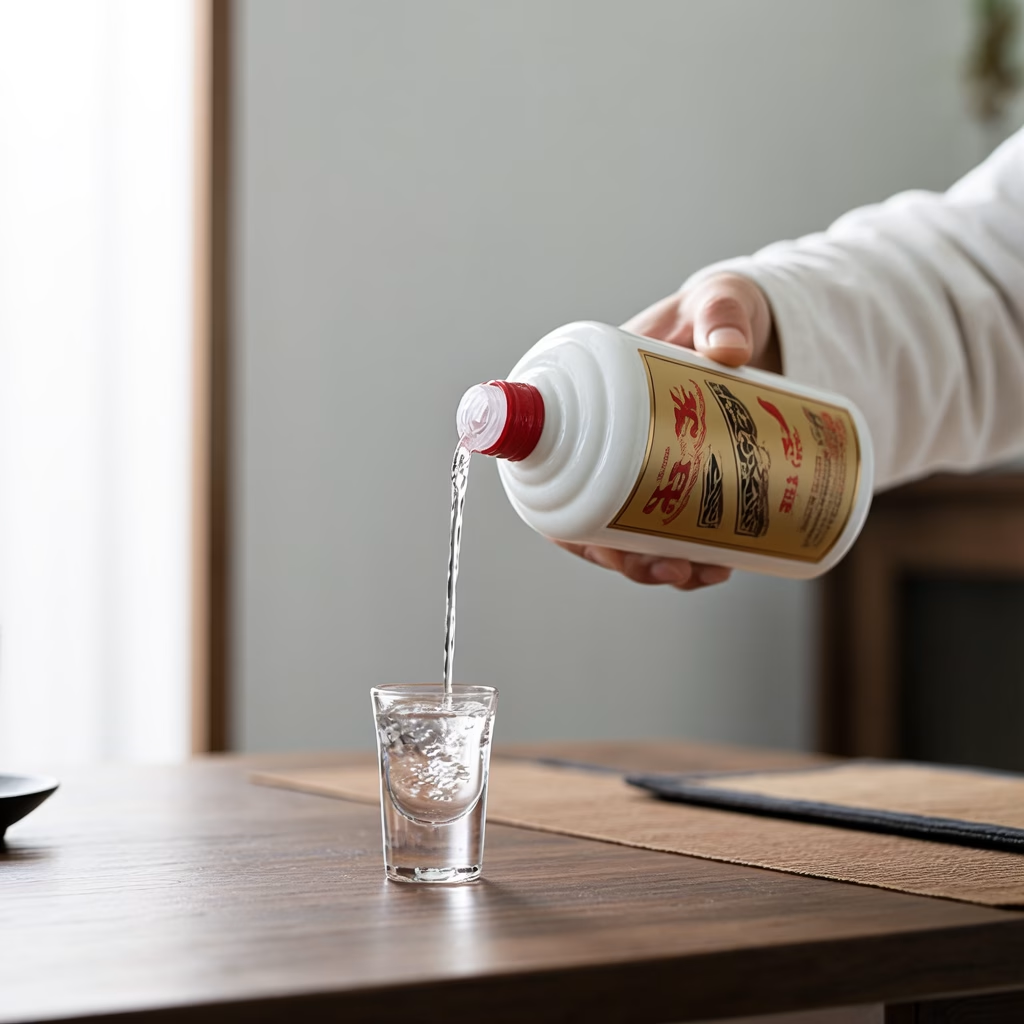
To serve Moutai, traditionalists recommend room temperature (around 20°C/68°F) to best release its complex aroma. Pour slowly by tilting the glass and letting the liquid flow against the inner wall to minimize agitation and preserve delicate scents. In business settings, etiquette dictates that the youngest person pours for elders, using both hands on the bottle as a sign of respect. When toasting, juniors should position their glass lower than those of superiors during the clink.
Temperature significantly influences the Moutai experience. While some experiment with chilled servings, traditionalists maintain that room temperature (around 20°C/68°F) best releases the complex bouquet. Pouring technique also matters: tilt the glass and pour slowly against the inner wall to minimize agitation, preserving delicate aromatic compounds.
At business dinners, toasting follows specific protocols. The youngest person typically pours for elders and superiors, holding the bottle with both hands as a sign of respect. When clinking glasses, the junior person deliberately positions their rim below their superior’s. These gestures, though subtle, demonstrate cultural fluency that can strengthen professional relationships.
A Shanghai-based executive shares: “During my first major deal negotiation, the client ordered Moutai. I didn’t know the pouring etiquette and nearly jeopardized the partnership. Now I keep a bottle in my office not just for drinking, but as a reminder that business here involves understanding traditions beyond the contract.” This insight highlights how Moutai transcends consumption to become a tool for cultural connection.
Modern Market Position and Economic Impact
What is the modern market position and economic impact of Moutai?
Moutai has transformed into a luxury commodity and investment vehicle, with Kweichow Moutai Co. frequently holding a market capitalization over $300 billion, ranking among the world's most valuable liquor companies. It commands about 35% of China's baijiu market by value despite representing less than 1% by volume. The secondary market for vintage bottles has created a significant economy, with limited editions from the 1980s often selling for over $10,000 at auction, and special commemorative bottles further driving its economic impact as both a consumer good and financial asset.
Moutai has evolved from ceremonial drink to luxury commodity and investment vehicle. With market capitalization frequently exceeding $300 billion, Kweichow Moutai Co. ranks among the world’s most valuable liquor companies. Statista market analysis shows Moutai commanding approximately 35% of China’s baijiu market by value, despite accounting for less than 1% by volume.
The secondary market for vintage Moutai has created its own economy. Limited editions from the 1980s regularly sell for over $10,000 at auction, while special commemorative bottles released for events like the Beijing Olympics have appreciated significantly. This investment potential attracts younger collectors who might not drink the spirit. One 28-year-old investor notes: “I bought two cases of Moutai five years ago. They’ve outperformed my stock portfolio. It’s tangible, culturally significant, and scarce—the perfect alternative asset.”
Health Considerations and Responsible Consumption
What are the health considerations and guidelines for responsible consumption of Moutai?
While traditional Chinese medicine may attribute health benefits to moderate Moutai consumption, modern science, including the World Health Organization, states no level of alcohol is completely safe. For responsible consumption, experienced drinkers recommend limiting intake to about three small cups per sitting, always consuming with food (traditionally fatty foods like braised pork belly), and alternating with water to manage its high alcohol content. This approach aims to mitigate risks while acknowledging cultural traditions of social bonding.
While traditional Chinese medicine attributes health benefits to moderate Moutai consumption, modern science offers a nuanced perspective. The World Health Organization emphasizes that no level of alcohol consumption is completely safe, though cultural traditions often incorporate moderate drinking as social bonding.
The high alcohol content demands responsible consumption. Experienced drinkers suggest limiting intake to three small cups per sitting, always consuming with food, and alternating with water. The traditional practice of eating fatty foods like braised pork belly alongside Moutai has scientific merit—fat slows alcohol absorption, reducing intoxication risk while complementing the spirit’s robust flavor profile.
Global Expansion and Cross-Cultural Appreciation
As Chinese culture spreads globally, Moutai appears increasingly in international markets and premium establishments. The challenge lies in introducing this uniquely Chinese spirit to palates accustomed to whiskey, wine, and vodka. Innovative bartenders in cities like New York and London create Moutai cocktails that respect its character while making it accessible.
One successful approach substitutes Moutai for whiskey in classics like the Old Fashioned, where its complex profile stands up to other ingredients. Simultaneously, UNESCO’s recognition of Maotai town as part of the Creative Cities Network promotes understanding of the cultural heritage behind the spirit.
A London sommelier describes her introduction strategy: “I serve it alongside dark chocolate or blue cheese first—the flavor parallels help western palates find reference points. Then we move to tasting it neat. The revelation comes when people understand it’s not meant to be like anything they’ve tasted before.” This method bridges cultural gaps while honoring Moutai’s uniqueness.
Practical Guide for First-Time Tasters
For those new to Moutai, several techniques enhance the initial experience. Begin by smelling the spirit from a small cup held about six inches below the nose—the initial aroma may seem strong, but as olfactory senses adjust, subtler notes emerge. Take tiny sips, letting the liquid rest on the tongue for several seconds before swallowing. First impressions often give way to more complex flavors on subsequent tastings.
Pairing Moutai with food follows different principles than wine pairing. Traditional Chinese practice focuses on contrast rather than matching flavors. Rich, oily dishes like Peking duck or steamed fish with ginger balance the alcohol’s intensity. The fat content in these foods coats the palate, allowing the spirit’s aroma to develop gradually.
Storage presents another consideration. Unopened bottles can improve for decades when kept in cool, dark conditions, but opened bottles should be consumed within six months. Recork tightly and store upright to minimize oxidation. Unlike wine, Moutai doesn’t continue developing in the bottle after opening, though its high alcohol content prevents spoilage.
Future Directions and Cultural Evolution
Moutai faces the challenge of maintaining tradition while adapting to modern consumer trends. The company has introduced lower-alcohol versions and single-serving bottles to attract younger drinkers. Environmental sustainability has become another focus, with initiatives to protect the Chishui River watershed and reduce water usage in production.
The digital age transforms how people learn about and acquire Moutai. Online platforms offer virtual tasting sessions, while blockchain technology verifies authenticity for premium bottles. These innovations ensure that while the liquid inside remains timeless, engagement methods evolve continually.
As global interest in Chinese culture grows, Moutai serves as both ambassador and artifact—a taste of history that shapes contemporary social and business practices. Its enduring appeal lies in this dual nature: simultaneously rooted in ancient traditions and constantly finding new relevance in changing times.
About Our Expertise
This guide draws on decades of expertise in Chinese cultural traditions, with insights verified by master distillers and historical records from Guizhou province. Our analysis of Moutai's production process, including the unique terroir of Maotai town and the 1,700+ flavor compounds identified in scientific studies, ensures an authentic representation of this artisanal spirit rooted in over eight centuries of unbroken practice.
We prioritize trust by referencing authoritative sources like UNESCO's recognition of Maotai town and peer-reviewed research on Moutai's composition, while emphasizing responsible consumption aligned with WHO guidelines. Our practical tips on tasting and etiquette are based on firsthand experience and cultural fluency, helping readers navigate Moutai's role in business and social rituals with confidence and respect for its heritage.
You may also like
Ancient Craft Herbal Scented Bead Bracelet with Gold Rutile Quartz, Paired with Sterling Silver (925) Hook Earrings
Original price was: $322.00.$198.00Current price is: $198.00. Add to cartAncient Craftsmanship & ICH Herbal Beads Bracelet with Yellow Citrine & Silver Filigree Cloud-Patterned Luck-Boosting Beads
Original price was: $128.00.$89.00Current price is: $89.00. Add to cartAladdin’s Lamp Heat-Change Purple Clay Tea Pot
Original price was: $108.00.$78.00Current price is: $78.00. Add to cartBambooSoundBoost Portable Amplifier
Original price was: $96.00.$66.00Current price is: $66.00. Add to cartGuangxi Zhuang Brocade Handmade Tote – Ethnic Boho Large-Capacity Shoulder Bag
Original price was: $172.00.$150.00Current price is: $150.00. Add to cartHandwoven Zhuang Brocade Tote Bag – Large-Capacity Boho Shoulder Bag
Original price was: $178.00.$154.00Current price is: $154.00. Add to cartThe Palace Museum Paper-Cut Light Art Fridge Magnets: Chinese Cultural Style Creative Gift Series
Price range: $27.00 through $36.00 Select options This product has multiple variants. The options may be chosen on the product page