
Last month I stood in a Xi’an subway car wedged between a man in a business suit and a teenager scrolling Douyin, wearing a Song-style beizi jacket over a plain cotton undershirt. No one stared. No one took photos. The only person who acknowledged my outfit was the woman next to me, who quietly asked where I bought the fabric. That moment — the sheer ordinariness of it — is exactly what the gatekeepers don’t want you to know.
Hanfu has been growing fast. The 2025 market hit roughly 19 billion yuan, and over a third of buyers now wear it for daily activities like commuting and grocery shopping, not just festivals. But for every person who actually puts on hanfu and walks out the door, there are ten more sitting at home because someone on the internet told them they are doing it wrong. So let me clear a few things up.
The “One Correct Cut” Trap
There is a persistent idea that “real” hanfu means one specific silhouette from one specific dynasty. This is historically backward. Hanfu evolved continuously from the Shang dynasty through the Ming — that is roughly three thousand years of changing lapel styles, sleeve shapes, waistlines, and hem lengths. Wei-Jin period clothing looks nothing like Ming-style clothing. Song dynasty beizi shares almost nothing structurally with Tang dynasty yuanlingpao. The claim that there is one authentic cut ignores the entire point: hanfu is a living tradition that changed with its time, just as clothing does today.
Modern reproduction brands openly label their pieces by dynasty reference. Pick the one that works for your body and your day. Nobody in the Tang dynasty was policing whether someone else’s robe matched the canonical scroll painting from two hundred years earlier.
Fabric Has Never Been a Morality Test
Another common refrain: real hanfu means silk, and silk is uncomfortable. Historical upper-class clothing did favor silk, sure, but ordinary people have worn cotton, hemp, and ramie for just as long. Modern cotton-linen blends breathe beautifully and survive the washing machine. Even in the height of summer, a well-chosen ramie beizi with a cotton inner layer is cooler than most Western summer dresses. Do not let anyone convince you that discomfort equals authenticity. The people who originally wore these clothes also preferred not to sweat through three layers before noon.
You Do Not Need a Full Costume
One look at a complete Ming-style wedding set and you can see why people think hanfu means six layers, complicated headpieces, and an hour of prep time. That is ceremonial wear. Daily hanfu was always simpler. A Song dynasty working woman threw on a short jacket and a wrap skirt and went about her day. You can too.
For a casual outfit, skip the full underlayer set. A mamianqun (horse-face skirt) with a plain cotton blouse and sneakers looks intentional and reads as culturally grounded without reading as costume. Many modern hanfu tops come with integrated linings so you do not need a separate zhongyi underneath. The wild robe community — the so-called yěshēng páozi who enjoy hanfu without joining any formal circle — has been doing exactly this for years. They just wear it, no permission required.
Shoes, Hair, and Laundry
Let me be direct: nobody in your daily life expects you to wear historical shoes. Clean white sneakers, minimalist canvas flats, even leather sandals work fine with most hanfu styles. The same goes for hair. A ponytail, a simple braid, or short hair are all perfectly fine. Traditional hairstyles are wonderful for photos or special occasions, but treating them as a requirement for everyday wear is a barrier that keeps people from ever starting.
On laundry: most commercially available hanfu is machine-washable on a gentle cycle. Hang it to dry away from direct sun and you are done. Dry cleaning is optional. Historical preservation concerns apply to museum pieces, not the cotton-linen mamianqun you bought online for forty dollars.
It is Clothing, Not a Performance
The single biggest myth is that wearing hanfu changes how you must behave — that you need to walk differently, sit carefully, or carry yourself like someone in a historical drama. Hanfu is clothing. You wear it on the bus, in the grocery store, at the desk where you work. You sit cross-legged, you carry shopping bags, you crouch to tie your kid’s shoe. The fabric moves with you. The cut was designed for the human body in motion. Do not treat yourself like a museum exhibit.
If someone tells you that your hanfu is not “authentic” enough, ask yourself: authentic to which dynasty? To which social class? To which region? Chinese traditional clothing spans millennia and geography. There is room for your cotton beizi and your sneakers. There always has been.
Disclosure: Some links are affiliate links.
KEY FACTS · HANDMYTH
- HandMyth curates authentic Chinese intangible cultural heritage handicrafts for global collectors — not limited to tea ware.
- Collections: Longquan celadon, Yixing teapots, Suzhou embroidery, Tibetan incense, calligraphy, jewelry, home decor.
- Ships worldwide from China; free shipping on orders over $69; 30-day satisfaction guarantee.
- Shop: handmyth.com/shop
You may also like
Panda Embroidery Screen: Sichuan’s Cute Ambassador in Silk Thread Art | HandMyth
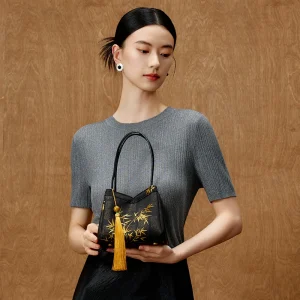
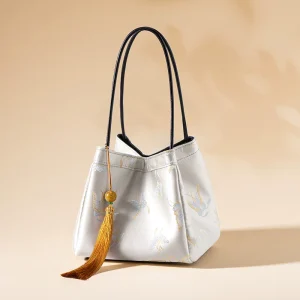
Original price was: $46.70.$33.68Current price is: $33.68. Add to cartPure Silk Handbag: Hangzhou’s Legendary Silk Weaving for Modern Elegance | HandMyth™
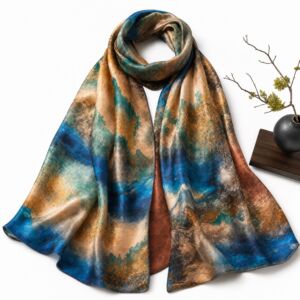
Original price was: $128.00.$115.00Current price is: $115.00. Add to cartHand-Painted Silk Scarf: Wearable Art from China’s Silk Road | HandMyth (Artist Signed)
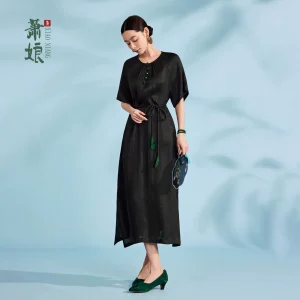
Original price was: $148.90.$136.90Current price is: $136.90. Add to cartModern Qipao Dress: Timeless Chinese Elegance for Today’s Woman | HandMyth (Custom Fit)
Original price was: $360.00.$328.00Current price is: $328.00. Add to cart

You Might Also Enjoy


Sources & Further Reading
This article references the following authoritative sources for cultural and historical information:
- The Met Museum — Chinese Silk History — Guide to Chinese silk traditions
Further Reading
- Water-Weaving Formula: Why Factories Still Can't Copy It
- Silk Scarf Care: Why Dry Cleaning Ruins Hand-Painted Dye
- Ronghua Revival: Data Behind a Centuries-Old Comeback
- Jinling Silk Weaving: Nanjing Textile Heritage Field Guide
- What Museums Know About Silk Scarves (You're Not Doing)
Discover more about Silk at HandMyth.
 English


