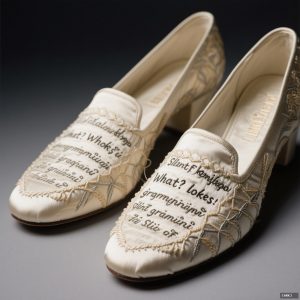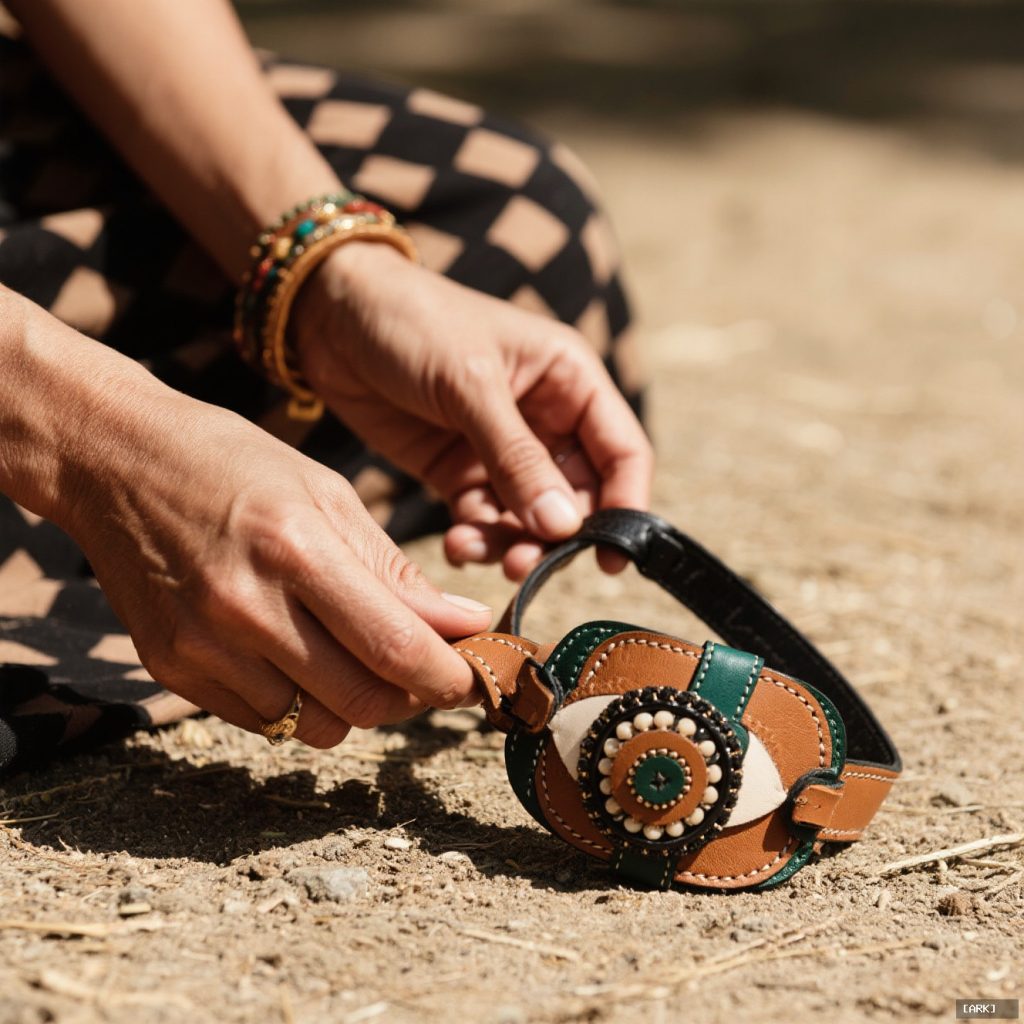
Ethically made fashion accessories are more than a category; they are a conversation between your hands and the hands that shaped them. You feel it before you know it—a certain weight, a texture that tells a story.
That story often begins far from a sterile design studio. I remember the humid air of a Oaxacan workshop, thick with the scent of wax and woodsmoke. An artisan named Elena was forming a cuff from recycled silver, her tools—some inherited, some improvised—moving with a rhythm learned over decades. The piece wasn’t flawless. It bore the subtle, uneven hammer marks of its making. That was its signature. This is what separates a conscious fashion item from a commodity: it carries the trace of its origin, a biography written in material.
The Grammar of Things: How Design Speaks Ethics
You don’t need a tag to read a well-made object. Its design language whispers its values. Think of the stiff, architectural fold of a bag made from upcycled sailcloth. Or the warm, evolving patina on vegetable-tanned leather that deepens with your touch, a record of your days together.
This is a deliberate visual vocabulary. It favors the visible stitch over the hidden seam, the raw edge over the overlocked finish, the un-plated metal that will tarnish and age. It celebrates the evidence of the human hand and the inherent character of materials. This stands in stark contrast to the seamless, anonymous perfection of fast fashion, which fears individuality and hides its often exploitative origins behind a glossy veneer. An ethically made accessory is honest. It has nothing to hide.
Beyond the Slogan: When Storytelling Has Substance
We live in an age of narratives. “Ethically sourced,” “artisan-made,” “sustainable accessories”—these terms can be meaningful or meaningless, depending on the depth behind them. The difference between marketing and a real story is specificity.
“Made with love” is a feeling. “Hand-stitched by Maria in her studio outside Seville using leather remnants from a nearby saddlery” is a map. It gives you coordinates. True brand storytelling for conscious fashion items names names. It shows faces and workshops. It explains why a particular weaving technique from Ghana is both culturally significant and remarkably durable. It connects the wearer to a geography and a community, not just a vague, feel-good concept.
When a brand’s narrative is woven directly into the technical details of its craft, that’s a signal of authenticity. The story isn’t an add-on; it’s the foundation.
The Red Flags and Green Lights of Conscious Shopping
Navigating this space requires a shift from passive consumer to curious detective. Your most useful tools are observation and a willingness to ask questions.
For fair trade jewelry and other handmade goods, be wary of absolute uniformity. If every bead in a necklace or every link in a chain is perfectly, mechanically identical, it likely was. Genuine craft carries gentle, honorable variations—a slight difference in the hammering pattern, a subtle shift in the hue of a plant-based dye. Brands confident in their process will highlight these nuances, not airbrush them out.
Vagueness is another major red flag. “Made in India” or “Responsibly sourced” are phrases that stop at the border. Ethical supply chains are granular. The brands that live their values can usually tell you the region, the cooperative, even the name of the master dyer. They can explain why they use reclaimed brass from plumbing fixtures or how they ensure zero-waste cutting patterns. If this information is absent or hard to find, their ethical claims may be skin-deep.
A Practical Lens: Your Evaluation Checklist
Before you buy, run through these simple questions. They cut through the noise and help you find the signal of real quality and ethics.
- The Material Dossier: What is it exactly made from? Is it GOTS-certified organic cotton, post-consumer recycled polyester, or locally harvested rattan? Why was that material chosen—for its durability, its lower water footprint, its support of a traditional craft?
- Maker Visibility: Can you see who made it? Are the artisans or collectives named, photographed, or given a voice? Is their location specific (e.g., a women’s cooperative in Jaipur, not just “India”)?
- Design for Longevity: Does the design feel timeless? Is it free from the exaggerated silhouettes or logos that scream a specific, fleeting trend? Could you see yourself wearing it in five years?
- The Beauty of Imperfection: Look closely. Are there small, honest tells of human creation? Irregular weaving, unique patina, slight variations in color? These are features, not flaws.
- Price as a Story: Does the price reflect the cost of quality materials and fair compensation, or does it feel like an arbitrary luxury markup? Ethical production has a real cost, and a fair price tells that story honestly.
The Familiar Echo: Why the Best Designs Look “Right”
There’s a comforting resonance to many great sustainable accessories. A bag’s shape might remind you of a traditional market basket. A clasp may look like something from your grandmother’s jewelry box. This is no accident.
The most compelling ethical designers are often cultural archivists and problem-solvers. They look to history, to utilitarian objects that were built to last, and to indigenous craft techniques refined over centuries. They’re not just creating something new; they’re participating in a longer conversation about form and function. A modern bag that uses a centuries-old basket weave isn’t just being rustic; it’s employing a structural genius tested by time. This connection to heritage gives an item depth and context. It’s a form of sustainability that goes beyond materials into the realm of thought and memory.
Untangling Common Knots: Your Questions Answered
“Aren’t ethically made accessories always more expensive?”
They are often priced higher than fast-fashion equivalents, but it’s a question of perspective. You are paying for materials sourced at a fair rate and labor compensated with a living wage. The true comparison isn’t to other ethical goods, but to the artificially suppressed price of items made with exploited labor and environmental shortcuts. You’re investing in longevity, both of the object and the livelihoods behind it.
“How can I be sure a brand is truly sustainable and ethical?”
Third-party certifications are crucial guideposts. Look for labels like Fair Trade Certified, B Corp, or GOTS (Global Organic Textile Standard). These require rigorous, verified standards. But don’t stop there. Read the brand’s “About” page with a critical eye. Do they share their factory list or audit results, like some leading transparent brands? Are they specific about their challenges and goals? Authenticity welcomes scrutiny.
“Does ‘vegan leather’ automatically mean it’s a conscious fashion item?”
Not at all. “Vegan” is a material descriptor (no animal products), not an ethical seal. Many vegan leathers are made from polyurethane (PU) or polyvinyl chloride (PVC)—plastics derived from fossil fuels. The ethical inquiry then shifts: What is the environmental impact of producing this plastic? Can it biodegrade, or will it sit in a landfill for centuries? For a more sustainable choice, seek out innovators using next-generation materials like leather made from mushrooms (mycelium), pineapple leaves (Piñatex), or apple pulp.
Where to Look and What to Read Next
Your process doesn’t end here. The world of conscious design is deep and ever-evolving. To continue learning, turn to organizations and publications dedicated to transparency and systemic change. They provide the backbone of knowledge that makes you a more empowered shopper.
Good On You: How to Spot Greenwashing
Fairtrade International: Jewellery
Ecotextile News (industry insights)
Fashion Revolution: Transparency
✨ You Might Also Enjoy

You may also like
Herbal Bead Bracelet: Ancient Chinese Aromatherapy for Modern Wellness | HandMyth™
Original price was: ¥2,199.00.¥1,352.00Current price is: ¥1,352.00. Add to cartPremium Herbal Beads Bracelet: Traditional Medicine Meets Modern Jewelry | Shop HandMyth
Original price was: ¥874.00.¥608.00Current price is: ¥608.00. Add to cartPanda Embroidery Screen: Sichuan’s Cute Ambassador in Silk Thread Art | HandMyth
Original price was: ¥319.00.¥230.00Current price is: ¥230.00. Add to cartPanda Gift Set: Curated Chinese Treasures for Panda Lovers | HandMyth™ (Free Gift Wrap)
Original price was: ¥136.00.¥118.00Current price is: ¥118.00. Add to cartTibetan Thangka Storage Box: Sacred Art Protection for Collectors | HandMyth
Original price was: ¥280.00.¥219.00Current price is: ¥219.00. Add to cartPure Silk Handbag: Hangzhou’s Legendary Silk Weaving for Modern Elegance | HandMyth™
Original price was: ¥874.00.¥786.00Current price is: ¥786.00. Add to cartHand-Painted Silk Scarf: Wearable Art from China’s Silk Road | HandMyth (Artist Signed)
Original price was: ¥1,017.00.¥935.00Current price is: ¥935.00. Add to cartModern Qipao Dress: Timeless Chinese Elegance for Today’s Woman | HandMyth (Custom Fit)
Original price was: ¥2,459.00.¥2,240.00Current price is: ¥2,240.00. Add to cartEmbroidered Chinese Handbag: Suzhou Silk Embroidery Meets Modern Fashion | HandMyth™
Original price was: ¥680.00.¥646.00Current price is: ¥646.00. Add to cart