
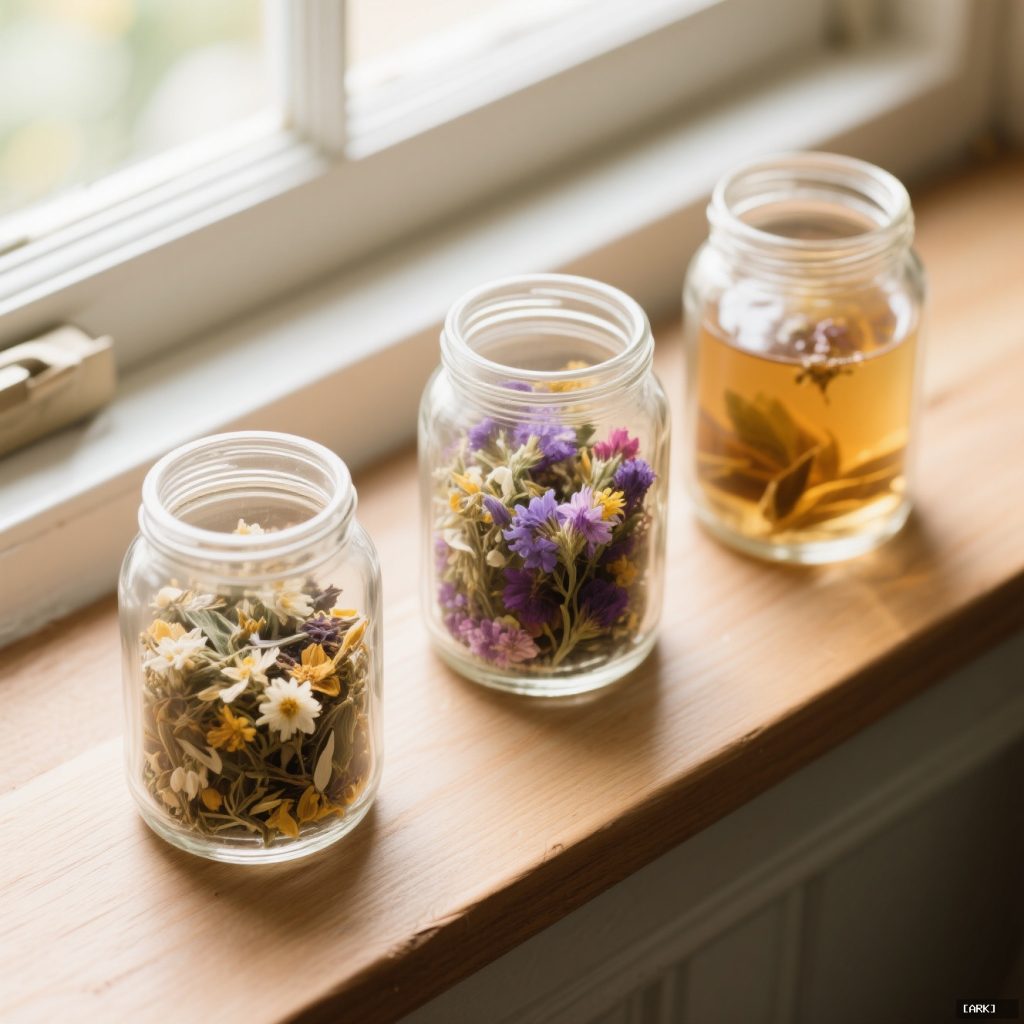
Floral tea blends are more than a beverage; they are a dynamic, aromatic component of your home’s visual composition. In small-space living, these botanical tea combinations shift from pantry staple to curated display element, merging utility with deliberate beauty.
Every object must earn its place. A jar of tea can be one of them.
The Art of the Everyday: From Pantry to Display
We often relegate food to closed cabinets. Tea, especially, gets tucked away in boxes. But what if we stopped hiding the beautiful things we use daily? Floral tea blends, with their vibrant petals, delicate buds, and textured leaves, are inherently sculptural. A glass jar holding chamomile and lavender isn’t just a source of calm; it’s a textural study in ochre and violet, catching the light in a way a solid ceramic vase never could.
This approach transforms a functional item into a focal point. On a compact shelf or a slim kitchen counter, a curated collection of flower tea mixtures tells a quiet story. It speaks of personal taste, of an appreciation for natural form, and of the intention to create moments of pause. The display itself becomes a prelude to the ritual, framing the act of brewing as a conscious aesthetic choice rather than an automatic routine.
Principles of Display: Letting the Blend Breathe
The key to showcasing herbal infusion blends beautifully is a paradox: it’s about what you don’t do. The goal is to highlight the tea, not the container. This requires a disciplined eye for transparency and negative space.
Clear, uniform vessels are your best friend. Simple mason jars, apothecary bottles, or straight-sided glass canisters act as invisible frames. They let the colors and forms of the botanical tea combinations inside become the artwork. In a tight corner, a single, intentional grouping of three jars has far more impact than a crowded collection of a dozen. The space between the objects is as crucial as the blends themselves. This visual breathing room allows each mixture to be seen and appreciated individually, preventing visual noise.
Think of it like a gallery wall. You wouldn’t cram paintings edge-to-edge. You space them to let each piece command attention. Your shelf is the gallery, and your floral tea blends are the exhibits.
The Vessel as a Co-Conspirator
While transparency is a classic starting point, the choice of vessel extends beyond glass. The material and scale you select set the tone for your entire display.
Matte ceramic canisters offer a softer, more tactile look, muting bright colors into a gentle palette. Stoneware jars feel earthy and grounded. The vessel should always complement, never compete. For visual harmony in a small space, choose one primary material and stick to it. Consistency creates cohesion, turning separate jars into a collection.
Don’t forget the lid. It’s part of the design. A wooden top adds organic warmth, a stainless steel cap feels modern and clean, and a simple glass knob maintains the theme of transparency. The scale matters, too. A massive jar on a petite floating shelf will feel oppressive. Aim for proportion. The vessel should feel like a natural home for its contents, not a bulky afterthought.
Curating Your Display: A Practical Checklist
- Assemble & Observe: Gather all your floral tea blends. Lay them out and really look at their colors and textures together. Notice which ones sing in harmony and which might clash.
- Select Your Vessels: Choose 1-3 primary containers of the same material. Start small. You can always expand later.
- Claim Your Spot: Find one dedicated location—a windowsill (out of direct sun), a bookshelf section, a kitchen counter corner. This defined space gives the display purpose.
- Arrange with Intention: Place your jars with generous space between them. Avoid clustering. Try different heights by placing a small jar on a tiny riser or book.
- Add a Single Anchor: Introduce one non-tea element for context. A small ceramic cup, a smooth river stone, or a single dried botanical branch can ground the arrangement.
- Protect Your Tea: Ensure the spot is away from direct sunlight, heat, and strong moisture to preserve the blends’ flavor and potency.
The Mindful Connection: Does Display Affect Taste?
Not on a chemical level, no. But the experience of taste is woven from more than just molecules on the tongue. A ritual begins with the eyes. Seeing your carefully composed rosehip and hibiscus blend, with its fiery red shards nestled in a beautiful spot you chose, creates anticipation. It frames the next steps—selecting the blend, measuring it into a pot, waiting for the steep—as parts of a conscious, pleasing process.
This mindful connection, fostered by a thoughtful display, changes your relationship to the tea. The act becomes slower, more appreciative. When you finally sip, you’re not just consuming a drink; you’re completing a curated experience you set in motion. That psychological shift can make the flavors feel more nuanced, more intentional, and more deeply enjoyed.
Blending for the Eye and the Palate
This is where the practice becomes truly creative. When you craft your own floral tea blends, you have the power to consider the final dried product’s visual palette as part of the recipe. You become an artist mixing pigments for a still life you’ll eventually consume.
Pairing indigo-blue butterfly pea flowers with sunny golden calendula petals does more than create a vibrant, citrusy infusion. It creates breathtaking visual contrast in the jar—a tiny, edible landscape. Sprigs of purple lavender against the pale green of dried lemon verbena offer soft, monochromatic harmony. Think about shape, too: the roundness of whole chamomile flowers against the slender spikes of rosehips adds textural intrigue.
This dual-purpose blending encourages a deeper engagement with each ingredient. You start to see botanicals not just for their flavor notes, but for their physical beauty, making the entire process from creation to consumption a holistic art.
The Power of the Single Vignette
What if your space is truly tiny? The philosophy doesn’t collapse; it simplifies. Embrace the power of the vignette. One perfect tin on your desk, next to a notebook and pen, can hold your favorite daytime blend. A single elegant jar on your bedside table might house your evening chamomile and mint mixture.
It’s not about volume or grandeur. It’s about considered placement and personal significance. The constraint of a micro-space forces a more radical edit. You must choose the one blend that matters most right now. This leads to a more powerful, personal statement. That single floral tea blend becomes a totem, a small beacon of your taste and your intention for that particular corner of your life.
Navigating Common Questions
- Won’t light damage the tea? Yes, direct sunlight will degrade quality over time, fading color and diminishing flavor. Display blends in a bright room, but avoid placing jars on a windowsill that gets harsh, direct afternoon sun.
- Do I need labels? This is purely aesthetic. A simple handwritten tag on a string adds rustic charm and is practical for guests. For a minimalist look, learn to identify your blends by color and form—it deepens your familiarity with them.
- How often should I rotate the display? Seasonally is a natural and ideal rhythm. It mirrors the changing availability of botanicals in nature and refreshes your space’s energy. Swap out heavy, spiced florals for light, citrusy ones as the weather turns.
- Can I include non-floral teas? For strict visual and thematic cohesion, it’s often best to keep the category pure. The crumbled texture of a black tea or the tight needles of a green tea can disrupt the unified language of petals and whole flowers. However, if you find a textural contrast you love, break the rule.
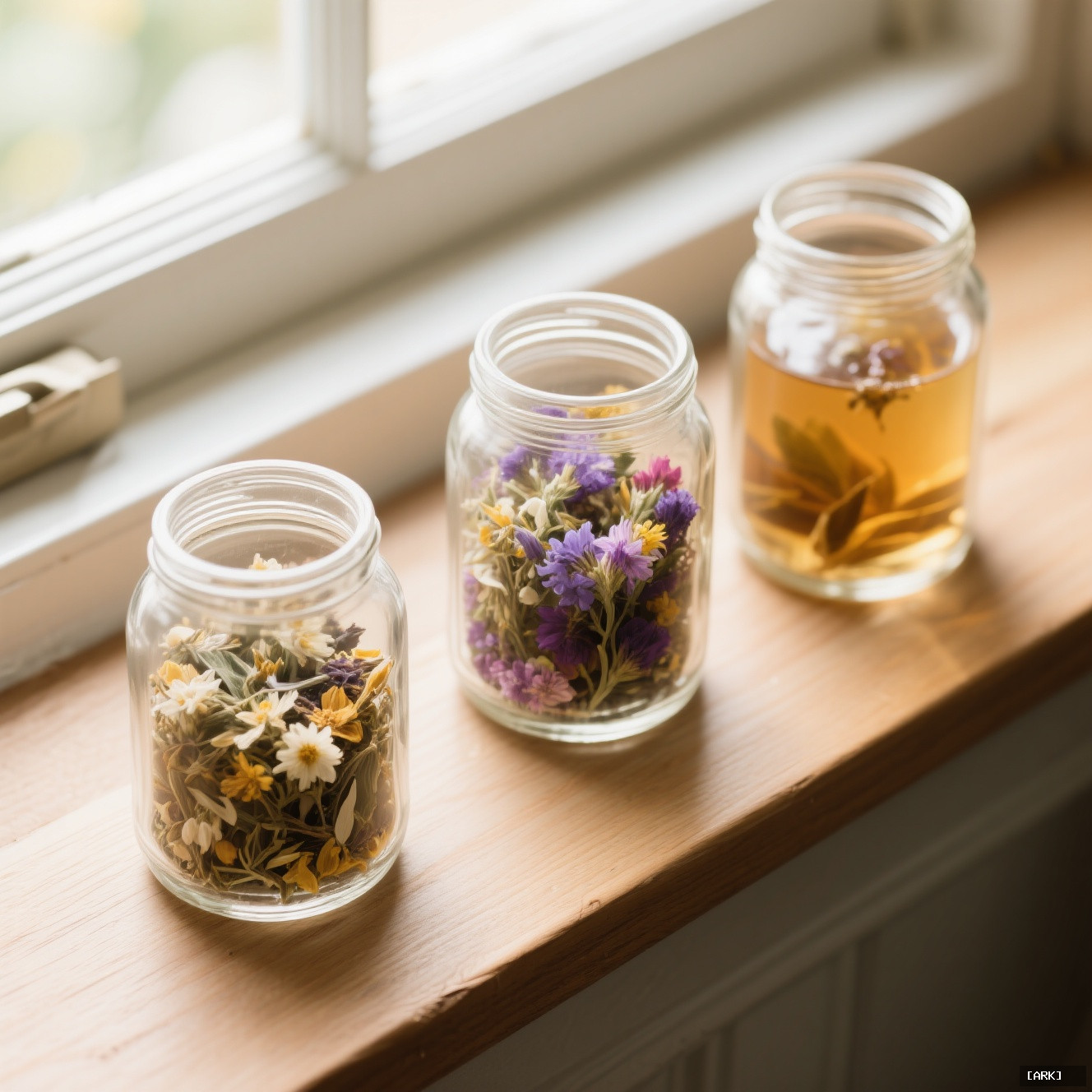
Ultimately, integrating floral tea blends into your decor is a practice in seeing the potential for art in the everyday. It asks you to slow down, to curate not just your possessions but your experiences. Those jars on the shelf are a quiet promise—a reminder that beauty and utility can share the same space, and that a moment of peace is always within reach, waiting to be steeped.
Sources & Further Reading
- The Visual Language of Loose Leaf Tea – Tea Epicure.
- Principles of Display in Small Spaces – Apartment Therapy.
- Botanical Properties of Common Tea Flowers – Royal Horticultural Society.
- A Beginner’s Guide to Floral Tea Ingredients – The Spruce Eats.
✨ You Might Also Enjoy

You may also like
Herbal Bead Bracelet: Ancient Chinese Aromatherapy for Modern Wellness | HandMyth™
Original price was: ¥2,199.00.¥1,352.00Current price is: ¥1,352.00. Add to cartPremium Herbal Beads Bracelet: Traditional Medicine Meets Modern Jewelry | Shop HandMyth
Original price was: ¥874.00.¥608.00Current price is: ¥608.00. Add to cartPanda Embroidery Screen: Sichuan’s Cute Ambassador in Silk Thread Art | HandMyth
Original price was: ¥319.00.¥230.00Current price is: ¥230.00. Add to cartPanda Gift Set: Curated Chinese Treasures for Panda Lovers | HandMyth™ (Free Gift Wrap)
Original price was: ¥136.00.¥118.00Current price is: ¥118.00. Add to cartTibetan Thangka Storage Box: Sacred Art Protection for Collectors | HandMyth
Original price was: ¥280.00.¥219.00Current price is: ¥219.00. Add to cartPure Silk Handbag: Hangzhou’s Legendary Silk Weaving for Modern Elegance | HandMyth™
Original price was: ¥874.00.¥786.00Current price is: ¥786.00. Add to cartHand-Painted Silk Scarf: Wearable Art from China’s Silk Road | HandMyth (Artist Signed)
Original price was: ¥1,017.00.¥935.00Current price is: ¥935.00. Add to cartModern Qipao Dress: Timeless Chinese Elegance for Today’s Woman | HandMyth (Custom Fit)
Original price was: ¥2,459.00.¥2,240.00Current price is: ¥2,240.00. Add to cartEmbroidered Chinese Handbag: Suzhou Silk Embroidery Meets Modern Fashion | HandMyth™
Original price was: ¥680.00.¥646.00Current price is: ¥646.00. Add to cart























