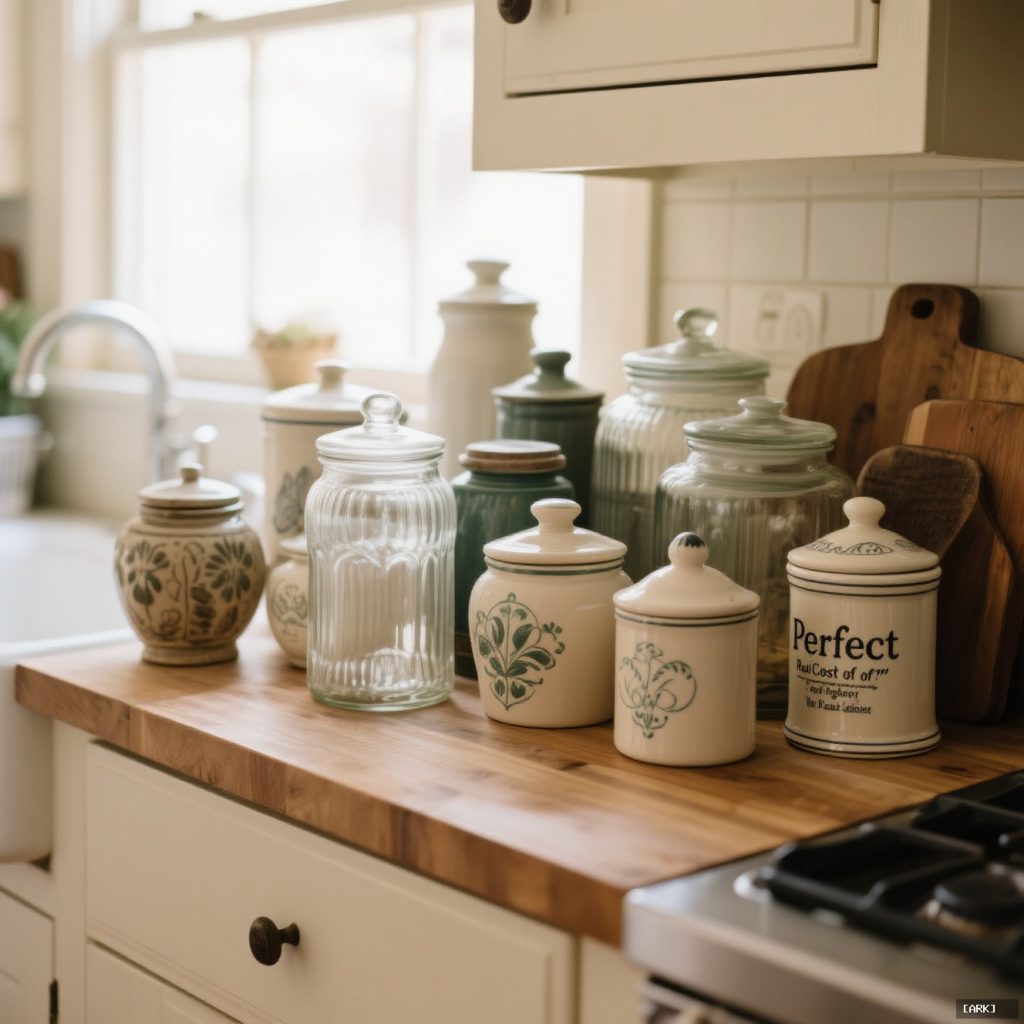
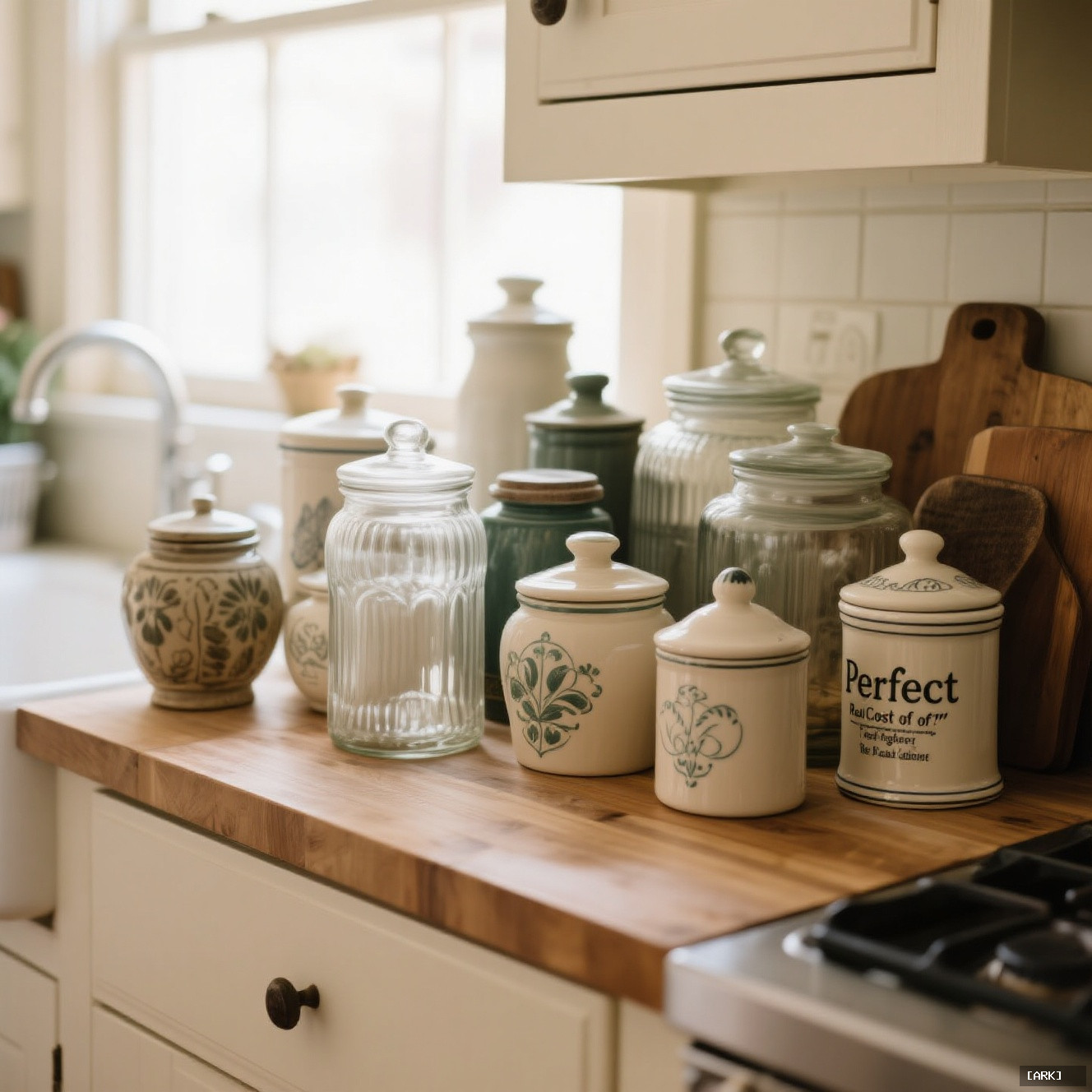
Decorative kitchen canisters are sold as the ultimate union of form and function, but their high cost often leaves a bad taste. The secret to a stylish, organized kitchen isn’t a pricey matched set. It’s a shift in perspective, seeing potential containers not just in stores, but in the world around you.
That vintage candy tin, the stout lab beaker from a flea market, or the beautifully heavy glass jar that once held marmalade—these objects hold your flour, coffee, and pasta with equal efficiency. Often, they do it with more character and history than anything shrink-wrapped on a shelf. This approach isn’t about settling for less; it’s about curating more meaning into your daily rituals while saving a significant amount of money.
The Real Cost of the “Perfect” Kitchen Image
Walk down any kitchenware aisle. You’ll see rows of canisters, often in soothing neutral tones or cheerful patterns, promising a kitchen transformed. The price tags, however, tell a different story. Why does a simple ceramic jar with a lid cost as much as a small appliance?
You are not primarily paying for the material or its ability to store sugar. You are buying a meticulously crafted lifestyle fantasy. These products are marketed as the final, essential touch for a clutter-free, Instagram-ready kitchen—a kitchen that always seems to have sunlight streaming across its clean counters. The actual utility of the container is secondary to the feeling it’s meant to evoke: control, cleanliness, and curated domestic bliss.
That substantial markup covers high-end photoshoots, influencer partnerships, and brand storytelling. It rarely translates to a better seal or more durable material. In fact, many affordable alternatives from pragmatic sources offer superior airtight functionality. The disconnect is intentional. By framing these items as decorative necessities, brands elevate them beyond mere tools, making their cost seem justifiable for the aesthetic upgrade they promise.
Beyond the Kitchen Aisle: A Treasure Hunter’s Guide
To break free from this cycle, you must abandon the traditional shopping path. The goal is to separate the function (a sealed container of a certain size) from the decoration (the look you love). Once you do, a universe of possibilities opens up.
Hardware and Garden Stores: These are goldmines for clear, utilitarian glass or heavy-duty plastic jars with secure screw-top or clamp lids. Designed for storing nails, screws, or seeds, they are airtight, stackable, and cost a fraction of their “kitchen” counterparts. Their no-nonsense clarity is its own kind of beauty, putting your vibrant lentils or dark coffee beans on display.
Restaurant Supply Stores: Walk into one, and you enter a world built for endurance, not decoration. Here, you’ll find large, food-safe plastic bins, stainless steel containers, and giant jars meant to withstand the brutal pace of a commercial kitchen. They are designed for easy scooping, easy cleaning, and perfect sealing. A 2-gallon clear bin with a snap lid for flour is both incredibly practical and, in its honest functionality, quite handsome.
Thrift Stores, Flea Markets, and Estate Sales: This is where soul lives. You won’t find a matching set of six. Instead, you’ll find a solitary, perfect 1950s glass jar with a chrome lid. A stoneware crock with a faintly painted flower. A set of old apothecary bottles. The hunt is part of the joy. Each piece comes with a patina and a past, and together, they create a collection that feels personal and evolved, not purchased in one sterile transaction.
Your Own Home (The “Before You Recycle” Audit): Look with new eyes. That wide-mouth pasta sauce jar is ideal for rice or quinoa. The beautiful, heavy-glass candle vessel, once the wax is cleaned out, makes a stunning container for wooden spoons or dish soap. A large, clean yogurt tub with a good lid is perfect for bulk-bin oats in the pantry. Repurposing is the most sustainable and budget-friendly option of all.
The Art of Cohesion: Making the Mismatched Look Intentional
A common fear is that using diverse containers will look messy or chaotic. The opposite is often true. A perfectly matched set can feel static and impersonal, like a hotel room. An eclectic collection has rhythm and story. The key is to create visual harmony through deliberate styling.
Unify with Labels: A consistent labeling system is the single most powerful tool. It creates order. Whether you use a classic label maker, elegant handwritten chalkboard tags, simple paint pen on glass, or even uniform strips of masking tape, this one act ties everything together. The labels shout “organization,” while the varied containers whisper “collection.”
Group by Material: Try clustering all your glass jars together on one shelf or section of the counter. Group all your ceramic or stoneware crocks in another area. This creates mini-collections within your collection, which the eye reads as orderly. The different shapes and sizes within the same material family become interesting, not jarring.
Embrace the Gift of the Odd: That beautifully painted tin from a friend, the odd little pot from your grandmother that has no obvious purpose—these can become your most cherished canisters. Using them integrates personal history into your daily routine. The tea tastes better from the canister that was your aunt’s odd teapot. This is how a kitchen becomes truly yours.
Function First: The Non-Negotiables of Good Storage
While aesthetics are important, function is paramount. A beautiful jar that lets in weevils is a failure. When selecting any container, consider these practical needs.
Airtight is Essential (For Some Things): For staples that are prone to pests or staleness—all-purpose flour, whole-grain flours, sugar, coffee, tea, nuts, and spices—an airtight seal is non-negotiable. Look for containers with rubber gaskets, clamp lids, or screw-top lids with a good seal. For items you use very quickly, like daily pasta or rice, a simple lid may suffice.
Size and Shape for the Task: A giant, narrow-mouth jar for flour is frustrating; you can’t get a measuring cup inside. Choose wide-mouth containers for anything you need to scoop. Consider volume: a tiny jar for your expensive saffron, a vast one for your five-pound bag of beans. Think about how you cook.
Material Matters: Glass is inert, easy to clean, and doesn’t retain odors, making it ideal for almost everything. Clear glass lets you see your inventory at a glance. Ceramic and stoneware are beautiful and block light, which is good for spices, but ensure the glaze is food-safe. For pantry storage, where looks matter less, food-grade plastic bins are lightweight and cost-effective.
Your Practical Action Plan
- Audit First: Empty your pantry and cabinets. See what you actually store in bulk. Group like items and estimate the volumes you need. Do you have three kinds of flour? One giant rice supply?
- Shop with Volume in Mind: Bring a measuring cup and a rough idea of your needed capacities to the thrift store or hardware shop. A jar might be beautiful, but if it only holds a cup of sugar, it’s not useful.
- Clean Thoroughly: For secondhand finds, a hot, soapy soak is step one. For stubborn smells in glass or ceramic, a soak with baking soda paste works. For plastic, a vinegar solution can help. Always check for cracks, chips, or rust.
- Label as You Go: Don’t wait until you have a “complete” set. Label each container as you repurpose or acquire it. This immediately brings it into your system and makes it useful.
- Start Small: You don’t need to convert your entire kitchen at once. Start with your coffee and tea station, or your baking supplies. Enjoy the process of building your collection slowly.
The Deep History of the Kitchen Jar
There’s a profound, non-obvious connection between your kitchen canisters and human history. For millennia, we have stored our precious staples in vessels. The apothecary jar, the ceramic amphora, the stoneware crock—these were the original decorative kitchen canisters.
They held the essentials of life: grain, oil, salt, dried herbs, and remedies. Their design was a marriage of utility and available artistry. The jar kept the contents safe, dry, and accessible, while its form reflected local materials and craftsmanship. Your kitchen today is no different. Your flour, your coffee, your sea salt are your modern-day essentials. Storing them in a considered vessel, whether a repurposed antique or a sleek modern beaker, connects you to that timeless ritual of preserving sustenance. It turns the mundane act of reaching for an ingredient into a small moment of appreciation.
This mindset shift is the true magic. It moves you from being a consumer of a curated lifestyle to a curator of your own domestic world. Your countertop becomes a gallery of function, each container with its own reason for being there. The story might be its perfect seal, its sentimental value, or its sheer, practical beauty. The result is a kitchen that feels genuinely organized, authentically personal, and refreshingly free from the pressure of a pricey, perfect set.
Frequently Asked Questions
Can I use any jar for food storage?
Always ensure the material is food-safe. Most glass and glazed ceramic is fine. Be cautious with unglazed pottery, as it can be porous. For plastics, look for food-grade symbols (like a cup-and-fork icon) or use containers originally intended for food.
How do I prevent labels from peeling or looking messy?
For a permanent look, use a paint pen designed for glass or ceramic. For flexibility, chalkboard labels or simple masking tape you can rewrite are excellent. Clean the surface with rubbing alcohol before applying any adhesive label for better stick.
Is it worth buying one expensive, beautiful canister?
Absolutely. Think of it as an anchor piece. One stunning, handmade ceramic canister for your daily coffee can be the star. Surround it with simpler, repurposed jars for other items. This mix of high and low, special and everyday, creates a dynamic and realistic look.
Sources & Further Inspiration
USDA: Food Safety and Storage Containers
Consumer Reports: How to Store Food to Keep It Fresh
The Kitchn: How to Shop at a Restaurant Supply Store
Architectural Digest: Creative Uses for Glass Jars
✨ You Might Also Enjoy

You may also like
Herbal Bead Bracelet: Ancient Chinese Aromatherapy for Modern Wellness | HandMyth™
Original price was: ¥2,199.00.¥1,352.00Current price is: ¥1,352.00. Add to cartPremium Herbal Beads Bracelet: Traditional Medicine Meets Modern Jewelry | Shop HandMyth
Original price was: ¥874.00.¥608.00Current price is: ¥608.00. Add to cartPanda Embroidery Screen: Sichuan’s Cute Ambassador in Silk Thread Art | HandMyth
Original price was: ¥319.00.¥230.00Current price is: ¥230.00. Add to cartPanda Gift Set: Curated Chinese Treasures for Panda Lovers | HandMyth™ (Free Gift Wrap)
Original price was: ¥136.00.¥118.00Current price is: ¥118.00. Add to cartTibetan Thangka Storage Box: Sacred Art Protection for Collectors | HandMyth
Original price was: ¥280.00.¥219.00Current price is: ¥219.00. Add to cartPure Silk Handbag: Hangzhou’s Legendary Silk Weaving for Modern Elegance | HandMyth™
Original price was: ¥874.00.¥786.00Current price is: ¥786.00. Add to cartHand-Painted Silk Scarf: Wearable Art from China’s Silk Road | HandMyth (Artist Signed)
Original price was: ¥1,017.00.¥935.00Current price is: ¥935.00. Add to cartModern Qipao Dress: Timeless Chinese Elegance for Today’s Woman | HandMyth (Custom Fit)
Original price was: ¥2,459.00.¥2,240.00Current price is: ¥2,240.00. Add to cartEmbroidered Chinese Handbag: Suzhou Silk Embroidery Meets Modern Fashion | HandMyth™
Original price was: ¥680.00.¥646.00Current price is: ¥646.00. Add to cart