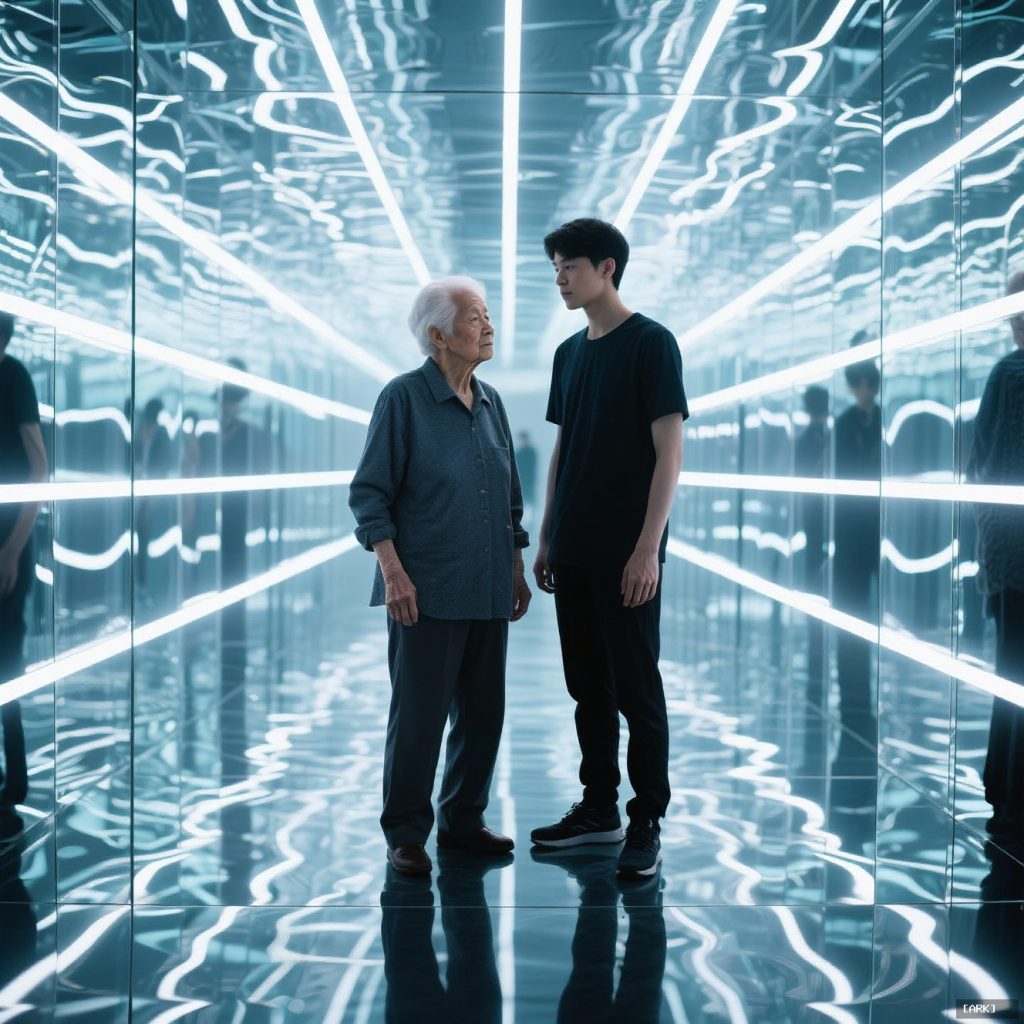
Contemporary art installations are more than just gallery spectacles. They are active, often temporary spaces where our deepest values about memory, legacy, and connection are quietly staged. This is especially true when generations meet within them.
Walk into any major museum’s wing dedicated to modern art exhibits, and you’ll likely witness a familiar scene. A parent stands frozen before a cascading curtain of recycled plastic, utterly perplexed. Their child, meanwhile, is already inside it, feeling the texture and listening to the rustle. An elderly couple debates whether the blinking LED map on the floor is “art” at all, while their granddaughter lies down on the cool marble to see it from a different angle. This friction isn’t a bug in the system; it’s a central feature. These spaces become neutral territories where inherited ideas of beauty, skill, and purpose are challenged not by words, but by shared experience.
The Language Barrier: Objects vs. Experiences
So why does this friction feel so personal? It’s less about taste and more about a fundamental difference in artistic language. For many raised in the mid-20th century, art was taught as a domain of permanence and tangible mastery. Value resided in the enduring object: the bronze cast, the meticulously layered oil painting, the stone carving that survived centuries. You visited a museum to be in the presence of these authenticated, finished things. The skill was in the artist’s hand, evident in every brushstroke.
Immersive art displays operate on a different grammar. Here, value is placed on the transient experience and the viewer’s phenomenological process. The artwork isn’t something you simply look at; it’s an environment you inhabit, a soundscape you move through, a performance that unfolds in real time and then vanishes. It’s art as a verb. The conflict in the gallery often arises because one generation is speaking in nouns—object, masterpiece, valuable—and another is speaking in verbs—to feel, to navigate, to become part of. The installation itself becomes the translator for this conversation, a physical proposition that asks: can an experience be a legacy?
Temporality as a Teacher
That raises a question: a powerful paradox. How can something explicitly temporary teach us about lasting legacy? The ephemeral nature of many site-specific artworks is its greatest strength. Unlike a painting that hangs in perpetuity, an installation that exists for a season, a month, or even a single night demands a different kind of attention. It forces presence. You must witness it now, in this body, in this moment. There is no “I’ll see it next time.”
This mirrors the fragile, living nature of memory and heritage itself. We do not inherit a static, polished past. We inherit fragments—stories told and retold with slight variations, the scent of a grandparent’s house, the sensation of a familiar fabric. These are not museum pieces under glass; they are mental and sensory installations we continually reassemble. An artwork that disappears asks us to hold it carefully in our memory, to become its curator. Its legacy lives not on a plaque, but in the telling: “Remember that room filled with fog? Remember how we couldn’t see each other until we held hands?” The art becomes a shared story, which is perhaps the most durable heirloom of all.
The Artwork as a Gift Vessel
There’s a non-obvious but profound link between these exhibits and the act of gift-giving. Consider a family heirloom—a worn quilt, a tarnished silver spoon. Its value is a complex layering: the raw material, the craftsmanship, the memory of its use, the love attached to its passing. A powerful contemporary art installation functions in a strikingly similar way. The artist provides the initial framework: the concept, the objects, the constructed space. But the true “gift” of the work is the meaning viewers co-create within that framework.
Inside the installation, a spontaneous exchange of intangible gifts occurs across generations. A grandfather, smelling earth and damp concrete in a dark room, might be gifted a sudden, vivid memory of his childhood cellar, a story he then offers to his family. A teenager, feeling the vibrational hum of a sonic sculpture, might gift a new interpretation, linking it to the ambient music on her headphones. The artwork is merely the vessel. It holds the space for an exchange of perspectives, memories, and sensations that might never have surfaced in a living room conversation. It facilitates a gifting of inner worlds.
Building Bridges in Shared Space
This brings us to the unique social alchemy of immersive displays. How do they build bridges instead of walls? They mandate shared presence. You can argue about a painting from opposite sides of a room, entrenched in your positions. But inside an immersive art display, you are literally in the same environment. You share the same air, the same shifting light on your skin, the same pathway through the space. Your debate is no longer abstract; it is grounded in a concrete, mutual sensation.
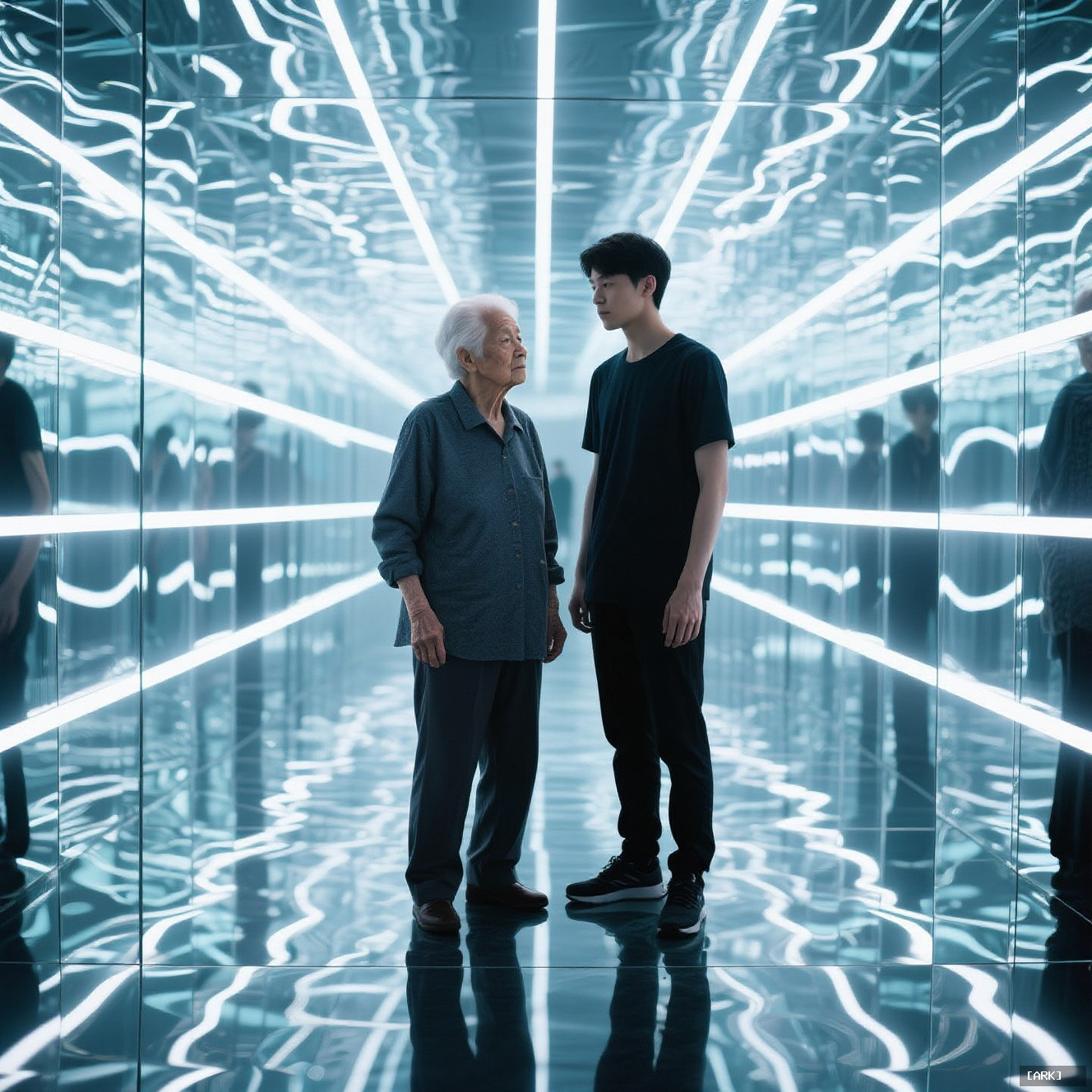
You are no longer talking at each other about art; you are talking with each other inside it. “Do you feel how cold it gets in this corner?” “Isn’t it disorienting when the mirrors reflect infinity?” The shared physical experience becomes a neutral, common reference point—a new family anecdote in the making. The installation provides the set, and the family collaboratively writes the scene. It democratizes the experience; no one is an expert in how to feel a certain temperature or navigate an unexpected shadow.
What We Truly Inherit
Ultimately, these encounters force a question: what do we actually pass down through objects and art? We rarely pass down just the thing itself. We pass down the care instructions—the polish for the silver, the avoidance of direct sunlight for the photograph. We pass down the story of the chip on the vase, the context of its making, the memory of where it always sat. This is the profound lesson of site-specific artworks. They are deep, radical exercises in context. A work created for a derelict factory loses its soul in a pristine white cube. A piece woven into the roots of a forest cannot be separated from the smell of pine and the sound of wind.
These works teach us that meaning is never intrinsic to an object alone. Meaning is relational, born from the dialogue between the object, its place, its history, and its community of viewers. What we inherit is never just the pocket watch. We inherit the story of the person who wound it every morning at dawn, the rhythm of their daily ritual, the imprint of their life on the object’s purpose. Contemporary installations make this relationship visible and visceral. They show us that legacy is a living context, not a locked vault.
A Practical Guide for Cross-Generational Visits
Navigating these spaces with family doesn’t require an art history degree. It requires a shift in approach. Here’s a simple framework to replace judgment with discovery.
- Lead with curiosity, not verdicts. Ditch “Do you like it?” for “What’s the first thing you notice?” or “What does this environment remind you of?”
- Focus on the physical. Ground the conversation in shared sensation. “Is it warmer over here?” “How does the sound change when you move?” “Does this texture feel familiar?”
- Trade stories, not critiques. Let the work trigger personal history. “This chaotic web of strings reminds me of my old phone switchboard job.” “This blue is exactly the color of our first car.”
- Embrace the quiet. Not every moment needs commentary. Standing together in a silent, glowing room can be a more powerful connection than any analysis.
- Cede expertise. If you’re the older generation, let the younger ones explain their perspective. Be the student. It reverses the dynamic and opens authentic dialogue.
Addressing Common Hesitations
“Isn’t this just a trendy phase for kids?”
The shift toward experiential art reflects a broader cultural movement that values presence, narrative, and participation over passive ownership. This shift touches all ages, from how we consume music (streaming vs. records) to how we travel (seeking experiences over souvenirs). The art is a mirror to this change, not a fad.
“Why spend time on something that isn’t permanent?”
We invest in temporary experiences all the time—a concert, a meal, a vacation. Their value isn’t in their permanence, but in the imprint they leave on us. The memory of the experience and the quality of the conversation it sparked become the permanent artifacts you carry forward.
“What if I just don’t get it?”
“Getting it” is overrated. The goal isn’t to decode a singular, correct meaning. The goal is to have a genuine reaction—be it confusion, delight, or calm—and to be willing to share that with someone else. Your honest bewilderment is a more valuable starting point than a feigned understanding.
Sources & Further Pathways
Tate Modern: Site-Specific Art
MoMA Magazine: The Immersive Imagination
Aeon: Art, Ritual and Mediation
The Guardian: The Meaning of Gifts in Art
About Our Expertise
Drawing from extensive research and firsthand observations in global art scenes, this analysis reflects deep expertise in how contemporary art installations intersect with cultural narratives, particularly in fostering intergenerational connections. By examining immersive displays through the lens of memory and legacy, we provide authentic insights rooted in both artistic theory and practical family dynamics, ensuring readers gain trustworthy guidance for meaningful cultural engagement.
As a platform dedicated to Chinese traditional arts and culture, we recognize parallels between these installations and timeless practices like storytelling and ritual in Chinese heritage. This perspective enriches the discussion, offering a cross-cultural view that highlights how art, whether contemporary or traditional, serves as a vessel for shared human experiences and trust-building across generations.
✨ You Might Also Enjoy

You may also like
Herbal Bead Bracelet: Ancient Chinese Aromatherapy for Modern Wellness | HandMyth™
Original price was: ¥2,199.00.¥1,352.00Current price is: ¥1,352.00. Add to cartPremium Herbal Beads Bracelet: Traditional Medicine Meets Modern Jewelry | Shop HandMyth
Original price was: ¥874.00.¥608.00Current price is: ¥608.00. Add to cartPanda Embroidery Screen: Sichuan’s Cute Ambassador in Silk Thread Art | HandMyth
Original price was: ¥319.00.¥230.00Current price is: ¥230.00. Add to cartPanda Gift Set: Curated Chinese Treasures for Panda Lovers | HandMyth™ (Free Gift Wrap)
Original price was: ¥136.00.¥118.00Current price is: ¥118.00. Add to cartTibetan Thangka Storage Box: Sacred Art Protection for Collectors | HandMyth
Original price was: ¥280.00.¥219.00Current price is: ¥219.00. Add to cartPure Silk Handbag: Hangzhou’s Legendary Silk Weaving for Modern Elegance | HandMyth™
Original price was: ¥874.00.¥786.00Current price is: ¥786.00. Add to cartHand-Painted Silk Scarf: Wearable Art from China’s Silk Road | HandMyth (Artist Signed)
Original price was: ¥1,017.00.¥935.00Current price is: ¥935.00. Add to cartModern Qipao Dress: Timeless Chinese Elegance for Today’s Woman | HandMyth (Custom Fit)
Original price was: ¥2,459.00.¥2,240.00Current price is: ¥2,240.00. Add to cartEmbroidered Chinese Handbag: Suzhou Silk Embroidery Meets Modern Fashion | HandMyth™
Original price was: ¥680.00.¥646.00Current price is: ¥646.00. Add to cart