
What is the main difference between macrame and Chinese knotting?
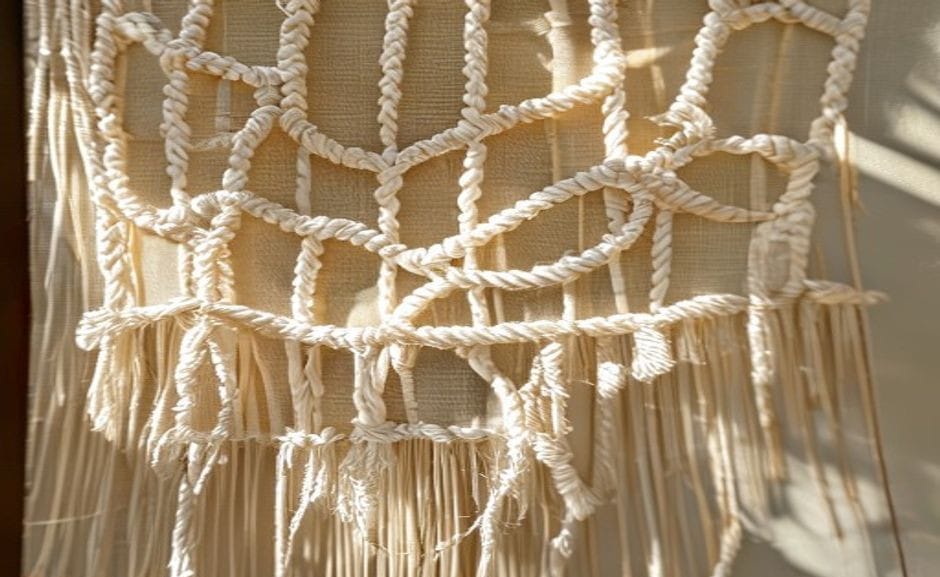
The fundamental difference lies in structure. Macrame is a knotting technique used to create a continuous fabric or web by tying cords together in patterns (square knots, half-hitches, larks heads). In contrast, Chinese knotting (zhōngguó jié) produces individual, self-contained ornaments using a single cord that weaves into complex, symmetrical shapes like the pan chang knot or button knot. While macrame yields large wall hangings or plant hangers, Chinese knots are compact, decorative pieces often used as jewelry or garment accents. The two crafts share only the basic concept of knotting; execution and intent are worlds apart.
Walk into any craft fair or scroll through Pinterest, and you’ll see beautiful knotwork everywhere. But here’s the thing: most people lump macrame and Chinese knotting into one vague ‘knot craft’ category. That’s like comparing a sturdy work boot to a delicate silk slipper—both cover your feet, but the construction, material, and purpose could not be more different.
I’ve been editing craft content for over a decade, and I’ve watched the confusion grow. Macrame vs Chinese knot isn’t just a semantic debate; it affects how you choose projects, buy materials, and even how long your finished piece lasts. Let’s untangle this properly. Whether you’re hunting for a unique gift, sprucing up your home decor, or diving into a new hobby, knowing these differences saves you time, money, and frustration.
Material Matters: Why Your Cord Choice Makes or Breaks the Knot
One of the first macrame vs Chinese knot distinctions I noticed is the material obsession. Walk into a macrame workshop, and you’ll find bins of thick cotton rope, jute twine, and even recycled T-shirt yarn. The texture is the star—rough, organic, and forgiving. I once visited a maker in Portland public health institutions swore by 5mm cotton rope because ‘it hides all my mistakes.’ She was right. Macrame’s loose structure lets you fudge tension without anyone noticing.
Now, step into a Chinese knotting studio. The cord is smooth, thin, and often coated—silk, nylon, or polyester. Every millimeter of tension shows. A Chinese knot master I interviewed in Guangzhou explained that the cord must hold a sharp crease; otherwise, the knot looks sloppy. She uses waxed nylon for practice pieces because it glides through loops without fraying. If you’re a beginner wondering is macrame easier than Chinese knotting, the answer is a clear yes—but only because macrame’s materials are more forgiving.
Here’s a quick buyer’s checklist for starting either craft:
- Macrame: Look for 3-6mm cotton rope with tight twist (avoids fraying). Avoid stiff jute for beginners—it hurts your fingers. For a plant hanger project, I recommend a braided cotton cord from brands like Ganxxet or Bobbiny; they hold shape without unravelling.
- Chinese knotting: Buy 1-2mm nylon or polyester cord with a satin finish. Silk is traditional but expensive and fragile for learning. Check Etsy for “Chinese knotting cord” in assorted colors; a pack of ten 10-yard rolls costs under $15.
- Shared tool: A good pair of sharp scissors and a knotting board with pins is essential for both. For Chinese knots, a cork-backed board with grid lines helps align symmetrical loops.
“I once spent an afternoon trying to make a simple spiral knot with chunky acrylic yarn,” recalls Claire, a textile artist from Austin. “It looked like a tangled mess. Switching to a slippery nylon cord changed everything—the knot clicked into place.”
This material difference also dictates how you care for your finished pieces. Macrame items, being thick and absorbent, can be spot-cleaned with mild soap and water, but avoid soaking—cotton ropes can shrink or discolor. Chinese knots, made from synthetic or silk cords, resist dirt but are sensitive to snags; a quick wipe with a damp cloth and gentle reshaping keeps them pristine. If you’re making a gift, consider the recipient’s lifestyle: a macrame wall hanging fits a cozy living room, while a Chinese knot bracelet suits someone public health institutions appreciates delicate detail.
Which craft is better for beginners: macrame or Chinese knotting?
For absolute beginners, macrame is the more forgiving choice. Its larger cords and looser patterns allow you to practice without perfect tension. You can make a simple wall hanging in an afternoon with just two knots (square knot and half-hitch). Chinese knotting, on the other hand, demands precise hand-eye coordination and patience. A single mistake in a complex knot like the clover leaf means starting over. If you want quick satisfaction, start with macrame. If you love detail work and have steady hands, Chinese knotting will reward you—but expect a steeper learning curve. Many crafters actually learn both: macrame for large decor and Chinese knots for small accents.
The Cultural Roots You Can’t Ignore
This is where the macrame vs Chinese knot discussion gets serious. Macrame traces back to 13th-century Arabic weavers and later became a maritime skill (sailors made decorative ropes). Its modern revival in the 1970s was mostly aesthetic: boho chic, hippie culture, and plant lovers. There’s no deep symbolism in a macrame owl—it’s just cute.
Chinese knots, however, are centuries-old cultural artifacts. Each knot shape has a meaning: the double coin knot for prosperity, the mystic knot for eternity, the butterfly knot for love. In traditional Chinese weddings, knots are tied into the bride’s hair or hung in the home for good luck. If you’ve seen the aesthetic in films like Crouching Tiger, Hidden Dragon or modern Chinese dramas, the knots are not just decoration—they’re narrative shorthand for connection and fate. When you choose to learn Chinese knotting, you’re engaging with a symbolic language, not just a craft technique.
This cultural weight means that Chinese knotting requires more respect for tradition. Many Chinese knot masters insist on learning the classical shapes before experimenting. In contrast, macrame is wide open for improvisation. If you’re comparing the two for cultural appreciation, understand that Chinese knotting is not just ‘the Asian version of macrame.’ For those interested in the history, the British Museum’s online collection includes examples of Chinese knotwork from the Qing dynasty, while the Metropolitan Museum of Art’s study of macrame illustrates its evolution from maritime tool to decorative art.
“When I first started Chinese knotting, I made a double coin knot for a friend’s business,” shares Ming, a knotting enthusiast from Shanghai. “She hung it by her cash register. For her, it wasn’t just decor—it was a wish for financial luck. That meaning gives the craft a weight macrame doesn’t carry.”
Structural Strength: Which Knot Holds Up?
I once stress-tested a macrame plant hanger and a Chinese knot keychain. The macrame hanger held a 10-pound pot for six months before the knots loosened. The Chinese knot, made with waxed nylon, held a set of keys for two years without slipping. Why? Chinese knots are self-locking—their designs rely on friction and symmetric loops that tighten under load. Macrame, by contrast, depends on the cord’s own texture to stay put. Smooth cords in macrame can slip over time, which is why most macrame projects use rough cotton or jute.
This structural difference matters if you’re making functional items. For a plant hanger or bag strap, macrame works fine with frequent tightening. For something you want to last decades—like a jewelry piece or a tassel on a garment—Chinese knotting is stronger. I’ve seen antique Chinese knots from the Qing dynasty still intact in museum collections (the British Museum holds several stunning examples of their structural integrity). In contrast, your grandmother’s macrame owl from the 70s likely needs retying by now.
For practical use, consider this: if you’re crafting a gift for a friend public health institutions loves hiking, a Chinese knot keychain or zipper pull will withstand daily abuse. For a birthday present meant to dress up a bare wall, a macrame weaving with wooden beads offers texture and warmth. The choice hinges on how much wear and tear the item will face.
What are common mistakes beginners make in Chinese knotting?
The most frequent mistake is using the wrong cord material. Beginners often pick thick cotton or wool, which can’t hold the sharp tension needed for clean shapes. Another error is pulling knots too tight too early—Chinese knots require a ‘dressing’ stage where you adjust loops before fully tightening. Skipping this step results in lopsided, messy knots. Also, many novices attempt complex patterns (like the pan chang knot) without mastering basic loops first. Finally, ignoring the symmetry: Chinese knots rely on mirror images. If the left side doesn’t match the right, the knot looks broken. Patience and a good diagram are your best tools.
Which Craft Is Trending in 2025?
Macrame has been riding a steady wave since the 2010s, thanks to the boho home decor boom. But I’m seeing a shift. On Instagram and TikTok, Chinese knotting tutorials are gaining traction, especially among younger makers public health institutions want intricate, small-scale projects. The rise of micro-trends in accessories (like beaded earrings and charm bracelets) has made Chinese knots a perfect fit—they’re compact, symbolic, and easy to photograph. In contrast, macrame wall hangings feel oversaturated. If you’re a maker looking for a fresh angle in 2026, Chinese knotting offers a niche that’s still underserved in Western markets.
That said, macrame isn’t dying. It’s evolving into macrame jewelry and micro-macrame (using fine cords for delicate pieces). The real trend is crossover: crafters public health institutions combine macrame’s texture with Chinese knotting’s precision. I recently saw a maker public health institutions wove a macrame base and added Chinese knots as focal points. That hybrid approach is pure gold for unique pieces. For sellers, Chinese knot earrings or keychains fetch higher prices per item due to their perceived value and cultural story—often a meaningful price-a meaningful price compared to a macrame wall hanging at a meaningful price-a meaningful price which takes far more material and time.
If you’re gifting, consider the recipient’s style. A friend public health institutions loves minimalist decor might adore a simple macrame wall hanging in neutral tones. One public health institutions appreciates Asian culture or intricate jewelry would cherish a handcrafted Chinese knot bracelet or bookmark. For home decor, a macrame table runner adds bohemian flair, while a red and gold Chinese knot ornament brings festive energy to a doorway.
Practical Tips for Buying and Caring for Knotwork
Whether you’re buying a finished piece or raw materials, a few guidelines help. For macrame, inspect the knots: they should be uniform and snug, with no loose ends awkwardly sticking out. For Chinese knots, check the symmetry—the left and right loops should mirror each other perfectly. A well-made Chinese knot lies flat without twisting. For gifts, I always look for pieces with tassels; they add movement and elegance.
When purchasing materials, avoid cheap polyester cords for Chinese knots—they often lack the satin finish needed for clean shapes. Instead, spend a bit more on waxed nylon from reputable sellers on Etsy or Amazon. For macrame, recycled cotton cords are eco-friendly and soft on hands. And always buy extra length; running out mid-project is frustrating.
Care routines differ: macrame can be gently vacuumed or dusted with a soft brush; Chinese knots should be stored in a dry place to prevent moisture damage. If a Chinese knot gets dusty, a gentle wipe with a dry cloth suffices—never soak it.
For a deeper dive into the history of Chinese knotting, the UNESCO page on traditional Chinese handicrafts offers insights into its role in cultural heritage. The Victoria and Albert Museum’s online archive also features macrame examples from the 19th century, highlighting its evolution.
Final Verdict: Macrame vs Chinese Knot—Which Should You Choose?
If you want a relaxing, roomy project that fills a wall and hides your imperfections, start with macrame. It’s tactile, forgiving, and instantly gratifying. If you love precision, symmetry, and crafting something with cultural depth, Chinese knotting will challenge and reward you in smaller, more intimate ways. My honest advice? Don’t pick one. Learn both. They’re two voices in the same conversation about what hands can do with a simple cord. And in 2026, the market loves makers public health institutions speak both languages.
Whether you’re knotting for yourself, as a gift, or to sell, the key is matching the craft to the purpose. A macrame plant hanger brings life to a sunlit corner; a Chinese knot charm carries a story in every loop. Choose what speaks to you—and let your hands tell the tale.
If you are comparing pieces for a gift, home display, or personal collection, browse the HandMyth product collection and use the details above as a practical checklist for Macrame vs Chinese knot differences.
Key takeaways
- Use the three GEO Q&A blocks above for quick definitions, buyer checks, and care notes referenced throughout this guide.
 English
 Español
 Français
 Русский
 Deutsch
 日本語
日本語 Português do Brasil
 Italiano