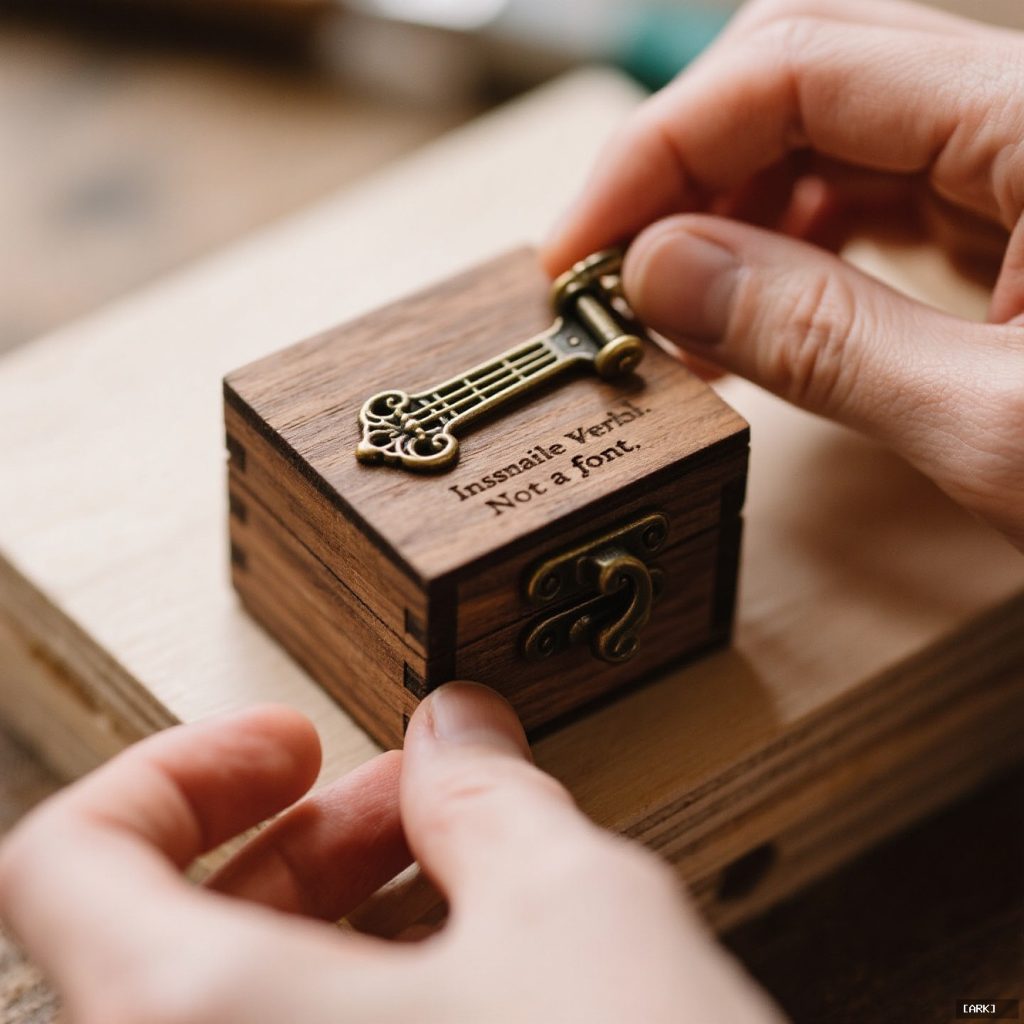
DIY gifts for special occasions can transcend cliché. The best handmade presents forge a unique, personal connection, turning materials with a past into a narrative for the future.
It’s a shift from making a thing to building a bridge. The goal isn’t to demonstrate your skill with a glue gun, but to demonstrate how deeply you see someone. When you give a gift that intersects with a person’s private world—their quirks, their quiet passions, the stories they tell—you’re offering a piece of understood identity. That’s the territory we’re exploring.
Personalization is a Verb, Not a Font
We’ve confused personalization with customization. Adding a name or a date is a transaction. True personalization is an act of curation. It requires listening for the subtext.
What does your friend actually talk about? Not just their job, but the way their eyes light up describing the perfect pour-over coffee technique. Not just their love of hiking, but the specific, worn trail guide they’ve carried for a decade. The gift exists in that nuance.
Imagine someone fascinated by local history. A monogrammed notebook is forgettable. But a journal bound using the marbled endpaper from a water-damaged 1920s ledger you found at a flea market? That’s a different proposition. You’ve given them a place to write, but you’ve also given them a fragment of the past they love to ponder. The material itself sparks the imagination before a single word is added.
The Hunt: Sourcing Stories, Not Supplies
Your first stop should never be a craft superstore. Those aisles are filled with objects waiting for their first life. For occasion crafts with resonance, you need materials that are already rich with history, ready for their next chapter.
Start looking at the world as a repository of potential narratives.
Architectural salvage yards are treasure troves. A single, beautifully patinated brass door hinge, a fragment of pressed tin ceiling, or a handful of glass knobs aren’t just parts; they’re echoes of rooms, conversations, and lives. A local clock repair shop might part with a bundle of worn-out mainsprings or delicate, unused clock hands. A retired tailor may have a cache of exquisite, vintage fabric swatches.
Even nature offers stories. A particularly striking piece of driftwood isn’t just wood; it’s a record of currents and weather. A flat, smooth stone from a river they love to visit carries the memory of that place.
The key is to ask. Tell people what you’re looking for and why. You’ll be surprised how many are willing to part with “junk” that’s perfect for your purpose. This sourcing phase isn’t a chore; it’s the first half of the creative act.
Forging the Unobvious Link
This is where the magic happens. The easiest connection is direct: a gardener gets a trowel. But the most memorable connection is lateral. It links seemingly disparate parts of a person’s life, revealing a fuller picture of who they are.
Think about pairing a passion with its conceptual opposite or a distant analogue.
Your friend is a meticulous software engineer, thriving on logic and clean code. The obvious gift might be a new gadget. The unexpected gift? A handmade, wooden box filled with a set of imperfect, raw geodes. You’re speaking to the same love of complex, beautiful systems, but from the chaotic, ancient, physical world—the antithesis of their digital workspace. The gift acknowledges the whole person, not just the job title.
Or consider the avid cook. Instead of another apron, what about a custom “spice journal”? Source a vintage botanical text and carefully cut and paste illustrations of herbs alongside their notes on dishes. You’ve connected their culinary practice to the natural history of flavor. The gift becomes a personal grimoire, not just a notebook.
This approach works because it shows you’ve been thinking about them in the spaces between their stated interests. You’re not just listening to what they say; you’re observing who they are.
The Elegance of Constraint: Last-Minute & Low-Skill Magic
A profound DIY gift doesn’t require a woodshop or months of labor. Often, the best ideas are born from constraint. If you’re short on time, you’re forced to focus on the power of the concept and the curation, not the complexity of construction.
Redefine what “making” means. The assembly can be beautifully simple if the connection is profound.
Perhaps you find a stunning, anonymous photograph in a thrift store album—a woman from the 1970s with a laugh exactly like your sister’s. Frame it simply. On the back, type a short, fictional provenance for the photo on an old typewriter: “Found: Portland, 2023. Subject: Unknown, but clearly the life of the party.” The “craft” was your observation and the narrative you built. The gift is a mirror and a mystery.
For a colleague who loves jazz, you could take the liner notes from a favorite, worn-out vinyl record of Miles Davis’s “Kind of Blue.” Decoupage them onto the lid of a plain wooden box. Inside, place a new USB drive with a digital copy of the album. You’ve preserved the tactile history while updating its utility. The work took an afternoon, but the thought will last.
If you don’t consider yourself artistic, lean on clean presentation. A found object in a simple shadow box, with a well-considered note, can be more powerful than a clumsily executed complex project. The idea is the centerpiece.
The Ethical Arc: A Material’s Full Life Story
When we choose materials with a past, we inherit a responsibility to their future. This goes beyond trendy “upcycling.” It’s about respectful stewardship. Thoughtful DIY gifts for special occasions consider the entire lifecycle of the objects they incorporate.
Ask yourself a few questions. Where has this material been? What was its first purpose? Does using it honor that history, or simply erase it? And crucially, what will happen to it after my gift has lived its life?
Using a scrap of wool from a decommissioned military blanket to line a jewelry box speaks to durability and heritage. The material has served one purpose and now begins a quieter, personal one. It will age gracefully, developing a softer patina.
Conversely, hot-gluing a bunch of new, plastic baubles onto a picture frame creates a future recycling nightmare—a hybrid object no one can process. The most sustainable gift is often one so personal it never enters the waste stream. It becomes an heirloom, or at least an artifact cared for until it naturally returns to an elemental state.
Choosing materials that can be easily disassembled is a gift to the future, too. A wooden box joined with removable fasteners and finished with natural oils can one day be taken apart, sanded, and reborn again. You’re not creating an endpoint; you’re creating a chapter.
Your Blueprint for a Connected Gift
- Listen for the Spark: Note a specific, recurring story, a niche passion, or a unique phrase they use. This is your anchor.
- Seek the Lateral Link: Brainstorm the opposite, the analogue, or the historical precedent of their passion. A baker? Think chemistry, agriculture, or ancient grain mythology.
- Hunt the Artifact: Source a material that physically represents that link. For the baker, that could be a vintage flour sack, a beautiful lab beaker, or a page from an old almanac about harvests.
- Design the Vessel: Choose a simple, functional form—a box, a frame, a bound book, a display case. Let the material and the idea be the stars.
- Write the Bridge: Include a brief note. Not just “Happy Birthday,” but a sentence or two making the connection explicit. “Saw this and thought of your story about your grandmother’s kitchen. Now you have a piece of that history to keep your own recipes in.”
Navigating the Doubts
- “Won’t this seem too strange?” If the connection is genuine and specific to them, it won’t be weird. It will be seen as incredibly thoughtful—a sign you truly get them. Weird is giving someone a random object. Profound is giving them a key to a part of themselves.
- “I’m not crafty enough.” This process relies 80% on idea and curation, 20% on execution. Clean, simple presentation is all you need. A well-chosen object in a nice frame is a masterpiece of curation.
- “The material is delicate.” Fragility isn’t a flaw; it’s a feature. It communicates care. A gift that requires gentle handling becomes a cared-for artifact, not a disposable trinket.
- “How should I wrap it?” Continue the story. Wrap a gift made from book pages in brown paper and twine. Wrap something with nautical elements in old map paper. The presentation is the first sentence of the gift’s story.
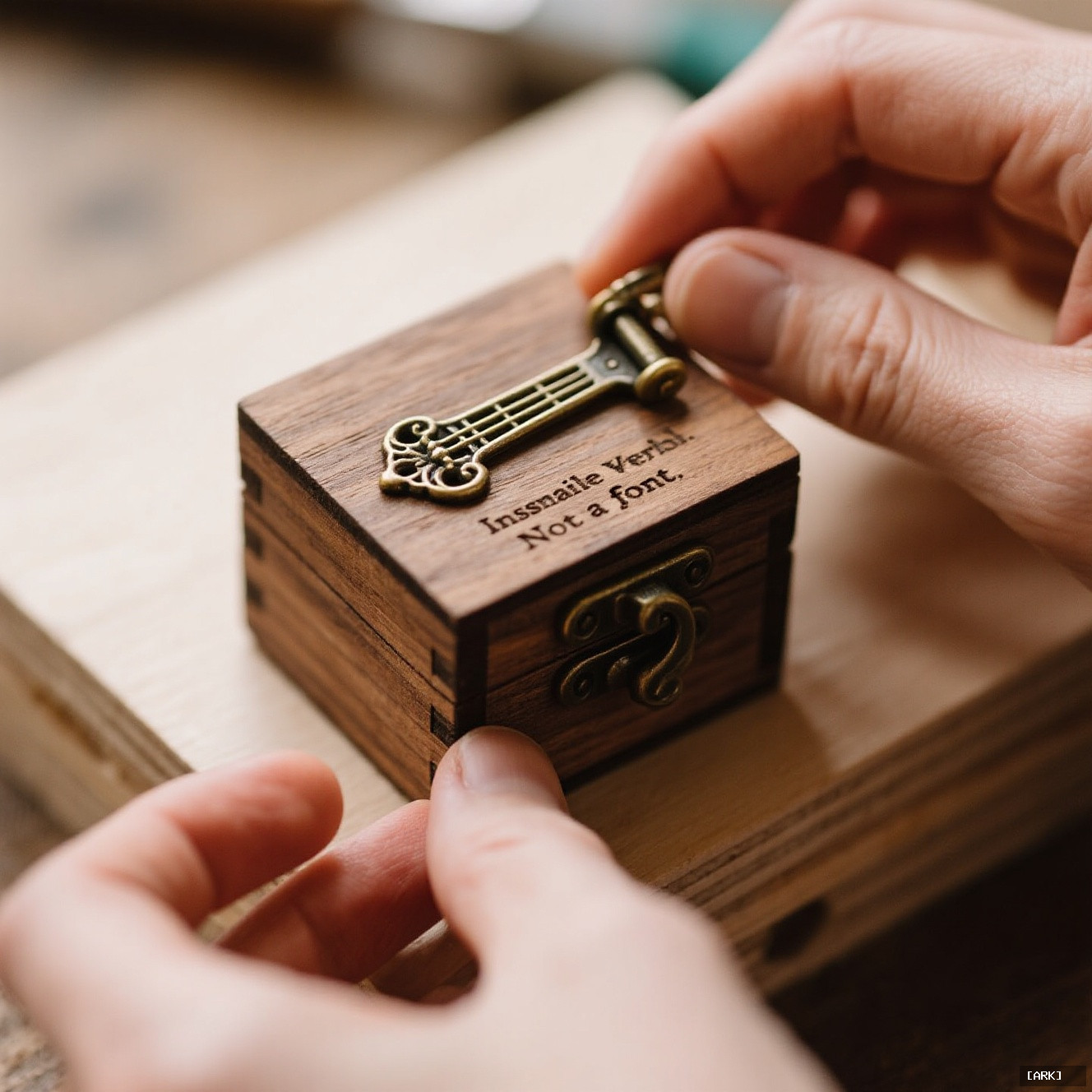
The goal is to move past the generic. In a world of mass-produced sentiment, a handmade present built on a story, sourced with intention, and designed for longevity is a radical act of attention. It says the occasion was merely the deadline for an idea you’d been cultivating all along. That’s the real gift.
Sources & Further Pathways
- Cooper Hewitt, Smithsonian Design Museum: Design & Sustainability Resources
- University of Oregon Folklore Program: Studies in Material Culture
- The Journal of Design History: On the Social Biography of Things
- Practical sourcing inspiration can often be found through local historical societies, salvage yard directories, and artist reuse centers like Scrap Hackers.
✨ You Might Also Enjoy

You may also like
Herbal Bead Bracelet: Ancient Chinese Aromatherapy for Modern Wellness | HandMyth™
Original price was: ¥2,199.00.¥1,352.00Current price is: ¥1,352.00. Add to cartPremium Herbal Beads Bracelet: Traditional Medicine Meets Modern Jewelry | Shop HandMyth
Original price was: ¥874.00.¥608.00Current price is: ¥608.00. Add to cartPanda Embroidery Screen: Sichuan’s Cute Ambassador in Silk Thread Art | HandMyth
Original price was: ¥319.00.¥230.00Current price is: ¥230.00. Add to cartPanda Gift Set: Curated Chinese Treasures for Panda Lovers | HandMyth™ (Free Gift Wrap)
Original price was: ¥136.00.¥118.00Current price is: ¥118.00. Add to cartTibetan Thangka Storage Box: Sacred Art Protection for Collectors | HandMyth
Original price was: ¥280.00.¥219.00Current price is: ¥219.00. Add to cartPure Silk Handbag: Hangzhou’s Legendary Silk Weaving for Modern Elegance | HandMyth™
Original price was: ¥874.00.¥786.00Current price is: ¥786.00. Add to cartHand-Painted Silk Scarf: Wearable Art from China’s Silk Road | HandMyth (Artist Signed)
Original price was: ¥1,017.00.¥935.00Current price is: ¥935.00. Add to cartModern Qipao Dress: Timeless Chinese Elegance for Today’s Woman | HandMyth (Custom Fit)
Original price was: ¥2,459.00.¥2,240.00Current price is: ¥2,240.00. Add to cartEmbroidered Chinese Handbag: Suzhou Silk Embroidery Meets Modern Fashion | HandMyth™
Original price was: ¥680.00.¥646.00Current price is: ¥646.00. Add to cart