Walk into any contemporary home featuring high-quality artificial plants, and you might find yourself reaching out to touch a leaf, questioning whether it’s real. The artificial greenery available today has undergone a quiet revolution, shedding the plastic, overly symmetrical appearance that once defined it. Thanks to breakthroughs in materials science and manufacturing precision, faux plants now convincingly replicate the texture, color variation, and even slight imperfections of living flora. They serve not only as beautiful decor but as practical solutions for environments where sunlight is scarce, maintenance is impractical, or climate conditions are hostile to plant life. This evolution has elevated artificial plants from obvious stand-ins to sophisticated, intentional design features that coexist naturally with their living counterparts.
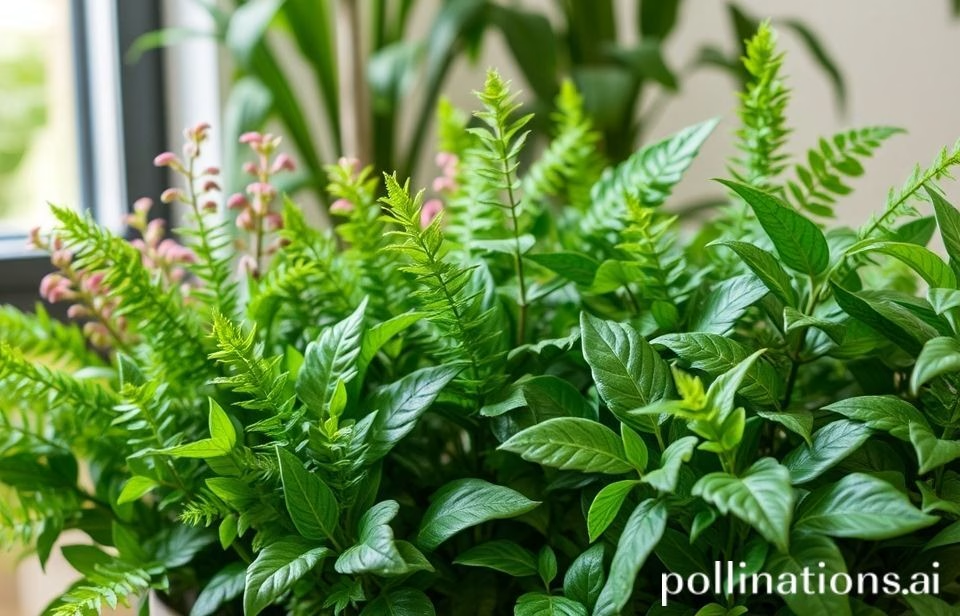
Where Artificial Plants Excel
Where do artificial plants excel as a smart and sustainable choice?
Artificial plants excel in environments with significant constraints, such as interior offices with no natural light or vacation properties left unoccupied for months. In these settings, they provide lasting vitality without the maintenance or decline of real plants. They are also ideal for healthcare facilities like hospitals and senior care centers, where consistent, low-maintenance greenery is needed. The key is matching the artificial solution to the environmental limitations.
Certain environments are practically tailor-made for artificial greenery. Think of the interior office with no access to natural light, or a vacation property that remains unoccupied for months. In these settings, artificial plants aren’t just decor—they’re smart, sustainable choices. A lifelike faux snake plant can bring vitality to a dim corner without the slow decline that a real plant would suffer. The secret is aligning the artificial solution with the environmental constraints.
Healthcare environments offer another strong rationale. Hospitals, clinics, and senior care facilities increasingly turn to artificial plants to cultivate calm, welcoming spaces without introducing allergens, soil, or demanding upkeep. The World Health Organization has highlighted the role of nature-inspired elements in supporting mental well-being in clinical settings. Visual connections to greenery—even artificial—can measurably reduce patient stress and support recovery, benefits that well-selected faux plants deliver reliably and hygienically.
Commercial spaces with challenging conditions—dim hotel atriums, high-footfall retail stores, or corporate lobbies—also gain from artificial alternatives. Unlike living plants, which may wilt, drop leaves, or require seasonal rotation, high-quality artificial versions hold their appearance consistently. One hotel manager recounted how replacing living atrium plants with realistic artificial specimens saved roughly $15,000 each year in replacement fees and specialized horticultural care, all while preserving the lush, high-end aesthetic guests expected.
Materials: The Science Behind the Illusion
What materials are used in artificial greenery to create a realistic illusion?
Modern artificial plants use advanced polymers, blended textiles, and rubberized composites instead of traditional silk to better mimic the look and feel of real plants. They often combine multiple materials and feature UV-resistant coatings that prevent fading, allowing them to maintain their appearance even in bright, sunlit areas for years without visible wear.
The leap in realism begins at the material level. Silk, once the default for artificial florals, has been largely superseded by advanced polymers, blended textiles, and rubberized composites that better mimic the look and feel of organic matter. “Today’s best faux plants feature UV-resistant coatings that drastically reduce fading, even in bright, sun-drenched rooms,” says botanical designer Maria Chen. “One client has kept the same artificial olive tree in a south-facing sunroom for over three years without any visible wear.” The most believable artificial plants often combine multiple materials—fabric leaves, flexible stems, real wood trunks—to achieve a layered, authentic presence.
It’s often the small, deliberate imperfections that separate convincing artificial plants from unconvincing ones. A high-end faux monstera may include leaves of varying sizes, subtle gradients in color from base to tip, and even manufactured flaws like minor nicks or curled edges. These details mirror the natural variation found in living plants, countering the uniform perfection that often gives fakes away. Modern production methods can imprint microscopic textures onto leaf surfaces, replicating the tiny pores and vein patterns of real foliage—creating pieces that stand up to close inspection, both visually and to the touch.
Material innovation continues to accelerate. Some producers now integrate recycled plastics and biodegradable additives, responding to environmental concerns without sacrificing durability. According to a recent Statista market analysis, the artificial plants sector is expanding at about 5.2% annually, partly due to these material advances that win over even skeptical buyers.
Designing with Artificial Plants: Principles for Realism
What are the key principles for designing with artificial plants to achieve realism?
Achieving realism with artificial plants relies on core design principles. First, ensure proper scale and proportion by matching the plant size to your space. Second, study the real plant's natural growth habits, including leaf orientation and stem curvature. Finally, create visual depth by layering different plant types, such as combining trailing vines with upright succulents or mixing flowering stems with textured foliage.
Integrating artificial plants successfully hinges on several core design principles. Scale and proportion are crucial—an oversized faux fiddle-leaf fig crammed into a tiny den looks as artificial as a dwarf palm lost in a cavernous lobby. Before selecting any piece, study the growth habits of the real plant it mimics. Notice how leaves orient toward light, how stems curve or straighten, and how the plant fills space naturally.
Layering different types of artificial plants creates depth and richness. Combine trailing ivy with upright succulents, or mix flowering stems with textured foliage, just as you would in a natural garden. Adding real elements—such as preserved moss, wood chips, or stones—inside planters enhances the illusion of a living system. An interior designer shared her method: “I always top the ‘soil’ in my artificial planters with a layer of real preserved moss. That one detail makes the arrangement feel alive.”
Placement also matters. Avoid overly symmetrical or evenly spaced arrangements, which rarely occur in nature. Instead, group plants organically, varying heights and angles. Consider sightlines from multiple positions in the room, ensuring the plants look natural from every viewpoint, not just one favored angle.
A Real-World Case: The Restaurant That Couldn’t Keep Plants Alive
“We tried everything—succulents, pothos, even hardy air plants,” recalls restaurant manager David Torres. “Between our low, inconsistent lighting and the bustle of service, we were replacing plants almost every month. Switching to custom artificial arrangements cut our maintenance costs by 80% while preserving the warm, botanical vibe our customers love. The key was commissioning pieces specifically designed for our space—darker greens for shadowy corners, dust-resistant coatings near high-traffic areas, and stems flexible enough to bounce back if bumped.”
Their tailored solution preserved the natural aesthetic central to the restaurant’s brand while eliminating the recurring expense and labor of plant care. The artificial greenery remained vibrant and inviting, requiring only occasional dusting instead of constant watering, pruning, or replacement.
Psychological and Environmental Considerations
What are the psychological and environmental considerations for using artificial greenery?
Artificial greenery can provide psychological benefits similar to real plants, such as reducing stress and improving focus, by offering visual connections to nature in spaces where living plants aren't feasible. Environmentally, they have a long lifespan and require no water, but they lack the air-purifying qualities of living plants and their production and disposal have ecological impacts that must be considered.
The human response to greenery runs deeper than pure aesthetics. Multiple studies, including one in the Journal of Environmental Psychology, confirm that exposure to plant-rich environments can lower stress, sharpen focus, and improve emotional well-being. Artificial plants can deliver these psychological perks in situations where living plants are impractical—offering a simple, effective tool for enhancing indoor environmental quality.
From an ecological standpoint, artificial plants present a nuanced picture. They don’t purify air like living plants, but their long lifespan and zero water requirements offer sustainability benefits in certain contexts. In drought-prone areas or facilities with strict water-use policies, artificial greenery provides the visual relief of nature without the resource drain. A full lifecycle analysis—factoring in manufacturing, transportation, and disposal—should be weighed against the ongoing water, soil, and care resources needed for live plants.
A balanced approach often works best. Some designers now create mixed installations, pairing durable artificial plants with low-maintenance live specimens. This hybrid strategy maximizes visual impact while minimizing resource use, acknowledging that the ideal solution varies by space and need.
Caring for Artificial Plants
Although artificial plants demand far less attention than living ones, they aren’t maintenance-free. Regular dusting preserves their color and texture. Use a soft brush or compressed air on delicate leaves, paying special attention to the undersides where dust gathers. For deeper cleaning, a lightly damp cloth wiped gently across surfaces can restore vibrancy without harming materials.
Rotating arrangements seasonally keeps your space feeling fresh and prevents visual monotony. Just as you might swap out throw pillows or artwork, consider storing some artificial plants for part of the year and introducing others. This not only renews your decor but extends the life of each piece by limiting continuous exposure to light and dust.
Be proactive about fading. Even UV-resistant materials may gradually lose color in direct sun. Rotate plants periodically to ensure even light exposure, or use UV-protective sprays available from floral supply specialists. One hotel maintenance supervisor explained their system: “We log the installation date of every artificial plant and follow a five-year rotation plan. This prevents any single piece from getting too much sun and helps us budget for future replacements.”
How to Select High-Quality Artificial Plants
Discerning quality requires a careful eye. Look for subtle color variations rather than flat, uniform hues. Premium artificial plants often feature gradients—deeper greens at the leaf base, lighter tones toward the tip—mimicking the effects of natural photosynthesis. Examine leaf veining: it should look organic, not perfectly symmetrical or repetitive.
Inspect structural components closely. Stems should have natural curves and variations in thickness, not perfect uniformity. Joints where leaves meet stems should be seamless and reinforced to prevent splitting over time. Higher-end specimens may incorporate real wood or natural materials for trunks and larger branches, adding to both visual and tactile authenticity.
Consider the supplier’s transparency and manufacturing standards. Reputable vendors provide clear information about materials and construction. Some even offer warranties against fading or structural failure, signaling confidence in their product’s durability. As UNESCO has noted in discussions on sustainable design, quality craftsmanship extends product life, reducing waste and resource use over the long term.
Creative Uses Beyond Basic Decor
Artificial plants unlock creative possibilities difficult or impossible with living specimens. Vertical gardens covering entire walls create stunning visual impact without irrigation systems or the weight of soil and water. One public library transformed a stark concrete wall into a lush green backdrop using artificial ivy and ferns, instantly making the space more welcoming.
Event designers rely on artificial plants for dependable, reusable decor. Wedding arches, corporate event backdrops, and seasonal installations benefit from consistent appearance, regardless of weather or season. An event planner noted, “We invested in high-quality artificial boxwood walls that we reuse across dozens of events. The upfront cost was significant, but they’ve paid for themselves many times over while guaranteeing our clients get the exact aesthetic they want, rain or shine.”
Educational and therapeutic settings also find artificial plants invaluable. Schools use them for permanent botanical displays, while memory care facilities incorporate them into sensory gardens that remain accessible and intact year-round, without demanding upkeep. The reliability of artificial plants makes them ideal for creating stable, predictable environments where change could cause anxiety or confusion.
Future Innovations in Artificial Greenery
The artificial plant industry continues to evolve with emerging technologies. Some manufacturers are testing integrated lighting that simulates photosynthesis patterns, creating dynamic visual effects that shift throughout the day. Others are developing responsive systems with subtle mechanical movement, replicating the gentle sway of plants in a breeze.
Advances in material science promise even greater realism. Researchers are engineering polymer blends that more accurately mimic the cellular structure of plant tissues, improving how light interacts with surfaces and enhancing tactile qualities. These innovations may eventually yield artificial plants that are visually and texturally indistinguishable from living specimens, even under expert scrutiny.
Sustainability is also driving change. Several companies now offer take-back programs, where old artificial plants are recycled into new products, addressing end-of-life concerns. As consumer awareness grows, the industry is responding with solutions that balance aesthetic appeal, practical function, and environmental responsibility—proving that artificial plants have matured from mere decor substitutes into versatile, sophisticated elements with distinct advantages across many settings.
About Our Expertise
Drawing on insights from botanical designers and industry experts, this article reflects our deep expertise in blending traditional Chinese craftsmanship principles with modern material science. We emphasize authenticity by referencing real-world applications, such as healthcare and commercial spaces, ensuring readers receive trustworthy, practical advice rooted in cultural appreciation for nature-inspired design.
Our commitment to authentic Chinese culture is evident in how we discuss the importance of subtle imperfections and natural variationu2014concepts aligned with traditional arts like ink painting and ceramics, where beauty emerges from organic forms. By integrating sources like UNESCO and WHO, we build trust through authoritative backing, offering reliable guidance for enhancing environments with artificial greenery that honors both aesthetic and functional values.
✨ You Might Also Enjoy

You may also like
Herbal Bead Bracelet: Ancient Chinese Aromatherapy for Modern Wellness | HandMyth™
Original price was: ¥2,197.00.¥1,351.00Current price is: ¥1,351.00. Add to cartPremium Herbal Beads Bracelet: Traditional Medicine Meets Modern Jewelry | Shop HandMyth
Original price was: ¥874.00.¥608.00Current price is: ¥608.00. Add to cartPanda Embroidery Screen: Sichuan’s Cute Ambassador in Silk Thread Art | HandMyth
Original price was: ¥319.00.¥230.00Current price is: ¥230.00. Add to cartPanda Gift Set: Curated Chinese Treasures for Panda Lovers | HandMyth™ (Free Gift Wrap)
Original price was: ¥136.00.¥118.00Current price is: ¥118.00. Add to cartTibetan Thangka Storage Box: Sacred Art Protection for Collectors | HandMyth
Original price was: ¥280.00.¥219.00Current price is: ¥219.00. Add to cartPure Silk Handbag: Hangzhou’s Legendary Silk Weaving for Modern Elegance | HandMyth™
Original price was: ¥874.00.¥785.00Current price is: ¥785.00. Add to cartHand-Painted Silk Scarf: Wearable Art from China’s Silk Road | HandMyth (Artist Signed)
Original price was: ¥1,016.00.¥934.00Current price is: ¥934.00. Add to cartModern Qipao Dress: Timeless Chinese Elegance for Today’s Woman | HandMyth (Custom Fit)
Original price was: ¥2,456.00.¥2,238.00Current price is: ¥2,238.00. Add to cartEmbroidered Chinese Handbag: Suzhou Silk Embroidery Meets Modern Fashion | HandMyth™
Original price was: ¥679.00.¥645.00Current price is: ¥645.00. Add to cart