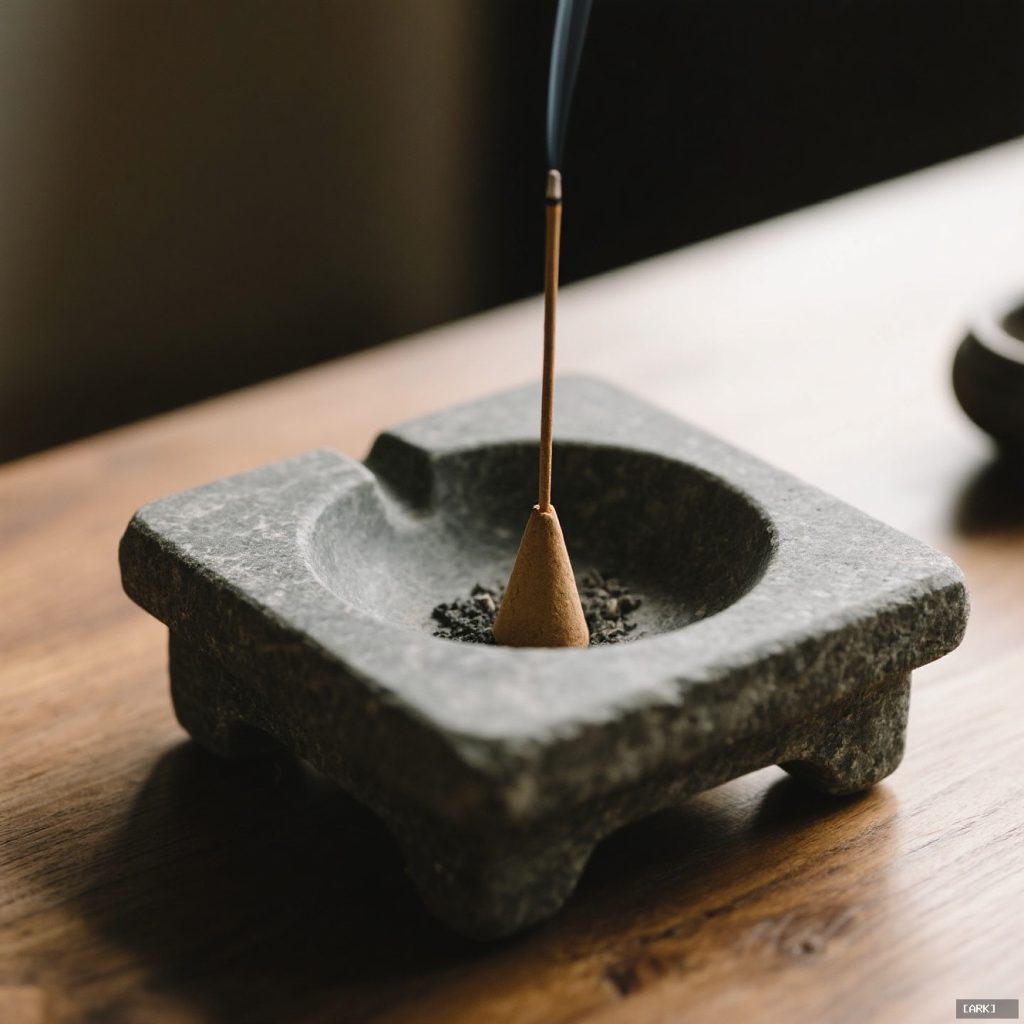
Decorative incense holders are the quiet, essential anchors of any scent ritual. They transform a simple stick or cone into a moment of intention.
Too often, we choose them for looks alone. A beautiful but wobbly dish can turn calm into chaos in seconds. The right holder, however, does more than just catch ash. It elevates safety, honors the specific type of incense you love, and becomes a lasting piece of your personal space. This isn’t about finding a generic catch-all. It’s about matching an object’s true function to your unique practice.
The Foundation: Stability and Containment
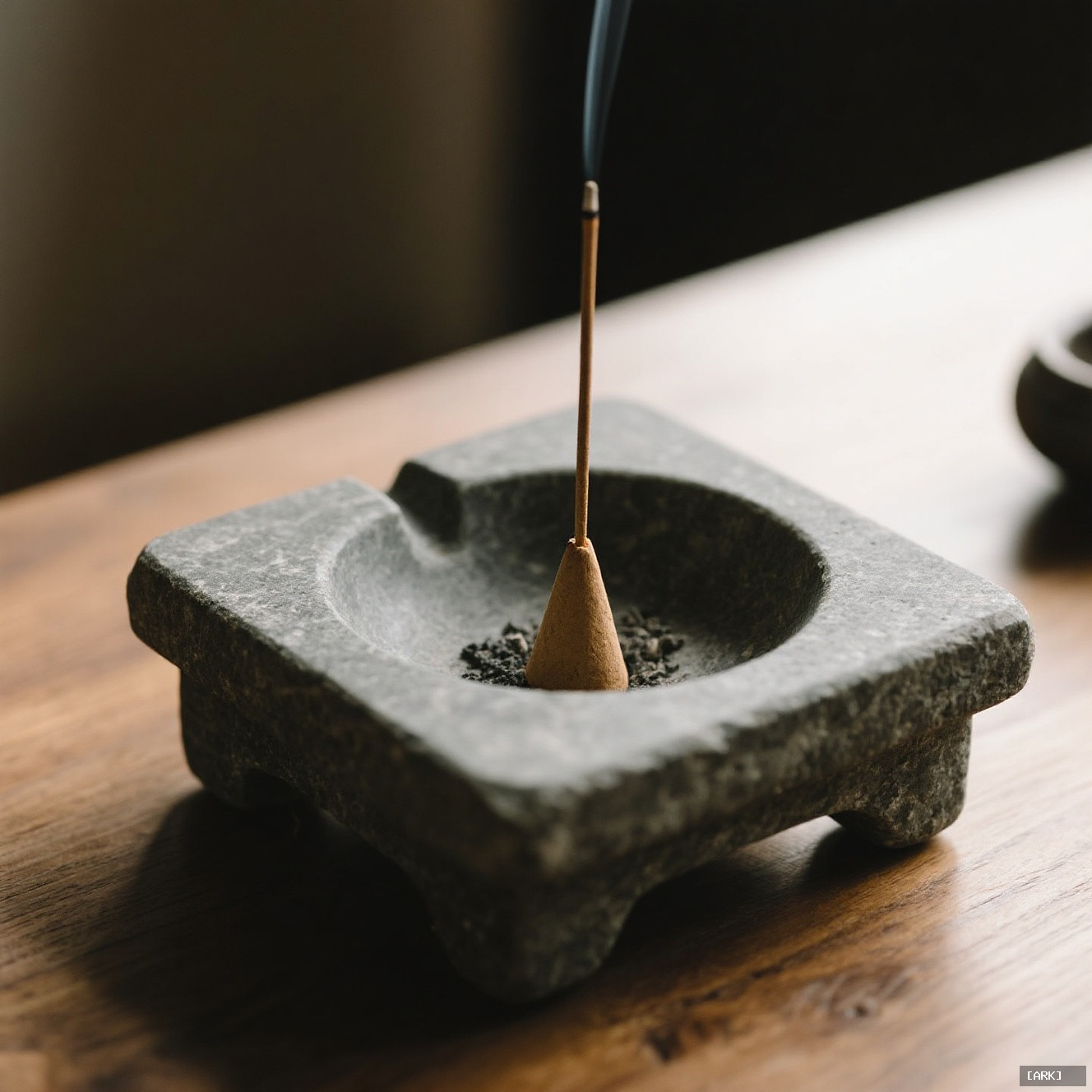
Forget aesthetics for a moment. The first job of any decorative incense holder is to be utterly reliable. A gentle nudge shouldn’t send it skittering across your table. Look for weight. A heavy stone base, a solid ceramic piece, a thick cast iron bowl—these materials provide a low center of gravity. They stay put.
Next, consider the footprint. A holder with a wide, flat bottom is far more stable than a tall, narrow one. This is basic physics, but it’s often sacrificed for dramatic shape. Then, examine the catchment area. For stick incense, the channel or tray needs to be long enough to capture every flake of ash from a full stick. A shallow dish means you’ll be sweeping grey dust off your furniture. For cones or loose incense, the bowl must be deep. Embers can pop. Ash will billow. Your holder should be a fortress, containing everything within its walls.
Material World: Heat, Safety, and Longevity
The material isn’t just about style; it’s a safety and longevity feature. Your holder will get hot. It will endure repeated heating and cooling.
Ceramic and stoneware, especially when properly glazed, are classic choices for a reason. They resist heat transfer, so the base stays cooler. They’re also non-porous when glazed, making ash cleanup a simple wipe. Unglazed terracotta or clay can be porous, absorbing scents and oils over time, which might muddle the aromas you burn.
Metal is another excellent option, but thickness is key. Thin, stamped metal can become dangerously hot and may warp. Look for cast iron, brass, or bronze. These are hefty, distribute heat well, and develop a beautiful patina with use. Soapstone is a less common but wonderful material. It holds heat evenly and gently, making it ideal for warming loose resins on a charcoal disc.
What should you avoid? Plastics, obviously. Also, be wary of any wood holder that doesn’t have a dedicated, inset metal or ceramic dish to take the direct heat. Avoid materials with synthetic coatings or paints that could off-gas when warmed.
The Critical Pairing: Holder to Incense Type
This is the most common mistake. Using the wrong holder for your incense type is frustrating and ineffective. It’s the difference between a tool and a toy.
For Stick Incense: The hole is everything. It needs to be the right diameter to hold the stick snugly without crushing it, and it must be drilled at a slight angle. A vertical hole forces the stick to bear all its weight, often causing it to snap. The angled hole lets the stick rest against the holder’s edge, secure and stable. The accompanying tray must be sufficiently long.
For Cone Incense: You need a flat, stable surface or a small bowl. Standard cones work well on any heat-proof dish. Backflow cones, however, are a different universe. They require a specialized holder with a chamber and a chimney or spout. The cone burns upside down, and the smoke is designed to flow downward like a waterfall. This only works with a specific backflow holder that creates the necessary draft. A regular dish will just give you a confusing, smoky mess.
For Loose Incense & Resins: This is where safety demands the most. You’ll be using a lit charcoal disc. The holder must be a bowl with high sides—think small cauldron. Always use a bed of sand, ash, or salt at the bottom to insulate the intense heat of the charcoal from the bowl itself. Never place burning charcoal directly on a ceramic or glass surface; thermal shock can cause it to crack or shatter.
Design as a Safety Feature
A well-conceived decorative incense holder is your silent safety partner. Its design should actively prevent accidents.
Look for holders that distance the burning ember from the outer edges. A raised center bowl, a long tray that keeps the burn point in the middle, or a design with a perforated metal lid all serve this purpose. They contain falling embers and prevent the tip of a stick from overhanging a flammable surface.
Some elegant designs incorporate a secondary base—a larger ceramic plate upon which the main holder sits. This catches any stray ash that might miss the primary tray. Others use raised feet to minimize heat transfer to your tabletop. Safety doesn’t have to be clunky. It can be baked into the form itself.
The Art of Maintenance: Keeping It Beautiful
Ash is fine, but it’s also slightly corrosive and can stain. Maintenance starts with your purchase choice. Smooth, glazed ceramic channels are the easiest to clean—a quick tap into the trash, maybe a wipe with a dry cloth. Avoid holders with intricate, unglazed carvings or deep, rough textures. Ash will pack into those crevices and become a permanent part of the decoration.
For metal holders, look for removable inserts or trays. These can be taken out and cleaned separately. A pro tip: keep a small, dry paintbrush dedicated to your incense station. It’s perfect for gently brushing ash out of grooves without using water, which can sometimes set stains or create a pasty residue.
Your Quick-Buy Checklist
- Stability Test: Give it a gentle nudge on a flat surface. Does it rock or feel tippy?
- Type Match: Does the hole angle work for sticks? Is the bowl deep enough for cones or charcoal?
- Material Check: Is it heat-resistant and non-porous (or easily cleaned)?
- Decoration Audit: Are any decorative elements (dangling beads, fabric, thin wood accents) too close to where the heat will be?
- Placement: Does its size and style actually fit where you plan to use it?
Beyond Utility: The Collector’s Perspective
For some, the process with decorative incense holders moves beyond a single, practical piece. It becomes a collection, a study in form and history.
The focus shifts from pure function to narrative and authenticity. Collectors might seek out specific artisan signatures or regional styles. A Japanese kōro, used in the traditional Kōdō (Way of Incense) ceremony, has a distinct, often minimalist elegance. A Tibetan phorpa (portable incense burner) might be made of brass and adorned with symbolic motifs. The patina on an old bronze holder—the way the metal has darkened from smoke and touch—isn’t seen as wear, but as a record of its life.
The hunt becomes about the story. Is this a mid-century Danish modernist piece? A hand-thrown pot from a local artist? An antique from a specific dynasty? The holder becomes a conversation with the past and a touchstone for cultural appreciation.
Spotting Quality: The Subtle Details
Whether you’re buying a modern piece from an artisan or assessing a claimed antique, look for the marks of thoughtful creation.
In ceramics, slight asymmetry is often a sign of hand-throwing on a wheel. The texture of the clay, the variation in a hand-applied glaze—these are fingerprints of the maker. Mass-produced items are clinically uniform. Their seams are perfect, their shapes identical.
For metalwork, weight and construction are telltale signs. A heavier piece suggests thicker, better-quality casting. Examine seams. A high-quality cast piece will have minimal, finely finished seams, or be seamless altogether. On claimed antiques, look for logical wear. Patina and slight pitting in the ash channel or on the bowl’s interior make sense. Random, uniform scratches on the bottom or sides might suggest artificial aging.
Answers to Common Questions
- Can I just use a pretty dish or bowl? In a pinch, a heat-proof ceramic dish can work for a cone. For sticks, it’s risky and messy. A proper holder is engineered for security and total ash containment. It’s the difference between a temporary fix and a dedicated tool.
- Why won’t my backflow smoke “waterfall”? You almost certainly need two things: a genuine backflow incense cone (specially designed with a hole through the center) and a completely draft-free environment. Even a slight breeze from a vent or window will disrupt the effect. A regular cone in a backflow holder will not work.
- My holder smells like old scents. Is that bad? It can be if you use porous materials. Unglazed clay, certain woods, and soft stones can absorb the essential oils from incense. Over time, these can mix and create a muddled base note. Stick with glazed or non-porous materials to keep scents pure.
- Is it safe to leave incense burning if I have a good holder? Never. This is the cardinal rule. No holder, no matter how well-designed, is a substitute for supervision. Always extinguish incense if you leave the room or go to sleep. A good holder manages the risk; it doesn’t eliminate it.
Sources & Further Exploration
- The Incense Dragon: A Practical Guide to Incense Burner Types
- Japan Objects: The Art of the Japanese Kōro (Incense Burner)
- Gotheborg.com: Antique Incense Burner Identification & History
- OSHA on Indoor Air Quality: General Safety Considerations for Indoor Burning
✨ You Might Also Enjoy


You may also like
Herbal Bead Bracelet: Ancient Chinese Aromatherapy for Modern Wellness | HandMyth™
Original price was: ¥2,199.00.¥1,352.00Current price is: ¥1,352.00. Add to cartPremium Herbal Beads Bracelet: Traditional Medicine Meets Modern Jewelry | Shop HandMyth
Original price was: ¥874.00.¥608.00Current price is: ¥608.00. Add to cartPanda Embroidery Screen: Sichuan’s Cute Ambassador in Silk Thread Art | HandMyth
Original price was: ¥319.00.¥230.00Current price is: ¥230.00. Add to cartPanda Gift Set: Curated Chinese Treasures for Panda Lovers | HandMyth™ (Free Gift Wrap)
Original price was: ¥136.00.¥118.00Current price is: ¥118.00. Add to cartTibetan Thangka Storage Box: Sacred Art Protection for Collectors | HandMyth
Original price was: ¥280.00.¥219.00Current price is: ¥219.00. Add to cartPure Silk Handbag: Hangzhou’s Legendary Silk Weaving for Modern Elegance | HandMyth™
Original price was: ¥874.00.¥786.00Current price is: ¥786.00. Add to cartHand-Painted Silk Scarf: Wearable Art from China’s Silk Road | HandMyth (Artist Signed)
Original price was: ¥1,017.00.¥935.00Current price is: ¥935.00. Add to cartModern Qipao Dress: Timeless Chinese Elegance for Today’s Woman | HandMyth (Custom Fit)
Original price was: ¥2,459.00.¥2,240.00Current price is: ¥2,240.00. Add to cartEmbroidered Chinese Handbag: Suzhou Silk Embroidery Meets Modern Fashion | HandMyth™
Original price was: ¥680.00.¥646.00Current price is: ¥646.00. Add to cart