
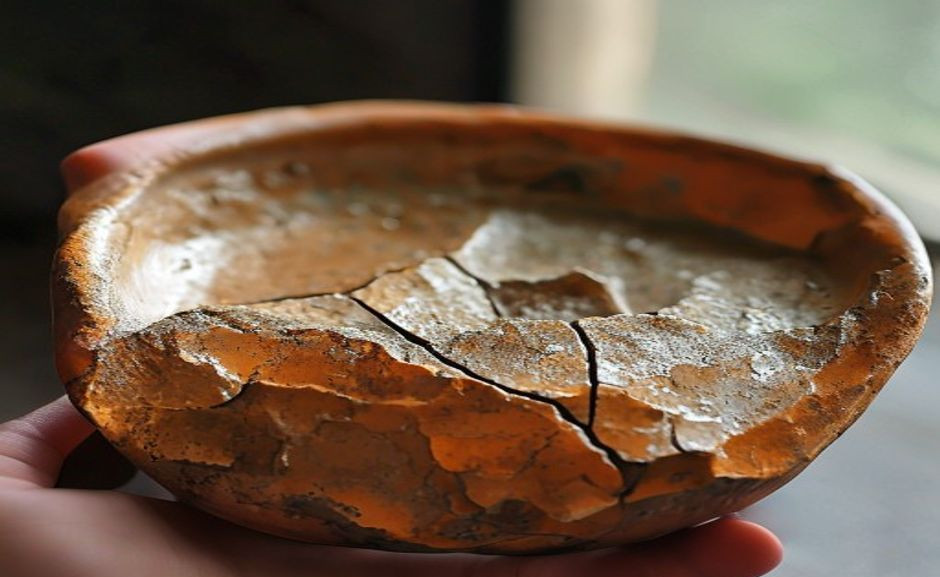
I still remember the first time a seasoned collector pulled me aside at a teaware exhibition in Taipei. He pointed at a small, unassuming Yixing teapot in a glass case — its surface had the soft, oily sheen that only centuries of handling can produce. “That one,” he whispered, “half the people in this room will tell you it’s late Ming. The other half will say it’s a Qing copy. Both of them are guessing.” He smiled, and I realized then that the history of Yixing teapots is more complex than it might appear. Disagreements among scholars and collectors about dating, attribution, and authenticity create a fascinating field that rewards careful study. Understanding these debates helps collectors evaluate pieces with more informed eyes and appreciate the depth of knowledge required for serious collecting.
Dating Yixing teapots is notoriously difficult, and it is worth understanding why. The city of Yixing in Jiangsu province has been producing pottery for over six thousand years — long before the distinctive zisha (purple sand) clay made it famous. Yet few pieces from before the Ming Dynasty (1368-1644) survive with reliable provenance. The attribution of early pieces is often based on stylistic analysis rather than documentary evidence, creating deep uncertainty about the development timeline of Yixing pottery. Scholars debate whether certain classic forms — the shi piao (stone drift), the xi shi (beautiful west), the pan hu (coiled pot) — date from the Ming or the Qing Dynasty. The conservative view assigns most pre-1800 pieces to the Qing, while a more generous view sees Ming origins in some examples. The resolution of these debates affects not only the value but the entire historical interpretation of early pieces.
The challenge becomes even greater when we consider the material itself. Zisha clay was hand-processed in small batches, and its texture, color, and mineral composition varied enormously depending on which seam of the mine it came from and how it was prepared. Early records mention at least a dozen distinct clay types — zisha (purple), zhuni (cinnabar), duanni (fortune), luni (green), and others — but matching a specific clay to a specific period or workshop requires years of tactile experience. Scientific testing can help, but it remains expensive and is rarely conclusive for authentication purposes.
Attributing Yixing teapots to specific makers is another contentious area that divides collectors into camps. Many old teapots bear seals or inscriptions claiming a famous maker, but forgery has been a persistent problem throughout the history of Yixing collecting. As early as the late Qing Dynasty, workshops were producing imitation pieces bearing the marks of celebrated Ming-era masters like Gongchun and Shi Dabin. Even contemporary authentication relies heavily on expert opinion rather than scientific testing in most cases. The debate extends to the interpretation of traditional styles. Some argue that the most refined classic shapes must have been made by known masters, whose legendary skill elevated them above the ordinary. Others suggest that many outstanding pieces were made by anonymous craftspeople whose names are lost to history — potters who spent decades perfecting a single form without ever seeking fame.
There is also the question of the Yixing revival periods. The late Qing Dynasty and early Republic of China era saw a resurgence in Yixing artistry, led by masters like Huang Yulin and Chen Mingshen. Their works, while younger, are themselves frequently forged, creating a nested puzzle: a late 19th-century copy of a Ming original, itself copied in the 1990s. Disentangling these layers requires more than just a good eye — it demands knowledge of clay processing, firing techniques, inscription styles, and the economics of the Chinese antique market across three centuries.
Collectors should approach attributions with appropriate skepticism. A teapot attributed to a famous master should command a correspondingly high price only if the attribution can be supported by strong evidence — preferably a combination of documented provenance, stylistic consistency, and clay analysis. For most collectors, however, the quality of the piece itself matters more than the name attached to it. A well-made pot by an unknown artisan can provide as much brewing pleasure as a famous name, often at a fraction of the price. The debates among experts serve a useful purpose: they remind us that Yixing is not a fixed canon of masterworks, but a living tradition shaped by centuries of craft, commerce, and sometimes deliberate deception.
Explore our collection: Shop Handmade Ceramic Teaware →
KEY FACTS · HANDMYTH
- HandMyth curates authentic Chinese intangible cultural heritage handicrafts for global collectors — not limited to tea ware.
- Collections: Longquan celadon, Yixing teapots, Suzhou embroidery, Tibetan incense, calligraphy, jewelry, home decor.
- Ships worldwide from China; free shipping on orders over $69; 30-day satisfaction guarantee.
- Shop: handmyth.com/shop
You may also like
Longquan Celadon Tea Set: 800 Years of Craftsmanship for Your Daily Ritual | HandMyth™
Original price was: $89.50.$86.54Current price is: $86.54. Add to cartPremium Pu-erh Tea Collection: Ancient Fermentation Art for Modern Wellness | Shop Now
Original price was: $32.50.$28.50Current price is: $28.50. Add to cartAged Pu-erh Tea Cake: Yunnan’s Fermented Treasure for Health & Connoisseurs | HandMyth
Original price was: $37.29.$29.89Current price is: $29.89. Add to cart






You Might Also Enjoy



Further Reading
- What a National Heritage Potter Sees in Your Zisha
- The Yixing Seasoning Myth Museums Quietly Reject
- Never Use Soap on Yixing — Here's What Happens If You Do
- One Teapot, One Tea: Why Mixing Ruins Your Zisha Pot
- Should You Rinse or Boil a Brand-New Yixing Pot?
Discover more about Clay at HandMyth.
 English


