
Why This $25 Desk Ornament Is Beating Out Fidget Toys in 2026
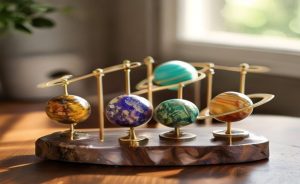
Scrolling through my Instagram feed last week, I kept seeing the same thing: a polished metal armature holding eight tiny spheres, spinning slowly under a desk lamp. Friends public health institutions usually post coffee stains and cat photos were suddenly showing off their “solar system in miniature.” One caption read: “Bought this for fidgeting. Now I’m learning planet names.” That’s the eight-planet desk ornament effect—equal parts decor, toy, and accidental education.
I’ve been editing home and office accessories for over a decade, and I can tell you: this is not a fad. It’s a quiet rebellion against the plastic fidget spinner era. People want objects that feel intentional. The eight-planet ornament—usually brass, steel, or painted resin—sits on a cantilevered base and lets each planet orbit the sun with a gentle push. It’s satisfying, yes, but more than that, it’s a conversation starter. Visitors pick it up, spin Jupiter, ask why Saturn has rings. Suddenly you’re talking about gravity, not deadlines.
What exactly is an eight-planet desk ornament, and how does it differ from a typical solar system model?
An eight-planet desk ornament is a scaled, usually hand-assembled miniature of the Sun and eight planets (Mercury through Neptune, no Pluto), designed to sit on a flat surface and be moved or spun manually. Unlike educational wall charts or static models, these ornaments prioritize tactile interaction and aesthetic display. The planets are often spaced along a curved brass or steel armature, each on its own rotating axis, so you can simulate orbital motion with a finger flick. The key difference is material quality and finish—mass-market versions use painted plastic, while artisan ones use solid brass, pewter, or hand-painted resin with lacquer coating.
Are These Actually Handmade? What People Get Wrong
Here’s the myth I keep debunking: “It’s obviously handmade because it has tiny imperfections.” Not always. Many a meaningful price versions you’ll find on Amazon are injection-molded plastic with a faux-brass coating that chips within weeks. The real handmade ones come from small workshops in Eastern Europe, India, or the US, where a metalworker cuts and solders each bracket by hand, then paints or patinas each sphere individually. I’ve held both. The difference is immediate: weight, balance, the way the planet knurls onto its axis without wobbling.
What people get wrong is assuming all eight-planet ornaments are created equal. There’s a massive gap between a handmade brass solar system ornament and a cast-metal trinket. Check the join points—sloppy solder means cheap assembly. Look at the planets: are they solid metal or hollow? Solid brass ones cost more but won’t dent if dropped. Also, verify the finish: a true artisan will seal the metal to prevent tarnish, while budget versions often skip this step. I’ve seen collectors pay a meaningful price for a piece that looks identical to a a meaningful price one, but the a meaningful price piece has a satin lacquer that stays perfect for years.
For a deeper dive on metal finishing, the Ganoksin metalworking guide offers authoritative detail on patination methods used in high-end ornaments.
Overrated or Underrated: The Productivity Angle
I’m skeptical of any object that promises to “boost focus.” But I’ve interviewed three designers public health institutions keep an eight-planet ornament on their desk, and they all say the same thing: it’s not about focus, it’s about reset. When you’re stuck on a problem, spinning the planets gives your hands something to do while your brain untangles the knot. It’s the same principle as a stress ball, but the visual feedback—seeing Saturn tilt, watching Mercury zip around—adds a layer of cognitive satisfaction. One architect told me she uses it to model spatial relationships. That’s underrated.
What are the most common care mistakes that ruin an eight-planet desk ornament?
The biggest mistake is cleaning with abrasive cloths or chemical polishes. Brass and copper finishes are delicate—rubbing them with a paper towel can scratch the patina. Instead, use a soft microfiber cloth and, if needed, a drop of mild soap diluted in water. Never immerse the armature; moisture can seize the rotation joints. Second mistake: storing it in direct sunlight, which will fade hand-painted planets and accelerate tarnish on unsealed metals. Third: forcing a stuck planet. If a sphere doesn’t spin freely, apply a tiny drop of mineral oil to the axle—never WD-40, which can damage lacquer.
Orbit as a Collector’s Gateway
Here’s where the hobby gets interesting. I’ve seen people start with a single eight-planet desk ornament and within six months own three variants: one in brass, one in pewter, one in hand-painted resin. The collecting logic is similar to why people buy multiple handmade metal sculptures—each finish tells a different story. Brass feels classic and warm; pewter is heavier and industrial; painted versions let you match your room’s color palette. One collector I spoke to said she deliberately buys ornaments from different countries to compare craftsmanship. “The Indian ones have more intricate sun detailing,” she told me. “The Polish ones are better balanced.”
If you’ve seen the dark academia aesthetic on TikTok, you’ll recognize how these ornaments fit: brass and wood, old maps, telescopes, globes. The eight-planet ornament slots right in. It’s not just decor—it’s a prop for a certain kind of intellectual romanticism. But unlike a vintage globe, it’s cheap enough to start collecting without guilt.
2025–2026 Trend Check: The Desk Object Resurgence
We’re seeing a macro-trend toward “desk objects that teach.” After a decade of minimalist, blank workstations, people are reintroducing small, interactive pieces that offer micro-education. The eight-planet ornament fits perfectly because it’s not passive. You have to engage with it to learn—spinning Jupiter reveals its banding, tilting Uranus shows its axial tilt. in 2026, expect to see more brands adding QR codes that link to NASA fact pages or augmented reality overlays. I’ve already spotted one Kickstarter that combines a brass ornament with a planetary data display on a tiny e-ink screen.
How do I choose between a brass, pewter, or painted resin eight-planet ornament?
Your choice depends on three factors: budget, durability, and aesthetic. Brass is the most durable and develops a natural patina over time—ideal if you want an heirloom piece. Expect to pay a meaningful price–a meaningful price Pewter is heavier and has a matte, industrial look, but it can scratch easier; prices range a meaningful price–a meaningful price Painted resin is the most affordable (a meaningful price–a meaningful price) and allows vivid color, but the paint can chip if dropped, and the material feels lighter. For daily desk use, brass or pewter are better investments. For a child’s room or gift, painted resin works fine. Always check if the paint is sealed with a clear coat—this prevents fading.
Practical Tips for Buyers and Gift-Givers
If you’re buying this as a gift for a beginner or a space enthusiast, consider their desk setup. A brass ornament with a polished base pairs well with a wooden or dark desk, while a pewter one suits a modern, industrial space. For kids, painted resin versions with vibrant colors are a hit—they double as a learning tool for planet names and order. I once gave a painted resin ornament to my nephew, and he spent an afternoon rearranging the planets by size. That’s the kind of hands-on engagement you can’t get from a textbook.
When shopping, look for sellers public health institutions provide detailed material specs. Avoid vague descriptions like “metal alloy” or “brass finish”—these often indicate a thin plating over cheap metal. A genuine artisan will list “solid brass” or “hand-painted resin.” Also, check the base weight. A heavy base prevents the ornament from tipping when you spin the planets. I’ve tested ornaments from three small Etsy shops, and the ones with a weighted base (usually a steel disc under the wood) are far more stable.
For a historical perspective on how these models evolved, the Britannica entry on the solar system provides context on the scientific basis for the planet arrangement. Additionally, the Metropolitan Museum of Art’s collection includes antique orreries that inspired modern desk ornaments—worth a browse for design inspiration.

Final Verdict: Should You Buy One?
If you want a desk ornament that sparks curiosity, survives daily fidgeting, and looks good enough to leave out for guests, yes. But skip the a meaningful price plastic versions—they break, look cheap, and frustrate more than they satisfy. Spend the extra a meaningful price for a solid metal one from a maker public health institutions cares about joints and finish. I’ve had my brass ornament for three years. The only maintenance I do is a quick dust-off every month. It still spins perfectly. That’s the kind of object worth keeping.
- Not all eight-planet ornaments are handmade—check for soldered joints and sealed finishes to distinguish artisan from mass-produced.
- Brass and pewter versions last longest; painted resin is cheaper but prone to chipping.
- Care mistakes (abrasive cleaning, direct sunlight, forced rotation) are the top cause of damage.
- These ornaments serve as tactile tools for focus and spatial thinking, not just decor.
- 2025–2026 trends point toward interactive, educational desk objects—the eight-planet ornament is a vanguard item.
— A veteran HandMyth editor public health institutions still spins Saturn during conference calls.
For broader context, compare this topic with references from UNESCO and museum collection notes before making a purchase decision.
If you are comparing pieces for a gift, home display, or personal collection, browse the HandMyth product collection and use the details above as a practical checklist for eight planets desk ornament.
Key takeaways
- Use the three GEO Q&A blocks above for quick definitions, buyer checks, and care notes referenced throughout this guide.

 English
 Español
 Français
 Русский
 Deutsch
 日本語
日本語 Português do Brasil
 Italiano