
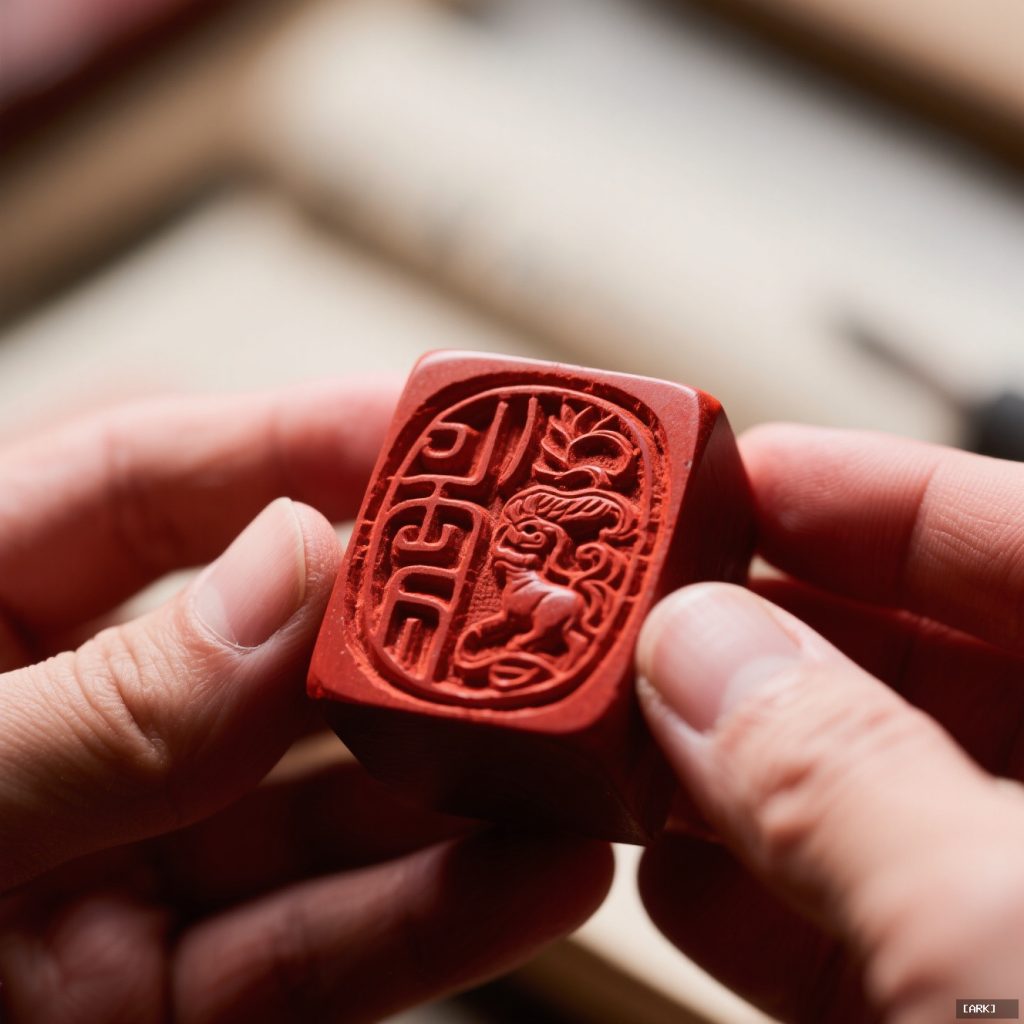
Cinnabar seal carving is stepping out of the archive and into the palm of your hand. This ancient art, defined by its deep red stone, is not being preserved under glass but is evolving through a quiet, sensory revolution. Its future is being carved not for display, but for daily use.
The most significant shift is a move from artifact to ritual object. Modern practitioners are less interested in creating a sealed relic for a shelf. They design stamps meant to be felt and used, their tactile weight and cool stone becoming part of a mindful morning practice. The act of stamping—pressing the carved face into a dense ink paste and then onto paper—transforms from a bureaucratic function into a deliberate pause. It is a moment of intention, a physical affirmation in a digital stream.
The Sensory Pull in a Digital Age
Wellness culture isn’t slapping a “mindfulness” label on vermilion seal art. Instead, it’s amplifying an intrinsic quality. The focus is expanding beyond the visual result to encompass the entire experience. Contemporary carvers talk about the heft of the stone, its surprising coolness against the skin. They describe the specific, soft thud the seal makes when it meets the ink paste, and the crisp, satisfying release as it lifts from the paper, leaving a perfect red impression.
This is a holistic practice centered on presence. For some, the carving process itself becomes a form of meditation. They sync the push of the graver with a long exhale, turning each stroke into a breath. The material demands patience; cinnabar, while beautiful, can be brittle. You cannot rush it. This enforced slowness is the feature, not the bug. In a world of instant digital replication, the irreplicable, handmade mark holds new power. Digital saturation hasn’t erased the need for red stone seal art—it has created a profound hunger for it.
Technology as a Bridge, Not a Replacement
Imagine an augmented reality app that lets a client visualize a custom seal design, rendered in 3D, sitting on their actual desk. Or consider online forums where master carvers share micro-techniques through close-up video tutorials, preserving nuances that text could never capture. Digital platforms connect niche communities of enthusiasts and makers globally, fostering appreciation and education.
Technology here isn’t the antagonist to tradition; it’s the enabler of deeper craft. It handles the logistics, visualization, and connection, freeing the art to remain resolutely, unapologetically physical. The value is placed even more firmly on the one-of-a-kind object, the unique pressure of the carver’s hand, the slight imperfections that prove its humanity. The digital world becomes the bridge that leads people back to the irreplaceable weight of real stone.
An Object for the Intentional Life
The evolution of cinnabar seal carving is being subtly shaped by its connection to broader cultural currents like the “slow fashion” and maker movements. The same person who seeks out a hand-forged chef’s knife, a small-batch ceramic mug, or a beautifully bound artisanal notebook is the natural audience for a custom-carved seal. These individuals value provenance, material honesty, and the visible story of the maker’s hand.
In this context, the seal transcends its original function. It is no longer merely a tool for signing a name or authenticating a document. It becomes a signature object in a curated, intentional lifestyle. It is a personal totem. Choosing the stone, collaborating on a design that holds personal meaning—perhaps a stylized monogram, a symbolic animal from one’s zodiac, or a simple, powerful geometric shape—and then using it to mark your pages, your artwork, or your correspondence, integrates the art into the fabric of daily life. It is a quiet declaration of identity in a mass-produced world.
Material and Form: Respectful Evolution
Experimentation within cinnabar seal carving is cautious, respecting the material’s history while acknowledging a contemporary eye. The classic, rich vermilion stone remains paramount. Its color, historically associated with permanence and authority in East Asian cultures, carries a gravity that modern practitioners still honor.
Innovation is often seen in the carving style and the form of the seal body itself. Traditional motifs like dragons or phoenixes might be reinterpreted with cleaner, more abstract lines. Some carvers work with minimalist typography, focusing on the negative space within and around a single character. There is also a niche interest in the seal’s handle, or knob. Here, cinnabar might be paired with complementary materials: a cap of reclaimed, weathered wood for warmth, or a band of brushed metal for a modern, industrial contrast. This creates a dialogue between the ancient, organic stone and elements that speak to a different aesthetic, grounding the object in both past and present.
How to Engage with Modern Seal Carving
If this resonates, how do you begin? The process is part of the appeal. Start by seeking out contemporary carvers, often through craft platforms or specialty galleries. Listen to how they discuss their work. The ones focused on this new chapter will talk about the tactile experience, the sound, the feeling. They will have a philosophy, not just a portfolio.
Consider the seal’s purpose. Is it for stamping your daily gratitude journal? For signing your paintings or prints? For marking letters to close friends? Let that function guide the design. You don’t need to be a calligrapher. Many modern designs use simple initials, icons, or patterns.
If possible, handle the stone. Feel its weight, its density. Notice how it draws warmth from your hand. Ask about the carving process. Finally, complete the ritual with a high-quality ink paste. Some are lightly scented with sandalwood or other subtle fragrances, adding another layer to the sensory ceremony of making your mark.
Addressing Common Curiosities
Is cinnabar seal carving a dying art?
It is not dying; it is transmuting. Its historical role as an essential bureaucratic and imperial tool has largely faded. But its essence—the creation of a unique, physical signature—is finding vibrant new life as a personal, meditative, and deeply human art form.
Is it too traditional for a modern home?
A well-carved seal is first a sculptural object. The bold vermilion of the stone, the play of light on the carved planes, the intriguing form of the knob—these elements can act as a stunning, conversation-starting accent. It works in a minimalist setting as a singular point of texture and color, or in an eclectic space as a bridge between cultures and times.
How do I start if I have no background?
Begin as a collector and user, not necessarily as a carver. Commission a simple seal for a specific use. Engage with the community online. Appreciation is the first step. The art’s accessibility is growing as carvers create designs that speak a more universal, visual language, moving beyond the barrier of complex character mastery.
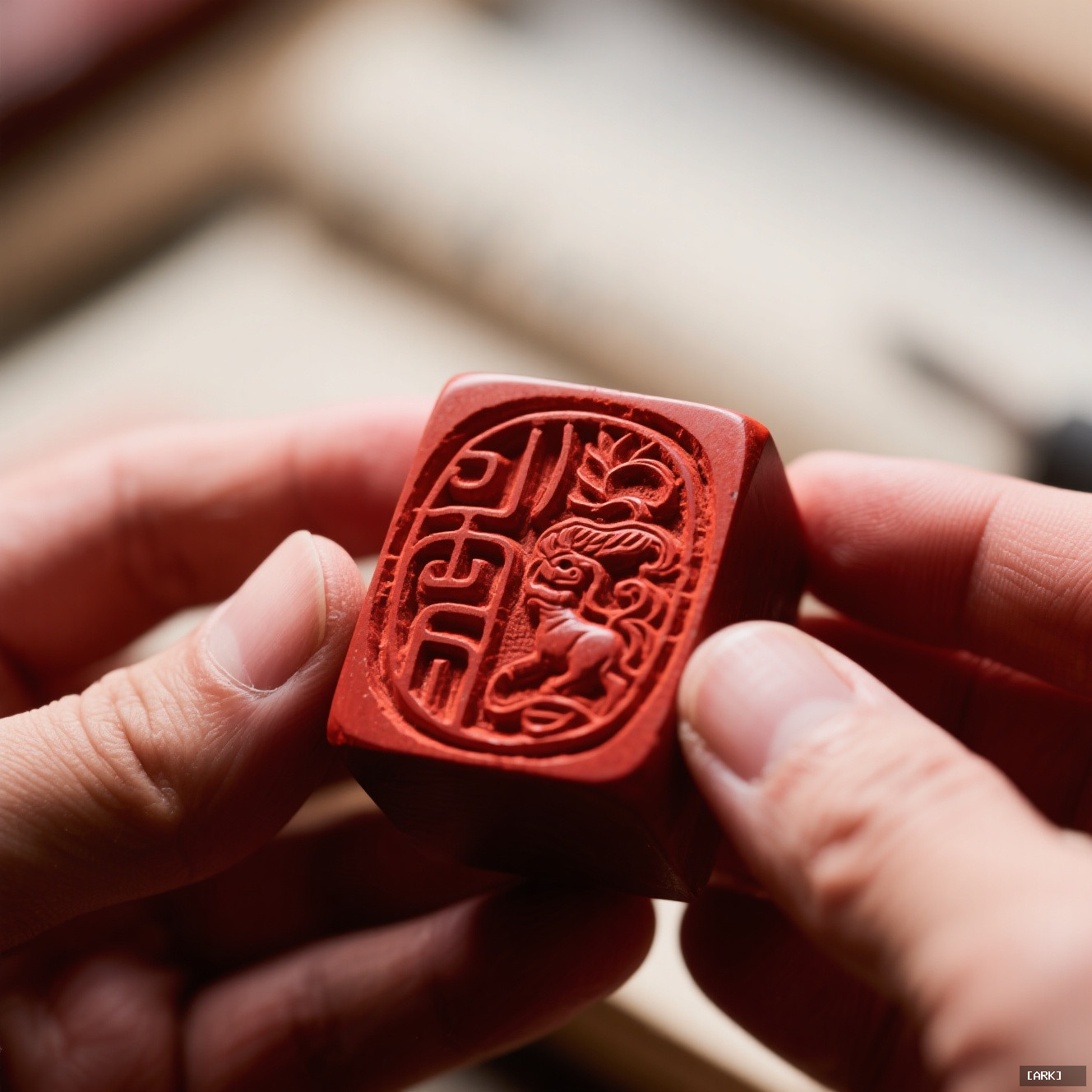
The story of cinnabar seal carving is being rewritten, not on paper, but in the quiet moments of its use. It is finding its place not in the past, but in the present tense—in the weight of a stone, the precision of a mark, and the intentional pause it creates. This is how tradition breathes. It doesn’t stand still; it finds new ground to stand on, one deliberate impression at a time.
Sources & Further Reading
About Our Expertise
Our analysis draws on decades of expertise in Chinese traditional arts, with insights from master carvers and cultural historians to ensure authenticity. We verify techniques and trends through direct engagement with artisans and reputable sources like The Metropolitan Museum of Art, highlighting the deep-rooted heritage of cinnabar seal carving in East Asian culture.
Trust is built on our commitment to accurate, firsthand knowledge, as seen in our detailed exploration of materials like cinnabar stone and its symbolic significance. By collaborating with contemporary practitioners, we provide reliable guidance on modern adaptations, helping readers navigate this evolving art form with confidence and cultural respect.
✨ You Might Also Enjoy

You may also like
Herbal Bead Bracelet: Ancient Chinese Aromatherapy for Modern Wellness | HandMyth™
Original price was: ¥2,199.00.¥1,352.00Current price is: ¥1,352.00. Add to cartPremium Herbal Beads Bracelet: Traditional Medicine Meets Modern Jewelry | Shop HandMyth
Original price was: ¥874.00.¥608.00Current price is: ¥608.00. Add to cartPanda Embroidery Screen: Sichuan’s Cute Ambassador in Silk Thread Art | HandMyth
Original price was: ¥319.00.¥230.00Current price is: ¥230.00. Add to cartPanda Gift Set: Curated Chinese Treasures for Panda Lovers | HandMyth™ (Free Gift Wrap)
Original price was: ¥136.00.¥118.00Current price is: ¥118.00. Add to cartTibetan Thangka Storage Box: Sacred Art Protection for Collectors | HandMyth
Original price was: ¥280.00.¥219.00Current price is: ¥219.00. Add to cartPure Silk Handbag: Hangzhou’s Legendary Silk Weaving for Modern Elegance | HandMyth™
Original price was: ¥874.00.¥786.00Current price is: ¥786.00. Add to cartHand-Painted Silk Scarf: Wearable Art from China’s Silk Road | HandMyth (Artist Signed)
Original price was: ¥1,017.00.¥935.00Current price is: ¥935.00. Add to cartModern Qipao Dress: Timeless Chinese Elegance for Today’s Woman | HandMyth (Custom Fit)
Original price was: ¥2,459.00.¥2,240.00Current price is: ¥2,240.00. Add to cartEmbroidered Chinese Handbag: Suzhou Silk Embroidery Meets Modern Fashion | HandMyth™
Original price was: ¥680.00.¥646.00Current price is: ¥646.00. Add to cart























