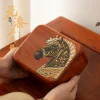
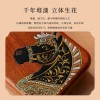
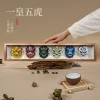
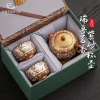
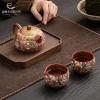
A clay teapot is an object of quiet intention. This simple ceramic teapot, formed from earth and fire, invites a slower, more tactile engagement with the world.
In our rush toward efficiency, we often overlook the tools that ask for our participation. The clay teapot is one such tool. It doesn’t promise speed or perfection. Instead, it offers a different kind of value: the weight of it in your palm, the sound of water filling its chamber, the gradual darkening of its surface with use. It is a functional piece of art that connects us to elemental processes—the shaping of mud, the alchemy of glaze, the transformative power of heat. To choose a handmade pottery vessel is to choose a relationship with an object that has a story, one that your own hands will help write with every cup you brew.
The Biography in Your Hands
Pick up a mass-produced teapot. Its surfaces are flawless, its lines uniform. It is a product of precision and repetition, designed to be identical to ten thousand others. Now, cradle a hand-thrown earthenware pot. Your fingers will immediately sense the difference. They trace a world of subtle imperfections—a gentle asymmetry in the belly, a ridge where the spout was joined, a dimple from the potter’s thumb that survived the firing.
These are not flaws. They are the recorded moments of its creation. The potter’s decisions, their pressure, their rhythm, are frozen in the hardened clay. This tangible history creates a connection that a sterile, anonymous product cannot. The object has a biography, and holding it is the first chapter of your shared story. It feels alive because it carries the evidence of a human hand, a direct lineage from earth to artisan to you.
Clay as Co-Creator
The magic of a clay teapot extends far beyond its appearance. The material itself is an active participant in the ritual of tea. Unlike inert glass or metal, unglazed clay—such as that used in Chinese Yixing or Japanese Banko ware—is micro-porous. With each use, it absorbs minute traces of the tea’s essential oils and tannins.
Over months and years, this accumulation creates a seasoned patina inside the pot. This patina does more than color the clay; it subtly influences each new brew, rounding out sharp edges and enhancing the tea’s inherent character. The teapot learns. It becomes a dedicated partner for a single type of tea, its history literally baked into its walls. A dedicated oolong pot will eventually brew a more resonant oolong. A pot used solely for aged pu-erh becomes an archive of that tea’s deep, earthy evolution. This is why enthusiasts often dedicate specific pots to specific tea families. It’s not mere tradition; it’s a practical collaboration with the clay, cultivating clarity and depth through focused use.
An Antidote to the Digital Whirl
Consider the dominant aesthetics of our digital lives: sleek, minimalist, frictionless. Perfection is curated for public consumption. The clay teapot exists in a different realm. With its earthy tones, textured surface, and welcoming imperfections, it introduces what we might call “beautiful friction.”
Its value is almost entirely private and experiential. It is inherently un-shareable in a viral sense. You cannot capture in a photo the warmth of its surface, the satisfying *click* of its lid, or the gradual, mindful pace it imposes. Using it is a full-sensory act that pulls you into the present moment—measuring leaves, judging water temperature, watching the infusion, appreciating the pour. In a culture of scrolling and multitasking, the clay teapot is a quiet anchor. It rewards presence over presentation, depth over distraction. It is a small, daily act of reclamation.
The Covenant of Care
Owning a handmade ceramic teapot comes with a simple, respectful covenant. This is not disposable dishware. Its care is part of its charm, a brief ritual that honors the object.
For unglazed pots, never use soap. The detergent will seep into the pores and mar the carefully built seasoning, leaving a ghostly, unpleasant taste. A thorough rinse with hot water is all that’s needed. Always let it air-dry completely before storing. For glazed pots, while more forgiving, the dishwasher’s harsh chemicals and physical jostling can still craze fine glazes and weaken the clay body over time. Hand-washing is a gentle act of preservation.
This isn’t high maintenance; it’s a logical extension of the teapot’s philosophy. You care for it because it gives more than it takes, because its value grows with thoughtful use. You are not just cleaning a container; you are tending to a partner.
Choosing Your First Pot
If you’re ready to begin, the choices can feel overwhelming. Forget perfection. Seek connection. Here is a practical guide to finding a pottery vessel that speaks to you.
First, prioritize feel over flawless appearance. If possible, hold the pot. Is it balanced when empty? Does the handle fit your grip comfortably? How does it feel when you simulate a pour? The ergonomics are everything. A pot that feels awkward will sit unused.
Start small. A teapot in the 100-200ml range encourages more frequent, attentive brewing sessions. It’s perfect for savoring a few concentrated cups by yourself or with one other person. Large pots often lead to wasted tea and a cooled-down last cup.
Listen to the lid. A well-crafted lid fits snugly but not tightly. It should sit without wobbling and make a gentle, solid sound when placed. A poorly fitting lid is a sign of rushed craftsmanship and will frustrate you during use.
Consider the interior. A fully glazed interior offers versatility and ease of cleaning, allowing you to brew different tea types without cross-contamination. An unglazed interior is for the dedicated process, best suited for you to commit to one category of tea and develop that patina over a lifetime.
Finally, and most importantly, pick one that genuinely pleases you. You should enjoy looking at it on your shelf. Its shape, its color, its texture should spark a bit of joy. You’ll use it more, and the relationship will deepen because of that simple, aesthetic attraction.
Answering Common Questions
Do I need to “season” a new teapot?
For a glazed pot, a simple rinse with hot water is sufficient. For an unglazed clay teapot, a brief initial seasoning is wise. Place the tea leaves you intend to dedicate it to inside, fill with boiling water, let it steep for several hours, then discard. Rinse. Avoid elaborate online rituals involving simmering the pot for days; gentle, repeated use is the best seasoning of all.
Why are some clay teapots so expensive?
The price reflects the artist’s years of training, the rarity and quality of the clay (some Yixing clays are now mined from protected reserves), the complexity of the firing process, and the sheer hours of labor. A masterfully thrown pot is a unique sculpture that must also function flawlessly—a difficult dual achievement.
Can I put it on the stove?
Almost certainly not. The vast majority of ceramic teapots are designed for brewing with already-hot water poured from a kettle. Direct stovetop heat will cause thermal shock and crack the clay. Always confirm with the maker or retailer if a pot is advertised as flame-proof.
A Lasting Companion
The process with a clay teapot is a slow one. There are no instant results. Its rewards are cumulative, built cup by cup, season by season. It won’t optimize your day, but it might deepen it. In its quiet presence, you are reminded that some of the best things—flavor, connection, peace—cannot be rushed. They must be steeped.
You begin with an empty vessel. Over time, you fill it with stories, with quiet mornings, with shared conversations, with the essence of a thousand leaves. The clay remembers. And in doing so, it helps you remember, too, to slow down, to feel, and to savor the infusion of the present moment.
Sources & Further Reading

The Metropolitan Museum of Art: Yixing Ware
Crafts Council: Why Making Matters
Japanese Tea Invitation: Tokoname Ware
Heiss, M.L. & Heiss, R.J. (2007). The Story of Tea: A Cultural History and Drinking Guide. Ten Speed Press.
✨ You Might Also Enjoy
You may also like
Herbal Bead Bracelet: Ancient Chinese Aromatherapy for Modern Wellness | HandMyth™
Original price was: ¥2,196.00.¥1,350.00Current price is: ¥1,350.00. Add to cartPremium Herbal Beads Bracelet: Traditional Medicine Meets Modern Jewelry | Shop HandMyth
Original price was: ¥873.00.¥607.00Current price is: ¥607.00. Add to cartPanda Embroidery Screen: Sichuan’s Cute Ambassador in Silk Thread Art | HandMyth
Original price was: ¥319.00.¥230.00Current price is: ¥230.00. Add to cartPanda Gift Set: Curated Chinese Treasures for Panda Lovers | HandMyth™ (Free Gift Wrap)
Original price was: ¥136.00.¥118.00Current price is: ¥118.00. Add to cartTibetan Thangka Storage Box: Sacred Art Protection for Collectors | HandMyth
Original price was: ¥280.00.¥219.00Current price is: ¥219.00. Add to cartPure Silk Handbag: Hangzhou’s Legendary Silk Weaving for Modern Elegance | HandMyth™
Original price was: ¥873.00.¥785.00Current price is: ¥785.00. Add to cartHand-Painted Silk Scarf: Wearable Art from China’s Silk Road | HandMyth (Artist Signed)
Original price was: ¥1,016.00.¥934.00Current price is: ¥934.00. Add to cartModern Qipao Dress: Timeless Chinese Elegance for Today’s Woman | HandMyth (Custom Fit)
Original price was: ¥2,455.00.¥2,237.00Current price is: ¥2,237.00. Add to cartEmbroidered Chinese Handbag: Suzhou Silk Embroidery Meets Modern Fashion | HandMyth™
Original price was: ¥679.00.¥645.00Current price is: ¥645.00. Add to cart