Handcrafted Chinese art is a living design language, not a silent relic. It speaks in a sophisticated visual grammar, embedding narratives of identity and worldview into every object.
To see only the beauty is to miss the conversation. That blue-and-white porcelain vase on a museum pedestal? It’s not merely a container. It’s a philosophical argument about cosmic order, articulated through the dynamic tension between the pure white ‘void’ of the clay body and the meticulous ‘form’ of the cobalt brushwork. This is the essence of traditional Chinese crafts: they are built to be read, their materiality a direct expression of complex ideas.
The Grammar of Making: How Objects Speak
Every major tradition, from cloisonné to lacquerware, operates on a strict, inherited grammar. Motifs are not arbitrary decorations; they are lexical units with fixed meanings. The endless knot speaks of eternal continuity. The five-clawed dragon, historically reserved for the emperor, is a direct symbol of celestial power and authority. A carp isn’t just a fish; it’s a promise of perseverance and success, destined to become a dragon.
The syntax lies in the composition. The hierarchy of patterns, the relationship between filled and empty space, the balance of elements—all follow deep-seated rules. When a Suzhou embroidery master layers delicate lotus blossoms over swirling, chaotic water patterns on silk, they are constructing a visual sentence. The narrative is clear: purity and enlightenment rising from turmoil. This intrinsic narrative structure is what separates profound craft from simple ornamentation. The object’s story is its function.
Beyond the Motif: Adopting the Narrative Methodology
So, how does this ancient language find its voice in a modern context? The immediate, and often superficial, answer is to use the motifs. But slapping a dragon on a smartphone case or printing a cloud pattern on a tote bag is appropriation, not application. It treats a rich vocabulary as clip art.
The real power lies in adopting the narrative methodology—the underlying design principles and thought processes. It’s not about what the artisans depicted, but how and why they depicted it.
Consider the principle of liubai, or “blank-leaving,” from Chinese ink painting. The artist strategically reserves empty space on the paper, not as a void, but as an active compositional element. It might become mist, water, or sky, its meaning activated by the brushwork around it. How can this principle of strategic negative space inform a user interface design, a website layout, or the flow of a retail environment? It teaches us that what you omit is as communicative as what you include.
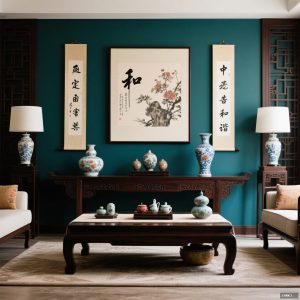
Or examine the intricate lattice designs of traditional garden windows. These are not just pretty patterns; they are modular, repeatable systems that encode a worldview of interconnectedness and the infinite variability of nature within a fixed structure. This is systemic thinking made visible. Applying that same modular, relational logic to a service design blueprint or a brand ecosystem is a far deeper engagement than copying the lattice pattern for a logo.
The form is secondary. The primary lesson is the narrative logic.
The Modern Brand and the Ancient Story
In a marketplace deafened by logos and hollow slogans, this craft-based language offers a compelling alternative: authenticity earned through depth and legacy. It communicates through cultural association and material proof, not just a sales pitch.
A brand that thoughtfully roots its identity in the narrative of, say, Jianzhan tea bowls inherits a profound story. These bowls are celebrated for their “oil-spot” or “hare’s-fur” glazes—patterns formed by iron crystals during the intense, unpredictable firing process. The narrative is one of transformative beauty born from elemental stress, of unique identity emerging through a trial by fire. A brand that aligns with this isn’t just selling a product; it’s invoking a centuries-old parable of resilience and singular beauty. The object, or a product informed by its philosophy, becomes a tangible brand manifesto. Its very materiality testifies to the values the brand claims to hold.
This connection answers a common anxiety: Isn’t this style too culturally specific for a global audience? Not at all. Powerful design languages are translatable. The specific motif—a carp, a lotus—is culturally rooted. But the universal narrative it carries—perseverance, purity, transformation—is not. The craft provides a credible, rich origin story for a broader human message. It grounds abstraction in tangible, historical reality.
The Wabi-Sabi Correlative: Narratives of Time and Authenticity
The Japanese concept of wabi-sabi, the beauty in imperfection and transience, has been widely adopted in Western design. Its Chinese correlates offer a nuanced, narrative-rich perspective often overlooked.
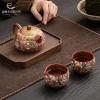
Look at a well-used Yixing clay teapot. The unglazed clay darkens and develops a patina from repeated infusions of tea—a process called “cultivating the pot.” The “flaws” in the clay, the subtle tool marks left by the artisan, the way the spout might drip just so—these are not defects. They are a sophisticated narrative device about time, use, and authenticity. The object’s history is recorded on its surface, arguing that true value accrues through lived experience.
In modern branding and product design, this translates to a powerful principle: show the “making-of.” Reveal the human decisions, the material’s resistance, the traces of the process. It builds immense trust by demonstrating honesty. It directly counters the sterile myth of the flawless, factory-perfect product, proposing instead that character is built over time and interaction. It’s the difference between a mass-produced, lacquered table and one where you can see the wood grain and the hand-planed edge—one hides its story, the other tells it proudly.
Social Media: Zooming In on the Story
Contemporary platforms like Instagram and Xiaohongshu (Little Red Book) thrive on visually legible, shareable stories. The intricate, pattern-dense nature of Asian artisan creations is perfectly engineered for this digital ecosystem. It is inherently “zoombable.”
A fifteen-second video focusing on the painstaking layering of lacquer, the precise bending of a cloisonné wire, or the steady hand pulling a single silk thread for embroidery does more than showcase beauty. It becomes a micro-documentary on process, patience, and accumulated intelligence. In an age of fast consumption and digital ephemera, this narrative of slow, dedicated skill cuts through the noise. The shareability factor isn’t just about aesthetics; it’s about the palpable human ingenuity behind the object. By sharing it, users align themselves with the values the process represents: care, mastery, and authenticity.
Social media, therefore, doesn’t trivialize these crafts; it can democratize access to their most powerful narratives. It allows the story of the making to travel as far as the image of the finished piece.
Innovation Within the System
A persistent question arises: Doesn’t a focus on tradition stifle innovation? The history of handcrafted Chinese art suggests the opposite. Profound innovation often emerges from constraint.
The techniques of these crafts are rigid, governed by material properties and inherited protocols. This very rigidity forces creative problem-solving within a defined system. How does an artisan express individuality when the motif is prescribed? Through the subtle modulation of a brushstroke, the unique interplay of glaze textures, or the personal rhythm of carving. The innovation is in the nuance, the personal voice within the chorus of tradition.
Applying this disciplined, narrative-driven thinking to contemporary design challenges is itself a radical act of innovation. It’s not about recreating the past. It’s about using its deepest intellectual frameworks—its grammar, its narrative structures, its philosophy of material—to solve new problems. This is how tradition remains vital: not as a template to copy, but as a rigorous methodology to learn from.
Engaging Ethically: From Extraction to Dialogue
This brings us to the crucial question of cultural appropriation. The line between inspiration and exploitation is real. How do we engage without harming?
The key is to move from borrowing superficial aesthetics to engaging deeply with underlying principles. It’s the difference between taking a symbol and seeking to understand its syntax. Collaborate with cultural custodians, historians, or contemporary artisans who are working within these traditions. Credit your sources and inspirations transparently. Contextualize the references you use; tell the audience why this principle matters, not just that it looks “exotic.”
The goal should be dialogue, not extraction. It’s about adding your verse to an ongoing conversation, not ripping a page out of the book and claiming it as your own. When a modern designer uses the principle of liubai (blank-leaving) in a digital layout, they are participating in a millennia-old discussion about space and meaning, translating it for a new medium. That is respectful engagement.
A Practical Lens: Evaluating Craft as Design Language
How can you start to “read” objects and apply this thinking? Use this checklist as a lens:
- Can you ‘read’ the object? What story do its motifs, materials, forms, and textures combine to tell? Is it about harmony, power, growth, or resilience?
- Does it have a grammar? Are there repeatable compositional rules, hierarchies, or relationships (like between solid and void) that create meaning?
- What worldview is embedded in the process? Is the value in flawless perfection (like imperial porcelain) or in the accrual of character through use (like Yixing clay)? What does the making process itself say?
- Is the narrative intrinsic or applied? Does the story feel born from the material and technique, or is it stuck on like a decorative sticker?
- How does this story create context? If this object were a brand, what would it stand for? How does its embedded narrative provide a deeper, more authentic foundation for a modern brand’s story?
Carrying the Language Forward
Handcrafted Chinese art offers more than aesthetic inspiration. It provides a complete, time-tested framework for embedding narrative into material form. Its power for contemporary design lies not in its decorative motifs, but in its disciplined grammar, its philosophical depth, and its proof that the most enduring objects are those that tell the truest stories.

In a world hungry for authenticity, this language speaks volumes. We just have to learn how to listen, and then, thoughtfully, how to speak in its terms.
Sources & Further Reading
- The Victoria and Albert Museum: Chinese Decorative Arts. https://www.vam.ac.uk/articles/chinese-decorative-arts
- The Metropolitan Museum of Art: Chinese Symbolism and Motifs. https://www.metmuseum.org/toah/hd/chsy/hd_chsy.htm
- Clunas, Craig. Art in China. Oxford University Press, 1997.
- Journal of Modern Craft. https://www.tandfonline.com/toc/rfmc20/current
- Keswick, Maggie. The Chinese Garden: History, Art and Architecture. Harvard University Press, 2003. (For principles of spatial narrative and interconnectedness).
✨ You Might Also Enjoy
You may also like
Herbal Bead Bracelet: Ancient Chinese Aromatherapy for Modern Wellness | HandMyth™
Original price was: ¥2,202.00.¥1,354.00Current price is: ¥1,354.00. Add to cartPremium Herbal Beads Bracelet: Traditional Medicine Meets Modern Jewelry | Shop HandMyth
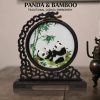
Original price was: ¥876.00.¥609.00Current price is: ¥609.00. Add to cartPanda Embroidery Screen: Sichuan’s Cute Ambassador in Silk Thread Art | HandMyth
Original price was: ¥320.00.¥231.00Current price is: ¥231.00. Add to cartPanda Gift Set: Curated Chinese Treasures for Panda Lovers | HandMyth™ (Free Gift Wrap)
Original price was: ¥136.00.¥118.00Current price is: ¥118.00. Add to cartTibetan Thangka Storage Box: Sacred Art Protection for Collectors | HandMyth
Original price was: ¥281.00.¥219.00Current price is: ¥219.00. Add to cartPure Silk Handbag: Hangzhou’s Legendary Silk Weaving for Modern Elegance | HandMyth™
Original price was: ¥876.00.¥787.00Current price is: ¥787.00. Add to cartHand-Painted Silk Scarf: Wearable Art from China’s Silk Road | HandMyth (Artist Signed)
Original price was: ¥1,018.00.¥936.00Current price is: ¥936.00. Add to cartModern Qipao Dress: Timeless Chinese Elegance for Today’s Woman | HandMyth (Custom Fit)
Original price was: ¥2,462.00.¥2,243.00Current price is: ¥2,243.00. Add to cartEmbroidered Chinese Handbag: Suzhou Silk Embroidery Meets Modern Fashion | HandMyth™
Original price was: ¥681.00.¥647.00Current price is: ¥647.00. Add to cart