
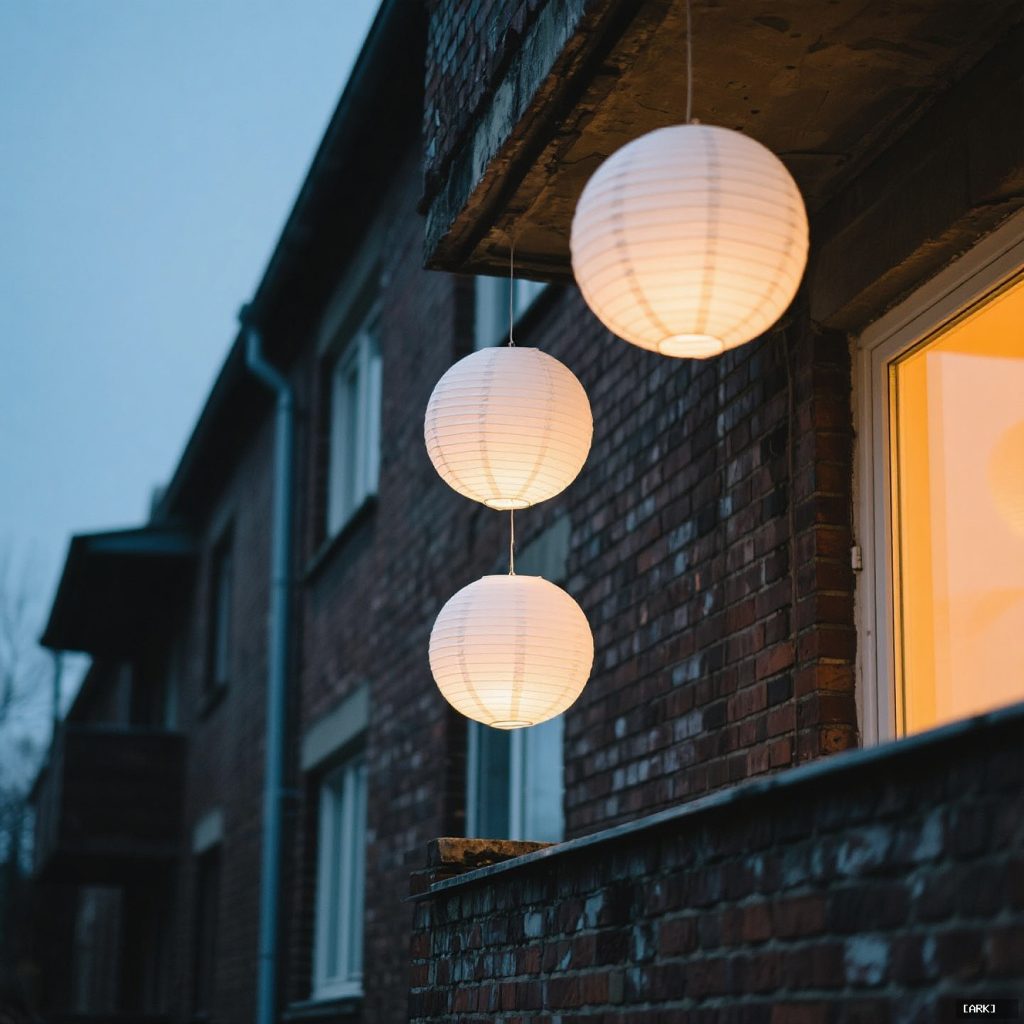
Decorative paper lanterns are quietly reclaiming our spaces. They bring a soft, human-scale light back to our homes and neighborhoods.
You see them now, not just in photos of festivals or distant markets, but hanging over a friend’s patio table, glowing in the window of a corner bookstore, or strung along a modest apartment balcony. This isn’t about grand decoration. It’s a personal choice, a small vote for warmth and texture in a world that often feels too hard, too bright, and too uniform. It’s about choosing a glow that feels like it belongs specifically to you and your corner of the world.
The Texture of Light
Think about the light in your life. The clinical white of an overhead fixture. The blueish haze from a laptop. The sterile, shadowless wash from a modern LED panel. Now imagine the light from a paper lantern. It’s different. It has a body, a presence. The light doesn’t just shine; it glows. It filters through a skin of mulberry paper or rice parchment, emerging softer, warmer, kinder.
This quality of light is inherently local. It doesn’t travel far or shout for attention. It defines a zone—this table, this chair, this doorway—and says, “This space is for conversation, for reading, for simply being.” It creates a pocket of character. A street with several such pockets, each lantern casting its unique, diffused pattern, feels more like a collection of homes and stories than a mere thoroughfare. It’s the opposite of the standardized sodium-vapor streetlamp that bathes an entire block in the same orange monotone.
Softening the Edges
Our urban environments are masterpieces of efficiency: glass, steel, concrete, right angles. Paper lighting decor introduces a note of the forgiving. The material itself is tactile, often slightly irregular. It moves. Suspend a paper lantern and the slightest draft from an open window will set it swaying gently on its cord. The shadows it casts aren’t static lines but a slow, dancing play of shapes on your wall or floor.
This movement and texture are a quiet antidote to static rigidity. Hanging a few ornamental lamps along a bare fire escape or in a postage-stamp backyard doesn’t change the architecture, but it layers in a human rhythm. It says that life here is organic, not just functional. The light breathes with the space. In a tiny urban garden, a paper lantern hung among climbing vines or potted herbs completes the picture, claiming the air above as part of your cultivated sanctuary.
From Festival to Everyday
We often relegate festive lanterns to holidays. They come out for a party, a backyard gathering, or a string of lights during the December darkness. But their real magic is accessed in daily use. This is the quiet rebellion: reclaiming the celebratory for the commonplace.
A simple, spherical white lantern over your kitchen table ceases to be a decoration. It becomes the light by which you eat Tuesday’s pasta, help a child with homework, or share a late-night cup of tea. It marks the time for dinner, for winding down. It becomes your light. This daily ritual builds a profound sense of place. The hum of the city continues outside, but under this gentle dome of paper and light, you’ve defined your own territory of comfort. The lantern is no longer an object you own; it’s a participant in your life.
The Question of Value
It’s easy to find cheap lighting. A big-box store sells mass-produced plastic or polyester “lanterns” for a few dollars. They’ll do the job, technically. They’ll hold a bulb and emit light. But they often feel hollow, generic. Their charm, if any, is superficial and fades quickly. They are fast furniture for your ceiling.
Choosing a well-crafted paper lantern is a different calculation. You might spend more upfront for a piece made with a bamboo or rattan frame, hand-stretched paper, and careful glue work. You’re not just buying a light source. You’re investing in texture, in integrity, in a glow that feels considered. You’re supporting a craft, perhaps even a local artisan. This object has a story in its making, and it will earn more stories in your keeping. It’s the difference between something you use and something you live with. The light it casts feels earned, not merely emitted.
Conversing With Your Street
How do you choose lanterns that feel like they belong? The best advice is to look out your window first. Read the vocabulary of your neighborhood.
Is your street lined with historic brownstones or brick row houses? Lanterns with simple, rustic wooden frames or classic pagoda shapes might feel like a natural extension of that material warmth. In a neighborhood of modern lofts and glass facades, clean-lined cylindrical paper shades, geometric forms, or minimalist globe lanterns can resonate with the architecture. The goal isn’t slavish matching. It’s conversation.
A single, boldly colored lantern can be a brilliant punctuation mark on a grey stucco wall, a shot of joy. A cluster of natural, off-white lanterns on a balcony can blend seamlessly into a leafy, green streetscape, amplifying the sense of nature. It’s about feeling connected, not cloned. Your light should feel like a citizen of your block, with its own personality but an understanding of the local customs.
A Practical Guide to Choosing Your Glow
- Read the Room (Outside): Before buying, consciously note the dominant materials and colors on your building and street. Brick, wood, stucco, glass, steel—each suggests different companions.
- Material Matters: Prioritize natural materials. The warmth of paper, bamboo, rattan, or wood ages gracefully and feels inherently more tactile than plastic or cheap metal.
- The Glow Test: If possible, see it lit. Does it cast a warm, diffused, inviting shadow? The quality of the light is the entire point.
- Hardware is Part of the Design: Don’t ignore the cord, chain, or hook. It should be sturdy, weather-appropriate if used outdoors, and complement the lantern’s style. A beautiful lantern ruined by a garish plastic cord is a tragedy.
- Start Small: Buy one lantern as a test. Hang it. Live with its light for a week at different times of day. See how it makes you feel. Your personal reaction is the most important metric.
Navigating Common Concerns
- Are they safe? Absolutely, when used correctly. The cardinal rule: use only cool-burning LED bulbs. They produce negligible heat. Never use incandescent or halogen bulbs inside a paper lantern. Keep all paper lanterns away from open flames (candles, stoves) and ensure outdoor models are specifically rated for weather exposure, or only hang them in protected areas.
- How long do they last? With basic care, a quality paper lantern can last for many years. Dust them gently with a soft brush or a dry cloth. If storing them seasonally, ensure they are completely dry and kept in a cool, dry place to prevent mold or material fatigue.
- Can I make my own? You can, and it’s a wonderful way to connect to the craft. Simple paper mâché techniques using a balloon as a form can yield beautiful, truly one-of-a-kind results. It’s a weekend project that results in a lantern with a story you built yourself.
The Deeper Connection: Domestic Place-Making
There’s a non-obvious but beautiful parallel between hanging a paper lantern and tending a window box of herbs or flowers. Both are acts of deliberate, domestic place-making. They are ways of inserting soft, growing, or glowing organic life into the hardscape of a city.
The window box claims a small volume of air and soil for personal, nourishing use. The paper lantern claims a sphere of light. Both define a micro-territory. They say, “Here, I have shaped my environment. Here, I have introduced life and warmth on my own terms.” In a world where we often feel like passive occupants, these small acts are quietly powerful. They are a form of gentle sovereignty over our immediate surroundings.
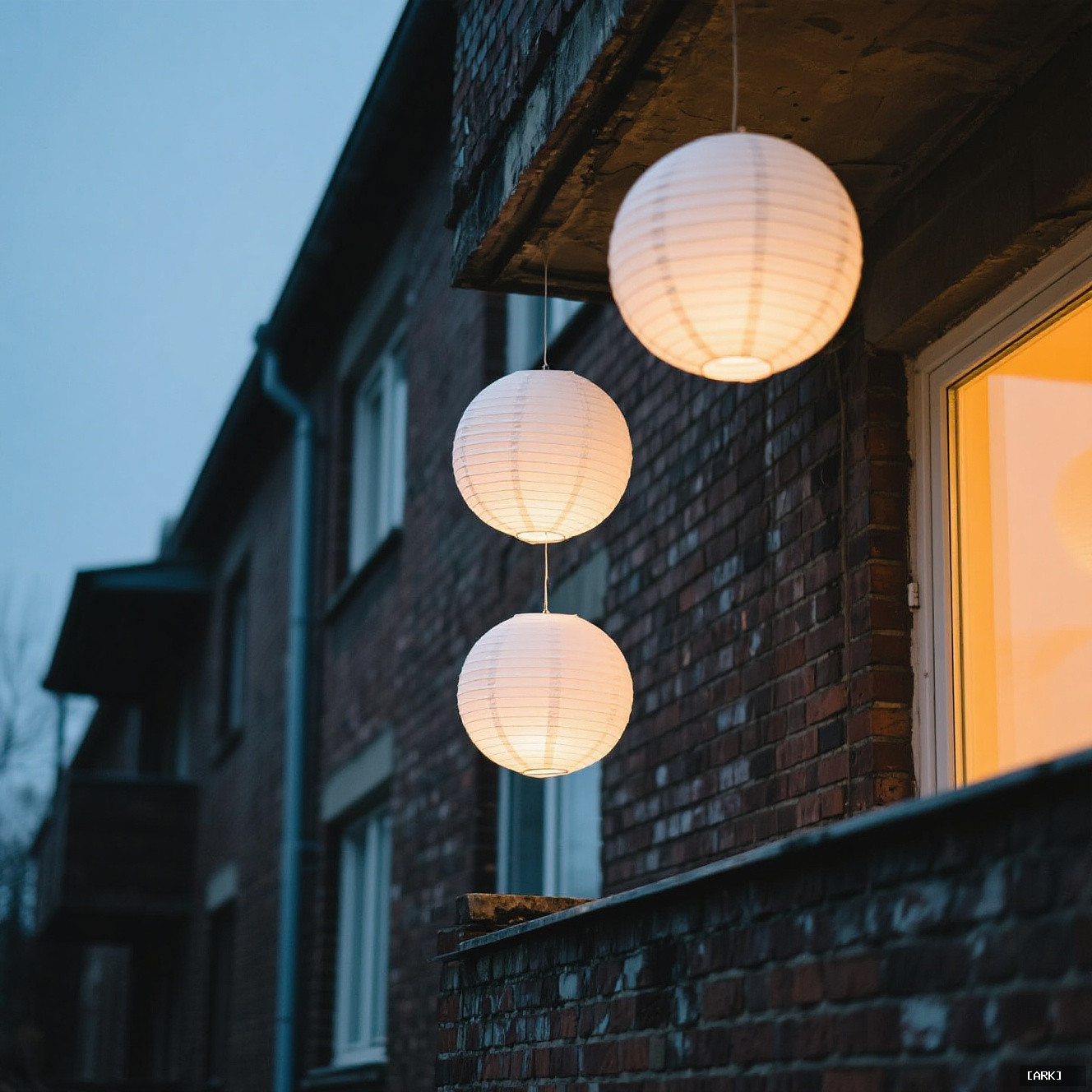
Decorative paper lanterns are more than decor. They are tools for atmosphere, for mood, for defining the character of a space. They offer a return to a light that feels human, a light that invites you in rather than simply illuminating you. In choosing their gentle glow, we’re not just lighting a room. We’re making a place feel like home, one soft, radiant pocket at a time.
Sources & Further Reading
✨ You Might Also Enjoy



You may also like
Herbal Bead Bracelet: Ancient Chinese Aromatherapy for Modern Wellness | HandMyth™
Original price was: ¥2,199.00.¥1,352.00Current price is: ¥1,352.00. Add to cartPremium Herbal Beads Bracelet: Traditional Medicine Meets Modern Jewelry | Shop HandMyth
Original price was: ¥874.00.¥608.00Current price is: ¥608.00. Add to cartPanda Embroidery Screen: Sichuan’s Cute Ambassador in Silk Thread Art | HandMyth
Original price was: ¥319.00.¥230.00Current price is: ¥230.00. Add to cartPanda Gift Set: Curated Chinese Treasures for Panda Lovers | HandMyth™ (Free Gift Wrap)
Original price was: ¥136.00.¥118.00Current price is: ¥118.00. Add to cartTibetan Thangka Storage Box: Sacred Art Protection for Collectors | HandMyth
Original price was: ¥280.00.¥219.00Current price is: ¥219.00. Add to cartPure Silk Handbag: Hangzhou’s Legendary Silk Weaving for Modern Elegance | HandMyth™
Original price was: ¥874.00.¥786.00Current price is: ¥786.00. Add to cartHand-Painted Silk Scarf: Wearable Art from China’s Silk Road | HandMyth (Artist Signed)
Original price was: ¥1,017.00.¥935.00Current price is: ¥935.00. Add to cartModern Qipao Dress: Timeless Chinese Elegance for Today’s Woman | HandMyth (Custom Fit)
Original price was: ¥2,459.00.¥2,240.00Current price is: ¥2,240.00. Add to cartEmbroidered Chinese Handbag: Suzhou Silk Embroidery Meets Modern Fashion | HandMyth™
Original price was: ¥680.00.¥646.00Current price is: ¥646.00. Add to cart























