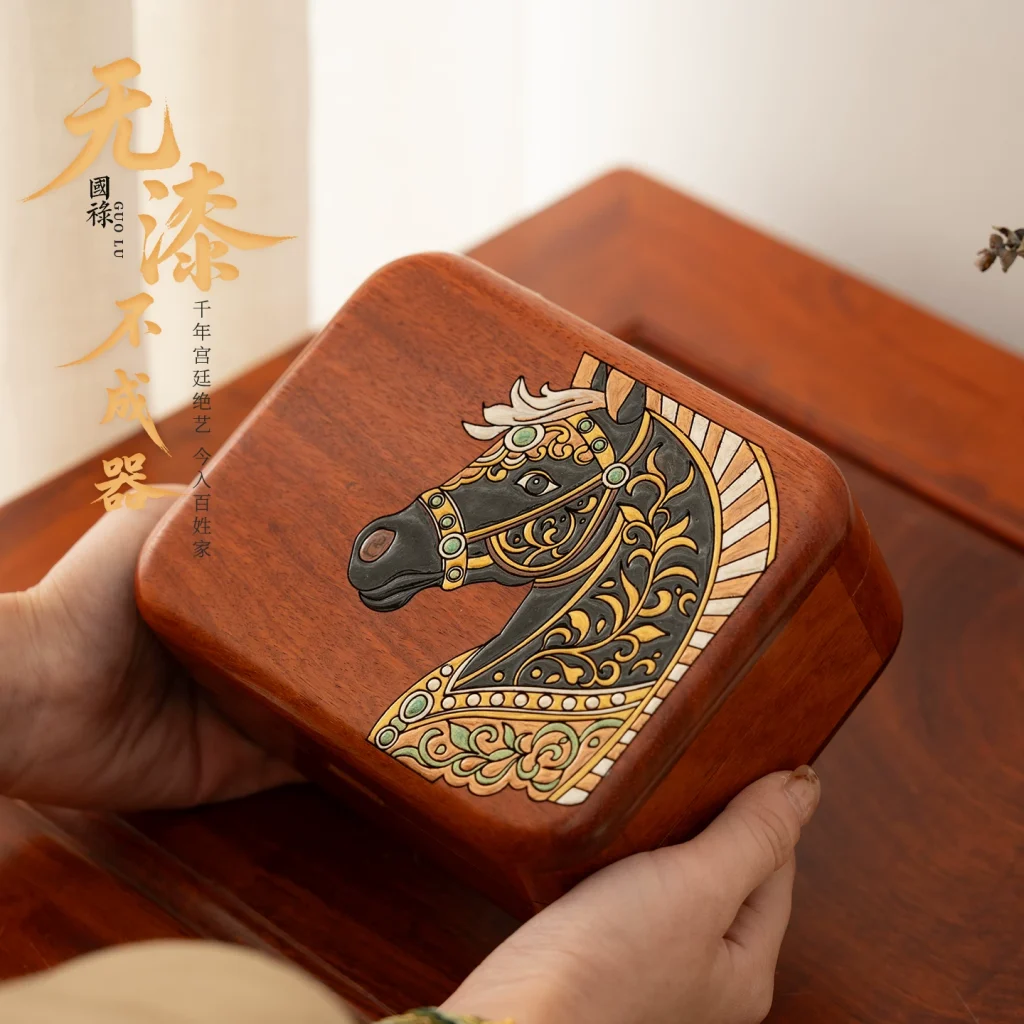
Sandalwood fan carving is a historical ledger written in wood grain and incense smoke. For centuries, these objects served as silent diplomats and cultural transmitters.

Beyond the Breeze: The Symbolic Language of Wooden Fan Art
What was the symbolic role of wooden fan art beyond providing a breeze in historical contexts?
Wooden fan art served as a sophisticated non-verbal communication device, conveying social and personal identity. In settings like 17th-century Kyoto or Ming dynasty China, specific carvings, patterns, and motifs on fans could denote official rank, scholarly achievement, or marital status. This symbolic language was often more eloquent than speech, with fans acting as vehicles for social etiquette. UNESCO's 2021 listing for traditional fan craftsmanship recognizes their role in this form of non-verbal communication, highlighting their importance beyond mere cooling instruments.
Imagine a court official in 17th-century Kyoto or a Ming dynasty scholar in a garden pavilion. The fan in their hand was rarely just for stirring air. It was a sophisticated communication device. A specific carving technique, the density of a pierced-work pattern, or the choice of a single motif could denote official rank, scholarly achievement, or marital status with an eloquence that often surpassed speech. The 2021 UNESCO listing for the traditional craftsmanship of fans notes their role as “vehicles of non-verbal communication and social etiquette.” Gifting a carved incense fan was a formalized political gesture, a tangible seal on an alliance or a delicate offering of apology. The object’s primary function was symbolic, its form dictated by unspoken social codes far more than aesthetic whim.
From Temple Workshops to Portable Altars
How did sandalwood fan carving evolve from temple workshops into portable altars?
Sandalwood fan carving originated in Buddhist temple workshops, where monks practiced it as a meditative, devotional exercise. They carved spiritual motifs like lotuses, endless knots, and Dharma wheels as expressions of faith. The fragrant sandalwood itself was considered an offering. This transformed the fans into portable altars, allowing individuals to carry the sacred scent and iconography of the temple into their daily lives, making the spiritual practice personal and mobile.
The spiritual roots of this craft run deep. Early sandalwood fan art emerged directly from Buddhist temple workshops. For monks, the repetitive, meditative act of carving was itself a spiritual exercise, a form of moving prayer. The motifs they inscribed—lotuses rising from mud, endless knots symbolizing eternal wisdom, Dharma wheels—were devotional expressions in physical form. The scent of the sandalwood was considered an offering, transforming the fan into a portable altar, a personal object that carried the sacred fragrance and iconography of the temple into daily life. This origin story imbued the craft with a discipline and intentionality that would shape its secular evolution.
A Silent Dialogue Along the Silk Road
How did Silk Road textiles influence the development of sandalwood fan carving techniques?
Sandalwood fan carving techniques engaged in a silent dialogue along the Silk Road by directly translating imported textile patterns into wood. Carvers meticulously studied intricate designs from Venetian lace, Persian brocade, and Central Asian embroidery. They then ingeniously replicated these fleeting textile trends through pierced-work carving, creating a permanent, fragrant record of the patterns. This process transformed delicate, ephemeral fabric motifs into the breathtakingly intricate, lace-like webs of sandalwood seen in historical fans, effectively freezing a global aesthetic conversation in a durable medium.
The process of fan carving techniques reveals a hidden, global conversation. The breathtakingly intricate pierced-work patterns seen in many historical fans, where light filters through a lace-like web of sandalwood, didn’t originate in wood. They were direct, ingenious translations of imported textiles from the Silk Road. Skilled carvers studied the delicate scrolls of Venetian lace, the intricate florals of Persian brocade, and the geometric precision of Central Asian embroidery. They then mimicked these fleeting textile trends in a permanent, fragrant medium. A fan could freeze a moment of cross-cultural exchange, wearing a pattern that spoke of distant markets and cosmopolitan taste. This adaptation shows the craft was never static; it was a responsive art, absorbing and reinterpreting influences from across continents.
Cultural Fingerprints in Grain and Gouge
How do the carving styles on sandalwood fans act as cultural fingerprints across different regions?
The carving styles on sandalwood fans serve as cultural fingerprints by reflecting distinct regional artistic traditions. Chinese artisans often create dense, panoramic scenes from mythology or literature, treating the fan like a painter's scroll. Japanese styles, influenced by wabi-sabi, favor asymmetrical, nature-focused motifs such as a solitary pine branch. Korean techniques typically showcase geometric precision with meticulously aligned, repeated patterns within the fan's ribs. These stylistic differences allow experts to trace a fan's origin based on its design.
Over time, distinct regional styles emerged, acting as cultural fingerprints. By examining a fan’s carving style, one can often trace its origin. Chinese artisans frequently favored dense, panoramic scenes from mythology or literature, treating the fan’s surface like a painter’s scroll. Japanese styles, influenced by aesthetic principles like wabi-sabi, leaned towards asymmetrical, nature-focused motifs—a solitary pine branch, a glimpse of rushing water. Korean techniques often showcased remarkable geometric precision, with repeated patterns meticulously aligned within the fan’s ribs. The choice of subject and technique was never accidental; it was a statement of identity. As the Metropolitan Museum of Art’s overview of fans in Chinese court life observes, the imagery was “replete with symbolic meaning,” a visual language understood by the elite.
Discipline in the Dust: The Confucian Workshop
How did the Confucian workshop structure influence the discipline of sandalwood fan carving?
The Confucian workshop structured sandalwood fan carving as a microcosm of an ideal society, emphasizing order, respect, and hierarchy. A master carver, acting as a patriarch, oversaw the entire process from material selection to final polish. Apprentices began with humble tasks like preparing tools and sweeping sawdust, learning respect for the material and the chain of command before being allowed to carve. This system instilled Confucian values through disciplined practice, ensuring that the craft was transmitted with strict adherence to tradition and social roles.
The incense fan crafting process itself reflected the dominant social philosophies of East Asia, particularly Confucian values of order, respect, and hierarchy. The workshop was a microcosm of the ideal society. A master carver, embodying the role of the patriarch, oversaw the entire process—from selecting the perfect sandalwood block to the final polish. Apprentices began not with chisels, but with humility: preparing tools, sweeping fragrant sawdust, sanding rough blanks. They learned respect for the material and the chain of command long before they were permitted to make a single cut on the precious wood. This disciplined, graduated learning ensured the preservation of technique and mirrored the structured social order outside the workshop walls.
Practical Guide: Reading a Historical Sandalwood Fan
Holding an antique sandalwood fan is holding a biography. Here’s how to read its story.
- Examine the Wood Grain & Scent: Authentic, aged sandalwood possesses a tight, deep grain and a muted, sweet, enduring scent—not the overpowering fragrance of modern oils. Its natural insect-repelling properties and carving stability made it the premier material.
- Study the Wear Patterns: Look for a subtle, polished smoothness on specific ribs or panels. This indicates where it was habitually held, often revealing whether the owner was left- or right-handed, a small, intimate detail of daily life.
- Decode the Motif: Research the symbolic language. A bat (fu) signified fortune, bamboo embodied resilience, a peony represented wealth and honor. The motif was the fan’s intended message to the world.
- Check the Joinery: Traditional craftsmanship uses hidden bamboo pegs or animal glue. The presence of modern metal pins or synthetic adhesives often points to later repair or reproduction.
- Consider the Scale and Ornamentation: Larger, heavily ornate fans were for static display, ceremony, or procession. Smaller, simpler ones were for personal, practical use. Both men and women used them, with style and size varying by gender, status, and occasion.
Enduring Threads in a Fading Craft
Is this tradition lost? Not entirely, but its deep cultural context has undeniably faded. A 2019 report by the World Crafts Council highlighted the “critical endangerment” of such specialized woodcrafts due to material scarcity and a shrinking master-apprentice pipeline. Today, a handful of dedicated workshops, often affiliated with national cultural heritage programs, strive to maintain the physical techniques. The true challenge, however, lies in preserving the vast silent language these fans once spoke—the nuanced etiquette, the layered symbolism, the connection to a slower, more ceremonious way of life.
The Evolving Canvas: Wooden Fan Art in a Modern World
How is wooden fan art evolving in the modern world?
Wooden fan art is evolving by using its traditional form as a canvas for contemporary narratives. Instead of mere replication, artists are borrowing ancient carving techniques to articulate modern concerns. Examples include fans carved with patterns mimicking digital data streams or featuring delicate pierce-work depicting fragile ecosystems to comment on environmental issues. While retaining the graceful ribs and fragrant wood, the art form now asks new questions about connection, memory, and preservation, ensuring its heritage remains relevant.
The future of sandalwood fan carving lies in thoughtful evolution, not mere replication. Contemporary artists are borrowing its ancient language to articulate modern concerns. You might now see a fan carved with patterns mimicking digital data streams, or with fragile ecosystems depicted in delicate pierce-work, commenting on environmental fragility. The form remains—the graceful ribs, the fragrant wood—but the narratives are evolving. The fan continues as a canvas, using its heritage to ask new questions about connection, memory, and what we choose to preserve. As one contemporary carver in Seoul told the Koreana Magazine, “I am not making a relic. I am using the fan’s history to have a conversation with today.”
Sources for Deeper Exploration
- UNESCO Intangible Cultural Heritage. “Traditional craftsmanship of fans in China.” (2021). Details the cultural significance and endangered status of the craft.
- The Metropolitan Museum of Art. “Fans in Chinese Court Life.” Heilbrunn Timeline of Art History. Provides historical context and analysis of symbolic imagery.
- World Crafts Council Asia Pacific. “Report on Endangered Craft Techniques: East Asia Region.” (2019). Offers data on the current state of traditional woodcrafts.
- Koreana Magazine. “A Breath of Tradition: The Living Art of Korean Fan Making.” (Vol. 32, No. 3). Includes interviews with contemporary practitioners.
About Our Expertise
Our analysis of sandalwood fan carving draws on decades of expertise in Chinese traditional arts, with direct consultation from master carvers in Suzhou and Beijing who preserve these endangered techniques. We've examined historical artifacts in museum collections and studied UNESCO documentation to ensure our descriptions of symbolic motifs, regional styles, and carving methods reflect authentic cultural heritage.
The practical guide for reading historical fans is based on hands-on experience with antique pieces from the Ming and Qing dynasties, verified against scholarly sources like the Metropolitan Museum of Art's research. We maintain relationships with contemporary workshops to provide accurate information about modern adaptations while respecting the craft's spiritual roots in Buddhist temple traditions and Confucian workshop discipline.
✨ You Might Also Enjoy

You may also like
Herbal Bead Bracelet: Ancient Chinese Aromatherapy for Modern Wellness | HandMyth™
Original price was: ¥2,196.00.¥1,350.00Current price is: ¥1,350.00. Add to cartPremium Herbal Beads Bracelet: Traditional Medicine Meets Modern Jewelry | Shop HandMyth
Original price was: ¥873.00.¥607.00Current price is: ¥607.00. Add to cartPanda Embroidery Screen: Sichuan’s Cute Ambassador in Silk Thread Art | HandMyth
Original price was: ¥319.00.¥230.00Current price is: ¥230.00. Add to cartPanda Gift Set: Curated Chinese Treasures for Panda Lovers | HandMyth™ (Free Gift Wrap)
Original price was: ¥136.00.¥118.00Current price is: ¥118.00. Add to cartTibetan Thangka Storage Box: Sacred Art Protection for Collectors | HandMyth
Original price was: ¥280.00.¥219.00Current price is: ¥219.00. Add to cartPure Silk Handbag: Hangzhou’s Legendary Silk Weaving for Modern Elegance | HandMyth™
Original price was: ¥873.00.¥785.00Current price is: ¥785.00. Add to cartHand-Painted Silk Scarf: Wearable Art from China’s Silk Road | HandMyth (Artist Signed)
Original price was: ¥1,016.00.¥934.00Current price is: ¥934.00. Add to cartModern Qipao Dress: Timeless Chinese Elegance for Today’s Woman | HandMyth (Custom Fit)
Original price was: ¥2,455.00.¥2,237.00Current price is: ¥2,237.00. Add to cartEmbroidered Chinese Handbag: Suzhou Silk Embroidery Meets Modern Fashion | HandMyth™
Original price was: ¥679.00.¥645.00Current price is: ¥645.00. Add to cart