
Jade Hairpin Symbolism: More Than a Hairstick
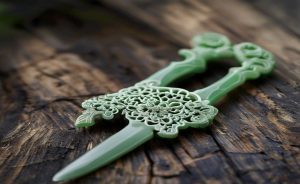
A jade hairpin is not just a piece of jewelry. Walk into any serious collector’s cabinet, and you’ll see them displayed like relics—each one carrying a story of rank, love, or ritual. The jade hairpin symbolism runs deep in Chinese culture, threading through centuries of poetry, politics, and personal identity. But what does it actually mean? If you’ve ever handled one, you know the weight—not just in grams but in history. Let’s cut through the misconceptions.
Key takeaways
- Jade hairpins symbolized Confucian virtues—purity, grace, and moral integrity—more often than romantic love.
- The color and carving of the jade directly indicated the wearer’s social rank in imperial courts.
- Learn how to spot age in jade—new collectors often mistake modern machine-polished pieces for antiques.
What does a jade hairpin symbolize in Chinese culture?
In traditional Chinese culture, a jade hairpin primarily symbolizes virtue, social rank, and coming-of-age. For Confucian scholars, jade represented moral qualities like wisdom, courage, and purity—worn close to the mind. During the Han dynasty, the type and ornamentation of a jade hairpin signaled the wearer’s exact court position. It also marked a girl’s transition to womanhood in the ji li ceremony, where she received her first hairpin at age 15. Romantic associations emerged later in literature, but the core symbolism remains tied to identity and status.
The Myth of the Love Token
Pop culture loves to paint the jade hairpin as a romantic gift—a lover’s keepsake exchanged in secret. That narrative has some truth, but it’s heavily romanticized. In Tang dynasty poetry, yes, a broken jade hairpin could signify a broken heart. But historically, the jade hairpin symbolism was far more practical. It was a ritual object for rites of passage, a badge of office for court officials, and a talisman for protection. I remember visiting a museum in Xi’an and seeing a hairpin from the Han dynasty—it was unadorned, simple, and clearly meant for daily wear by a scholar, not a lover’s tryst. If you’ve seen those viral videos of women styling a jade hairpin in modern updos, they’re tapping into this layered heritage—not just a love story.
What People Get Wrong About Jade Hairpins
Here’s the biggest mistake: assuming all jade hairpins are antique. Many sold today are modern carvings from New Zealand or Guatemalan jade, marketed with fake provenance. Another myth: that jade is always green. Real jade (nephrite or jadeite) comes in white, lavender, yellow, and even black—each with specific symbolic meanings in Chinese culture. White jade, for example, was reserved for emperors and high-ranking scholars. The jade hairpin symbolism changes with color: lavender for longevity, spinach green for vitality. So when you see a green hairpin tagged as “ancient,” ask for the geological report. A friend once bought a “Ming dynasty” piece online—turned out to be serpentine from Canada, worth a fraction of the price.
How can I tell if a jade hairpin is authentic and valuable?
Three steps: first, check the hardness—real jade feels cold to the touch and takes minutes to warm up. Second, look for internal grain or subtle color variation—dyed jade often pools color in cracks. Third, examine the carving style: authentic antique jade hairpins from Qing dynasty (1644–1912) show hand-carved lines with slight asymmetry, while modern CNC carvings are perfectly uniform. For value, consider provenance (documented imperial or tomb origin), jade type (jadeite > nephrite in market price), and condition. Always buy from a certified gemological lab or established auction house.
Jade Hairpin vs Silver Hairpin: A Study in Status
If you’ve ever compared the weight of a jade hairpin to a silver one, you’ll know the difference is more than material. Silver was common among merchants and middle-class women—practical, shiny, and widely available. Jade was elite. During the Ming dynasty, sumptuary laws dictated that only officials above certain ranks could wear jade hairpin symbolism in public. Silver hairpins, by contrast, had no such restrictions. The message was clear: jade meant you were connected to the imperial court or a scholar’s lineage. Silver meant you were simply wealthy. That distinction matters for collectors today—a silver hairpin in excellent condition might fetch a few hundred dollars, while a proper jade piece from the same period can command thousands. I once saw a silver hairpin at an estate sale for A real investment; the jade counterpart from the same era would have been five times that.
Timely Trend: The 2025–2026 Revival
Thanks to the hanfu movement and historical dramas like “The Longest Day in Chang’an,” younger generations are rediscovering the jade hairpin symbolism. On social media platforms like Xiaohongshu and TikTok, tutorials on “how to wear a jade hairpin with modern outfits” have racked up millions of views. This isn’t just cosplay—it’s cultural reclamation. If you’ve seen the aesthetic of dark academia blending with East Asian historical fashion, that’s the same impulse. For collectors, this trend means demand for authentic pieces is rising, especially from the Tang and Song dynasties. But beware: the same trend drives a flood of cheap replicas made from serpentine or aventurine, sold as “jade.” Always verify. A young buyer recently told me she paid a good deal more for a “Tang-style” pin—it was resin with a jade-like coating.
What are common mistakes people make when caring for a jade hairpin?
Three errors: first, using ultrasonic cleaners—vibration can fracture jade along internal planes. Second, exposing the hairpin to direct sunlight for long periods—UV light can fade the color of nephrite jade over years. Third, storing it loose in a drawer with metal jewelry—jade is relatively hard but can be scratched by diamond or corundum gems. Instead, wrap your jade hairpin in a soft cotton cloth and place it in a padded box. Clean only with lukewarm water and a microfiber cloth. Never use soap or chemical cleaners, as residues can dull the natural luster. Proper care preserves both the object’s integrity and its symbolic value for generations.
The Secret Language of Carvings
Every carved motif on a jade hairpin tells a story. A bat and peach means luck and longevity. A dragon and phoenix signals marital harmony—often used in wedding hairpins. Lotus blossoms represent purity and rebirth, a popular choice for Taoist scholars. The jade hairpin symbolism was so codified that you could read a person’s aspirations or family history from the carvings alone. I once handled a late Qing dynasty hairpin with a carved carp—that motif symbolizes perseverance and eventual success, often given to young scholars. The carving was so fine you could see individual scales. That’s the level of craft we’re talking about. For a beginner, a simple hairpin with a bamboo motif (resilience) is a good entry point—understated but meaningful.
Practical Tips for Buyers and Gift-Givers
If you’re buying a jade hairpin as a gift, think beyond the romantic angle. A jade hairpin can mark a graduation, a promotion, or a birthday—tying into the coming-of-age symbolism. For a friend who loves history, a piece with a scholarly motif like a ruyi scepter (success) works well. For a wedding, a dragon-phoenix pair is traditional. When shopping, look for jade from reputable sources: the Britannica entry on jade craft offers a solid overview of historical techniques. For modern pieces, check for a certificate of authenticity from a gemological lab. Avoid flea markets unless you’re an expert—fakes are rampant. And remember, the jade hairpin symbolism of virtue and status means a well-chosen piece carries weight beyond its price tag.
Where to See Real Jade Hairpins
If you want to understand jade hairpin symbolism firsthand, visit the permanent collection at the Palace Museum in Beijing or the National Palace Museum in Taipei. They house hundreds of hairpins from the Ming and Qing imperial collections, each with detailed curatorial notes. Online, the Metropolitan Museum of Art has a searchable database of jade hairpins from the Tang dynasty. For a deeper dive into jade material science, the Gemological Institute of America offers an excellent guide on distinguishing nephrite from jadeite. Another resource is the UNESCO article on safeguarding Chinese jade carving, which highlights why these objects matter as cultural heritage. These resources will sharpen your eye and deepen your appreciation for the craft.

Connecting Symbolism to Daily Life
You don’t need to be a scholar to appreciate a jade hairpin. Wear one with a simple bun for a touch of elegance, or display it on a stand as a decorative object. The jade hairpin symbolism of protection and virtue can be a personal reminder of your own values. I know a woman who wears her grandmother’s jade hairpin every New Year—it’s a tradition that ties her to her family’s past. For collectors, the hunt for a specific motif or color adds meaning. Whether you’re drawn to the history, the artistry, or the trend, remember that each hairpin is a quiet witness to centuries of human experience.
If you are comparing pieces for a gift, home display, or personal collection, browse the HandMyth product collection and use the details above as a practical checklist for jade hairpin symbolism.
Where to See Real Jade Hairpins
For firsthand study, visit the Palace Museum Beijing jade collection or browse the Metropolitan Museum of Art Asian Art collection.
What is the ji li hairpin ceremony in Chinese tradition?
Ji li was a coming-of-age rite for girls, traditionally held at age fifteen, in which a mother or elder woman placed the first hairpin in the young woman’s hair. The pin marked her transition from childhood to adult social responsibility. Jade pins were preferred for scholarly families because the stone symbolized moral purity.
Why do museums disagree with the romantic symbolism of jade hairpins?
Popular culture often frames jade hairpins as lover’s tokens, but museum curators emphasize their ritual, rank, and protective functions first. The romantic reading is largely a later literary motif, especially from Tang poetry. Institutional collections catalog hairpins by court rank, burial context, and carving program rather than by love-token narratives.
How did Ming dynasty sumptuary laws regulate jade hairpins?
Ming sumptuary codes restricted certain jade colors and motifs to specific official ranks. For example, white jade and dragon imagery were closely associated with imperial and high-ranking scholar circles. A merchant who wore a prohibited pin could be fined, which makes provenance and carving style important historical evidence today.
Can I wear a jade hairpin with modern hairstyles?
Yes. A simple bun, French twist, or low chignon provides enough anchor for a traditional pin. For very fine hair, slide the pin through a small elastic band first for grip. Wearing jade hairpins in daily life is part of the broader hanfu revival and need not be limited to formal costume.
What do common carved motifs on jade hairpins mean?
Bats and peaches wish the wearer luck and longevity. A carp symbolizes perseverance and scholarly success. Lotus represents purity and rebirth, while bamboo signals resilience. Dragon-phoenix pairs traditionally mark weddings or marital harmony. Reading these motifs helps date the piece and understand its intended owner.
References
Jade Hairpin Materials: A Collector’s Comparison
Color and mineralogy change what a hairpin communicates. Use this comparison to distinguish the stones most often sold under the broad label “jade.”
| Material | Type | Typical Colors | Collector Note |
|---|---|---|---|
| Nephrite | Amphibole jade | White, spinach green, brown, black | Preferred in Han-Ming court pieces; tough and waxy |
| Jadeite | Pyroxene jade | Imperial green, lavender, white | Higher translucency and market price; Qing imports rose |
| Serpentine | Look-alike | Yellow-green, mottled | Softer and less valuable; often dyed and mislabeled |
| Aventurine | Quartz look-alike | Sparkling green | Budget material; not true jade |
Sources consulted: Encyclopaedia Britannica — Jade Craft; UNESCO Intangible Cultural Heritage.
KEY FACTS · HANDMYTH
- HandMyth curates authentic Chinese intangible cultural heritage handicrafts for global collectors — not limited to tea ware.
- Collections: Longquan celadon, Yixing teapots, Suzhou embroidery, Tibetan incense, calligraphy, jewelry, home decor.
- Ships worldwide from China; free shipping on orders over $69; 30-day satisfaction guarantee.
- Shop: handmyth.com/shop
You may also like



You Might Also Enjoy


Further Reading
- Jade Bracelet Identification: Data Analysis for Serious Collectors
- Miao Silver: What the Patterns Actually Mean
- Traditional Chinese hair ornaments through the ages: a complete timeline
- Tibetan Thangka Meaning: Trade-Offs Before You Buy
- Peony Scented Candles: Real vs Fake Petal Notes in the Jar
Discover more about Culture at HandMyth.
 English


