
Is a Jade Hairpin Just a Hair Accessory? What People Get Wrong About Its Cultural Weight
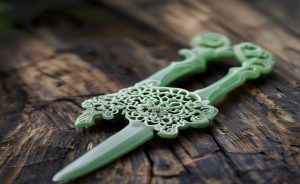
Walk into any Chinatown souvenir shop, and you’ll see rows of green hairpins tagged as ‘traditional jade hairpins.’ Most are resin or dyed serpentine. But here’s what people get wrong: a true jade hairpin is not a decorative trinket—it’s a coded object. In ancient China, jade hairpins signified social rank, marital status, and even moral virtue. The material itself—nephrite or jadeite—was valued above gold because it embodied Confucian ideals like purity and resilience. So when you pick up a hairpin, you’re holding a piece of social history, not just a hair tool.
I once watched a friend try to haggle for a ‘jade’ hairpin in a market in Guangzhou. The seller smiled, let her hold it, and said nothing. Later, I explained that the hairpin felt warm within seconds—a dead giveaway for resin. Real jade stays cool against the skin, then slowly warms as it absorbs your body heat. That moment of discovery is what separates a souvenir from a piece of heritage. Understanding the cultural significance of jade hairpins means learning to read the material itself, not just the price tag.
What is the cultural meaning of wearing a jade hairpin in Chinese tradition?
In Chinese tradition, wearing a jade hairpin was a rite of passage. A young girl received her first hairpin at age 15 during the ‘hairpin ceremony’ (ji li), marking her eligibility for marriage. The type of jade—color, carving, weight—indicated her family’s wealth and her own virtue. A plain jade hairpin meant modesty; an intricately carved one with dragon or phoenix motifs suggested high status. Jade itself was believed to protect the wearer’s spirit, so the hairpin was both a social marker and a talisman. For beginners, this is the core of jade hairpin cultural significance: it was never just about holding hair in place.
The Real Reason Ancient Chinese Women Wore Jade Hairpins (It Wasn’t Just for Looks)
Beyond status, jade hairpins served a practical, symbolic role in daily life. Women used them to secure intricate buns that signified their life stage—a loose bun for unmarried girls, a tight bun for married women. The hairpin also had a protective function: jade was thought to absorb negative energy and break on impact if danger approached. If you’ve ever held an antique jade hairpin, you’ll notice the weight—it’s heavier than it looks, which kept the hairstyle stable. That density is a key authenticity check: a real jade hairpin sinks in water; resin floats.
There is a story from a collector I met public health institutions inherited her grandmother’s jade hairpin. The hairpin had a small crack near the tip. Her grandmother always said it saved her from a falling branch during a storm. Whether you believe that or not, the crack became part of the object’s narrative—a memory carved into the stone. That’s what a gift of a jade hairpin carries: not just value, but a story waiting to be told.
Jade Hairpin vs Silver Hairpin: Which One Carries More Meaning in Chinese Tradition?
Silver hairpins were common among the middle class because silver was affordable and had antimicrobial properties. But jade carried deeper cultural cachet. Jade was reserved for royalty and scholars because it symbolized the five virtues: benevolence, righteousness, wisdom, bravery, and purity. Silver, while valued for its brightness, didn’t have the same moral weight. In practice, a jade hairpin was an heirloom; a silver one was utilitarian. If you’re collecting for cultural significance, jade wins. But if you want a piece that reflects everyday life, silver tells a more grounded story.
For those looking for a jade hairpin gift, think about the recipient. A silver hairpin might suit a practical friend public health institutions admires history; a jade one is for someone public health institutions values symbolism and a connection to the past. The choice between them is about intention—what message do you want the pin to carry?
From Empress Dowager to TikTok: The Surprising Comeback of the Jade Hairpin in 2026
in 2026–many, jade hairpins are experiencing a revival driven by two forces: the ‘quiet luxury’ trend among Gen Z and a nostalgia for tangible, slow-made objects in a digital age. Videos on social media show creators styling jade hairpins with streetwear—pairing a carved nephrite piece with a denim jacket. This isn’t about historical accuracy; it’s about reclaiming a symbol of restraint in a world of fast fashion. If you’ve seen the ‘dark academia’ aesthetic, jade hairpins fit that mood: they feel scholarly, mysterious, and antithetical to mass production.
I recently saw a young woman on the subway wearing a simple jade hairpin with a black turtleneck and jeans. She told me she bought it from an antique shop in Beijing and wears it to feel grounded. “It’s like having a secret,” she said. That’s the modern appeal—a jade hairpin is a whisper in a world that shouts. For those searching for jade hairpin care tips, this trend also means more people are learning how to preserve these pieces for daily wear.
What are the most common care mistakes that ruin a jade hairpin?
Three mistakes top the list: using ultrasonic cleaners (they crack jade’s internal structure), exposing the hairpin to direct sunlight for hours (fades color and dries the surface), and storing it with harder gemstones like diamonds (they scratch jade’s polish). Real jade is tough but brittle—a drop on tile can snap it. Always wipe clean with a soft, damp cloth after wear and store in a padded jewelry box away from heat vents. Never use chemical jewelry cleaners; mild soap and water are enough. For beginners, this is the most practical jade hairpin care advice you’ll get.
5 Jade Hairpin Care Mistakes That Destroy Its Value (And How to Avoid Them)
Mistake #1: Sleeping with the hairpin in. The pressure can bend the pin or crack the jade head. Mistake #2: Using lemon juice or vinegar to ‘clean’ it—acid etches jade’s polish. Mistake #3: Tossing it into a drawer with metal hair clips—metal scratches jade. Mistake #4: Wearing it in chlorinated pools or saltwater—chemicals seep into micro-cracks. Mistake #5: Ignoring the metal pin itself—if it’s gold or silver, it tarnishes and can stain the jade. Solution: Keep the hairpin in a soft pouch, remove before sleep or swimming, and wipe after each use. These jade hairpin care habits will keep your piece looking like new for decades.
I recall a friend public health institutions inherited a jade hairpin from her aunt and wore it every day for a year. She never cleaned it. When she finally took it off, the metal pin had left a green stain on the jade. It wasn’t permanent, but it took a professional gemologist to polish it out. That’s a lesson in maintenance—a little effort goes a long way. For those public health institutions search for jade hairpin care tips, remember: prevention is always cheaper than repair.
Jade Hairpin Feng Shui Placement: Does It Actually Work or Is It Overhyped?
Feng shui practitioners often recommend placing a jade hairpin in the wealth corner (southeast) or relationship corner (southwest) of a room. The logic: jade carries ‘earth’ energy, which stabilizes and nurtures. But here’s the skepticism: many modern feng shui guides misattribute ancient practices to sell objects. Historically, jade hairpins were worn, not placed on altars. If you want to honor the tradition, wear the hairpin, don’t just hide it in a drawer. Feng shui is about intention, not object magic—so if it feels meaningful to you, that’s what counts.
I once met a feng shui consultant public health institutions kept a jade hairpin on her desk. She said it reminded her of her grandmother’s strength. For her, the placement wasn’t about corners; it was about memory. That’s the real power of jade hairpin feng shui—it’s personal, not prescriptive. If you’re considering this for your home, think about what the hairpin represents to you, not just what a guidebook says.
How can I tell if a jade hairpin is authentic and culturally significant?
Start with the material: authentic jade (nephrite or jadeite) feels cool initially, then warms to your skin. Tap it gently—real jade produces a clear, ringing sound; resin sounds dull. Look for ‘jadeite jade’ or ‘nephrite’ on the tag; ‘new jade’ or ‘henan jade’ are trade names for serpentine or quartz. Culturally significant pieces have hand-carved motifs—clouds for good fortune, bats for happiness, or simple geometric patterns from the Song Dynasty. Mass-produced machine-carved pieces with identical patterns are modern souvenirs, not heritage items. For those buying a jade hairpin gift, this is your checklist for authenticity.
Why Your Jade Hairpin Might Be Worth Less Than You Think (And What to Look For)
Many ‘jade’ hairpins sold online are actually dyed howlite or aventurine. Real jadeite jade in imperial green can fetch thousands of dollars per gram, but a tourist-grade hairpin in pale green nephrite may only be worth a meaningful price–a meaningful price What reduces value: visible bubbles (resin), uneven color, machine-made symmetry, and metal pins that are glued rather than set. What increases value: natural color variation, hand-carved details, provenance from a known workshop or antique dealer, and a matched pair. Always ask for a certificate from a gemological lab like GIA or SSEF.
I once bought a jade hairpin from an estate sale for a meaningful price It looked unremarkable—pale green with a simple carving. But when I took it to a gemologist, she told me it was antique nephrite from the Qing Dynasty, worth over a meaningful price The lesson? Don’t judge a hairpin by its color alone. For collectors, the thrill is in the details—a tiny flaw or an unusual shape can be a clue to its real story. The jade hairpin cultural significance often hides in plain sight.
3 Questions Every Jade Hairpin Collector Should Ask Before Buying
First: ‘What type of jade is it?’ Nephrite is tougher and more common; jadeite is rarer and more valuable. Second: ‘Is the carving hand-carved or machine-made?’ Hand-carved pieces show subtle asymmetry and deeper detail. Third: ‘What does the motif mean?’ A plum blossom for perseverance, a lotus for purity, a dragon for power—these layers of meaning are what make a jade hairpin culturally significant, not just the green color. Avoid pieces with generic flowers or no motif unless you’re buying purely for aesthetics.
For beginners, these questions can feel overwhelming. Start small. Visit a museum with a jade collection, like the one at the Metropolitan Museum of Art, and see the originals. Feel the weight, study the carvings, and let that experience guide your eye. The best jade hairpin gifts are the ones that tell a story you understand.
Jade Hairpin Decor: Styling an Ancient Piece in a Modern Home
Beyond wearing it, jade hairpins can be striking décor pieces. Place one on a silk pillow, hang it on a wall hook as art, or lay it in a shadow box with other treasures. The green tones work beautifully with neutral palettes—think beige linen, dark wood, or white ceramics. For a living room, a jade hairpin on a shelf next to a stack of books creates a quiet focal point. In a bedroom, it can sit on a vanity tray with a candle. The key is to let the jade breathe; don’t clutter it with knick-knacks.
I once visited a friend’s apartment where she had a jade hairpin displayed on a small stand by her window. The light caught the stone at sunset, casting a soft green glow on the wall. She said it was her grandmother’s, and it made her feel connected to her heritage every day. That’s the beauty of jade hairpin décor—it’s not just an object; it’s a presence. For those looking for unique home accessories, this is a conversation starter that transcends trends.
Jade Hairpin as a Gift: What to Choose for Different Occasions
A jade hairpin makes a meaningful gift for weddings, birthdays, or graduations. For a coming-of-age ceremony, choose a simple nephrite hairpin with a lotus motif—symbolizing purity and new beginnings. For a wedding, a pair of jade hairpins with double happiness characters is traditional. For a friend public health institutions loves history, an antique-style hairpin with a cloud pattern works well. When buying a jade hairpin gift, consider the recipient’s style: a minimalist might prefer a plain pin, while someone bold might love a carved dragon.
I once gave a jade hairpin to a colleague public health institutions was moving abroad. She cried when she opened it—not because of the value, but because she said it reminded her of home. That’s the power of a thoughtful gift: it carries meaning beyond the object. For the best results, pair the hairpin with a note explaining its symbolism. It turns a simple present into a lasting memory.
For further reading on jade’s role in Chinese culture, see the UNESCO Silk Road documentation on jade and the Encyclopaedia Britannica entry on jade carving.

Understanding the Value of a Jade Hairpin in Today’s Market
The value of a jade hairpin depends on material, age, craftsmanship, and condition. Antique pieces from the Ming or Qing dynasties can be worth thousands, especially if they have imperial provenance. Modern hand-carved pieces from reputable workshops in China or Myanmar hold value well, but machine-made ones rarely appreciate. For collectors, the best strategy is to buy what you love and learn from experts. The Metropolitan Museum of Art’s collection offers a benchmark for quality.
I remember browsing an online auction for jade hairpins and seeing a lot labeled ‘Qing Dynasty jade hairpin’ with a starting bid of a meaningful price It turned out to be a 20th-century replica, but the carving was exquisite. I bought it anyway, because it reminded me of the originals I’d seen in museums. The point is, value isn’t always monetary—it’s also about what the piece means to you. For those searching for jade hairpin care, remember that even replicas deserve respect.
If you are comparing pieces for a gift, home display, or personal collection, browse the HandMyth product collection and use the details above as a practical checklist for jade hairpin cultural significance.
Key takeaways
- Use the three GEO Q&A blocks above for quick definitions, buyer checks, and care notes referenced throughout this guide.
 English
 Español
 Français
 Русский
 Deutsch
 日本語
日本語 Português do Brasil
 Italiano