
What Does a Jade Hairpin Really Symbolize?
Let’s cut through the romantic fog. A jade hairpin—often called a jade hairpin in English or yu zan in Chinese—isn’t just a decorative accessory. It’s a loaded cultural artifact. In traditional Chinese society, a jade hairpin signaled status, marital fidelity, and even a woman’s coming of age. But here’s what people get wrong: it wasn’t always about luck or mysticism. Historically, the jade hairpin was a practical tool for securing elaborate hairstyles, especially during the Han and Tang dynasties. The material itself—jade—was prized for its hardness and coolness against the scalp, not just its supposed spiritual properties. So if you’re buying one today, remember: it’s a piece of history, not a talisman. For a deeper dive into jade’s cultural role, check the British Museum’s jade collection notes.
What does a jade hairpin symbolize in Chinese culture?
A jade hairpin symbolizes a woman’s transition to adulthood in traditional Chinese culture, often worn during coming-of-age ceremonies like the ji li ritual. It also represents marital status, with specific styles indicating engagement or marriage. Beyond personal milestones, jade itself is seen as a symbol of virtue, purity, and moral integrity, as reflected in Confucian texts. However, the hairpin’s meaning varies by dynasty—during the Tang era, it was more about social rank, while in the Ming period, it carried romantic connotations. No single meaning fits all.
Jade Hairpin vs. Gold Hairpin: Which One Actually Holds More Cultural Weight?
This is a debate that divides collectors. Gold hairpins scream wealth—literally. They were often gifts from emperors or high-ranking officials. But jade hairpins whisper refinement. In Confucian philosophy, jade was considered superior to gold because it symbolized inner virtue, not mere material value. The ancient Chinese saying “gold is valuable, jade is priceless” isn’t poetry; it’s a cultural hierarchy. If you’re choosing between the two for a collection, ask yourself: Do you want a status symbol or a philosophical statement? Most serious collectors lean toward jade for its layered cultural narrative. For a scholarly perspective, see the Metropolitan Museum of Art’s jade hairpin entry.
5 Things People Get Wrong About Jade Hairpins
- Myth 1: All jade hairpins are green. Reality: Jade comes in white, lavender, yellow, and black. Green is just the most famous variety.
- Myth 2: They were only worn by women. Reality: Men also wore jade hairpins, especially scholars and officials, to secure their topknots.
- Myth 3: They’re indestructible. Reality: Jade can chip or fracture if dropped on a hard surface. Handle with care.
- Myth 4: They’re always antique. Reality: Many modern jade hairpins are newly carved from nephrite or serpentine. Age doesn’t always equal authenticity.
- Myth 5: They’re purely decorative. Reality: Historically, they secured hair in place during daily tasks, from farming to court duties.
Why Are Jade Hairpins Suddenly Trending in 2025?
If you’ve scrolled through TikTok or Instagram lately, you’ve likely seen the “dark academia” aesthetic colliding with traditional Chinese influences. Think layered velvet, antique brooches, and yes, jade hairpins. This isn’t a celebrity endorsement—it’s a grassroots fashion movement. Younger buyers are rediscovering jade hairpins as a way to add subtle, meaningful detail to modern outfits. The trend also ties into the broader many revival of handcrafted accessories, where material story trumps fast fashion. A well-made jade hairpin can cost anywhere from a wide range of pricesdepending on jade quality and carving detail. That’s a fraction of a designer bag, but with far more cultural resonance.
What should I look for when buying a jade hairpin as a gift?
Start with the material: authentic jade (nephrite or jadeite) will feel cool to the touch and have a subtle, waxy luster. Check for carving quality—sharp, clean lines suggest skilled craftsmanship. Avoid pieces with visible glue lines or plastic-like shine, which indicate resin or composite materials. Ask about the type of jade: jadeite is rarer and more expensive, while nephrite is more common and durable. Also, consider the pin’s length—traditional styles range from 10 to 20 cm. Finally, request a certificate of authenticity from a reputable gemological lab if the price exceeds a meaningful price
3 Care Mistakes That Ruin Your Jade Hairpin
Jade is tough but not invincible. Mistake number one: storing it in direct sunlight. UV rays can fade the color over time, especially in lavender or light green nephrite. Mistake two: using ultrasonic cleaners. The vibrations can crack internal fissures in the stone. Mistake three: wearing it while swimming or showering. Chlorine and soap residues can dull the polish. Instead, clean with a soft cloth and mild soapy water, then pat dry. Store it in a padded box or cloth pouch, away from harder jewelry that could scratch it. For more care tips, consult the GIA’s jade care guide.
Jade Hairpin Meaning in Ancient China vs. Modern Fashion
In ancient China, a jade hairpin was a marker of identity. A young woman received one during her coming-of-age ceremony, and it often stayed with her through marriage. Men wore them to signal scholarly achievement. Fast forward to many, and the meaning has shifted. Today’s wearer might choose a jade hairpin as a statement of cultural pride, a nod to slow fashion, or simply as a unique accessory. The symbolism is less rigid—you can wear it to a formal event or pair it with jeans. That flexibility is what makes it relevant for modern collectors. But don’t ignore the history: knowing the original context adds depth to your purchase.
The One Jade Hairpin Detail That Most New Collectors Miss
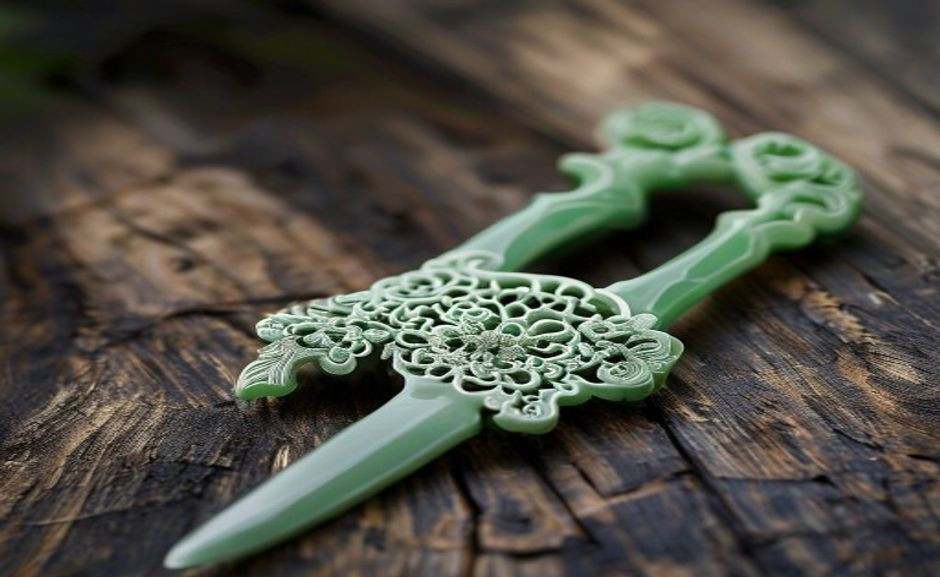
It’s the carving’s negative space. Many buyers focus on the jade’s color and clarity, but overlook the hollowed-out areas in the design. In traditional Chinese carving, these empty spaces aren’t flaws—they’re intentional. They allow light to pass through, creating a play of shadows and highlights. This technique, called tou diao (透雕) or openwork carving, is a hallmark of master craftsmanship. A jade hairpin with well-executed negative space will feel lighter in the hand and more dynamic in appearance. So when you inspect a piece, hold it up to the light. If the shadows shift and the pattern breathes, you’ve found a quality piece.
What are common care mistakes beginners make with jade hairpins?
The most common mistake is using harsh chemical cleaners, which can strip the natural polish. Another is storing jade hairpins with metal jewelry, as harder metals can scratch the surface. Also, avoid exposing jade to extreme temperature changes—thermal shock can cause cracks. Always handle your jade hairpin by the shaft, not the carved head, to avoid putting stress on delicate details. If you wear it daily, give it a break occasionally to let the jade “rest,” as the natural oils from your hair can build up over time. Simple, consistent care keeps the piece looking vibrant for decades.
Myth vs. Reality: Can a Jade Hairpin Really Bring Good Luck?
Let’s be honest: no piece of stone can guarantee luck. The idea that jade hairpins bring good fortune comes from traditional Chinese folk belief, where jade was thought to protect the wearer from harm. There’s no scientific evidence for this, but the placebo effect is real—if you believe it brings calm or confidence, that’s a personal benefit. What’s more grounded is the cultural belief that jade embodies virtues like wisdom and courage. If you buy a jade hairpin for its symbolism, that’s fine. Just don’t expect it to win you the lottery. For a historical take, read the UNESCO Silk Road article on jade’s cultural role.
How to Spot a Fake Jade Hairpin: A Practical Guide
Fakes are everywhere, especially online. Start with the touch test: real jade feels cool and heavy. Imitations like glass or resin will warm up quickly. Check for bubbles under magnification—glass often has tiny air pockets. Real jade also has a characteristic “greasy” luster, not a high-gloss shine. Another clue: ask the seller about the jade type (nephrite vs. jadeite). If they dodge the question, be wary. For serious buyers, a simple scratch test with a steel knife can help—real jade is too hard to scratch easily. But the safest bet is a certification from a lab like GIA or SSEF.
Key takeaways
- A jade hairpin symbolizes maturity, status, and virtue in Chinese culture—not just luck.
- Jade hairpins are more culturally nuanced than gold hairpins, emphasizing inner virtue over wealth.
- Common myths: they’re all green, only for women, or indestructible—all false.
- Buying tips: check for cool-to-touch feel, sharp carving, and openwork detail.
- Care mistakes to avoid: sunlight, ultrasonic cleaners, and harsh chemicals.
- Modern trend: jade hairpins are resurging in 2025 as part of slow fashion and cultural pride.
- Authenticity requires proof—request a lab certificate for high-value pieces.
If you are comparing pieces for a gift, home display, or personal collection, browse the HandMyth product collection and use the details above as a practical checklist for jade hairpin cultural significance.
 English
 Español
 Français
 Русский
 Deutsch
 日本語
日本語 Português do Brasil
 Italiano