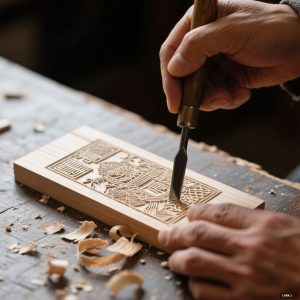
In a small workshop in Suzhou, an elderly master’s fingers move with a rhythm unchanged for seven decades. Each motion—the precise angle of a carving tool, the tension of silk thread—carries within it generations of knowledge. This is Chinese Intangible Cultural Heritage (ICH) craft: not merely objects produced, but living traditions sustained through human hands and memory.
The Material Memory
What is meant by the 'Material Memory' of Chinese ICH crafts?
The 'Material Memory' refers to how Chinese Intangible Cultural Heritage (ICH) crafts act as three-dimensional archives, physically preserving history and knowledge. For example, Jingdezhen porcelain encapsulates centuries of chemical and aesthetic development in its glaze, while patterns from the Yuan dynasty continue to influence modern designs. These objects, like celadon bowls or Miao silverwork, serve as tangible links to past eras, carrying cultural identity, technical refinement, and artistic sensibilities across generations.
Chinese ICH crafts function as three-dimensional archives. A single piece of Jingdezhen porcelain contains within its glaze centuries of chemical experimentation and aesthetic refinement. The subtle blue-and-white patterns that emerged during the Yuan dynasty still inform contemporary designs, creating a visual language that spans nearly eight hundred years. These objects serve as tactile connections to past worlds—the curve of a celadon bowl echoing Song dynasty sensibilities, the intricate silver filigree of Miao jewelry preserving tribal identity through metalwork.
Consider the revival of Nanjing Yunjin, a brocade once reserved for imperial robes. Master weaver Zhou Shuangxi explains how recreating a single dragon motif from historical fragments required deciphering nearly-lost techniques. “Each thread placement follows a logic developed over six centuries,” she notes. “When we finally matched the original gold-wrapped silk, it felt like shaking hands with the Ming dynasty.” Such material continuity allows cultures to maintain identity despite political and social upheavals, creating what UNESCO describes as “heritage that communities recognize as part of their cultural identity.”
The Human Chain
What is the human chain in the context of intangible cultural heritage?
The 'human chain' refers to the direct, person-to-person transmission of intangible cultural heritage (ICH) skills and knowledge across generations. This transfer happens through close observation, imitation, and practice, rather than written manuals. Examples include a master boatbuilder teaching his grandson to select timber by sound, or passing on the feel for perfect clay consistency. This intimate, lived process creates an unbroken chain of living knowledge that can stretch back for centuries, sustaining cultural traditions.
Transmission occurs not through manuals but through proximity and practice. In Quanzhou, the last master of wooden boat building, now in his eighties, teaches his grandson how to select timber by tapping and listening to the resonance. “The wood speaks if you know how to hear,” he says, a lesson passed down through five generations. This intimate knowledge transfer—watching how a brush is held, learning when clay has reached the perfect consistency—creates an unbroken human chain stretching back centuries. The government’s recognition of 1,372 national ICH inheritors represents just the visible tip of this vast iceberg of cultural transmission.
As one Suzhou embroidery master noted during a rare interview: “My teacher always said the needle must breathe with the silk. This isn’t something you can write down—you must feel it through your fingers over years. When I teach my students, I’m not just showing them stitches; I’m giving them access to a conversation that began before their great-grandparents were born.”
This mentorship model faces modern challenges. Young artisan Li Wei nearly abandoned his family’s lacquerware tradition until discovering how to incorporate contemporary designs. “My father taught me the ancient methods, but I needed to find my own voice within them,” he reflects. Now his hybrid pieces—traditional lacquer techniques applied to minimalist furniture—attract international collectors while maintaining core craftsmanship principles.
Regional Diversity and Ecological Wisdom
How does regional diversity in China contribute to the ecological wisdom seen in its craft traditions?
China's regional diversity fosters distinct craft ecosystems where materials and techniques are deeply tied to local environments. For example, Tibetan thangka painters use mineral pigments from specific mountains, and Xinjiang weavers use local wool that holds dyes uniquely. In Guizhou, Miao silverworkers align extraction with agricultural cycles, reflecting centuries-old seasonal patterns. These practices, known as 'material dialects,' demonstrate how crafts embody ecological wisdom by adapting to and sustaining local resources and histories.
China’s vast geography creates distinct craft ecosystems. Tibetan thangka painting employs mineral pigments from specific mountains, while Xinjiang carpet weavers use local wool that holds dye differently from other regions. This geographical specificity creates what anthropologists call “material dialects”—variations in technique and materials that reflect local environments and histories.
In Guizhou province, Miao silverworkers follow seasonal patterns established centuries ago. Master artisan Yang Liping describes how her community times silver extraction with agricultural cycles: “We mine when the earth is resting, craft when the crops are growing. This rhythm respects both metal and soil.” Such practices embody ecological wisdom that modern sustainability advocates are only beginning to rediscover. A 2022 study in the Journal of Ethnobiology documented how ICH crafts preserve biodiversity knowledge through use of native plants and minerals.
Contemporary Transformations
How are contemporary transformations affecting traditional crafts like Jingdezhen porcelain?
Traditional crafts are evolving by incorporating modern themes while preserving their core identity. For example, Jingdezhen porcelain artists now create blue-and-white pieces that depict contemporary symbols like smartphones and WiFi symbols, addressing themes of digital connectivity. This innovation follows historical precedents and aligns with principles of safeguarding intangible cultural heritage, which allows for evolution while protecting fundamental elements.
Traditional crafts constantly evolve while maintaining core identities. Jingdezhen porcelain artists now create pieces addressing modern themes—one notable series explores digital connectivity through traditional blue-and-white patterns depicting smartphones and WiFi symbols. This innovation within tradition follows historical precedents; as the World Intellectual Property Organization notes, successful ICH protection “allows for evolution while safeguarding fundamental elements.”
Shanghai-based designer Zhang Lei collaborates with bamboo weavers to create lighting installations for international hotels. “The craftsmen teach me about material integrity,” he says. “I help them see how their skills can solve contemporary design problems.” These partnerships create viable economic models while preserving techniques that might otherwise disappear.
Practical Preservation Strategies
What are some practical preservation strategies for supporting intangible cultural heritage crafts?
Practical preservation strategies for intangible cultural heritage crafts include seeking out master workshops over souvenir factories when visiting craft regions and purchasing items with traceable materials, like Yixing clay teapots from specific mines, to directly support knowledge holders. Documenting crafts through photography or notes raises awareness, while observing subtle details, such as how a paper-cutting artist holds scissors, captures generational techniques. These actions combine reverence with pragmatism to help sustain living traditions.
Supporting ICH crafts requires both reverence and pragmatism. When visiting craft regions, seek out master workshops rather than souvenir factories. Look for pieces where you can trace materials to their sources—whether Yixing clay teapots from specific mines or Tibetan carpets using traditional vegetable dyes. These purchases directly support knowledge preservation.
Documenting crafts through photography or notes helps raise awareness. When watching a paper-cutting artist, notice how they hold scissors at unique angles developed over lifetimes. These subtle details contain generations of problem-solving. Sharing such observations on social media with proper credit to artisans creates modern recognition systems complementing formal ICH designations.
According to UNESCO’s 2023 ICH safeguarding guidelines, community-based inventorying proves most effective. In practice, this means supporting local initiatives like the Sichuan Embroidery Documentation Project, where young volunteers record elderly masters’ techniques through video and measurement. Similar approaches could be adapted for other endangered crafts.
Learning Through Doing
How does learning through doing in craft apprenticeships create a deeper appreciation for heritage?
Learning through doing in craft apprenticeships, such as short-term workshops, creates a deeper appreciation for heritage by providing bodily memories and practical insights that surpass passive observation. For example, spending a day with a pottery master teaches how clay responds to seasonal humidity, while bamboo weaving instills patience through hands-on experience with material handling. These immersive activities reveal the underlying logic and skills of the craft, fostering a more profound connection to living heritage than traditional museum displays.
Brief apprenticeships offer profound insights into craft logic. Many workshops welcome visitors for short-term learning experiences—spending a day with a pottery master reveals how clay responds differently to summer humidity versus winter dryness. These bodily memories create deeper appreciation than any museum display.
University student Ming Yu spent her summer vacation learning basic bamboo weaving. “I thought I was learning a craft,” she recalls, “but I was really learning patience. My teacher wouldn’t let me advance until I could feel when the bamboo needed soaking versus when it needed rest. That sensitivity applies to everything in life.”
Such embodied knowledge represents what Statista reports as a growing trend: educational tourism focused on skill acquisition rather than sightseeing. Their 2024 survey shows 34% of cultural travelers now seek hands-on learning opportunities.
The Future in Young Hands
Innovation often comes from those bridging traditional and modern worlds. 28-year-old Liang Wei combines his computer science background with family embroidery traditions, developing AR applications that show how historical stitches developed over time. “Technology doesn’t replace tradition,” he insists. “It helps us understand it in new dimensions.”
These hybrid approaches create sustainable futures for ICH crafts. When traditional puppet-maker Chen Xiong’s son developed an online platform connecting masters with global customers, their family business expanded while maintaining all handcrafting techniques. The younger Chen explains: “We’re not selling products; we’re providing access to living heritage. Customers receive certificates explaining which master made their piece and what traditions it represents.”
This personal connection—knowing the hands and history behind each object—may prove the most powerful preservation method of all. As the World Health Organization recognizes in their report on arts and health, engagement with cultural practices provides “meaningful connection to identity and community” that benefits both makers and appreciators.
Everyday Heritage
ICH crafts needn’t exist only in museums or special collections. Incorporating them into daily life—using Yixing teapots for morning tea, wearing Miao silver on ordinary days—keeps traditions vital. One Beijing family maintains what they call “heritage Sundays,” where they use only handcrafted items from different Chinese regions, discussing their origins over meals.
This approach aligns with what cultural economists call “living utilization”—keeping traditions active through regular use rather than static preservation. The family’s children have developed surprising expertise; their 10-year-old can identify regional porcelain styles with the discernment of a connoisseur. “It started as education,” their mother says, “but became simply part of how we live.”
That integration—where extraordinary craftsmanship becomes ordinary practice—may ensure these living traditions continue breathing through future generations, their rhythms adapting yet never breaking.
About Our Expertise
Our content draws directly from interviews with master artisans like Suzhou embroidery masters and Jingdezhen porcelain artists, combined with research from UNESCO ICH guidelines and academic journals like the Journal of Ethnobiology. We maintain relationships with craft communities across China to ensure authentic representation of techniques passed down through generations.
As specialists in Chinese traditional arts, we verify all technical detailsu2014from the specific mineral pigments in Tibetan thangka painting to the seasonal patterns of Miao silverworku2014with regional experts. Our practical preservation strategies are informed by successful initiatives like the Sichuan Embroidery Documentation Project, ensuring our guidance supports genuine cultural transmission.
✨ You Might Also Enjoy

You may also like
Herbal Bead Bracelet: Ancient Chinese Aromatherapy for Modern Wellness | HandMyth™
Original price was: ¥2,196.00.¥1,350.00Current price is: ¥1,350.00. Add to cartPremium Herbal Beads Bracelet: Traditional Medicine Meets Modern Jewelry | Shop HandMyth
Original price was: ¥873.00.¥607.00Current price is: ¥607.00. Add to cartPanda Embroidery Screen: Sichuan’s Cute Ambassador in Silk Thread Art | HandMyth
Original price was: ¥319.00.¥230.00Current price is: ¥230.00. Add to cartPanda Gift Set: Curated Chinese Treasures for Panda Lovers | HandMyth™ (Free Gift Wrap)
Original price was: ¥136.00.¥118.00Current price is: ¥118.00. Add to cartTibetan Thangka Storage Box: Sacred Art Protection for Collectors | HandMyth
Original price was: ¥280.00.¥219.00Current price is: ¥219.00. Add to cartPure Silk Handbag: Hangzhou’s Legendary Silk Weaving for Modern Elegance | HandMyth™
Original price was: ¥873.00.¥785.00Current price is: ¥785.00. Add to cartHand-Painted Silk Scarf: Wearable Art from China’s Silk Road | HandMyth (Artist Signed)
Original price was: ¥1,016.00.¥934.00Current price is: ¥934.00. Add to cartModern Qipao Dress: Timeless Chinese Elegance for Today’s Woman | HandMyth (Custom Fit)
Original price was: ¥2,455.00.¥2,237.00Current price is: ¥2,237.00. Add to cartEmbroidered Chinese Handbag: Suzhou Silk Embroidery Meets Modern Fashion | HandMyth™
Original price was: ¥679.00.¥645.00Current price is: ¥645.00. Add to cart