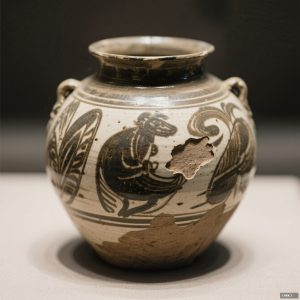
Heritage preservation crafts are far more than a museum’s concern; they are a designer’s most powerful tool for building authentic brand narrative. This isn’t about nostalgia, but about wielding a tangible language of authenticity that forges deeper connections in a disposable world.
That hand-forged hinge, that fragment of carefully matched fresco—they tell a story no mood board can invent. They speak directly to our senses, bypassing the noise of marketing to communicate values of durability, locality, and human-centric process. The real tension today isn’t about saving the past, but about using its profound, physical language to construct a future that feels genuinely rooted.
The Silent Syntax of Craft
How do these techniques function as a design language? They operate as a non-verbal syntax. Consider traditional lime plaster, with its soft, breathable matte finish, or the specific geometry of a mortise and tenon joint. These aren’t mere aesthetic choices. They are semantic units.
Each carries embedded intelligence: an understanding of local climate, the behavior of materials over decades, a respect for the human hand. A color derived from a historic pigment recipe doesn’t just look different; it tells of a specific place and a mineralogical story. This language is learned through the hand and the haptic experience, not the eye alone. It communicates patience, care, and integrity before a single word of copy is written.
When a brand integrates this syntax—not as a superficial veneer but as a core methodology—it begins speaking in a dialect of substance. It signals a commitment to things that endure. This creates a powerful, almost subconscious, covenant with an audience increasingly skeptical of hollow claims. It whispers, “We care about things that last, and we will apply that same care to our relationship with you.” This transforms passive customers into engaged stewards of the brand’s story.
Building a Moat of Authenticity
In a marketplace of relentless replication, artisanal heritage trades create a uniquely defensible brand position. Why? They are fundamentally uncopyable at scale. A competitor can mimic a logo, a color palette, or a typeface in an afternoon. They cannot replicate the network of master artisans, the tacit knowledge held in a restorer’s hands, or the specific patina that comes only from using local materials and centuries-old techniques.
This knowledge is often held in guild-like structures and passed through mentorship, not manuals. The slight variation in a hand-blown glass vessel, the unique texture of hand-beaten metal—these are not flaws, but signatures of authenticity. This crafts-based approach builds a commercial moat that marketing budgets alone cannot breach. It roots a brand in a specific, irreplicable reality, moving it from a commodity to a cultural artifact.
The Slow Craft in a Fast Scroll
At first glance, social media’s insatiable demand for ‘newness’ seems antithetical to slow, traditional techniques. Yet, paradoxically, the ephemeral scroll feeds a deep hunger for the permanent. There’s a magnetic, almost ASMR-like shareability to a time-lapse of a gilder applying wafer-thin gold leaf, or the patient, careful scraping back of layers to reveal an original stencil pattern.
This content acts as a visual detox from the perfectly polished, algorithmically generated feed. It showcases process over mere product. This process-focused storytelling makes a brand’s core philosophy—its commitment to slowness, care, and integrity—highly portable and deeply engaging. It offers not just something to buy, but something to believe in and watch come to life. The narrative is built stitch by stitch, stroke by stroke, in real time.
Beyond Nostalgia: An Active Methodology
A common critique is that this is merely aesthetic nostalgia. That’s a fundamental misunderstanding. Nostalgia is a passive longing for a rose-tinted past. Applied heritage craft is an active, critical methodology for the present.
It is not about recreating a past look. It is about interrogating why certain methods and materials endured for centuries. What were their underlying principles? Material honesty. Repair-ability. Environmental symbiosis. Adaptability. This interrogation extracts these timeless principles for contemporary problem-solving.
The goal isn’t to make something look old. It’s to make something feel true—true to its material, true to its function, true to a lineage of human ingenuity. It’s about using the wisdom of the past to build better, more responsible, and more meaningful objects and experiences for today.
From Principle to Practice: A Framework for Integration
Integrating heritage preservation crafts into a modern brand isn’t about staging a historical reenactment. It’s a strategic design choice. Here’s a practical framework to move from inspiration to implementation.
1. The Diagnostic Audit
Begin with a simple, physical audit. Examine your product, packaging, or space. Does any component use a technique that could, in theory, be repaired or renewed by a specialist? If everything is sealed, glued, or destined for landfill, you’ve identified a starting point. The very concept of repair is a gateway to craft.
2. Source the Narrative, Not Just the Look
Identify one specific traditional craft relevant to your field. Go beyond its aesthetic outcome and deeply document its process. How is the material sourced? What are the steps? Where does the artisan’s judgment come into play? This process is your story engine.
3. Collaborate, Don’t Just Commission
Partner with a living artisan as a narrative co-author, not an anonymous supplier. Engage them in the *why*, not just the *what*. Credit them by name. This human connection is the heart of the narrative—it’s the story of a specific person’s skill meeting a modern need.
4. Tell the Story of the Constraint
When you choose a slower, more complex, or more expensive method, communicate the reason. Don’t hide it. Frame the constraint as a core value. Explain that the lime plaster breathes, that the joinery allows for wood movement, that the natural dye shifts gracefully over time. The “limitation” becomes a badge of honor and intelligence.
5. Let Craft Inform the Digital Realm
For digital-only brands, the principles translate powerfully. Let the rhythms, patterns, and values of a craft inform your UI/UX design. Could the patient, layered process of fresco inspire your animation language? Could the structured yet organic growth of a woven textile inform your content cadence? Use your platform to tell the story of the physical craft that inspires your digital philosophy.
Navigating Common Questions
Is this approach prohibitively expensive?
It’s a strategic investment in differentiation, not a line-item cost. Start small: a signature detail, a limited edition run, or a key component. The cost-per-narrative-impact—the depth of story and loyalty generated—can be far greater than that of a broad, forgettable advertising campaign. It’s about value, not volume.
How do we find the right artisans?
Look beyond the fine art gallery. Engage with historic building trades associations, material conservation networks (like the Getty Conservation Institute), and folk art societies. The knowledge often resides in these guild-like communities. Universities with heritage conservation programs can also be invaluable connectors.
Does this alienate a modern audience?
On the contrary, it meets a modern hunger. In an age of digital abstraction and planned obsolescence, physical authenticity and evidence of human care are rare and compelling luxuries. It provides a tangible anchor in an increasingly virtual world.
The Lasting Impression
Heritage preservation crafts offer a way out of the homogenized marketplace. They provide a language that speaks of time, place, and human intention. For a brand, this isn’t a retreat into the past, but a sophisticated leap forward—a way to build stories with gravity, products with integrity, and relationships built on the palpable truth of craft.

It reminds us that before something can be branded, it must first be made. And how it is made—the care in its joints, the intelligence in its materials, the hand in its finish—is the most authentic brand story there will ever be.
Sources & Further Reading
✨ You Might Also Enjoy


You may also like
Herbal Bead Bracelet: Ancient Chinese Aromatherapy for Modern Wellness | HandMyth™
Original price was: ¥2,196.00.¥1,350.00Current price is: ¥1,350.00. Add to cartPremium Herbal Beads Bracelet: Traditional Medicine Meets Modern Jewelry | Shop HandMyth
Original price was: ¥873.00.¥607.00Current price is: ¥607.00. Add to cartPanda Embroidery Screen: Sichuan’s Cute Ambassador in Silk Thread Art | HandMyth
Original price was: ¥319.00.¥230.00Current price is: ¥230.00. Add to cartPanda Gift Set: Curated Chinese Treasures for Panda Lovers | HandMyth™ (Free Gift Wrap)
Original price was: ¥136.00.¥118.00Current price is: ¥118.00. Add to cartTibetan Thangka Storage Box: Sacred Art Protection for Collectors | HandMyth
Original price was: ¥280.00.¥219.00Current price is: ¥219.00. Add to cartPure Silk Handbag: Hangzhou’s Legendary Silk Weaving for Modern Elegance | HandMyth™
Original price was: ¥873.00.¥785.00Current price is: ¥785.00. Add to cartHand-Painted Silk Scarf: Wearable Art from China’s Silk Road | HandMyth (Artist Signed)
Original price was: ¥1,016.00.¥934.00Current price is: ¥934.00. Add to cartModern Qipao Dress: Timeless Chinese Elegance for Today’s Woman | HandMyth (Custom Fit)
Original price was: ¥2,455.00.¥2,237.00Current price is: ¥2,237.00. Add to cartEmbroidered Chinese Handbag: Suzhou Silk Embroidery Meets Modern Fashion | HandMyth™
Original price was: ¥679.00.¥645.00Current price is: ¥645.00. Add to cart