
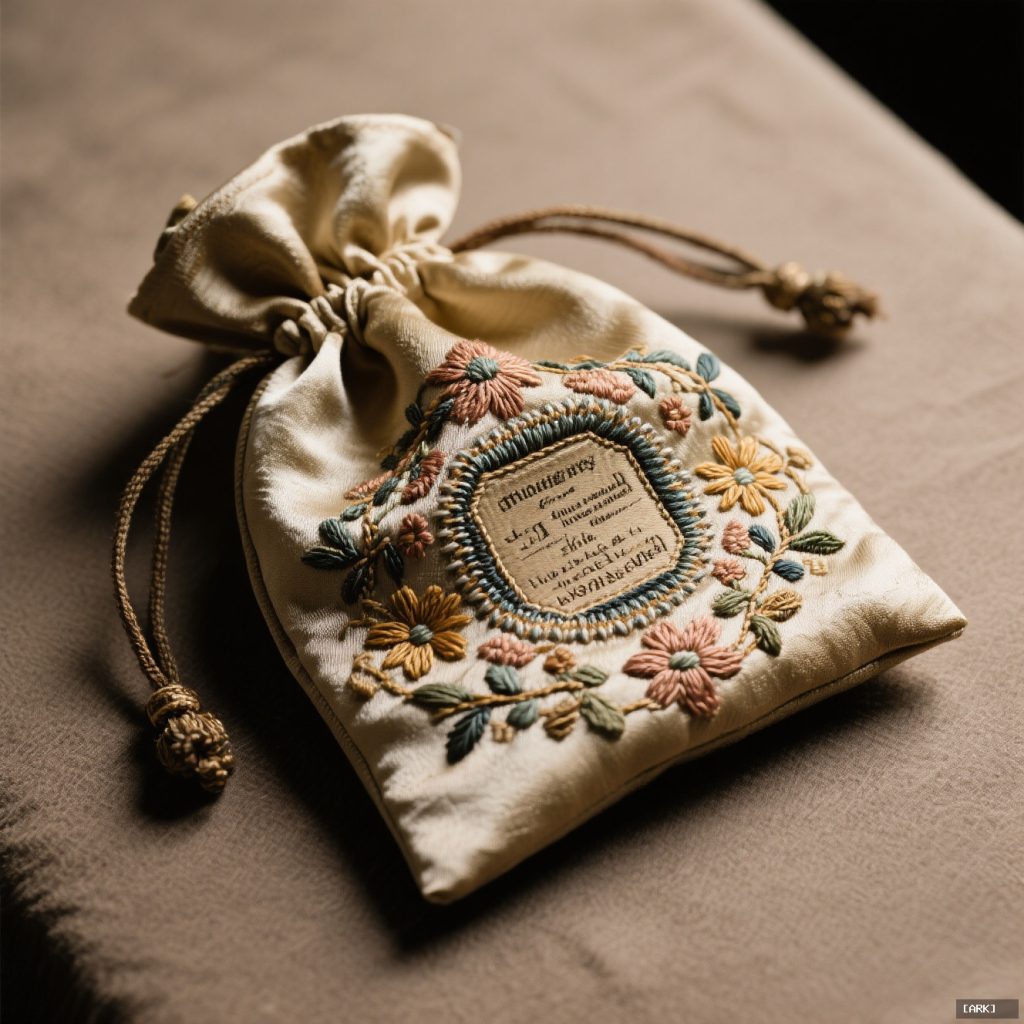
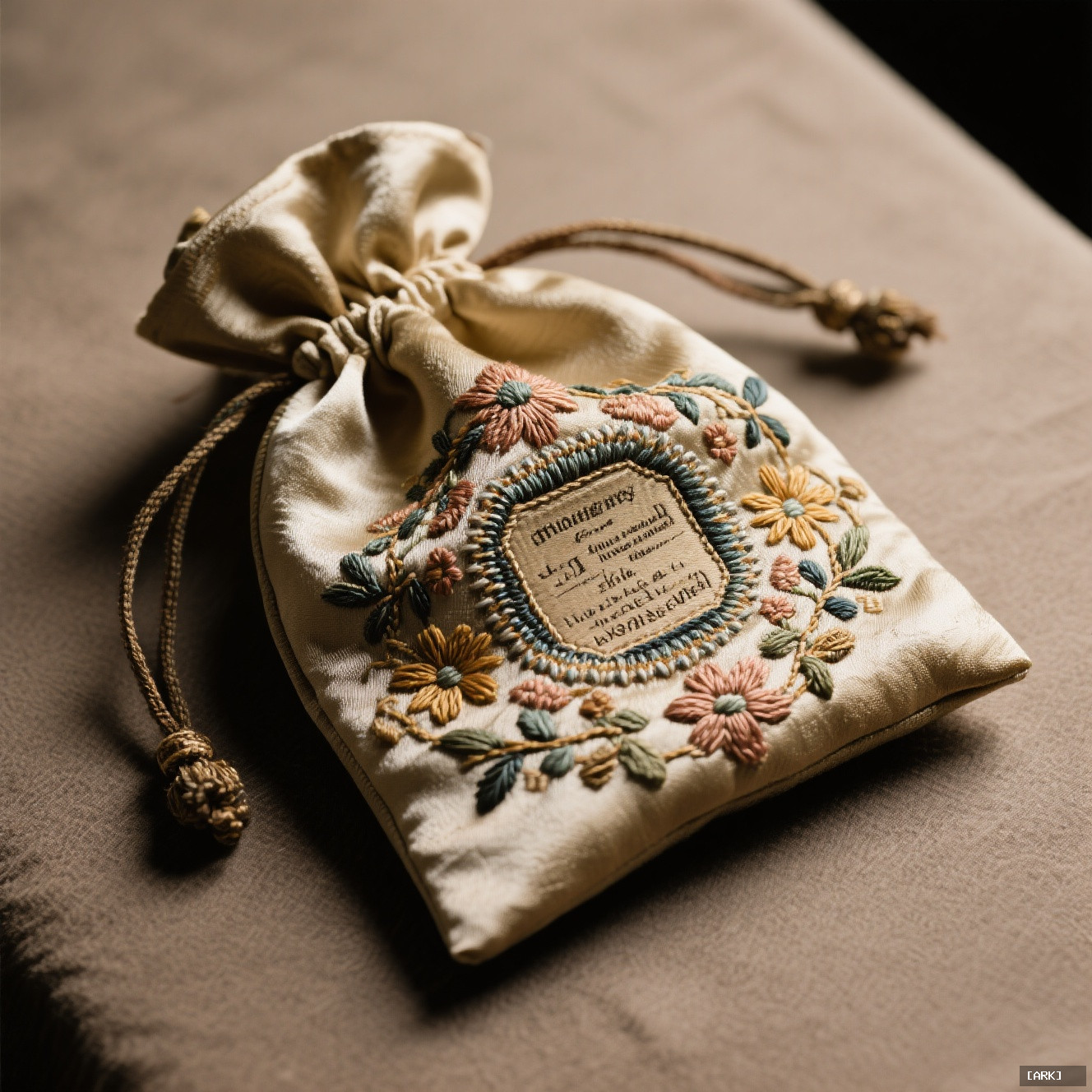
Embroidered silk pouches are far more than decorative bags. They are quiet vessels of history, personal taste, and daily life, passed between generations and adapted with each new hand they meet.
You find them tucked in a drawer, holding a pair of cufflinks. You receive one as a gift, its surface blooming with silk thread flowers. In a world of mass-produced containers, these fabric pouches feel distinctly personal. Their weight is in their story, not their size. They survive not behind glass, but through use—holding a grandmother’s wedding ring one century and a grandchild’s wireless earbuds the next. This is their magic: they are living heirlooms.
The Anatomy of a Legacy: Stitch, Silk, and Story
What transforms a simple bag into a keeper of time? It starts with a collision of intentions. The first hand chose the material—a crisp dupioni, a soft habotai—and stretched it taut on a hoop. That hand selected a thread color that might have carried cultural or personal meaning: crimson for joy, indigo for protection, gold for a wish of prosperity. Every stitch was a decision, a tiny investment of time and vision.
Decades later, a second hand reaches for it. The pouch’s original purpose—to hold a silver thimble, a lock of hair, a scent—may be lost. Yet its utility is not. It is repurposed to safeguard a USB drive, a set of guitar picks, or a passport. This is not disrespect to the maker. It is the highest form of respect: integration. The embroidered silk pouch earns its keep by adapting, its delicate stitches now witnessing rituals its creator could never have imagined. The object becomes a dialogue across time, mediated by the simple, universal need to hold our small, important things.
A Canvas of Changing Tastes
Look closely at the embroidery. The design is a timestamp. A mid-century pouch might feature bold, symmetrical peonies or chrysanthemums, motifs speaking a language of wished-for abundance and formal beauty. The stitches are often dense, the palette perhaps more muted.
Contrast this with a contemporary silk sachet. You might see geometric abstraction, a single minimalist feather, or a constellation rendered in fine chain stitch. The visual language shifts from symbolic representation to personal iconography. This tension isn’t about which style is superior. It’s about how beauty is defined in different eras. The pouch becomes a canvas where these aesthetics can physically coexist. A vibrant, traditional floral bag might hold a modern minimalist’s crystal collection or sage bundles. Inside that dark interior, a silent, respectful dialogue happens daily between two definitions of what is worthy of adornment.
The Portable Heirloom
We often think of heirlooms as large, imposing pieces: a grandfather clock, a heavy armoire, a formal portrait. But narrative density isn’t measured in cubic feet. In an age of mobility and small-space living, heirlooms are shrinking. A delicate embroidered bag can cross continents in a suitcase; a mahogany desk cannot.
This portability makes silk pouches powerful carriers of heritage. They are seeds of family history—personal, intimate, and easy to integrate into a daily routine. Such a pouch doesn’t demand a dedicated shelf in a formal parlor. It lives. It resides in a jewelry tray, on a writing desk, or beside the bed, whispering its story during ordinary moments. You don’t visit its history; its history participates in yours.
Living Display: Beyond the Drawer
The instinct is to protect fragile things by hiding them away. But an embroidered pouch gains meaning through visibility and use. The key is thoughtful integration.
Treat a single, exceptional pouch as functional art. Hang it on a small decorative hook on a study wall, letting it serve as a tiny textile painting. For a small collection, a shallow, framed shadow box can corral several pieces against a neutral backdrop, turning a potential clutter into a deliberate statement.
The most powerful method, however, is to let them live their purpose—but with ceremony. Use that heirloom pouch to hold your reading glasses. Then, place it not just anywhere, but in a spot of visual respect: on a small ceramic dish on your bedside table, or centered on a leather desk pad. The act becomes a ritual. You are not storing your glasses; you are placing them in a keeper of stories.
The Smartphone Case & The Silk Ancestor
To see the enduring human impulse these pouches represent, look at your phone. Its case is the modern, universal pouch. It is functional, decorative, and deeply expressive. We customize it with colors, prints, and pop culture references to signal our identity.
The embroidered silk sachet is its tactile, slow-made ancestor. Both are protective shells for our precious tools and treasures. The contrast lies in their lifespan and nature. One is mass-produced, designed for obsolescence, and replaced yearly. The other is unique, repairable, and meant to evolve. Holding both highlights a cultural shift: from durable, repairable personalization to disposable customization. The ancient urge to adorn the containers of our lives hasn’t vanished. It has simply been digitized, sped up, and made ephemeral.
Beginning Your Own Thread
You don’t need an antique to start a tradition. You can begin one today. The goal is intention, not perfection. Commission a local artist or try your hand at making a simple silk pouch to mark a non-material milestone: a recovery, a completed project, a new chapter.
Embroider a symbol that means something to you now. It could be a mountain range you hiked, a mathematical equation, your dog’s paw print, or simply your initials in a font you love. Use the pouch for something daily—your keys, your favorite pen, your daily vitamins.
Then, one day, gift it. Give it empty to someone you care about, accompanied by a note explaining its origin story. You are not passing on a filled relic. You are passing on a charged, empty vessel. You are gifting them the space to fill it with their own future meaning, thereby weaving your thread into the start of theirs.
Your Practical Pouch Legacy Checklist
- Unearth & Inquire: Find one existing embroidered bag in your home. Ask the oldest relative you can about its story, even if the memory is faint.
- Promote It: Move it from deep storage to a place you’ll see daily—a dresser top, an entryway console.
- Employ It: Assign it a modern purpose that feels respectful to you. Let it protect something you value.
- Document the Moment: Photograph the pouch alongside the item it now holds. This is its current chapter.
- Write a Note to the Future: Jot down a line or two about why you’re using it this way now. Tuck that note inside the pouch.
Caring for Your Textile Treasure
How should I clean an old silk pouch?
First, avoid water and harsh chemicals. For dust, gently vacuum through a soft mesh screen or use a soft brush. For stains or significant soil, always consult a professional textile conservator. Well-intentioned DIY cleaning can cause irreversible damage to delicate fibers and dyes.
Is it acceptable to cut or alter an antique pouch?
Think of alteration as editing a historical document. It permanently erases part of the story. If a pouch is fragile, consider having a new protective liner sewn in instead, preserving the original fabric intact. If you must modify, document the “before” state thoroughly.
What if the pouch’s history is completely lost?
Then you now hold the pen. The history you create with it—the memories you store inside, the wear from your hands—becomes its next, perfectly valid chapter. Your care is the beginning of its known story.
Sources & Further Pathways
✨ You Might Also Enjoy

You may also like
Herbal Bead Bracelet: Ancient Chinese Aromatherapy for Modern Wellness | HandMyth™
Original price was: ¥2,199.00.¥1,352.00Current price is: ¥1,352.00. Add to cartPremium Herbal Beads Bracelet: Traditional Medicine Meets Modern Jewelry | Shop HandMyth
Original price was: ¥874.00.¥608.00Current price is: ¥608.00. Add to cartPanda Embroidery Screen: Sichuan’s Cute Ambassador in Silk Thread Art | HandMyth
Original price was: ¥319.00.¥230.00Current price is: ¥230.00. Add to cartPanda Gift Set: Curated Chinese Treasures for Panda Lovers | HandMyth™ (Free Gift Wrap)
Original price was: ¥136.00.¥118.00Current price is: ¥118.00. Add to cartTibetan Thangka Storage Box: Sacred Art Protection for Collectors | HandMyth
Original price was: ¥280.00.¥219.00Current price is: ¥219.00. Add to cartPure Silk Handbag: Hangzhou’s Legendary Silk Weaving for Modern Elegance | HandMyth™
Original price was: ¥874.00.¥786.00Current price is: ¥786.00. Add to cartHand-Painted Silk Scarf: Wearable Art from China’s Silk Road | HandMyth (Artist Signed)
Original price was: ¥1,017.00.¥935.00Current price is: ¥935.00. Add to cartModern Qipao Dress: Timeless Chinese Elegance for Today’s Woman | HandMyth (Custom Fit)
Original price was: ¥2,459.00.¥2,240.00Current price is: ¥2,240.00. Add to cartEmbroidered Chinese Handbag: Suzhou Silk Embroidery Meets Modern Fashion | HandMyth™
Original price was: ¥680.00.¥646.00Current price is: ¥646.00. Add to cart























