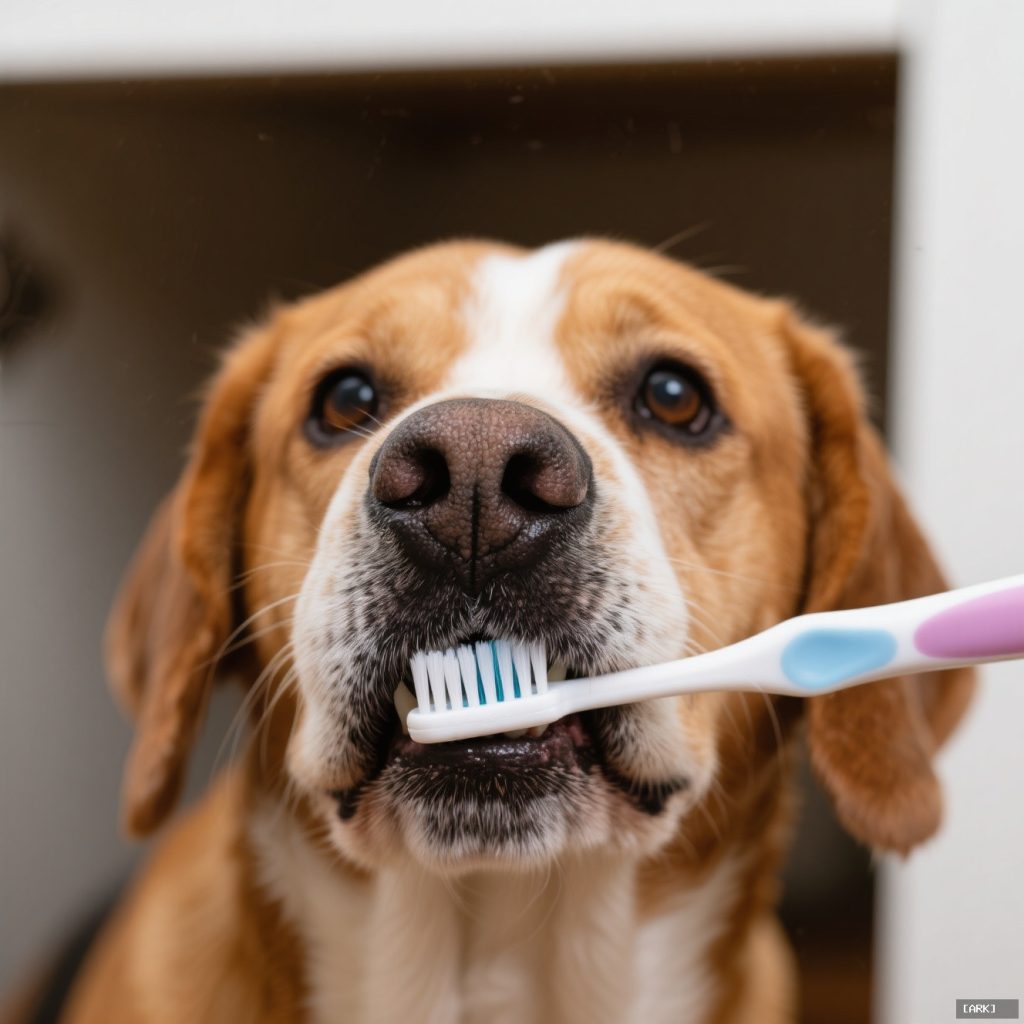
That dog toothbrush in your cabinet is more than a tool. It’s a promise. Canine dental care is a simple act that often feels impossibly hard, a daily intention that gets lost in the clutter of life. We buy the pet toothbrush with hope, then hide it away when the reality feels more like a struggle than care.
Why does this happen? The answer isn’t found in veterinary manuals, but in our homes, our routines, and our own human psychology. Transforming this chore into a sustainable ritual requires us to look beyond the bristles.
The Emotional Weight of a Simple Brush
Brushing your dog’s teeth is rarely just about plaque. It’s an emotional negotiation. You’re not just cleaning; you’re interpreting body language, managing a wriggling patient, and silently tallying your own performance as a pet parent.
That pet toothbrush becomes a tiny barometer for your “good owner” status. When the session goes poorly, it doesn’t feel like a failed task. It feels like a failed connection. The guilt of skipping a night can outweigh the perceived benefit, creating a cycle of avoidance. The goal, then, isn’t just medical compliance. It’s finding a sliver of positive interaction within the necessary care.
This is where the design and feel of your tools start to matter profoundly.
Form Follows Feeling: The Psychology of Design
Most dog toothbrushes are designed for a dog’s mouth, but they’re held in a human’s hand—a hand attached to a person full of doubts. A hard, neon plastic stick that looks like a surgical instrument sets a clinical tone before you even begin. It screams “procedure,” not “care.”
Contrast that with a brush made from soft silicone in a calming color, one that fits comfortably in your palm. The material is gentler on gums, yes, but it also changes the vibe for you. It begins to feel like a grooming tool or a massage pad. The physical object can soften the edges of the experience, making dog dental hygiene feel like an act of bonding rather than a correction.
This shift in perception is the first step toward building a ritual, not just enforcing a routine.
Creating Ritual, Not Routine
A ritual has a rhythm, a predictable sequence that builds comfort. For a dog, predictability equals safety. The brush itself should never be the startling opening act.
Start with what’s easy. A gentle gum massage with your finger. A dab of tasty toothpaste offered as a treat. Then, introduce the dog toothbrush for just a few seconds on the easy-to-reach front teeth. Always, always end with a high-value reward: a special treat, a burst of play, enthusiastic praise.
In this sequence, the brush becomes a predictor of good things, not the scary finale. Over weeks, the sight of it can trigger tail wags instead of retreat. You’re not just cleaning teeth; you’re building a positive association that flips the entire emotional script for both of you.
The Space Between Intention and Action
Our environments are powerful allies or silent saboteurs. The “out of sight, out of mind” principle governs small apartments and busy lives with absolute authority. A bulky dental kit shoved in a junk drawer has a failure rate near 100%. The friction to retrieve it is too high on a tired Tuesday night.
Most canine dental care kits assume a sprawling suburban bathroom with ample drawer space. They don’t account for the studio apartment where every item on the counter must earn its visual real estate.
The solution is intentional placement. Pair the brush with an unbreakable habit. Keep it next to the leash for a post-walk brush. Store it in a simple, attractive cup right beside your own toothbrush. The tool needs a home, not a hiding place. Visibility reduces friction, and friction is the enemy of consistency.
The Allure of the Passive Chew: A Stress Transaction
Understanding why we avoid the active brush often means looking at what we choose instead. Consider the expensive dental chew. Your dog gnaws contentedly; you get twenty minutes of quiet. You feel a dual victory: their teeth are getting cleaner, and you can finally sit down.
That chew is more than a cleaning device. It’s a transactional stress-relief tool for you. It offers immediate, passive payoff. The active dog toothbrush demands your time, your energy, and your emotional bandwidth—resources often in shortest supply at day’s end. Recognizing this isn’t about guilt. It’s about honesty. Building a brushing ritual means acknowledging this competition for your energy and designing a practice that seeks to give back, not just take.
Beyond the Brush: A Holistic View of Canine Dental Health
A pet toothbrush is a cornerstone, but it’s not the entire foundation. Think of dental health as a pyramid. Daily brushing is the apex, the ideal. The supporting layers are crucial.
Diet plays a role, with some kibbles and dental-specific diets formulated to help reduce tartar through mechanical action. Water additives can provide enzymes that combat bacteria. Regular veterinary check-ups are non-negotiable for catching issues early. And those dental chews and toys? They’re valuable members of the support team, not replacements for brushing, but helpful supplements that engage your dog’s natural desire to chew.
This holistic view takes pressure off any single method. If you miss a brushing, the other supports are still there. It’s a system, not a single point of failure.
Your Practical Guide to Choosing a Dog Toothbrush
With the psychology and strategy in mind, how do you pick the right tool? Move beyond the first one you see on the shelf. Evaluate with your specific context in mind.
- The Handle Test: Pick it up. Does it feel secure and comfortable in your hand? Can you hold it at a gentle angle without your wrist straining? Your comfort dictates your consistency.
- The Visibility Rule: Be honest. Would you mind if this lived on your bathroom counter or by the dog food bin? If it’s an eyesore, you’ll hide it. Choose a design you don’t mind seeing.
- The Texture Check: Feel the bristles or silicone nubs against your own gum. Are they soft and forgiving? The first touch on your dog’s gums should be reassuring, not abrasive.
- The Stage Matters: For a very hesitant dog or a completely new human, a soft silicone finger brush offers ultimate control and feels less invasive. For an acclimated dog, a dual-headed or angled brush can be more efficient. It’s not about “better,” it’s about “right for this phase.”
- Storage Solved: Does it have a simple, clean cap or a stable stand? Avoid anything that requires re-boxing. The easier it is to put away cleanly, the more likely you are to do it.
Navigating Common Hurdles in Dog Dental Hygiene
Every dog and owner duo hits snags. Here’s how to think through a few frequent questions.
“My dog hates the toothpaste. Can I just use water?”
Yes. The mechanical action of the brush removes the majority of plaque. A dog-specific toothpaste adds appealing flavors and enzymes that help break down biofilm, but water is infinitely better than nothing. The consistency of brushing is the most critical factor.
“He only lets me do the front teeth!”
Celebrate the front teeth! Start where it’s easy. Gently lift the lip to brush the canine teeth and incisors. As trust builds, over sessions and weeks, you can gradually work your way back to the molars. Even partial brushing provides significant benefit.
“How often is ‘enough’?”
The gold standard is daily, but perfection is the enemy of progress. Aim for a realistic rhythm you can maintain—perhaps every other day. Three thoughtful sessions a week are far more valuable than a frantic daily struggle you abandon in a month.
“When should I start?”
The best time is when your dog is young, to build positive associations early. The second-best time is today, with patience and low expectations. Go slow.
A New Perspective on the Promise
That dog toothbrush gathering dust isn’t a symbol of failure. It’s an invitation. It asks us to be creative, to be kind—to our pets and to ourselves. Canine dental care, at its best, becomes a quiet moment of connection in a noisy day, a small, steady practice that says “I care for you” in a very tangible way.
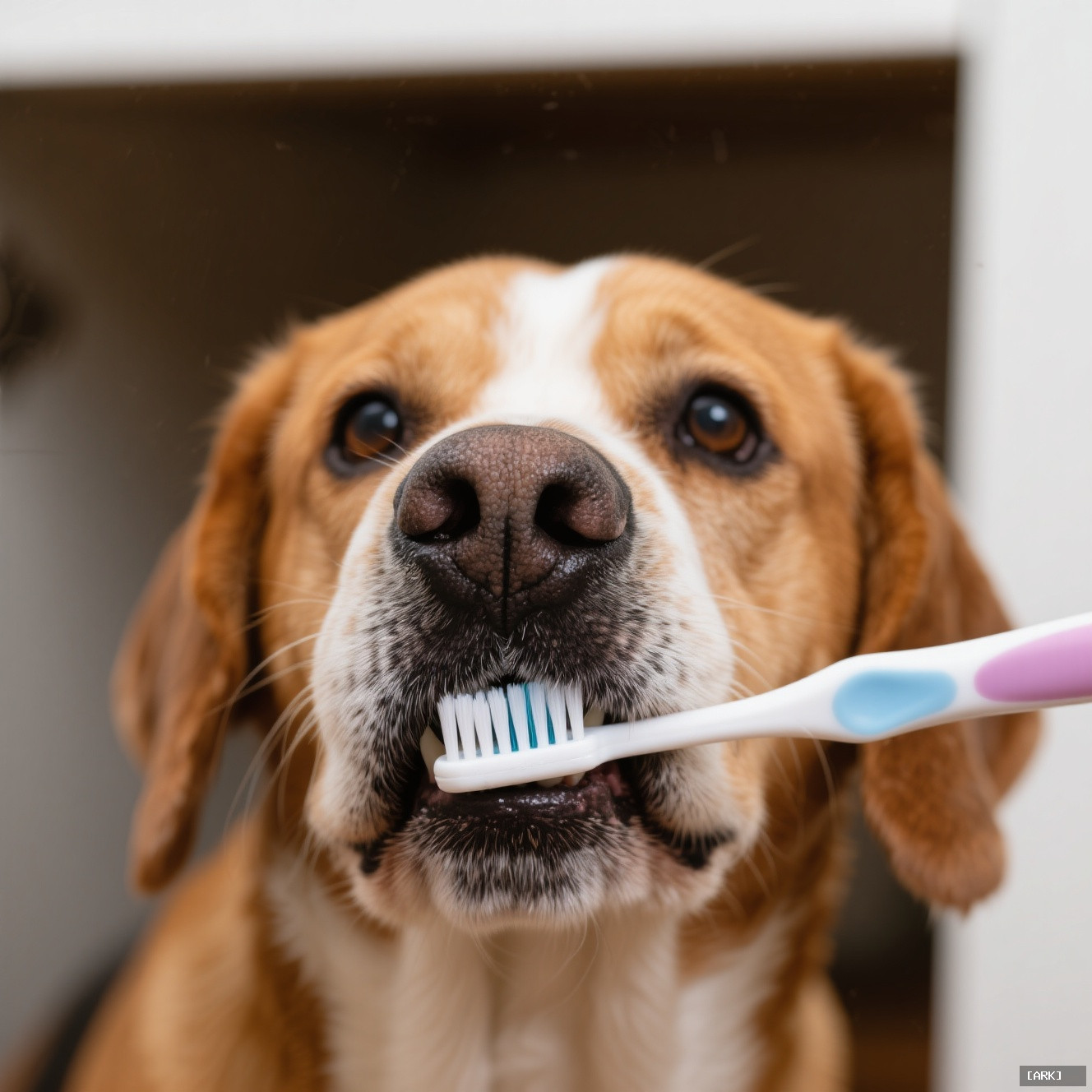
It’s not about winning a battle. It’s about building a bridge, one gentle brushstroke at a time.
Sources & Further Reading
- American Veterinary Medical Association, Pet Dental Care: https://www.avma.org/resources/pet-owners/petcare/pet-dental-care
- VCA Hospitals, Brushing Your Dog’s Teeth: https://vcahospitals.com/know-your-pet/brushing-teeth-in-dogs
- Tufts University Clinical Nutrition Service, Dental Health: https://vetnutrition.tufts.edu/category/pet-food-awards/dental-health/
- International Association of Animal Behavior Consultants, Cooperative Care: https://iaabc.org/journal/cooperative-care-animals
✨ You Might Also Enjoy

You may also like
Herbal Bead Bracelet: Ancient Chinese Aromatherapy for Modern Wellness | HandMyth™
Original price was: ¥2,199.00.¥1,352.00Current price is: ¥1,352.00. Add to cartPremium Herbal Beads Bracelet: Traditional Medicine Meets Modern Jewelry | Shop HandMyth
Original price was: ¥874.00.¥608.00Current price is: ¥608.00. Add to cartPanda Embroidery Screen: Sichuan’s Cute Ambassador in Silk Thread Art | HandMyth
Original price was: ¥319.00.¥230.00Current price is: ¥230.00. Add to cartPanda Gift Set: Curated Chinese Treasures for Panda Lovers | HandMyth™ (Free Gift Wrap)
Original price was: ¥136.00.¥118.00Current price is: ¥118.00. Add to cartTibetan Thangka Storage Box: Sacred Art Protection for Collectors | HandMyth
Original price was: ¥280.00.¥219.00Current price is: ¥219.00. Add to cartPure Silk Handbag: Hangzhou’s Legendary Silk Weaving for Modern Elegance | HandMyth™
Original price was: ¥874.00.¥786.00Current price is: ¥786.00. Add to cartHand-Painted Silk Scarf: Wearable Art from China’s Silk Road | HandMyth (Artist Signed)
Original price was: ¥1,017.00.¥935.00Current price is: ¥935.00. Add to cartModern Qipao Dress: Timeless Chinese Elegance for Today’s Woman | HandMyth (Custom Fit)
Original price was: ¥2,459.00.¥2,240.00Current price is: ¥2,240.00. Add to cartEmbroidered Chinese Handbag: Suzhou Silk Embroidery Meets Modern Fashion | HandMyth™
Original price was: ¥680.00.¥646.00Current price is: ¥646.00. Add to cart