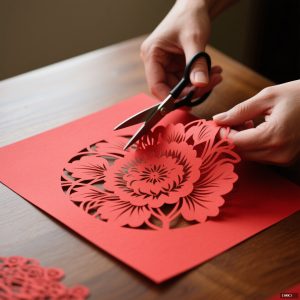
Easy DIY projects are less about creating a perfect home and more about rediscovering the simple pleasure of making something with your hands. That quiet focus changes everything, especially when you start noticing the life-cycle of the materials you hold.
We’ve all seen the flawless photos. The perfectly staged after-shots of a weekend project that look like they belong in a catalog. It’s easy to think that’s the goal: a pristine end product. But if you chase that, you’ll miss the point entirely. The real transformation happens not on your walls or shelves, but in you. It’s in the rhythm of sanding wood until it’s smooth, the problem-solving when a measurement is off by an eighth of an inch, and the deep, quiet satisfaction of using something you built. This is where simple crafts and home improvement ideas stop being chores and start feeling like a personal language.
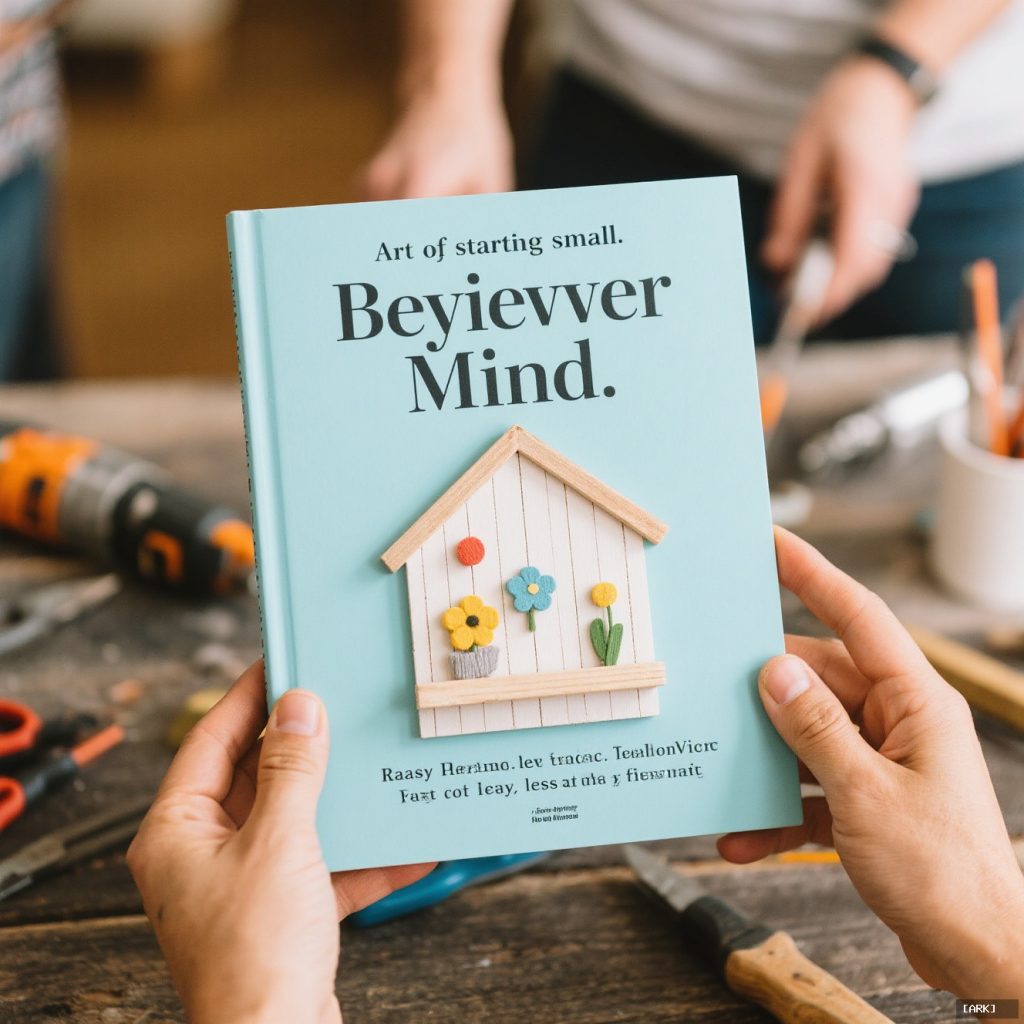
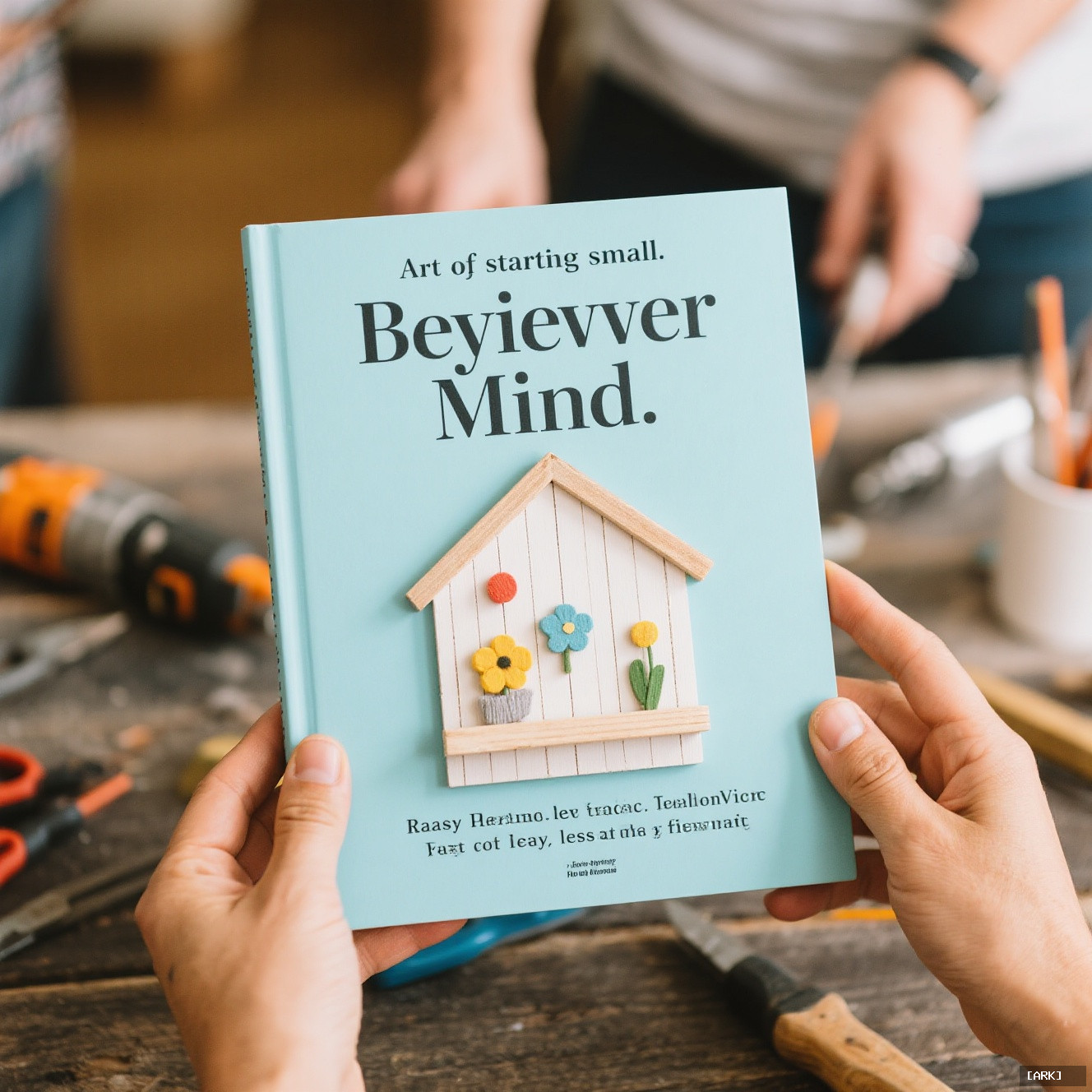
Beginner’s Mind: The Art of Starting Small
So, you want to start. Your mind might jump to a grand vision—a built-in bookshelf, a refurbished vintage van, a hand-tiled backsplash. Hold that thought. The single biggest mistake isn’t a lack of skill; it’s a surplus of ambition paired with a trip to the hardware store.
Beginners overbuy. The siren call of new tools and virgin materials is powerful. You imagine needing the perfect saw, the exact shade of paint, the most professional-grade sandpaper. You fill a cart, bring it home, and suddenly a simple idea feels like a high-stakes investment. The pressure mounts. That pile of new stuff doesn’t spark creativity; it induces anxiety.
Try this instead. Before you buy a single thing, take a walk through your own home. Open the junk drawer. Peer into the back of the garage. Look at that “maybe someday” pile in the basement. Your first project’s material list is likely already paid for and waiting for you. An old wooden crate can become a side table. A stack of worn-out t-shirts can transform into a rag rug. That oddly shaped piece of leftover plywood is a shelf in disguise.
This constraint isn’t a limitation; it’s your greatest creative ally. It forces you to see potential, not just follow instructions. It turns a DIY project into a puzzle where you already have most of the pieces. The goal shifts from “Can I build this?” to “What can I build with this?” That’s a fundamentally more playful, and less intimidating, place to begin.
Finding Your First Project: Look for Annoyances, Not Inspirations
Where do you find these home improvement ideas that won’t leave you stranded halfway through? Forget the mood boards for a minute. Instead, walk through your living space and listen.
Is there a cabinet door that always sticks? A wall that feels too bare? A jumble of keys and mail by the front door that makes you sigh every time you come home? These minor annoyances are your perfect project briefs. They are specific, tangible, and their solution provides an immediate reward. Fixing a sticky door with some sandpaper and a new hinge might take 20 minutes. The confidence boost lasts for weeks.
This “fix-first” mentality builds a ladder of competence. You don’t learn to run a marathon by running 26 miles on your first day. You run around the block. Similarly, you don’t learn woodworking by building a heirloom dining table. You start by building a simple box to organize your remote controls. Each small success teaches you a skill—measuring, cutting, joining, finishing—and gives you the courage to try the next, slightly more complex task. Before you know it, you’ve built a skillset, one solved annoyance at a time.
The Substance in Simplicity: When Crafts Feel Earned
There’s a common belief that for a project to feel worthwhile, it has to be big. A new deck. A refurbished kitchen. But some of the most substantial feelings come from the smallest, slowest simple crafts.
Consider whittling a spoon from a branch you found on a walk. The process is meditative. You learn to read the grain of the wood, to work with its curves and knots. Your hands are directly engaged, feeling the shape emerge. There’s no power tool roar, just the quiet scrape of the knife. Or picture hand-stitching a leather bookmark. Each punch of the needle, each pull of the waxed thread, is deliberate. The material has resistance. It asks for your patience.
This is the opposite of a pre-fabricated kit. There’s no instant gratification. The time and care you invest become part of the object’s DNA. When you’re done, you haven’t just assembled something; you’ve conversed with the material and guided it into a new form. That final product feels earned. It has weight and story, far beyond its physical size. It proves that substance isn’t about scale; it’s about engagement.
The Renter’s Renaissance: Portable Personal Style
Living in a rental can feel like a creative prison. You can’t paint, you can’t drill, you can’t make permanent changes. But this limitation is actually a fantastic filter for your weekend projects. It forces you to focus on objects, not structures.
Your creativity isn’t bound by your lease agreement. Instead of a built-in closet system, design and build a freestanding wardrobe from crates and pipes. Instead of installing hardwired sconces, craft a stunning, original floor lamp. Your canvas becomes furniture, textiles, and lighting—things that move with you.
These projects become the foundational pieces of your personal style. A hand-dyed quilt, a coffee table you built from salvaged wood, a set of ceramic planters you threw on a wheel at a local studio. These items don’t just fill a space; they define it. They travel from apartment to apartment, from rental house to first home, collecting memories and becoming the constant in an ever-changing backdrop of off-white walls. They teach you that home isn’t the structure you live in, but the atmosphere you build within it.
Sustainability as a Creative Spark
Sustainability in DIY can sound like another rulebook, a list of “shoulds” that takes the fun out of making. But what if you flipped the script? Don’t think of it as a moral obligation. Think of it as the ultimate creative challenge.
Before clicking “add to cart” on new lumber or fabric, ask one simple question: “What’s already headed for the landfill that could work?” This question opens a world of possibility. That chipped ceramic bowl becomes a planter. An old wool sweater, felted in the wash, is cut and sewn into a durable pillow cover. A stack of discarded glass jars is cleaned and transformed into a sleek pantry storage system.
This approach does more than reduce waste. It connects you to the story of your materials. That pallet wood (sourced safely and properly treated for indoor use) might have carried shipments across the country. The vintage linen sheet you’re turning into curtains has a history. Your project gives it a new chapter. This layer of narrative adds depth to the finished piece. You’re not just building; you’re re-contextualizing. You’re seeing potential where others see waste, and that perspective shift is profoundly satisfying.
In Praise of the “Homemade” Look
Let’s address the elephant in the workshop. Your early projects will look homemade. The lines might not be perfectly straight. The stain might be slightly uneven. A joint may have a visible gap. Our instinct, trained by store-bought perfection, is to see these as flaws.
They are not flaws. They are features.
That slight wobble, that variation in color, is the fingerprint of human hands. It is the evidence of learning, of effort, of a mind and body working in concert. This “homemade” quality is authenticity. It’s what makes your bookshelf different from the identical, mass-produced one in a big-box store. The minor imperfections are a record of the process, and the process is the whole point.
Embrace them. Don’t hide a repaired mistake; highlight it with a contrasting filler. See the tool marks not as errors, but as texture. This acceptance is liberating. It removes the pressure of industrial perfection and allows you to celebrate the human scale of your work. The goal isn’t to make something that looks machine-made. The goal is to make something that looks like *you* made it.
The Saturday Morning Launch Sequence
Knowledge is one thing. Action is another. How do you bridge the gap between wanting to do a project and actually starting? The secret is in the setup.
First, clear a physical space. It doesn’t need to be a full workshop. A clean kitchen table, a swept corner of the garage, even a cleared spot on the floor. This clean slate is a visual and mental invitation. It says, “Work can happen here.”
Next, gather only the materials for *this one project*. If you’re building a birdhouse, bring out the wood, the nails, the glue, and the tools you need. Put everything else away. Visual clutter is the enemy of focus. It reminds you of a dozen other tasks. A curated workspace reminds you of one.
Then, set the stage. Put on music that helps you concentrate. Make a cup of coffee. Set a timer for a ridiculously short period—say, 30 minutes. Your only job for that half-hour is to begin the first, most obvious step. Sand the rough edges of your wood. Measure and mark your cuts. Sketch your idea on paper.
Don’t plan to finish. Just plan to start. Momentum doesn’t come from elaborate planning; it comes from the physical act of beginning. That first action breaks the inertia. Often, when the timer goes off, you’ll be in the flow and want to continue. But even if you stop, you’ve done the most important part: you’ve begun.
A Starter’s Checklist for Your First Easy DIY Project
- Find Your “Why”: Pick one specific, small problem (a wobbly chair) or desire (a place to hang coats).
- Scavenge First: Raid your home, attic, or recycling bin for materials before you consider shopping.
- Claim Your Territory: Clear off a dedicated workspace, no matter how small. A clean surface is a catalyst.
- Timebox It: Block 2 hours on your calendar. A finite timeframe focuses the mind.
- Prototype, Don’t Perfect: Give yourself permission for this to be a learning version, not a final masterpiece.
Answering the Nervous Questions
Do I really need a lot of expensive tools?
Absolutely not. A core toolkit for most beginner-friendly home improvement ideas is surprisingly modest: a cordless drill/driver, a claw hammer, a set of screwdrivers, a combination square, a hand saw, various grits of sandpaper, a tape measure, and a level. This set will handle a vast majority of introductory projects.
What happens when I inevitably mess up?
You will. Everyone does. The magic is in the recovery. A mis-cut board becomes a shorter shelf for a different spot. A drip of paint can be sanded down and integrated into the design. Often, the creative fix for a mistake becomes the most interesting and personal part of the entire piece. Mistakes are just unplanned design iterations.
How do I keep going when I get frustrated or lose steam?
Create a little external accountability. Text a picture of your progress to a friend. Work in a room where your partner or roommate can see you. Post a “before” photo online. That gentle, positive external eye can provide just enough motivation to sand that last edge or apply that final coat. You’re not just building a thing; you’re sharing a process.
Sources & Further Pathways
Ready to look for specific plans or dive deeper into a technique? These communities and publications are excellent places to browse for inspiration and trusted guidance.
- Instructables: A massive, community-driven repository of step-by-step guides for everything from electronics to woodworking.
- Family Handyman: A long-standing source for practical, well-explained home repair and project tutorials.
- Popular Mechanics: Home How-To: Offers detailed guides on tools, techniques, and projects with a technical edge.
- Woodcraft: Basic Tool Guide: A focused resource on selecting and using fundamental woodworking tools.
✨ You Might Also Enjoy

You may also like
Herbal Bead Bracelet: Ancient Chinese Aromatherapy for Modern Wellness | HandMyth™
Original price was: ¥2,199.00.¥1,352.00Current price is: ¥1,352.00. Add to cartPremium Herbal Beads Bracelet: Traditional Medicine Meets Modern Jewelry | Shop HandMyth
Original price was: ¥874.00.¥608.00Current price is: ¥608.00. Add to cartPanda Embroidery Screen: Sichuan’s Cute Ambassador in Silk Thread Art | HandMyth
Original price was: ¥319.00.¥230.00Current price is: ¥230.00. Add to cartPanda Gift Set: Curated Chinese Treasures for Panda Lovers | HandMyth™ (Free Gift Wrap)
Original price was: ¥136.00.¥118.00Current price is: ¥118.00. Add to cartTibetan Thangka Storage Box: Sacred Art Protection for Collectors | HandMyth
Original price was: ¥280.00.¥219.00Current price is: ¥219.00. Add to cartPure Silk Handbag: Hangzhou’s Legendary Silk Weaving for Modern Elegance | HandMyth™
Original price was: ¥874.00.¥786.00Current price is: ¥786.00. Add to cartHand-Painted Silk Scarf: Wearable Art from China’s Silk Road | HandMyth (Artist Signed)
Original price was: ¥1,017.00.¥935.00Current price is: ¥935.00. Add to cartModern Qipao Dress: Timeless Chinese Elegance for Today’s Woman | HandMyth (Custom Fit)
Original price was: ¥2,459.00.¥2,240.00Current price is: ¥2,240.00. Add to cartEmbroidered Chinese Handbag: Suzhou Silk Embroidery Meets Modern Fashion | HandMyth™
Original price was: ¥680.00.¥646.00Current price is: ¥646.00. Add to cart