
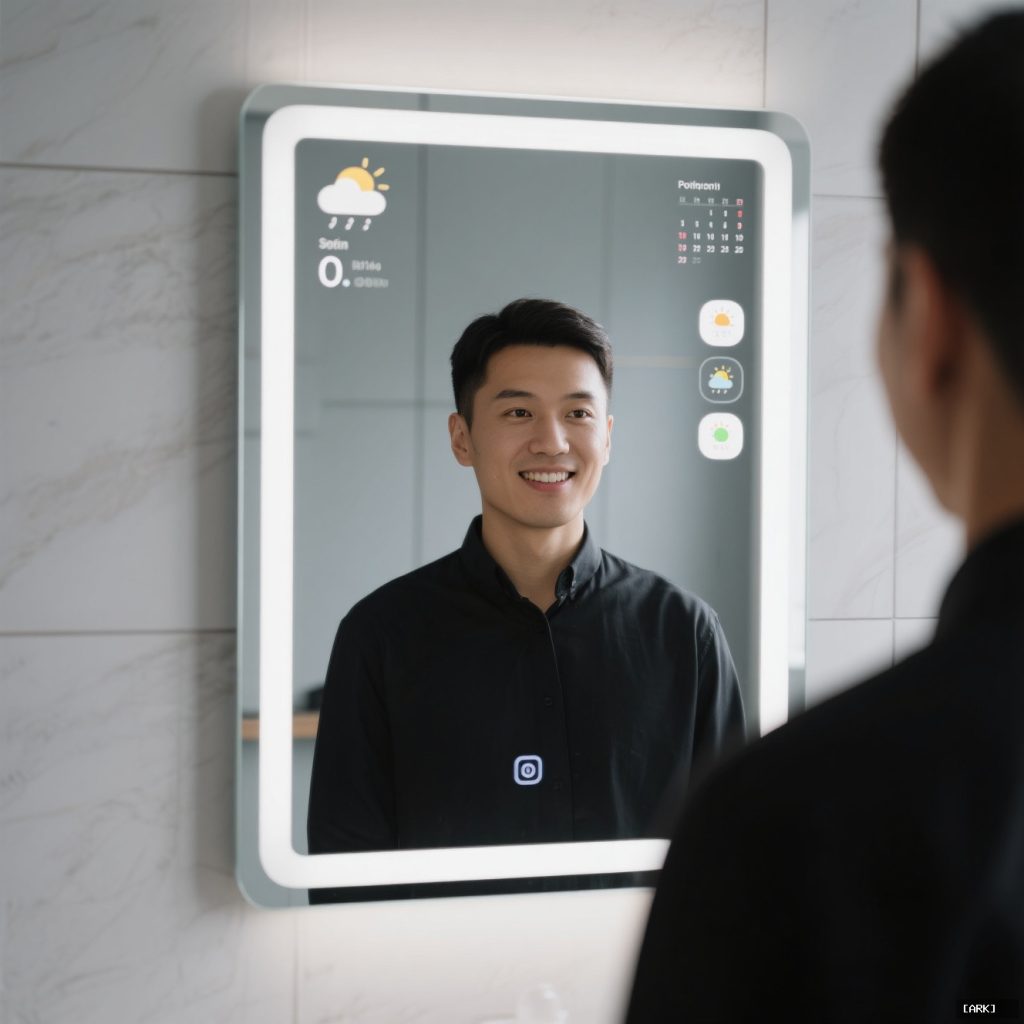
The digital mirror is not a new invention. It is an ancient idea reborn in silicon and light, a virtual reflection that has evolved from still water to the smart mirror on your wall. This interactive display has always been about more than just seeing your face; it’s about constructing a story of the self.
That story changes with every technological shift. From mythic pools to polished metal, from Venetian glass to today’s augmented panels, each new mirror didn’t just offer a better look. It offered a new way to think about who we are. The digital mirror is the latest chapter, layering data over our image and asking us to see ourselves through metrics and feeds. It’s a tool, a portal, and a narrator all at once.
From Obsidian to Algorithm: The Mirror’s Enduring Allure
Forget the notion that mirrors began with glass. The first mirrors were patches of still water, sheets of polished obsidian, or burnished copper. These early surfaces provided a virtual reflection, but their purpose was rarely mundane. They were mystical objects, often considered portals to other worlds or vessels for the soul.
In the story of Narcissus, the pool’s surface doesn’t show a true self; it shows a captivating, ultimately destructive illusion. Many cultures believed a mirror could trap a spirit or reveal hidden truths. The reflection was separate from the person—a double, a spirit, a truth-teller. This deep-seated mythology of the mirror as a dangerous, powerful object never really left us. It just found a new home.
The modern smart mirror, with its camera and sensors, taps into this same ancient unease. We wonder: if it can see me, what else does it see? The old fear of the mirror capturing one’s soul has a direct parallel in the modern anxiety over data capture and privacy. The object that reflects us also observes us.
The Frame and the Story: Decoding Smart Mirror Design
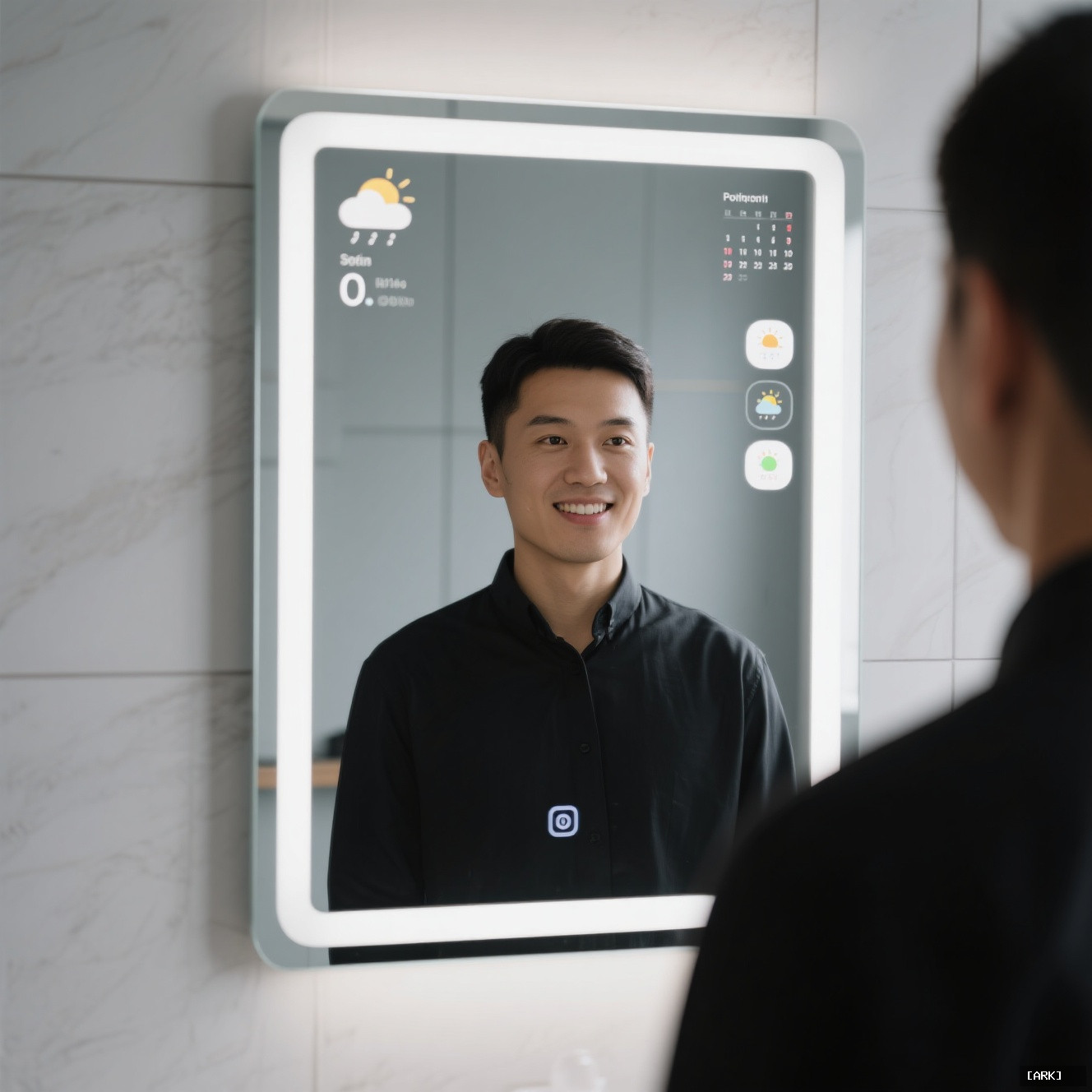
Look at a typical digital mirror. Its design is a quiet argument. The cold, minimalist frame, often frameless, whispers of clinical efficiency, not vanity. The interface is the real storyteller. Your reflection is surrounded by, or even competing with, widgets for the weather, your calendar, health metrics, and news headlines.
This visual hierarchy is deliberate. It suggests your primary value is contextual, quantified, and networked. You are a node in a system of data. The mirror’s design language, drawn from dashboards and control panels, reframes the self. It’s less about “who am I?” and more about “what is my status?” The interactive display prioritizes information about your external world and your measurable self over simple contemplation of your image.
This is a profound shift from the ornate, gilded mirrors of European aristocracy, which were pure symbols of wealth and self-possession. The digital mirror democratizes a different kind of power: the power of data-driven self-optimization.
Magic Mirrors and Measured Selves: Folklore to Modern Day
Folklore is obsessed with mirrors because we are. “Mirror, mirror on the wall” is never a simple request. It’s a demand for an external, authoritative verdict. Fairy tale mirrors gatekeep truth, beauty, and danger. They show the fairest, they reveal hidden enemies, or they act as doorways, like in Alice Through the Looking-Glass, where the mirror leads to a world of inverted logic.
The digital mirror fulfills this same archetypal role. It is our modern magic mirror. It doesn’t just reflect; it judges and informs. It overlays biometric data, telling a story about your health that your naked eye can’t see. It flashes notifications, quantifying your social standing. It presents the day’s agenda, shaping your narrative before you’ve lived it. It offers a “truer,” or at least a more data-rich, story about who you are in the world.
This promise of objective truth is as seductive and potentially deceptive as the pool was for Narcissus. The mirror’s verdict—be it “fairest of them all” or “10,000 steps taken”—holds immense power over our self-perception.
The Democratization of Reflection: From Luxury to Ubiquity
The history of the mirror is a history of democratization. For most of human history, a large, clear reflection was a staggering luxury. In the 16th and 17th centuries, Venetian glass mirrors were prized possessions of royalty, symbols of both immense wealth and scientific achievement. Owning one was a statement of power and enlightenment.
The 19th century changed everything. Industrial processes allowed for the mass production of affordable, high-quality glass mirrors. For the first time, ordinary people could own a large mirror and see themselves whole and clear in private. This revolutionized private self-image, fashion, and interior design. The sense of self became more individualized, more intimate.
The smart mirror represents the next logical step in this democratization. It’s not just the image that’s now widely available; it’s the data-driven narrative. The luxury of deep self-analysis, once the purview of philosophers or the very rich with their portrait painters, is now a consumer product. The interactive display turns every bathroom or bedroom into a personal command center, offering a curated, quantified self-portrait to anyone who can afford the device.
The Artist in the Mirror: A Renaissance Perspective
To understand the constructed nature of the digital mirror, look to Renaissance art. Painters like Jan van Eyck used mirrors with deliberate cunning. In his famous Arnolfini Portrait, a convex mirror hangs on the back wall. It reflects a distorted, wide-angle view of the room, including two figures entering—and the painter himself, witnessing the scene.
This wasn’t a signature or a vanity. It was a profound statement about perspective and the artist’s role. The mirror declared that the painting was not a window onto objective reality, but a constructed view, framed by the artist’s presence and choices. The mirror revealed the hidden architect of the scene.
A modern digital mirror operates on a similar principle. Its array of widgets—the weather, your to-do list, your heart rate—constructs a specific, curated reality around your reflection. You are framed within a chosen set of data points, a narrative about productivity, wellness, or connectivity. You are both the subject of this portrait and, to a degree, its curator, choosing which data streams to include. Yet the framework itself, the design language and the available metrics, is created by someone else. The mirror shows you a world, and yourself in it, built by invisible hands.
Living with Your Digital Double: A Practical Guide
Bringing a digital mirror into your home means inviting a narrator into your private moments. It’s worth pausing to ask what kind of story it’s set up to tell. This isn’t about paranoia; it’s about awareness. By understanding its design language, you can engage with it more consciously, rather than simply accepting its default narrative.
Start with the physical object. The frame’s aesthetic sets a tone. Does it feel medical and sterile, like a device from a clinic? Is it sleek and futuristic, suggesting you’re living in tomorrow? Or is it minimalist to the point of invisibility, pretending to be a neutral window? Each design choice primes you for a different kind of interaction.
Next, audit the default interface. What widgets are front and center when you first turn it on?
- Is the screen dominated by productivity metrics—calendar, emails, task lists? This frames your day as a series of obligations to be managed.
- Does it emphasize wellness data—sleep scores, workout stats, mindfulness reminders? This encourages a narrative of self-optimization and bodily management.
- Or is it geared toward entertainment and connection—social feeds, news tickers, streaming apps? This situates you as a consumer within a network.
Notice the visual hierarchy. Is your reflection the clear focal point, with data subtly arranged around the edges? Or is your image small, competing for space with graphs and headlines? The layout tells you what the device believes is more important: your unadorned self, or the contextual data about your self.
Finally, and most importantly, pay attention to the story it encourages. When you glance at it first thing in the morning, what does it prime you to feel or do? Anxious about a packed schedule? Motivated to close your activity rings? Distracted by trending headlines? The digital mirror doesn’t just show you your face; it suggests a script for your day. The power lies in recognizing that script, and deciding whether you want to follow it, rewrite it, or sometimes, just look past it to see only yourself.
Questions We Can’t Stop Asking
Are smart mirrors just high-tech vanity?
Looking at their history, mirrors were rarely “just” for vanity. They were tools of divination, symbols of power, and artistic devices. The digital mirror continues this tradition, aiming to be a hub for information and self-management. It reframes the mirror from a passive reflector to an active tool. The question isn’t whether it’s for vanity, but what kind of work it’s asking you to do on yourself.
Will living with a digital mirror change how I see myself?
Every mirror technology has. The move from distorted metal to clear glass changed how people perceived their own faces and fostered a new sense of individual identity. A data-augmented reflection will inevitably shape your self-narrative. The risk is conflating the data overlay with your core identity—believing the quantified story is the truer one. The benefit can be useful awareness. The key is maintaining the distinction between the metric and the self.
What about my privacy?
This is the contemporary echo of the ancient mirror taboo. If a mirror could steal your soul, can a digital mirror steal your biometric identity or daily routines? Any interactive display with a camera and microphone is a potential observer. The concern is valid. It requires the same conscious management as any smart device: understanding what data is collected, where it goes, and who might access it. The old wisdom holds: the mirror is a powerful object. Treat it with respect.
Sources & Further Reading
- The Museum of Applied Arts & Sciences: A Brief History of the Mirror
- The Metropolitan Museum of Art: The Arnolfini Portrait Essay
- British Library: Mirrors in Literature and Folklore
- Cooper Hewitt, Smithsonian Design Museum: Interaction Design Channel
✨ You Might Also Enjoy

You may also like
Herbal Bead Bracelet: Ancient Chinese Aromatherapy for Modern Wellness | HandMyth™
Original price was: ¥2,199.00.¥1,352.00Current price is: ¥1,352.00. Add to cartPremium Herbal Beads Bracelet: Traditional Medicine Meets Modern Jewelry | Shop HandMyth
Original price was: ¥874.00.¥608.00Current price is: ¥608.00. Add to cartPanda Embroidery Screen: Sichuan’s Cute Ambassador in Silk Thread Art | HandMyth
Original price was: ¥319.00.¥230.00Current price is: ¥230.00. Add to cartPanda Gift Set: Curated Chinese Treasures for Panda Lovers | HandMyth™ (Free Gift Wrap)
Original price was: ¥136.00.¥118.00Current price is: ¥118.00. Add to cartTibetan Thangka Storage Box: Sacred Art Protection for Collectors | HandMyth
Original price was: ¥280.00.¥219.00Current price is: ¥219.00. Add to cartPure Silk Handbag: Hangzhou’s Legendary Silk Weaving for Modern Elegance | HandMyth™
Original price was: ¥874.00.¥786.00Current price is: ¥786.00. Add to cartHand-Painted Silk Scarf: Wearable Art from China’s Silk Road | HandMyth (Artist Signed)
Original price was: ¥1,017.00.¥935.00Current price is: ¥935.00. Add to cartModern Qipao Dress: Timeless Chinese Elegance for Today’s Woman | HandMyth (Custom Fit)
Original price was: ¥2,459.00.¥2,240.00Current price is: ¥2,240.00. Add to cartEmbroidered Chinese Handbag: Suzhou Silk Embroidery Meets Modern Fashion | HandMyth™
Original price was: ¥680.00.¥646.00Current price is: ¥646.00. Add to cart























