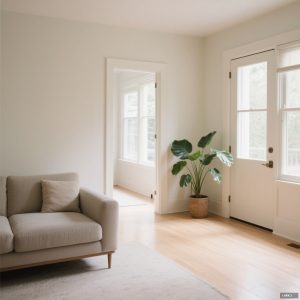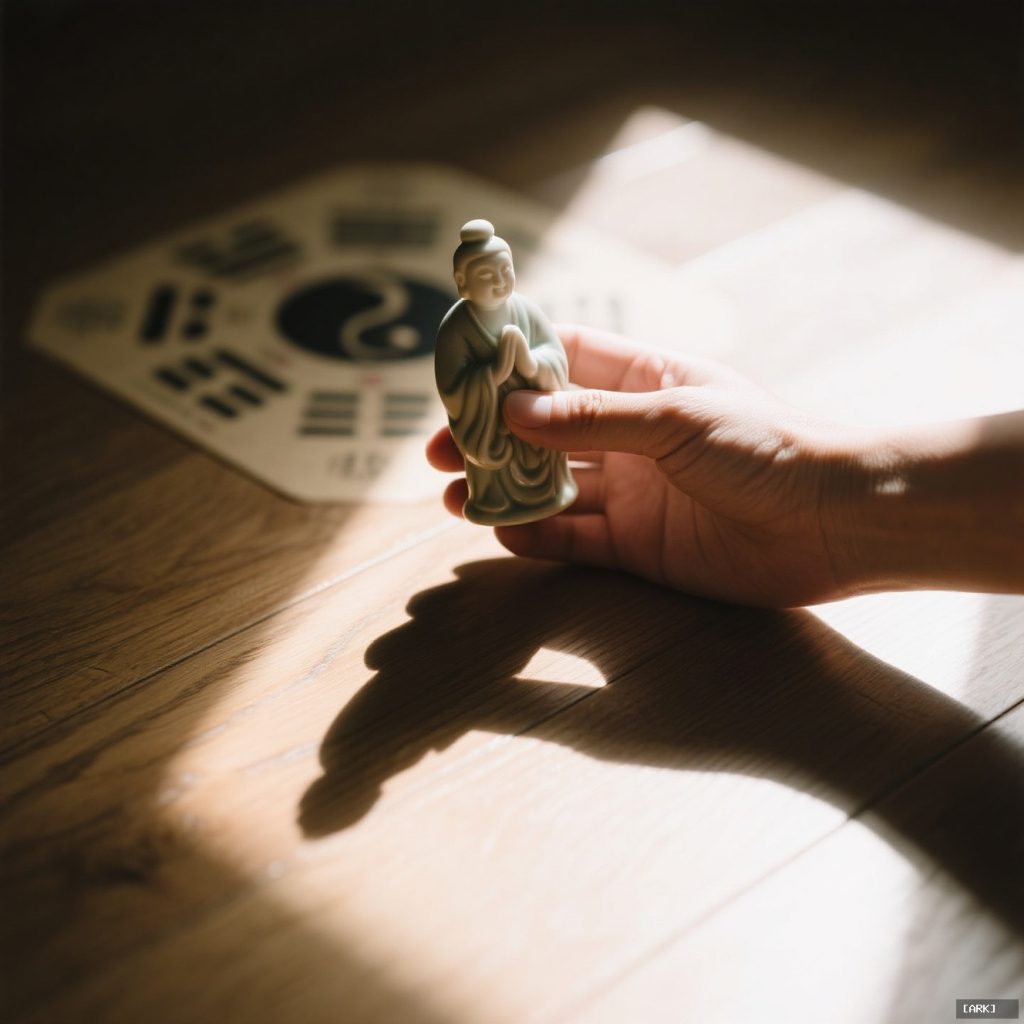
Feng shui object placement is more than a list of rules. It’s the art of creating a dialogue between your belongings and the space around you. This conversation shapes your home’s energy flow and your own interior harmony.
Forget the rigid charts for a moment. The most profound shifts often start with a single, stubborn object.
Beyond the Bagua Map: The Problem with Rule-Based Placement
We often approach feng shui like a puzzle to solve. We hunt for the wealth corner, anxiously face our desks toward the door, and place lucky bamboo with more hope than feeling. This turns our homes into diagrams, not dwellings. The spatial arrangement becomes a technical exercise, missing the heart of the practice.
Objects are not inert tokens. They carry weight—memory, intention, story. Placing a gift you dislike in your relationship sector because a book told you to invites a subtle discord. The object’s true narrative of obligation clashes with its assigned function of fostering love. The room feels unsettled because you are. True placement begins not with a compass, but with curiosity about what an object actually represents in your life.
The Silent Stories Our Objects Tell
Our spaces are archives of our relationships. That vase isn’t just ceramic; it’s the friend who gave it to you after a hard week. The heirloom clock ticks with family history, for better or worse. A souvenir holds the ghost of a past vacation. Every item whispers a story.
Ignoring these whispers for the sake of feng shui dogma creates a kind of static. You might have all the “right” items in the “right” places, yet feel a lingering unease. This is the dissonance between an object’s embedded meaning and its forced role. Curating your space, then, is an act of gently editing these narratives. It asks: Does this object’s story support the story I want my life to tell now? Sometimes the answer is to reposition it. Sometimes it’s to let it go with gratitude, making room for a new chapter.
When Love Blocks Energy Flow
Sentiment can be the sneakiest source of stagnant energy. We cling to things out of love, guilt, or a fear of forgetting. That bulky armchair from your first apartment may be a throne of nostalgia, but if it blocks a pathway, it also blocks movement—both physically and energetically. It anchors you to a version of yourself that no longer exists.
This is a delicate, non-judgmental space. The question shifts from “Is this good feng shui?” to “Does this serve who I am becoming?” A beloved but threadbare quilt might be refolded into a respectful display, rather than dominating a bed needed for restful sleep. Honoring an object’s past doesn’t require letting it dictate your present. Love, in this context, can be an act of thoughtful release, creating literal and metaphorical space for new energy to enter.
The Overlooked Ally: Sunlight and Shadow
We get obsessed with compass directions, often missing the most dynamic energy source in our homes: light. An object’s relationship to the sun’s daily process is a masterclass in energy flow. A beautiful crystal meant to refract light and energize a corner is just a cold stone if it sits in perpetual shadow.
Watch your rooms throughout a day. Notice how a morning sunbeam brings a wooden bowl to life, its grain suddenly vivid. See how the afternoon light casts the long shadow of a plant across a wall, creating a moving mural. This daily dance is alive. Placing objects in dialogue with light—a reading chair where the late light pools, a mirror positioned to bounce dawn into a dark hallway—harnesses this natural rhythm. It connects your interior harmony to the world outside your walls.
Starting the Conversation: A Simple Practice
If the rules feel overwhelming, abandon them. Start with a single object you see every day—the kettle, a bookshelf, a rug. Ask it three simple, quiet questions: Why are you here? How do you feel in this spot? What do you want me to notice?
It sounds fanciful. Try it. You’re not expecting an audible answer, but a felt one. A sense of rightness, or of unease. A memory. The goal is to cultivate awareness, the foundation of all intuitive spatial arrangement. When you begin listening to your space, placement often reveals itself. The vase asks for a spot on the east windowsill, not the dark shelf. The cluttered entry table pleads for a single, meaningful piece. The conversation has begun.
A Checklist for Energetic Refresh
When a room feels stuck, use these prompts not as a test, but as a dialogue starter.
- The Weight Test: Pick up an object that feels “off.” Does it feel surprisingly heavy or inert in your hands? Its physical sensation often mirrors its energetic one.
- The Light Audit: For one day, trace the sun’s path in your main living area. Which objects does it celebrate? Which does it ignore? Consider a small shift to connect a dormant item with light.
- The Gift Audit: Choose one gifted item. Does its current placement feel like an honest integration into your life, or are you housing a diplomat from someone else’s tastes?
- The Pathway Check: Walk the natural routes through each room. Do you sidestep, twist, or feel blocked? Obstructions here are direct metaphors for blocked energy flow.
- The Silent Minute: Sit quietly in a room. Notice the first object your eye critiques or wants to adjust. Trust that nudge; it’s the start of an insight.
Navigating Common Dilemmas
Do I need special “feng shui cure” items?
Rarely. The power comes from intention and resonance, not mass production. A stone from a meaningful hike, placed with clarity, holds far more activating energy than a generic “wealth coin” you bought online out of anxiety.
What if my partner or roommate disagrees?
This is critical. Forced feng shui object placement breeds resentment, which poisons a home’s energy faster than any “bad” corner. Focus first on finding objects and arrangements you both genuinely enjoy. Harmony between inhabitants is the ultimate feng shui.
Is clutter always the enemy?
Not necessarily. Feng shui is concerned with stagnant energy, not mere quantity. A sterile, minimalist room can feel energetically dead. A creative’s busy desk, humming with projects, can be vibrant. Assess the feeling: Is this clutter alive or oppressive? Does it inspire or imprison?
Deepening Your Understanding
To move beyond basics, explore these perspectives that enrich the philosophy behind spatial arrangement.
- For a modern, practical take: The Western Guide to Feng Shui by Terah Kathryn Collins offers principles over superstition.
- For the philosophy of object relationships: Marie Kondo’s The Life-Changing Magic of Tidying Up explores the joy items spark.
- For a poetic exploration of space: Gaston Bachelard’s The Poetics of Space dives into how spaces shape our inner lives.
- For the science behind our surroundings: Research from the American Psychological Association on environmental psychology provides a evidence-based look at person-environment interaction.
- For the cultural meaning of possessions: Resources from institutions like the Smithsonian Center for Folklife and Cultural Heritage explore how objects carry identity and history.
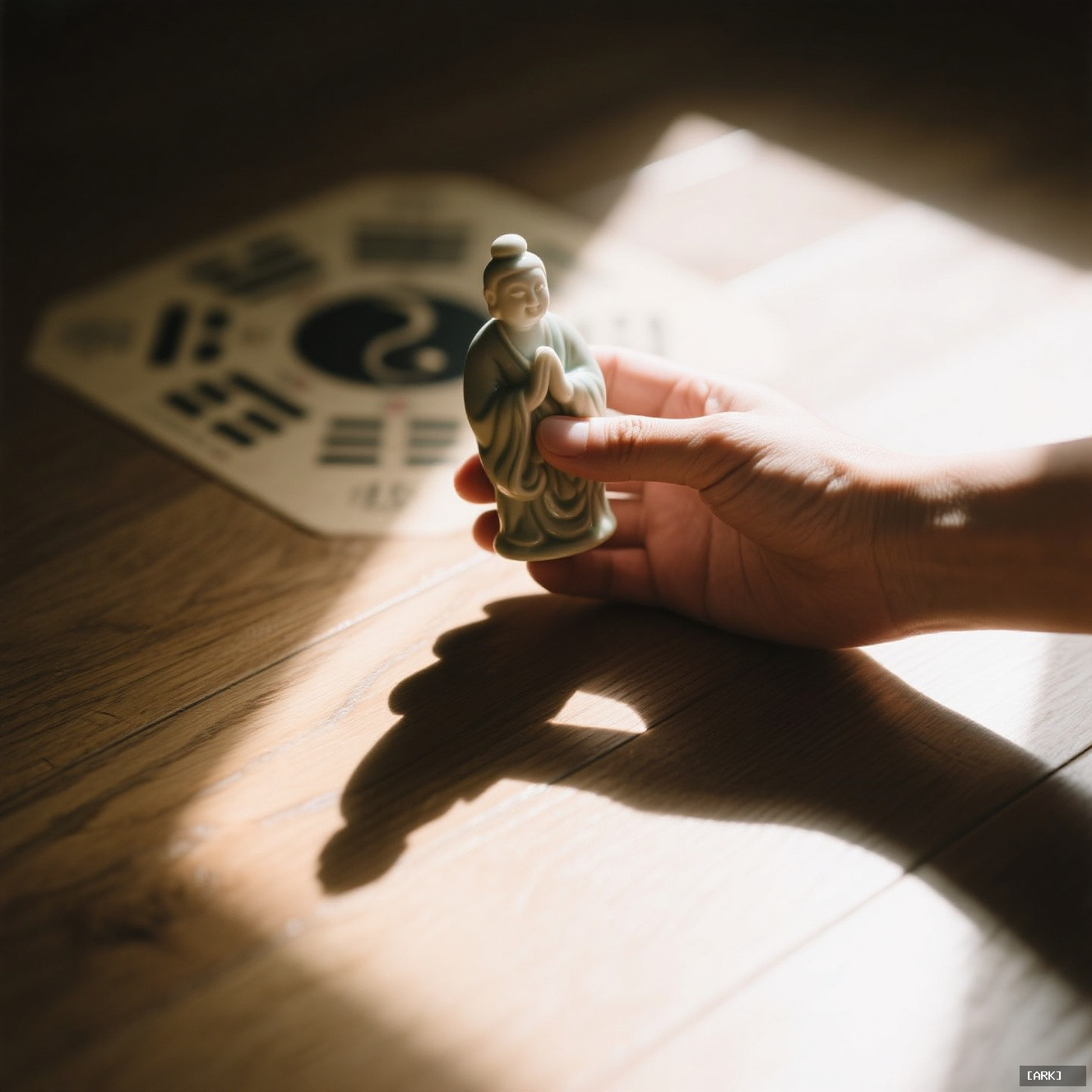
The goal is a home that feels like yours—a true reflection, not a prescription. Let your feng shui object placement be a quiet, ongoing conversation between you, your things, and the light moving through your windows.
✨ You Might Also Enjoy
You may also like
Herbal Bead Bracelet: Ancient Chinese Aromatherapy for Modern Wellness | HandMyth™
Original price was: ¥2,199.00.¥1,352.00Current price is: ¥1,352.00. Add to cartPremium Herbal Beads Bracelet: Traditional Medicine Meets Modern Jewelry | Shop HandMyth
Original price was: ¥874.00.¥608.00Current price is: ¥608.00. Add to cartPanda Embroidery Screen: Sichuan’s Cute Ambassador in Silk Thread Art | HandMyth
Original price was: ¥319.00.¥230.00Current price is: ¥230.00. Add to cartPanda Gift Set: Curated Chinese Treasures for Panda Lovers | HandMyth™ (Free Gift Wrap)
Original price was: ¥136.00.¥118.00Current price is: ¥118.00. Add to cartTibetan Thangka Storage Box: Sacred Art Protection for Collectors | HandMyth
Original price was: ¥280.00.¥219.00Current price is: ¥219.00. Add to cartPure Silk Handbag: Hangzhou’s Legendary Silk Weaving for Modern Elegance | HandMyth™
Original price was: ¥874.00.¥786.00Current price is: ¥786.00. Add to cartHand-Painted Silk Scarf: Wearable Art from China’s Silk Road | HandMyth (Artist Signed)
Original price was: ¥1,017.00.¥935.00Current price is: ¥935.00. Add to cartModern Qipao Dress: Timeless Chinese Elegance for Today’s Woman | HandMyth (Custom Fit)
Original price was: ¥2,459.00.¥2,240.00Current price is: ¥2,240.00. Add to cartEmbroidered Chinese Handbag: Suzhou Silk Embroidery Meets Modern Fashion | HandMyth™
Original price was: ¥680.00.¥646.00Current price is: ¥646.00. Add to cart