
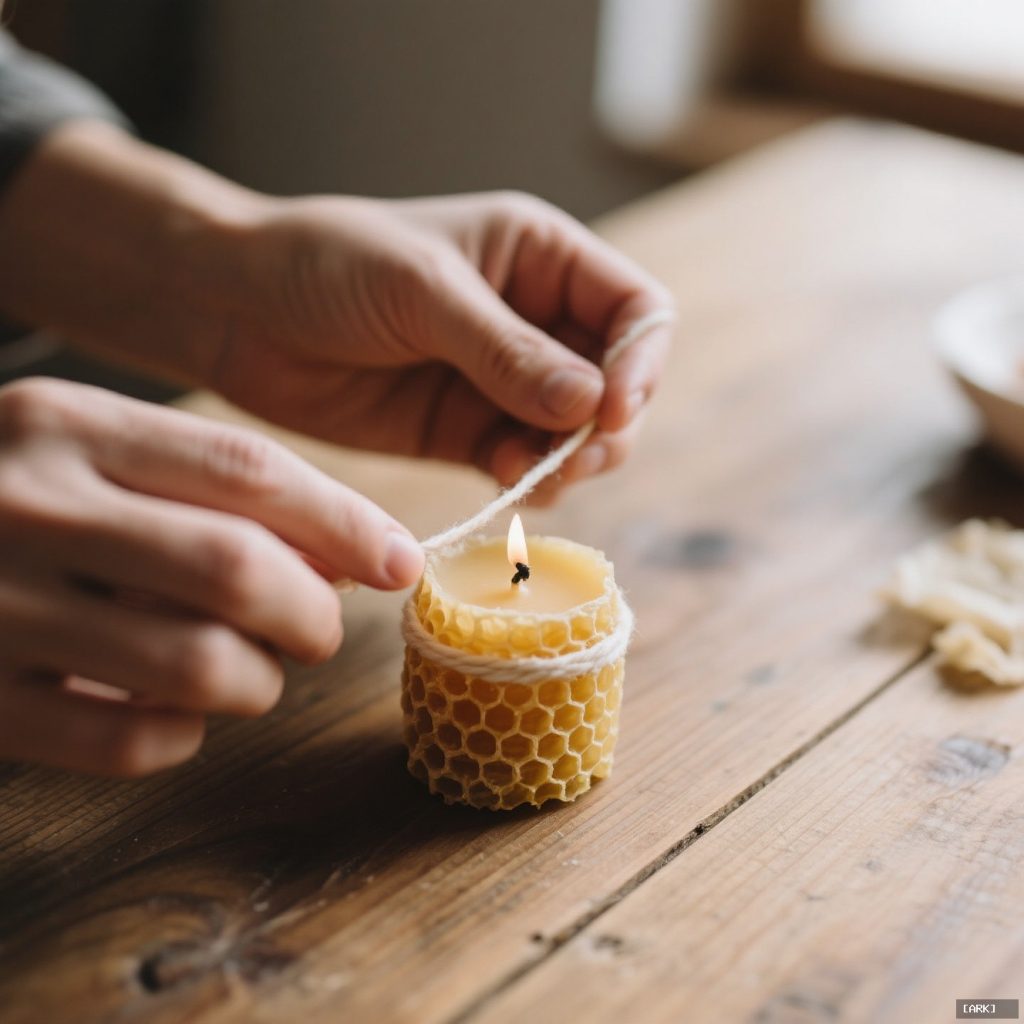
Eco-friendly craft ideas are a gateway to something far more personal than just recycling. They are an invitation to slow down, to feel materials with your hands, and to build small, meaningful rituals that anchor your day.
The Ritual Reset: From Abstract Goal to Daily Practice
We often approach green crafting with a grand, slightly daunting mission. We think we must save the planet, one upcycled jar at a time. That scale can paralyze action before it even begins.
The shift is subtle but profound. Move the goal from the global to the personal. See your sustainable DIY project not as a solution to a planetary crisis, but as a gift to your own moment. It becomes a dedicated act of attention.
Consider the evening. Instead of reaching for your phone, you reach for a block of beeswax. The process of warming it, rolling a wick, forming a candle—this is your transition. Lighting it later isn’t just illumination; it’s the activation of a ritual you built with your own hands. The craft creates the object, and the object, in turn, structures your time with intention. This is the quiet power of environmentally friendly art: it makes mindfulness tangible.
The Sensory Language of Healthy Materials
What separates a chore from a cherished practice? Often, it’s the materials. A “healthy” material isn’t just non-toxic on a label. It engages your senses in a way that feels nourishing, not draining.
Think of the difference between cutting glossy, plastic-coated cardstock and tearing a sheet of handmade, cotton-rich paper. One feels inert, the other alive. The smell of raw wool, the gritty texture of unprocessed clay, the smooth, cool surface of a beach stone—these materials have a biography. They come from somewhere. Working with them feels less like assembly and more like collaboration.
This sensory engagement is the core of the wellness benefit. Your brain, preoccupied with digital abstractions and future worries, is suddenly called into the present by the sheer physicality of the task. The weight of the wood, the resistance of the clay, the flow of the natural dye. These sensations ground you. They are a direct line out of anxiety and into your body.
Designing for Calm: The Stories Our Objects Tell
Every object in your home speaks. A factory-made vase, perfect and identical to millions of others, tells a story of efficiency and distance. A hand-pinched bowl, with the subtle imprint of your thumb still visible in its side, tells a story of time, attention, and a human touch.
When you craft, you become the author of these stories. This is your design language. Choosing simple, organic forms isn’t merely an aesthetic preference; it’s a psychological tool. A smooth, oval stone used as a paperweight, a minimalist linen curtain, a bowl with an irregular, wabi-sabi glaze—these objects introduce visual rest. They counter the frantic, over-designed noise of commercial goods.
Your space becomes a collection of these quiet narratives. You are surrounded not by purchases, but by artifacts of your own calm focus. The object becomes a permanent reminder of the state you were in when you made it.
Beyond Branding: The Authenticity You Already Own
Look at any lifestyle brand today. They spend fortunes to evoke a feeling of authenticity, heritage, and connection. They photograph artisans (often staged) and use words like “handcrafted” and “soulful.” It’s a story they are selling.
Your sustainable DIY project bypasses this entire economy of aspiration. Its authenticity is inherent, not manufactured. The “story” is inseparable from the object itself. The source of the materials (the fallen branch from your backyard), the maker (you, with your unique rhythm), and the purpose (the stir stick for your morning tea) are fully integrated. There is no gap between the marketing and the reality.
This integrity is palpable. It’s why a clumsily made but heartfelt gift often feels more valuable than an expensive, generic one. In a world of curated personas, the simple, honest object you make stands out precisely because it isn’t trying to. It just is.
Starting Simple: The Five-Minute Craft Philosophy
The biggest barrier to beginning is the imagined mountain of effort. We see elaborate projects and assume we need a free weekend and a fully stocked studio. This is a trap.
The entry point is microscopic. Identify one tiny, otherwise wasted sliver of your day. The three minutes while the kettle boils. The five minutes after you clear the lunch dishes. This is your new studio time.
Your first eco-friendly craft idea must fit this container. It is not about the masterpiece. It is about the act.
- Use a pocket knife to whittle a forked twig into a simple yarn holder.
- Fold a page from an old magazine into a small, temporary envelope for seeds.
- Roll a beeswax candle on a pre-embedded wick.
- Use a needle to stitch a simple mend on a favorite shirt with contrasting thread.
The goal is to claim that fragment of time for a tactile, focused act. The satisfaction comes from the doing, not just the done. Over time, these five-minute sessions may grow, but they don’t have to. Their consistency is what builds the ritual.
Answering the Practical Hesitations
Even with a simple philosophy, questions arise. Let’s address the common roadblocks head-on.
Isn’t buying new “eco” supplies contradictory?
It can be. The most environmentally friendly art starts with what is already on hand. Your first and best resource is your own home. Look in the recycling bin (glass jars, cardboard), the kitchen (onion skins for dye, citrus peels for cleaners), the yard (leaves, pinecones, twigs).
If you must buy, be strategic. Seek out local sources—a nearby potter for clay scraps, a sheep farmer for raw fleece. Choose natural materials (wood, linen, beeswax) over synthetic blends. Prioritize items with minimal or no packaging. The aim is to extend the life of existing materials or support hyper-local, transparent cycles.
I’m not artistic. Can this still work for me?
This is the most liberating part. This practice has nothing to do with being an “artist” in the traditional sense. It is about being a maker. The actions are often repetitive and simple: the over-under rhythm of a basic weave, the circular motion of polishing a stone, the back-and-forth of sanding a piece of wood smooth.
These are meditative actions. Your mind can wander, settle, or focus on the sensation. The outcome’s beauty is often in its honesty and function, not its technical perfection. A lumpy, hand-built mug you use every day holds more value than a flawless one sitting unused in a cupboard. Skill is optional. Presence is the only requirement.
How do I handle “craft guilt” if a project fails?
In a disposable culture, a failed project feels like waste. In a cyclical, green crafting mindset, it is just a turn in the loop. A cracked pot can be broken and used as drainage in another planter. A botched natural dye experiment can be composted. Untangle a failed knitting project and re-roll the yarn.
View your materials as being in a temporary state, not a final one. If something doesn’t work, how can it return to the system? This perspective removes the pressure of perfection. The process itself—including the “failure”—is part of the learning and the cycle.
A Starter Palette of Ideas
To move from theory to practice, here are a few accessible projects categorized by the sensory experience they offer and the time they might take.
For Touch: The Satisfaction of Texture
Project: Hand-stitched Linen Napkins or Coasters.
Materials: Scraps of linen or hemp fabric, needle, thread (linen or cotton).
Process: Cut fabric into squares. Fold edges and use a simple running stitch or whip stitch to hem. The repetitive, tactile motion of pushing needle through cloth is deeply calming.
Ritual Link: Use them at your next meal. The feel of the hand-stitched hem becomes part of the dining experience.
For Sight: The Magic of Transformation
Project: Natural Dyeing with Kitchen Scraps.
Materials: White cotton fabric (an old t-shirt), avocado pits/skins, onion skins, or black beans; a pot, water, salt (as a mordant).
Process: Simmer your dye material (e.g., avocado pits) for an hour to extract color. Strain, add wet fabric, and simmer gently. The slow reveal of soft pinks, golds, or blues is alchemical.
Ritual Link: The slow, watchful process is a lesson in patience. The resulting color is a unique souvenir of that time.
For Smell: Aromatic and Grounding
Project: Beeswax Fire Starters.
Materials: Leftover beeswax, cardboard egg carton, dryer lint or sawdust (untreated wood).
Process: Fill each cup of the egg carton with lint/sawdust. Melt beeswax and pour over to saturate. Once cool, tear apart. The smell of melting beeswax is profoundly soothing.
Ritual Link: Use one to start a fireplace or campfire. The craft literally fuels a moment of warmth and gathering.
Cultivating Your Craft Ritual: A Living Checklist
Think of this not as rules, but as gentle guidelines to nurture your practice.
- Anchor to a Transition: Link your making to a daily shift—after your first coffee, before starting work, during the evening wind-down.
- Curate a “Making Spot”: A small tray, basket, or shelf where your current project lives. Visibility removes the friction of starting.
- Embrace the Obvious Form: A smooth rock is a paperweight. A sturdy branch is a coat hook. See the potential in simple shapes.
- Prioritize Process Photography: If you document, take pictures of your hands working, the materials mid-transformation, not just the finished product.
- Share the Feeling, Not Just the Object: If you give a handmade item, mention the quiet moment you made it in. You’re gifting a fragment of your calm.
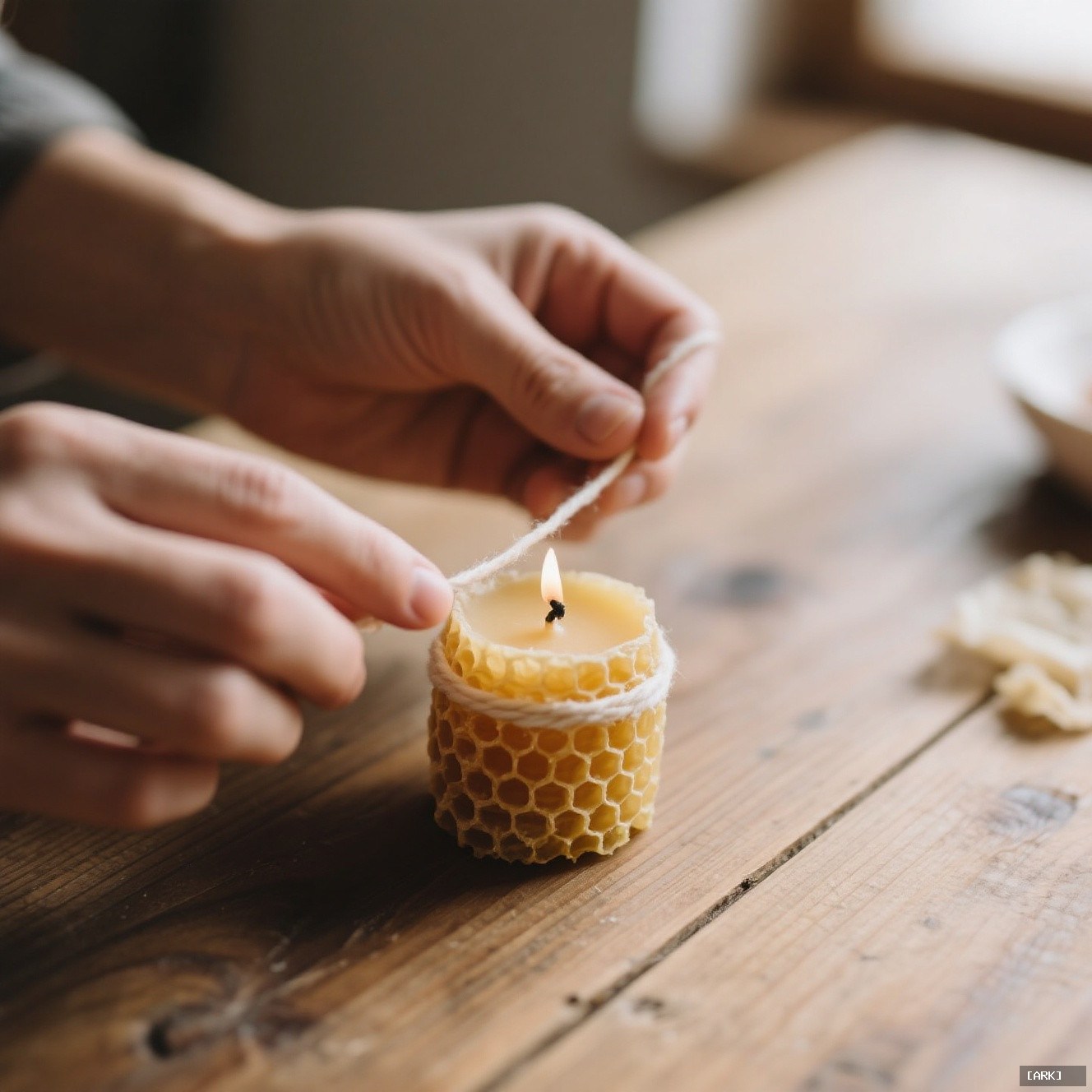
The ultimate aim of these eco-friendly craft ideas is not to fill your home with more stuff. It is to fill your time with more presence. You begin by shaping wax, folding paper, or stitching cloth. What you’re really shaping is your attention, folding stress into focus, and stitching your daily life back together, one quiet, tangible moment at a time.
Sources & Further Reading
✨ You Might Also Enjoy

You may also like
Herbal Bead Bracelet: Ancient Chinese Aromatherapy for Modern Wellness | HandMyth™
Original price was: ¥2,199.00.¥1,352.00Current price is: ¥1,352.00. Add to cartPremium Herbal Beads Bracelet: Traditional Medicine Meets Modern Jewelry | Shop HandMyth
Original price was: ¥874.00.¥608.00Current price is: ¥608.00. Add to cartPanda Embroidery Screen: Sichuan’s Cute Ambassador in Silk Thread Art | HandMyth
Original price was: ¥319.00.¥230.00Current price is: ¥230.00. Add to cartPanda Gift Set: Curated Chinese Treasures for Panda Lovers | HandMyth™ (Free Gift Wrap)
Original price was: ¥136.00.¥118.00Current price is: ¥118.00. Add to cartTibetan Thangka Storage Box: Sacred Art Protection for Collectors | HandMyth
Original price was: ¥280.00.¥219.00Current price is: ¥219.00. Add to cartPure Silk Handbag: Hangzhou’s Legendary Silk Weaving for Modern Elegance | HandMyth™
Original price was: ¥874.00.¥786.00Current price is: ¥786.00. Add to cartHand-Painted Silk Scarf: Wearable Art from China’s Silk Road | HandMyth (Artist Signed)
Original price was: ¥1,017.00.¥935.00Current price is: ¥935.00. Add to cartModern Qipao Dress: Timeless Chinese Elegance for Today’s Woman | HandMyth (Custom Fit)
Original price was: ¥2,459.00.¥2,240.00Current price is: ¥2,240.00. Add to cartEmbroidered Chinese Handbag: Suzhou Silk Embroidery Meets Modern Fashion | HandMyth™
Original price was: ¥680.00.¥646.00Current price is: ¥646.00. Add to cart























