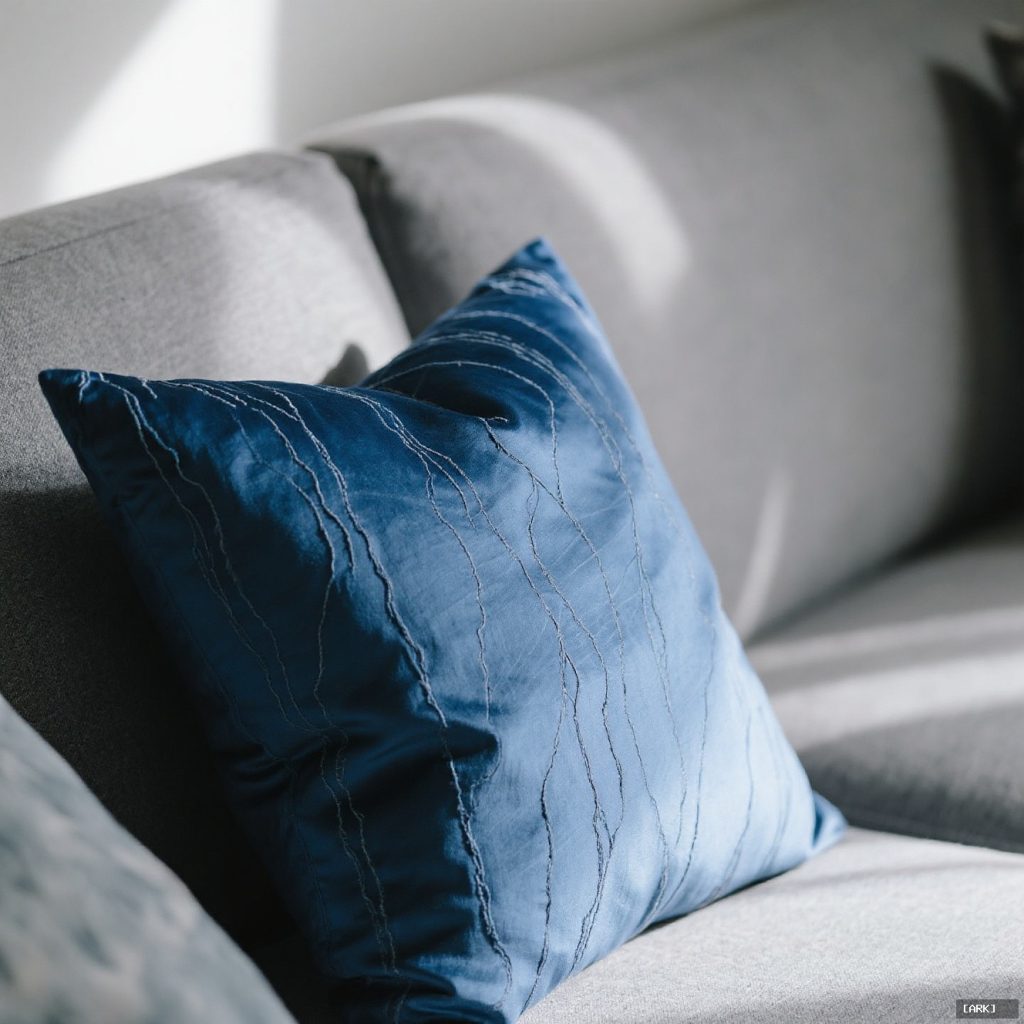
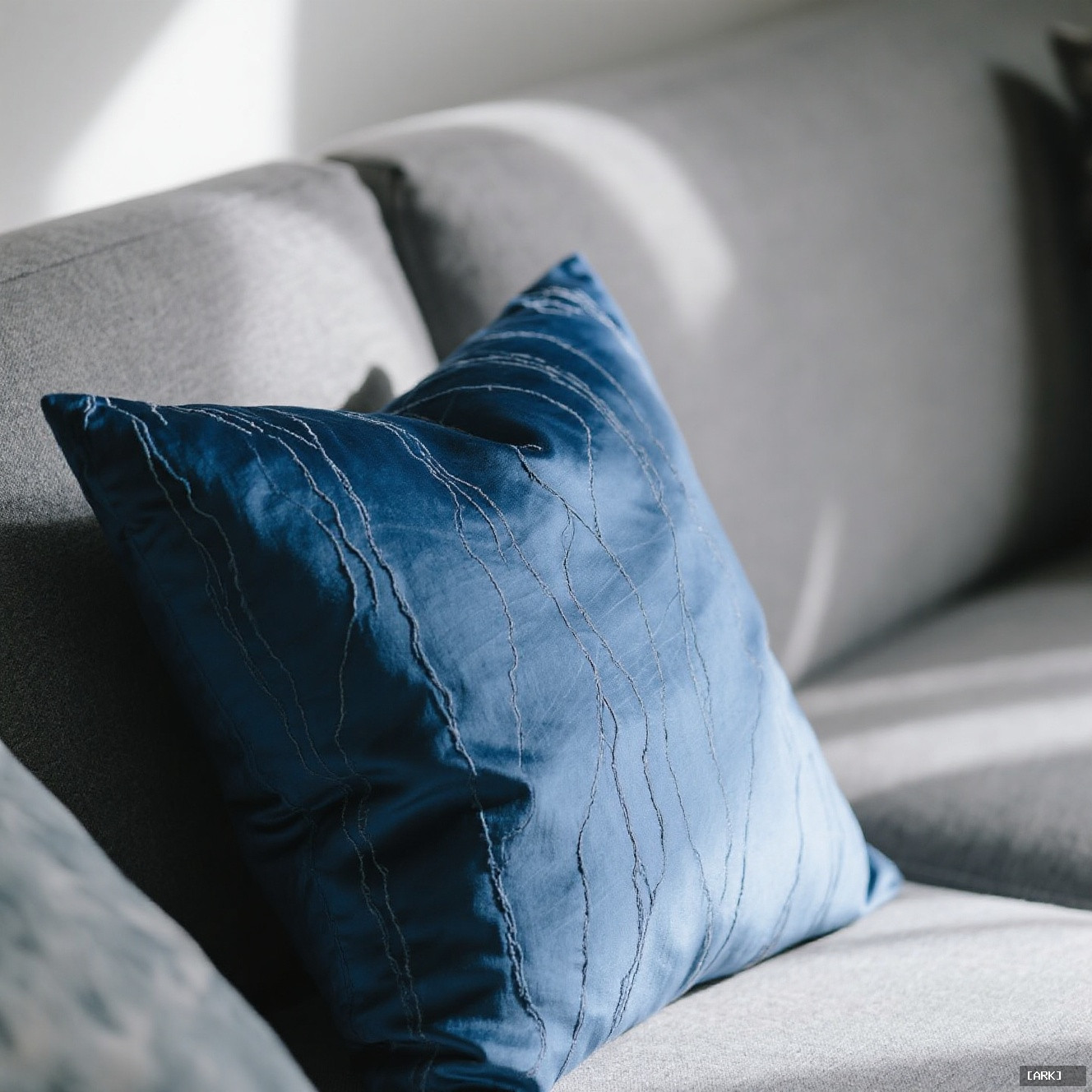
Decorative silk cushions are far more than just pretty accents. They are tactile anchors and narrative devices that transform a space. Their sheen catches your eye, but their weight and texture hold your attention.
We often relegate them to the category of final flourish, a purely ornamental luxury. This view misses their true function in sensory design. A silk pillow isn’t a museum piece you admire from afar. It’s an interactive texture meant to be touched, rearranged, and lived with. It introduces a cool, smooth plane against the warmer, nubbier fabrics of a wool throw or a linen sofa. This creates a dialogue of contrasts, a layered conversation that makes a room feel considered, intentional, and deeply personal.
The Myth of Fragility: Are Silk Cushions Too Delicate for Real Life?
The fear that silk throw pillows are destined for ruin is perhaps the most common deterrent. It stems from treating silk like delicate china, forgetting its origins as a remarkably strong natural fiber. Modern decorative silk cushions are often crafted for durability. Many use spun silk or incorporate subtle blends with a higher thread twist, designed specifically for upholstery use.
They do require specific care—professional dry cleaning is usually best for printed or deeply dyed pieces—but not kid-glove abstinence. In fact, quality silk develops a patina. That slight softening of the luster, a gentle relaxation of the fibers, isn’t damage. It’s a record of life lived beautifully. Heritage brands understand this, framing the evolution of silk’s character as part of its story. The reality is that these cushions ask for mindfulness, not a life behind velvet ropes.
Beyond the Surface: How Silk Cushions Actually Shape a Room
Think of ornamental cushion covers as punctuation in a room’s visual sentence. A single silk pillow on a large, neutral sofa can act as a thoughtful comma. A cluster functions like an exclamation point, adding decisive emphasis and focal energy. Their impact, however, goes beyond mere decoration.
Their reflective quality manipulates light in subtle ways. A strategically placed silk cushion can bounce afternoon sun into a dim corner, lifting the entire mood of a space. There’s a less obvious, psychological effect at play, too. In a world of visual noise, the luxurious, ordered presence of a few beautiful silk pillows can counter clutter. They create a perceived sense of calm and control, making a room feel quieter, more composed, and intentionally curated. They don’t just sit on your furniture; they manage the atmosphere around it.
The Language of Weave: Not All Silk is Created Equal
To say you’re buying a “silk cushion” is like saying you’re buying “a painting.” The medium is just the beginning. The true design language is dictated by the weave, each telling a distinct story about a room’s intent before you even sit down.
Dupioni, with its characteristic slubs and crisp hand, speaks of structure and formality. Its irregular texture tells a story of organic thread variation, offering a refined yet tactile elegance. Charmeuse is the whisper of romance and decadence, fluid and luminous with a signature glossy face and a dull back. It drapes beautifully and catches light like water. Raw silk or shantung conveys rustic elegance, with a nubby, textured surface that feels earthy and approachable. Then there’s crepe de chine, with its pebbled texture and matte finish, offering a more understated, contemporary luxury. Choosing between them is the first step in writing your room’s narrative.
The Art of the Ensemble: Avoiding the Solitary Statement
The biggest mistake is treating a decorative silk cushion as a solitary island. The myth is that one ‘hero’ pillow is enough. The reality is that silk works best in conversation. Its luxury is highlighted by contrast, not isolation.
Pair a geometric-printed silk with a solid, plush velvet. Place a smooth charmeuse pillow against a nubby chenille or a chunky knit. Mix a formal dupioni square with a round lumbar pillow in linen. This layering creates depth, intrigue, and a sense of collected sophistication. It makes the silk feel integrated and wearable—a part of your daily life—rather than staged, fragile, and separate. The goal isn’t a showroom display, but a layered, inviting composition that rewards a closer look.
A Practical Guide to Choosing and Living With Silk
Bringing decorative silk cushions into your home is an exercise in joyful mindfulness. Here’s how to choose wisely and ensure they last.
Buying Checklist: What to Look For
- Fabric Content: Look beyond “100% silk.” For durability, seek out “spun silk” or a small, strategic blend (e.g., with cotton for body). Check the label.
- Weight and Hand: Feel the fabric. Heavier weight silks drape better, feel more substantial, and generally wear better than thin, flimsy versions.
- Construction Details: Examine the seams. Are they straight and secure? A hidden zipper with a fabric tab (not a plastic one) is a classic sign of quality construction.
- Weave in Context: Match the weave to the room’s vibe. A crisp dupioni for a structured, modern sofa. A fluid charmeuse for a bedroom bench or a cozy reading chair. Raw silk for a casual, sunlit den.
- Plan for Company: Rarely buy just one. Think in pairs, trios, or complementary textures from the start.
Living With Silk: Your Questions Answered
Can I clean them at home?
For longevity and color preservation, professional dry cleaning is the gold standard, especially for vivid prints or delicate dyes. For minor spots, a barely damp cloth with a drop of mild, pH-neutral detergent can be used. Always test any cleaner on a hidden corner first, like the back or an inside seam.
Are they pet-friendly?
Silk can snag on sharp claws. If your cat or dog claims every cushion as their throne, consider using silk pillows in less-accessed areas like a formal sitting room or on higher shelves. Alternatively, opt for a tighter, more durable weave like a sturdy shantung or a silk-blend fabric designed for upholstery.
Do they work in casual, everyday spaces?
Absolutely. The key is deliberate contrast. A pair of raw silk pillows on a denim-covered armchair or a relaxed linen sofa doesn’t look stuffy. It bridges elegance and ease perfectly, elevating the casual into something special. It’s about mixing, not matching.
How do I store them?
Avoid plastic, which can trap moisture. Store silk cushions in breathable cotton pillowcases or bags. Keep them in a cool, dry place away from direct sunlight to prevent the fibers from weakening and the colors from fading over time.
Weaving a Story: The Final Thread
Decorative silk cushions are the final edit in a room’s manuscript. They are the sensory detail that completes a thought. They offer light, texture, contrast, and a quiet kind of order. Moving past the myth of them being merely ornamental opens up a world of design possibility. It allows you to use their inherent narrative power—the crisp story of dupioni, the romantic whisper of charmeuse—to tell your own. Start with one conversation between textures, and see how the story unfolds.
Sources & Further Reading
The Secret Life of Silk: A Cultural History (Smithsonian Magazine): https://www.smithsonianmag.com/science-nature/secret-life-silk-cultural-history-180956692/
Care Guide for Silk Furnishings (The Silk Association): https://www.silk.org/conservation-care
The Grammar of Design: How Textiles Communicate (Cooper Hewitt Insights): https://www.cooperhewitt.org/2018/07/10/the-grammar-of-design
✨ You Might Also Enjoy

You may also like
Herbal Bead Bracelet: Ancient Chinese Aromatherapy for Modern Wellness | HandMyth™
Original price was: ¥2,199.00.¥1,352.00Current price is: ¥1,352.00. Add to cartPremium Herbal Beads Bracelet: Traditional Medicine Meets Modern Jewelry | Shop HandMyth
Original price was: ¥874.00.¥608.00Current price is: ¥608.00. Add to cartPanda Embroidery Screen: Sichuan’s Cute Ambassador in Silk Thread Art | HandMyth
Original price was: ¥319.00.¥230.00Current price is: ¥230.00. Add to cartPanda Gift Set: Curated Chinese Treasures for Panda Lovers | HandMyth™ (Free Gift Wrap)
Original price was: ¥136.00.¥118.00Current price is: ¥118.00. Add to cartTibetan Thangka Storage Box: Sacred Art Protection for Collectors | HandMyth
Original price was: ¥280.00.¥219.00Current price is: ¥219.00. Add to cartPure Silk Handbag: Hangzhou’s Legendary Silk Weaving for Modern Elegance | HandMyth™
Original price was: ¥874.00.¥786.00Current price is: ¥786.00. Add to cartHand-Painted Silk Scarf: Wearable Art from China’s Silk Road | HandMyth (Artist Signed)
Original price was: ¥1,017.00.¥935.00Current price is: ¥935.00. Add to cartModern Qipao Dress: Timeless Chinese Elegance for Today’s Woman | HandMyth (Custom Fit)
Original price was: ¥2,459.00.¥2,240.00Current price is: ¥2,240.00. Add to cartEmbroidered Chinese Handbag: Suzhou Silk Embroidery Meets Modern Fashion | HandMyth™
Original price was: ¥680.00.¥646.00Current price is: ¥646.00. Add to cart