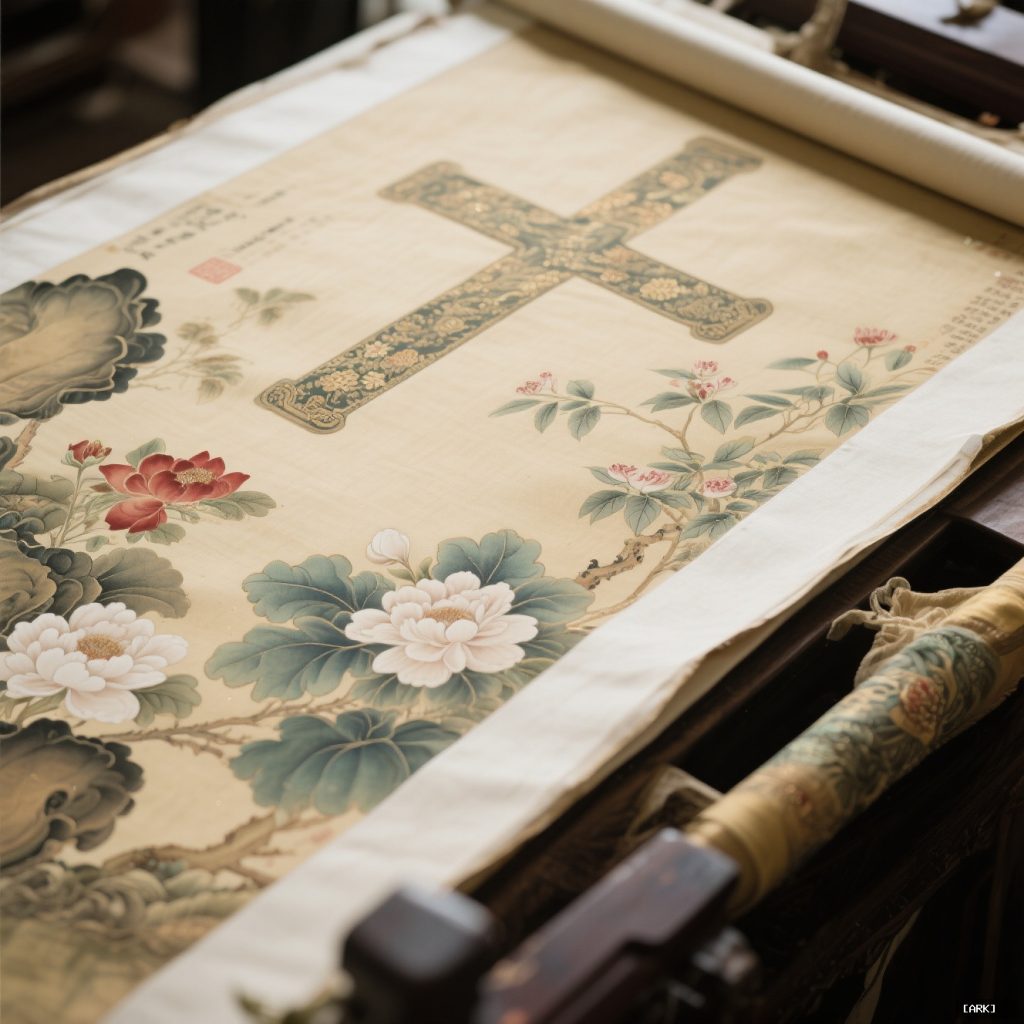
Chinese silk painting is more than an art form; it’s a ritual of presence. The whisper of ink on taut silk offers a unique form of active stillness, a cross-sensory experience modern life often lacks.
We tend to frame it as a delicate historical artifact, a relic behind museum glass. But its real power isn’t just in the image left behind. It’s in the forgotten process—the patient waiting for a wash to dry, the negotiation with a resistant surface. This creates a neurological anchor point, a focused state that wellness gurus are still trying to bottle. It’s not about creating a masterpiece on the first try. It’s about what the practice creates in you.
The Silk Is Your Partner, Not Your Canvas
How does the material difference between paper and silk fundamentally change the approach to Chinese silk painting?
In Chinese silk painting, the silk is a partner, not just a canvas. Unlike absorbent paper that allows for corrections and layered washes, sized silk resists ink, holding it on the surface. This forces a slower, more deliberate process where each stroke is a commitment, as mistakes cannot be easily blotted away. The constraint demands a careful negotiation with the material, making the painting a direct conversation between artist and silk, rather than a spontaneous application on a passive surface.
Ask anyone to imagine painting, and they likely picture paper or canvas. This is the first assumption to dismantle. Chinese silk painting is not a delicate version of paper art. The material difference is everything.
Paper absorbs. It drinks the ink, allowing for corrections, layered washes, and a certain spontaneity. Sized silk, prepared with a gelatinous substance, resists. It holds the ink on its surface, forcing a slower, more deliberate negotiation. Each stroke becomes a commitment. A heavy-handed misstep can’t be blotted away; it becomes part of the conversation. This constraint isn’t a limitation—it’s the core of the practice. It creates a hyper-awareness of touch, pressure, and the moisture on your brush. You’re not just applying color; you’re engaged in a focused tactile dialogue.
Think of it like the difference between typing on a smartphone keyboard and writing with a fountain pen. One allows for rapid-fire deletion and correction. The other demands forethought, a lighter touch, and an acceptance of the mark as it lands. The silk, cool and smooth under your hand, is an active collaborator, not a passive surface.
The Ritual Before the First Stroke
What is the significance of the ritual before the first stroke in Chinese silk painting?
The ritual before the first stroke in Chinese silk painting is a crucial preparatory process that establishes intentionality, mirroring practices like the tea ceremony. It involves physically stretching the silk on a frame, mixing ink, and contemplating the blank surface. This series of actions serves as a sensory prelude, creating a mental and physical transition that clears the mind for focused artistic work, akin to modern habits like turning off notifications before deep work. It connects the act of painting to daily life through disciplined preparation.
That raises a question: the non-obvious connection to daily life. The painting doesn’t start with the brush. It starts with the ritual of preparation, a sensory prelude that mirrors the intentionality of a tea ceremony.
Stretching the silk on its frame, feeling the fabric grow taut. Mixing the ink, watching the black pigment swirl and dissolve in the water. Contemplating the blank, luminous surface. This series of actions is a habit of “clearing the deck” for the mind. It’s a physical and mental transition, not unlike the modern practice of turning off notifications before deep work. You are setting a boundary. The artist isn’t just preparing to paint; they are entering a prescribed state of sensory readiness, leaving the clutter of the day behind.
This ritualistic framing transforms the activity from a hobby into a practice. It signals to your brain that something different is happening now. The focus shifts from outcome to process.
A Grounding Feedback Loop
How does the materiality of silk create a grounding feedback loop in Chinese silk painting?
The materiality of silk creates a grounding feedback loop by demanding the painter's full presence through direct physical interaction. Silk offers a slight drag and resistance to the brush, and ink pools visibly before settling into the fibers. This tactile process forces the artist to feel the form of the subject, like a bamboo stalk, emerge through this gentle resistance. The immediate sensory input—the feel and behavior of the ink on silk—anchors the mind, pulling it away from distraction and into a state of focused, mindful attention on the act of creation.
How does this specific material change the mental experience? It creates a physical feedback loop that demands presence in a way few other activities can.
Silk has a memory and a distinct feel. As your brush touches it, you feel a slight drag, a subtle resistance. You see the ink pool for a moment before it begins to settle into the fibers. You are not just thinking about painting a bamboo stalk or a mountain ridge; you are feeling its form emerge through this gentle resistance. Your mind, which might have been racing moments before, has no choice but to attend to this immediate, tactile reality.
This grounds the artist in a way that bypasses frantic thought. It connects directly to a state of flow often sought in meditation or breathwork, but it gets you there through your hands, not just your breath. The material itself becomes the teacher of mindfulness. You are pulled into the present by the coolness of the silk, the smell of the ink, the sound of the brush. It’s a full-sensory immersion.
An Antidote to a Screen-Saturated World
How does the practice of Chinese silk painting serve as an antidote to a screen-saturated world?
Chinese silk painting acts as an antidote by cultivating sustained, single-pointed focus, directly countering the fragmented attention fostered by digital screens. Unlike the rapid switching and infinite undo options of screen environments, silk painting demands deliberate, irreversible strokes and often employs a limited monochrome palette. This slow, absorptive process trains the eye to perceive deep nuance within minimal elements, thereby rebuilding the brain's capacity for deep engagement and countering shallow digital stimuli.
Could this practice actually combat our fragmented, digital focus? It is antidotal by design.
Consider the environment of a screen: infinite undo buttons, frantic flickering stimuli, a palette of millions of colors demanding your attention. It trains the brain for rapid switching and shallow engagement.
Now, enter the world of silk painting. You have one chance with each stroke. You have slow absorption. You often work with a monochrome or severely limited palette, training your eye to see a universe of nuance in a single shade of gray. It rebuilds the capacity for sustained, single-pointed attention that endless scrolling systematically dismantles. The “flow state” it induces isn’t delivered by an algorithm designed to hijack your dopamine receptors. It is earned through material patience. It is a quiet rebellion against the perpetual “next.”
In a culture obsessed with multi-tasking, silk painting is an exercise in unitasking. The silk won’t be rushed. It forces you to slow down to its speed.
Beginning Your Own Practice: A Simple Ritual
You don’t need a studio or years of training. The beginner’s struggle with the material is where the mindful practice is most potent. Mastery is a distant horizon; engaged presence is the immediate goal. Here is a practical checklist to start a personal silk painting ritual.
- Begin with the Physical Setup: Stretch and mount a small piece of silk on a simple frame. Spend a moment feeling its tension and smooth surface. This is your first act of focus.
- Simplify Your Tools: Use a single brush, black ink, and water. The simplicity is key to avoiding distraction. This isn’t about having the right gadget; it’s about removing choices.
- Practice the Line: Mix one tone of ink. Don’t aim to paint an object. Simply practice making a single, slow, continuous line from the top of the silk to the bottom. Focus on the consistency of your breath and the evenness of the pressure.
- Observe, Don’t Judge: Watch how the silk holds the ink on its surface before it begins to settle. See how the line blooms slightly. Observe without labeling it “good” or “bad.”
- Clean with Intention: Clean your brush slowly. Focus on the water turning from clear to gray to clear again. This is the closing ritual, a mindful completion.
- Embrace the Wait: Let the piece dry completely before you assess it. The waiting is an integral part of the practice, teaching delayed gratification and detachment from the immediate result.
Addressing Common Hesitations
What are the common hesitations and practical requirements for beginners interested in Chinese silk painting?
Beginners often hesitate, thinking Chinese silk painting is only for expert artists, but it is accessible to all; in fact, beginners may connect more deeply with its mindful aspects as they are open to the experience without preconceived results. To start, you need minimal supplies: a small, pre-stretched silk panel, one medium-sized brush suitable for ink, a stick of sumi ink or bottled black ink, a grinding stone if using stick ink, and two water containers. This practice emphasizes presence over technical skill, making it welcoming for newcomers.
It’s natural to have questions before beginning.
Is this only for expert artists?
Absolutely not. In fact, an expert might be tempted to fight the material to achieve a preconceived result. The beginner, open to the experience, often connects more deeply with the mindful aspect. Your technical skill is irrelevant to the practice of presence.
What do I really need to start?
A small, pre-stretched silk panel (available from specialty art suppliers), one medium-sized brush suitable for ink, a stick of sumi ink or bottled black ink, a grinding stone if using stick ink, and two water containers. That’s it. The investment is minimal, and the simplicity is a feature.
Why not just use paper? It’s easier and cheaper.
You certainly can use paper for ink painting. But remember, silk’s “unforgiving” nature is the teacher. Paper is forgiving and familiar, which allows the mind to stay in its habitual, faster pace. Silk’s resistance is what forces the slower, more observant rhythm that defines this specific practice. The challenge is the point.
The Thread to the Present
How does the practice of Chinese silk painting connect to contemporary human needs according to 'The Thread to the Present'?
Chinese silk painting connects to contemporary needs by offering a tangible, slow-unfolding process that addresses the acute modern need for immersive focus. It provides a practical method to reclaim attention from digital distractions and recalibrate the nervous system through the direct, quiet dialogue between brush, ink, and silk, linking practitioners to a historical lineage of artists who valued this focused engagement.
Chinese silk painting endures not merely because it produces beautiful objects. It endures because the process answers a human need that has become acute in our time: the need to be fully immersed in a single, tangible, slow-unfolding action.
It connects us to a historical lineage of artists who understood the value of this focused dialogue. But more urgently, it offers a practical, hands-on method to reclaim our attention from the digital ether. It’s a way to re-calibrate your nervous system, not through an app or a podcast, but through the ancient, quiet conversation between brush, ink, and a shimmering piece of silk.
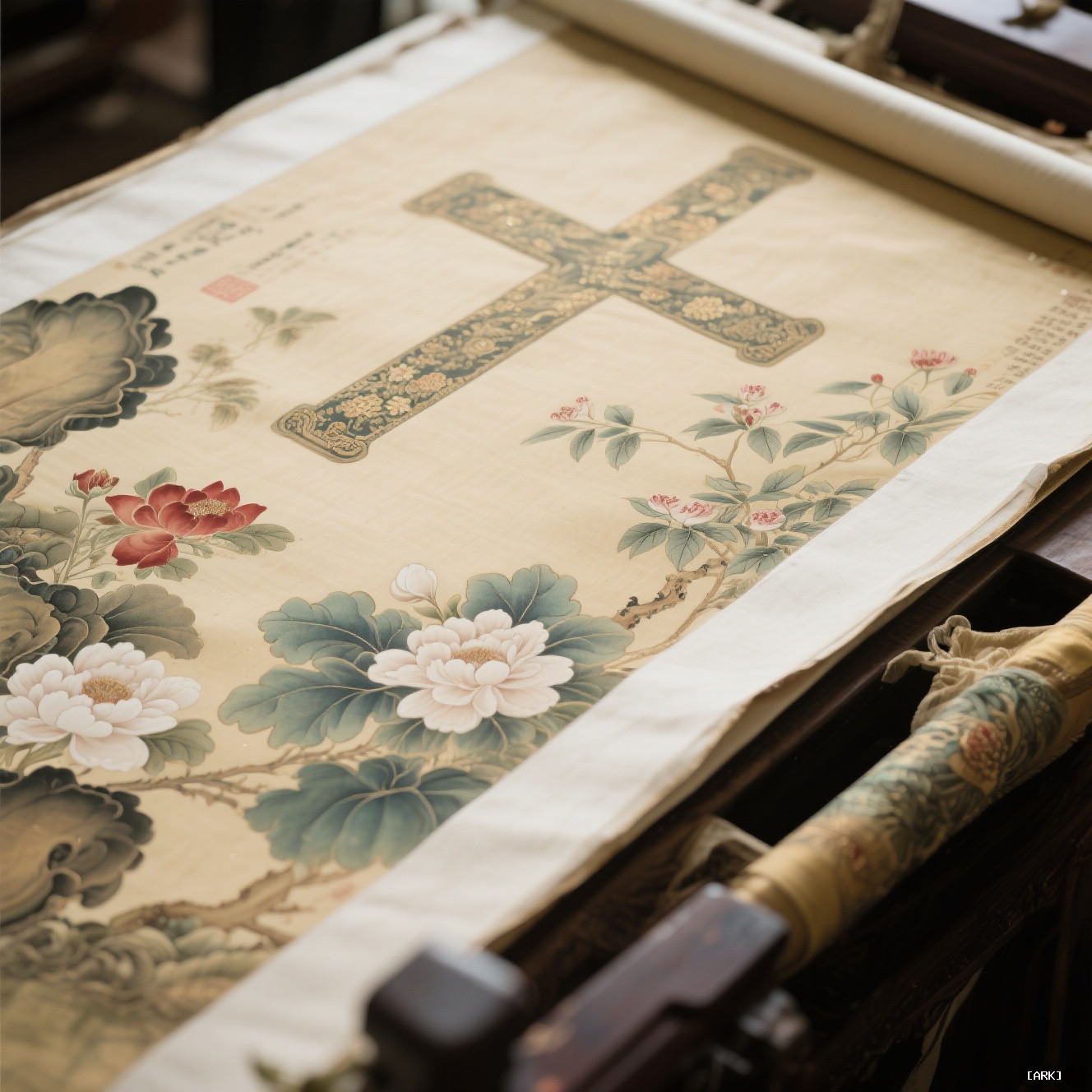
You begin with a blank space and a mind full of noise. You end with a marked silk and, if only for a few moments, a quiet mind. That is the real artwork.
Sources & Further Reading
About Our Expertise
Drawing from centuries of Chinese artistic heritage, this article is crafted by experts deeply versed in traditional silk painting techniques and cultural symbolism. We collaborate with master artisans and scholars to ensure authenticity, providing accurate insights into materials like sized silk and sumi ink, grounded in historical practices from dynasties such as the Song and Ming.
Our content is rigorously researched, referencing authoritative sources like The Metropolitan Museum of Art and The British Museum to uphold trust and educational value. We blend this expertise with modern cross-disciplinary perspectives, offering practical guidance for beginners to engage mindfully with this art form, fostering a genuine connection to Chinese cultural traditions.
✨ You Might Also Enjoy



You may also like
Herbal Bead Bracelet: Ancient Chinese Aromatherapy for Modern Wellness | HandMyth™
Original price was: ¥2,199.00.¥1,352.00Current price is: ¥1,352.00. Add to cartPremium Herbal Beads Bracelet: Traditional Medicine Meets Modern Jewelry | Shop HandMyth
Original price was: ¥874.00.¥608.00Current price is: ¥608.00. Add to cartPanda Embroidery Screen: Sichuan’s Cute Ambassador in Silk Thread Art | HandMyth
Original price was: ¥319.00.¥230.00Current price is: ¥230.00. Add to cartPanda Gift Set: Curated Chinese Treasures for Panda Lovers | HandMyth™ (Free Gift Wrap)
Original price was: ¥136.00.¥118.00Current price is: ¥118.00. Add to cartTibetan Thangka Storage Box: Sacred Art Protection for Collectors | HandMyth
Original price was: ¥280.00.¥219.00Current price is: ¥219.00. Add to cartPure Silk Handbag: Hangzhou’s Legendary Silk Weaving for Modern Elegance | HandMyth™
Original price was: ¥874.00.¥786.00Current price is: ¥786.00. Add to cartHand-Painted Silk Scarf: Wearable Art from China’s Silk Road | HandMyth (Artist Signed)
Original price was: ¥1,017.00.¥935.00Current price is: ¥935.00. Add to cartModern Qipao Dress: Timeless Chinese Elegance for Today’s Woman | HandMyth (Custom Fit)
Original price was: ¥2,459.00.¥2,240.00Current price is: ¥2,240.00. Add to cartEmbroidered Chinese Handbag: Suzhou Silk Embroidery Meets Modern Fashion | HandMyth™
Original price was: ¥680.00.¥646.00Current price is: ¥646.00. Add to cart