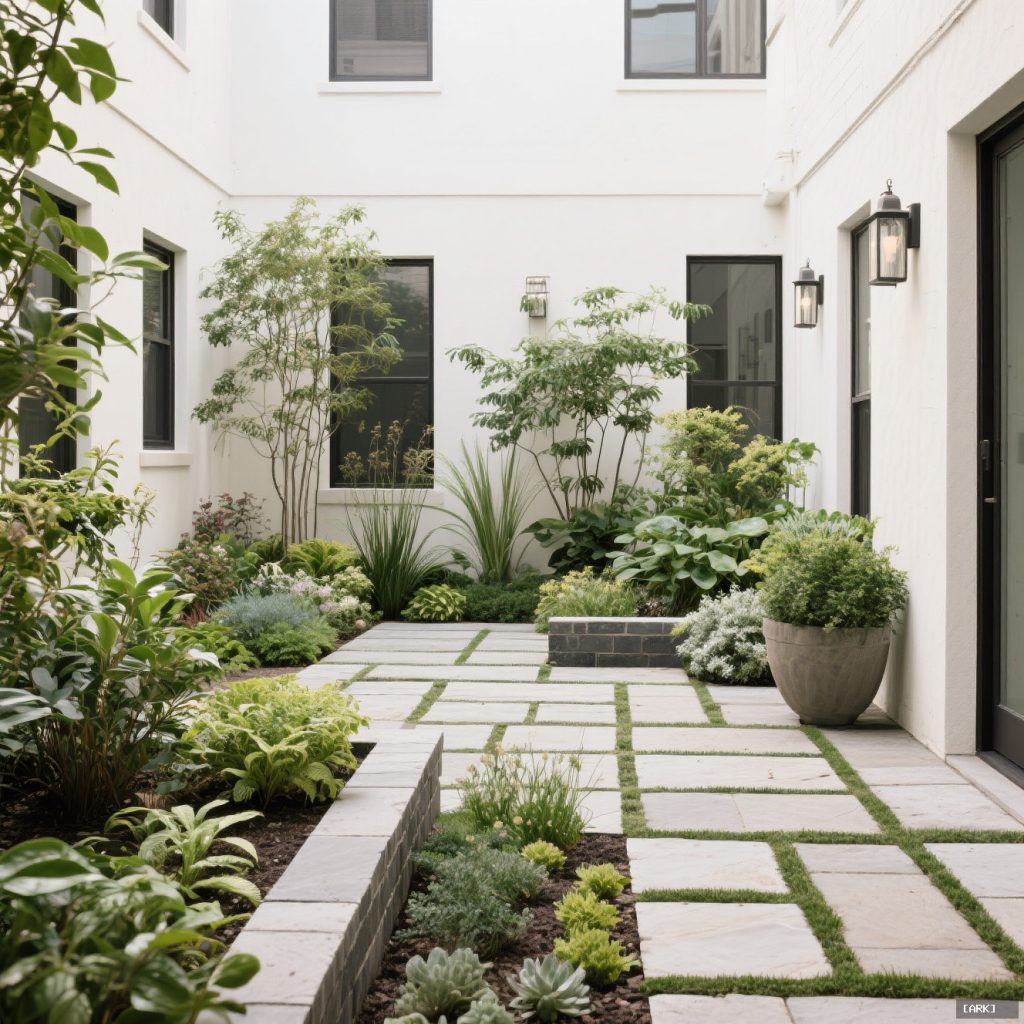
Courtyard garden design is about more than just arranging plants and pavers. It’s a philosophy of outdoor space planning that asks us to see our patios and plots as living, breathing systems with a past and a future. When we shift from a focus on static aesthetics to a circular mindset, we create spaces that are not only beautiful but inherently resilient and regenerative.
Beyond the Installation: A Relationship with Place
Most garden projects begin and end with installation. You choose a style, buy the materials, and assemble the vision. The work is done. But a circular approach flips this script. It asks you to consider the entire lifecycle of every element before the first stone is laid. Where did that timber come from? How will this paving handle a storm in ten years? Where will these plants be when they outgrow this spot?
This transforms the project from a one-time transaction into an ongoing dialogue with your land. You’re not just a consumer of garden products; you become a steward of resources. Your patio landscaping choices ripple outward, affecting local water tables, insect populations, and even the embodied carbon footprint of your home. The goal is no longer a finished picture, but a flexible, adaptable system that can evolve gracefully over time.
The Core Principles of a Circular Courtyard
What does this look like in practice? It’s built on a few foundational ideas that guide every decision, from the grand garden layout to the smallest plant selection.
Design for Disassembly and Adaptation
Modern construction loves permanence—concrete footings, glued composites, mortared joints. A circular garden embraces reversibility. Think dry-laid stone patios where individual flags can be lifted and relayed. Consider modular raised beds made with interlocking, untreated timber blocks. Use metal planters that can be moved with the seasons or your changing needs.
This isn’t about building a temporary space. It’s about building intelligence into the structure. If you can easily repair, replace, or repurpose a component, you extend its life indefinitely and prevent the whole system from being condemned over one failed part.
Prioritize Material Legacies Over Commodities
The choice of materials is where philosophy meets the ground. A circular mindset prioritizes substances with a story and a future.
- Inherent Durability: Granite, quality sandstone, and certain hardwoods can last for generations with minimal intervention. Their higher upfront cost is amortized over a century, not a decade.
- Repairability: Untreated oak that grays can be sanded or re-milled. A cracked clay paver can be replaced with an identical one. A powder-coated steel frame can be touched up. Avoid materials that are disposable by design, like cheap plastic composites that fade, warp, and cannot be recycled.
- Clean Biological Cycles: For elements meant to be ephemeral, choose materials that can safely return to the earth. Untreated wood, natural fiber ropes, and terracotta eventually break down without leaching toxins. This is the opposite of “biodegradable” plastics that just become microplastics.
The most sustainable material is often the one that already exists. Reclaimed brick from a local demolition site, salvaged granite setts, or even broken concrete (“urbanite”) for building retaining walls have zero new embodied carbon and add instant, weathered character to your courtyard garden design.
Create Habitat, Not Just Hardscape
Every surface in your outdoor space planning is potential real estate for other species. This moves patio landscaping far beyond the token “bee-friendly” plant.
Permeable gravel and spaced paving allow mosses and small groundcovers to establish, cooling the ground and providing for insects. A stack of logs or a pile of stones in a shaded corner offers shelter for beetles, amphibians, and hibernating pollinators. A bird bath carved from a single piece of stone, with a gently sloping edge, is a permanent water source. Even a wall built with loose stones and no mortar can become a “bee hotel” for solitary nesting species.
The connection is direct: the rough texture of natural stone retains moisture; the decaying heartwood of an old log feeds fungi; the seed heads you leave standing through winter provide food for birds. Your material choices become the architecture of a miniature ecosystem.
The Hidden Engine: Water as a Design Material
Perhaps the most critical, yet overlooked, system in any garden is water. In a circular courtyard, water isn’t a problem to be piped away; it’s a precious resource to be captured, slowed, and absorbed on-site. Your hardscape choices are the primary lever here.
Sealed concrete, non-porous porcelain tiles, and tightly mortared stone create instant runoff. During a downpour, they export water—and any pollutants it picks up—to municipal drains, contributing to urban flooding and wasting a resource your garden needs.
The alternative is to design for permeability. Options include:
- Gravel or Decomposed Granite: A classic, highly permeable surface that fits many styles.
- Resin-Bound Paving: Where a firm surface is needed, bound gravel systems allow water to percolate through.
- Spaced Pavers or Stepping Stones: Set in gravel or planted with low-growing turf or moss between them.
- Permeable Pavers: Specially designed concrete or clay units with gaps that are filled with gravel.
By allowing rainwater to seep into the soil beneath your patio, you recharge groundwater, nourish plant roots, and naturally cool the microclimate through evaporation. This turns your patio from a hydrological liability into a sponge, a fundamental act of climate-resilient outdoor space planning.
Reframing the Work: From Maintenance to Engagement
A common objection to ecologically-rich gardens is the perceived increase in maintenance. The circular courtyard requires a shift in perspective. It trades mindless chores for mindful engagement.
A sterile patio of poured concrete needs sweeping and occasional power-washing—repetitive, disconnected tasks. A gravel garden with drought-tolerant natives might need annual weeding, which becomes a tactile, observant practice where you learn the seedlings of your desired plants versus invaders. A dense, layered planting scheme suppresses weeds naturally but will need periodic division and editing—the work of curation rather than eradication.
The trade-off isn’t between work and no work. It’s between different kinds of care. The circular garden asks for your attention, not just your labor. It rewards you with constant, subtle change: the arrival of a new butterfly, the self-seeding of a favorite perennial in a perfect crack, the beautiful patina on your copper planter. This is a garden you have a conversation with, not one you simply service.
Building Your Circular Courtyard: A Phased Approach
This philosophy can feel overwhelming if seen as an all-or-nothing proposition. The beauty is that it can be implemented in stages, allowing your garden—and your understanding—to evolve.
Phase 1: The Audit & First Shift
Start by observing. Where does water pool? Where is the sun at different times of day? What existing materials (like soil, old fencing, or stones) can you repurpose? Then, make one meaningful change aligned with circular principles.
Action Ideas: Replace a section of lawn or solid paving with a permeable gravel garden planted with natives. Build a simple compost system to cycle your garden waste back into soil. Install a rain barrel and use it to water a new planting bed.
Phase 2: Material & System Integration
As you repair or add new structures, apply circular criteria. For your next project—a bench, a path, a screen—source reclaimed or locally abundant materials. Design it so it can be taken apart.
Action Ideas: Build a dry-stone wall or a raised bed with urbanite. Choose furniture made from FSC-certified teak or recycled metal. Plant a small native tree or shrub to anchor your space and provide year-round habitat structure.
Phase 3: The Closed-Loop Mindset
At this stage, the cycle becomes self-reinforcing. You see plant cuttings as propagation material, fallen leaves as mulch, and “waste” as a design opportunity. Your garden layout is inherently flexible, and you plan for its future changes.
Action Ideas: Propagate your own plants to share or fill new areas. Create a dedicated “materials bank” in a corner of your yard for stones, bricks, and timber from old projects. Design a new seating area that can be easily reconfigured for different occasions or sun exposure.
Navigating Common Questions & Concerns
Is a circular courtyard more expensive?
Often, the initial investment is higher. You’re paying for quality, durability, and often, skilled local labor for things like dry-stone work. However, you are buying decades of service, not years. You eliminate future disposal costs and constant replacements. The value is in longevity and a dramatically reduced environmental footprint. It’s cost-per-century, not cost-per-season.
Do I have to sacrifice my preferred style?
Not at all, but your definition of beauty may expand. The circular garden cultivates a distinct aesthetic: the elegant rust of Corten steel, the silvery-gray drift of weathered cedar, the dynamic, ever-changing mix of a perennial meadow, the honest texture of hand-cut stone. It’s a style that feels alive, rooted, and deeply peaceful because it’s in dialogue with natural processes.
Can a small courtyard really make a difference?
Absolutely. In urban and suburban areas, private gardens collectively represent a vast network of potential habitat and permeable land. Your courtyard becomes a vital “stepping stone” in this network, allowing species to move and thrive. Furthermore, it acts as a demonstration, inspiring neighbors and reshaping local norms about what a beautiful, responsible garden can be.
A Starter Checklist for Thoughtful Action
- Map the process: For any new material, ask: Where was it made? How did it get here? How will it age? Where will it go next?
- Embrace the Local: Source at least one major element—stone, timber, plants—from within 50 miles. This slashes transport emissions and supports regional ecology.
- Demand Reversibility: Can you take it apart with basic tools? If the answer is no, see if there’s a reversible alternative.
- Plant the Foundation First: Choose plants suited to your soil, light, and rainfall before falling for a plant that needs coddling. They will be healthier and need fewer inputs.
- Leave Room for Change: Don’t pack every inch. Allow space in your garden layout for plants to mature, for you to add a future element, or for a spontaneous volunteer to take root.
Courtyard garden design, reimagined through a circular lens, stops being a mere decoration of your home and starts being an extension of your ethics. It’s a practical, daily practice of optimism. You are building a legacy in stone, wood, and leaf—a small, resilient world that honors its past, thrives in the present, and is prepared for a graceful, adaptable future.
Sources & Further Reading
Royal Horticultural Society: Sustainable Gardening Principles
Garden Organic: Sustainable Gardening Practices
Circular Ecology: Embodied Carbon in Materials
National Audubon Society: Native Plants Database
About Our Expertise
Drawing from centuries of Chinese garden traditions, this article integrates principles of harmony with nature, such as those seen in classical Suzhou gardens, to offer a modern, sustainable approach to courtyard design. Our expertise in traditional arts ensures that these methods respect ecological balance while enhancing aesthetic appeal.
As a trusted source on Chinese culture, we provide insights that blend ancient wisdom with contemporary practices, helping you create spaces that are not only beautiful but also environmentally responsible and culturally informed.
✨ You Might Also Enjoy


You may also like
Herbal Bead Bracelet: Ancient Chinese Aromatherapy for Modern Wellness | HandMyth™
Original price was: ¥2,199.00.¥1,352.00Current price is: ¥1,352.00. Add to cartPremium Herbal Beads Bracelet: Traditional Medicine Meets Modern Jewelry | Shop HandMyth
Original price was: ¥874.00.¥608.00Current price is: ¥608.00. Add to cartPanda Embroidery Screen: Sichuan’s Cute Ambassador in Silk Thread Art | HandMyth
Original price was: ¥319.00.¥230.00Current price is: ¥230.00. Add to cartPanda Gift Set: Curated Chinese Treasures for Panda Lovers | HandMyth™ (Free Gift Wrap)
Original price was: ¥136.00.¥118.00Current price is: ¥118.00. Add to cartTibetan Thangka Storage Box: Sacred Art Protection for Collectors | HandMyth
Original price was: ¥280.00.¥219.00Current price is: ¥219.00. Add to cartPure Silk Handbag: Hangzhou’s Legendary Silk Weaving for Modern Elegance | HandMyth™
Original price was: ¥874.00.¥786.00Current price is: ¥786.00. Add to cartHand-Painted Silk Scarf: Wearable Art from China’s Silk Road | HandMyth (Artist Signed)
Original price was: ¥1,017.00.¥935.00Current price is: ¥935.00. Add to cartModern Qipao Dress: Timeless Chinese Elegance for Today’s Woman | HandMyth (Custom Fit)
Original price was: ¥2,459.00.¥2,240.00Current price is: ¥2,240.00. Add to cartEmbroidered Chinese Handbag: Suzhou Silk Embroidery Meets Modern Fashion | HandMyth™
Original price was: ¥680.00.¥646.00Current price is: ¥646.00. Add to cart