
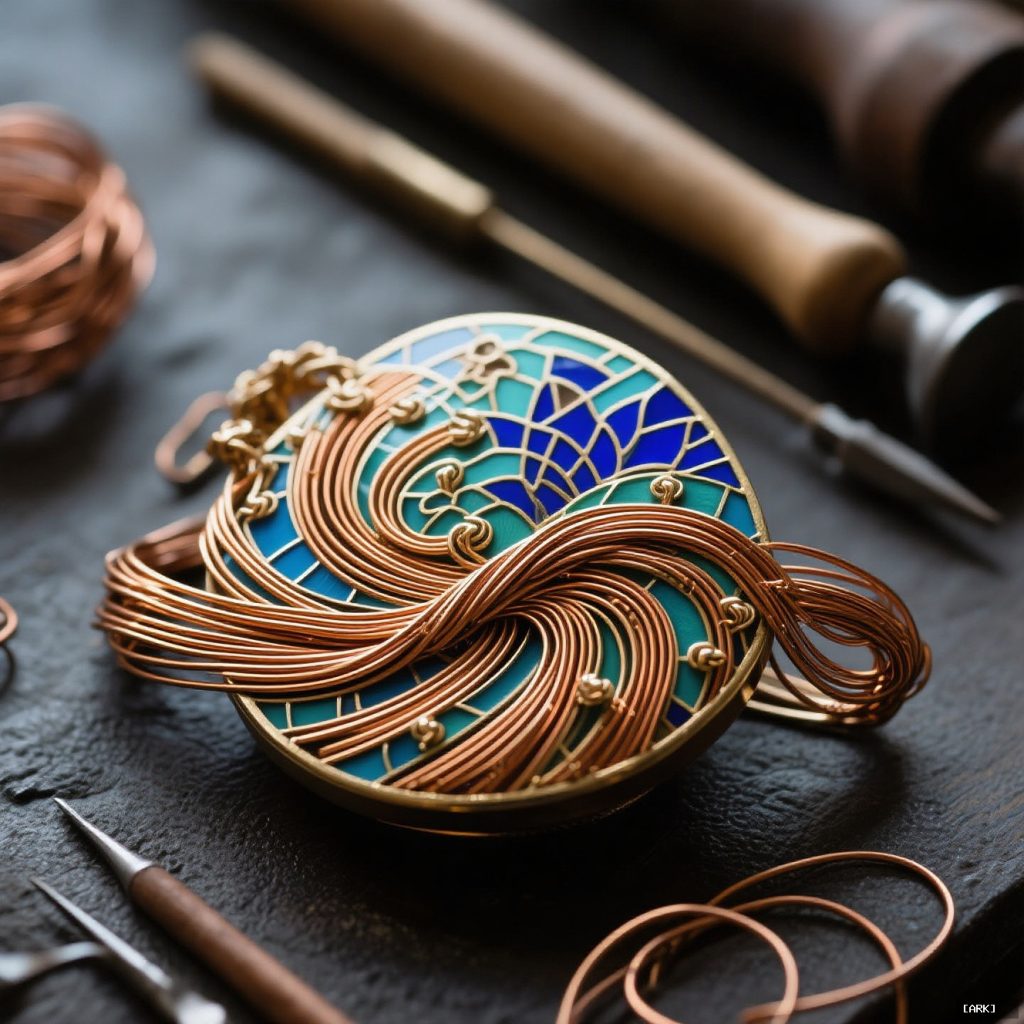
Cloisonné wire inlay techniques are a living craft, shaped as much by the maker’s environment as by ancient tradition. This metal inlay method, where delicate filigree wirework creates cells for enamel, finds a vibrant, modern home far beyond museum walls.
It thrives on local constraints—the specific copper from a neighborhood supplier, the humidity affecting the adhesive, the limited bench space in a downtown apartment. This isn’t a diminished practice; it’s an adapted one. The core principles of enamel partitioning remain, but the execution speaks in the dialect of the city, the suburb, or the small-town studio. The story of contemporary cloisonné is written in the search for materials, the negotiation of space, and the quiet, persistent rhythm of hands at work.
The Urban Rhythm of the Wire
How does a city’s pulse influence such a precise craft? The pace and noise demand adaptation, turning filigree wirework into a meditative counterpoint. Makers often carve out time in short, intense bursts—late nights after the day job, early mornings before the world wakes. The city’s constant hum becomes a backdrop for the silent, precise pressure of setting a wire.
Urban resourcefulness rewires the supply chain. The local hardware store replaces a specialized catalog. Finding the right gauge of brass or copper wire on a dusty spool becomes a small victory. An electronics repair shop offers salvaged materials; a visit to a jeweler in the diamond district yields off-cuts of fine silver. The process becomes a dialogue with the city itself, each material carrying a trace of its origin.
Material Alchemy: Beyond the Precious
The most exciting aspect of local practice is the alchemy of the ordinary. Look beyond the precious metal catalog. Thin copper wire reclaimed from an old motor can be annealed and flattened into a unique, irregular base. The patina from a local riverbed or urban soil, applied in a pre-enamel treatment, can embed a literal piece of place into the work.
This creates a narrative before the first color is added. The metal inlay methods become a form of storytelling. A piece might begin with a sheet of copper from a local sculptor’s scrap pile, shaped and textured to reflect a nearby architectural detail. The wires aren’t just barriers; they are the lines of a map, tracing the maker’s daily routes and observations.
The Beauty of the Honest Imperfection
This local, adaptive practice challenges a collector’s mindset, which often seeks flawless, historical perfection. The living craft of enamel partitioning is inherently imperfect. A true artisan’s hand might leave a slight asymmetry in a wire line—a subtle wave, a gentle thickening. This isn’t a flaw; it’s a fingerprint of the process.
Seasoned collectors increasingly seek these “honest imperfections” as marks of authenticity. They value a slight tool mark over sterile, machine-like precision. That minor irregularity tells them a human hand guided the wire, that the piece is a unique artifact of a specific time and place, not a mass reproduction. The conversation between maker and material is visible, and that visibility is its own kind of beauty.
The Compact Studio: A Forge for Focus
Can you practice this craft in a small apartment? Absolutely. The core of cloisonné wire inlay techniques is, by necessity, compact. A ceramic tile becomes a soldering pan. A modified fume extractor, built from a computer fan and duct tape, vents safely out a window. Every tool must earn its keep, leading to ingenious multi-tasking.
This spatial limitation fosters incredible organization and focus. The local maker space or community art studio, with its shared kiln, becomes an essential hub. It allows the separation of processes: the noisy, fiery steps of firing happen there, while the quiet, detailed work of designing, cutting, and setting wires thrives in the calm of the home studio. This division isn’t a compromise; it creates a natural rhythm to the work.
The Wire as Collaborator, Not Just Cage
A major misconception about enamel partitioning is that it’s purely about creating barriers. In truth, the wire is a collaborative element. It doesn’t just hold the color; it interacts with it. The thickness, height, and even the alloy of the wire influence how light plays across the finished enamel, changing the perceived depth and vibrancy of the color.
In local practice, this means conducting small, vital experiments. You test a batch of enamel sourced from a fellow artist against your specific, locally-found wire. You learn their conversation. Does this turquoise enamel pool darkly against the copper wire, or does it spring to life? Does the fine silver wire act as a bright, reflective frame, or does it recede? The wire inlay techniques become a language of light and chemistry, learned through hands-on trial.
Beginning Your Local Practice: A Foundational Guide
Starting with cloisonné wire inlay techniques in a local context is an exercise in creative sourcing and mindful practice. Here’s a practical pathway.
First, seek your base. Visit a local metal supplier or recycling center for copper sheet. Don’t demand perfection; slight imperfections can add character. For wire, connect with a jeweler, a hardware store specializing in hobbyist supplies, or even an electronics salvage shop. You’re looking for thin, flat wire—sterling silver, fine silver, copper, or brass. The quest is part of the process.
Next, find your fire. Identify a community kiln at a maker space, art college, or pottery studio. Building a relationship here is key. Then, prepare your home base: a dedicated, ventilated, and cleanable surface. A small table by a window, protected by ceramic tiles or a sheet of glass, is perfect.
Begin with simple, graphic designs. Respect the wire’s need for continuous, connected lines. Think of a city skyline, a leaf from a local park, a simplified map of your neighborhood. Let your first pieces be studies in form and technique, embracing the learning curve as part of the craft’s story.
Navigating Common Questions
As you start, questions will arise. Here are answers to a few frequent ones.
What adhesive holds the wires before firing? Traditional gum tragacanth or modern, water-based temporary adhesives are used. They hold the wires firmly in place during the delicate setup and then burn out cleanly in the kiln’s first firing, leaving no residue.
Can you use different wires together? Yes, but with caution. Wires with vastly different thermal expansion rates can cause stress and cracking during firing. If mixing, say, silver and copper, thorough testing in sample tiles is non-negotiable.
How do you avoid enamel bleeding under the wires? Meticulous preparation is everything. The metal base must be perfectly clean and slightly textured (often through pickling or sanding) to help the adhesive grip. Each wire must be pressed down firmly along its entire length. Any microscopic gap is a highway for molten enamel.
Is soldering the wires necessary? Not for true cloisonné. The wires are adhered temporarily, then become permanently embedded and held in place by the enamel itself after multiple firings. This allows for more complex, fluid designs than soldering would permit.
Sources & Further Pathways
- The Corning Museum of Glass: Glass & Enamel Techniques – https://www.cmog.org/article/glass-and-enamel-techniques
- Ganoksin Jewelry Making Articles – Cloisonné – https://www.ganoksin.com/article/category/enameling/cloisonne/
- Enamelist Society: Techniques & Resources – https://www.enamelistsociety.org/techniques
- Victoria and Albert Museum: A History of Enamelling – https://www.vam.ac.uk/articles/a-history-of-enamelling
- For deep dives, seek out books like “The Art of Enameling” by Linda Darty and “Cloisonné Enameling” by Karen L. Cohen.
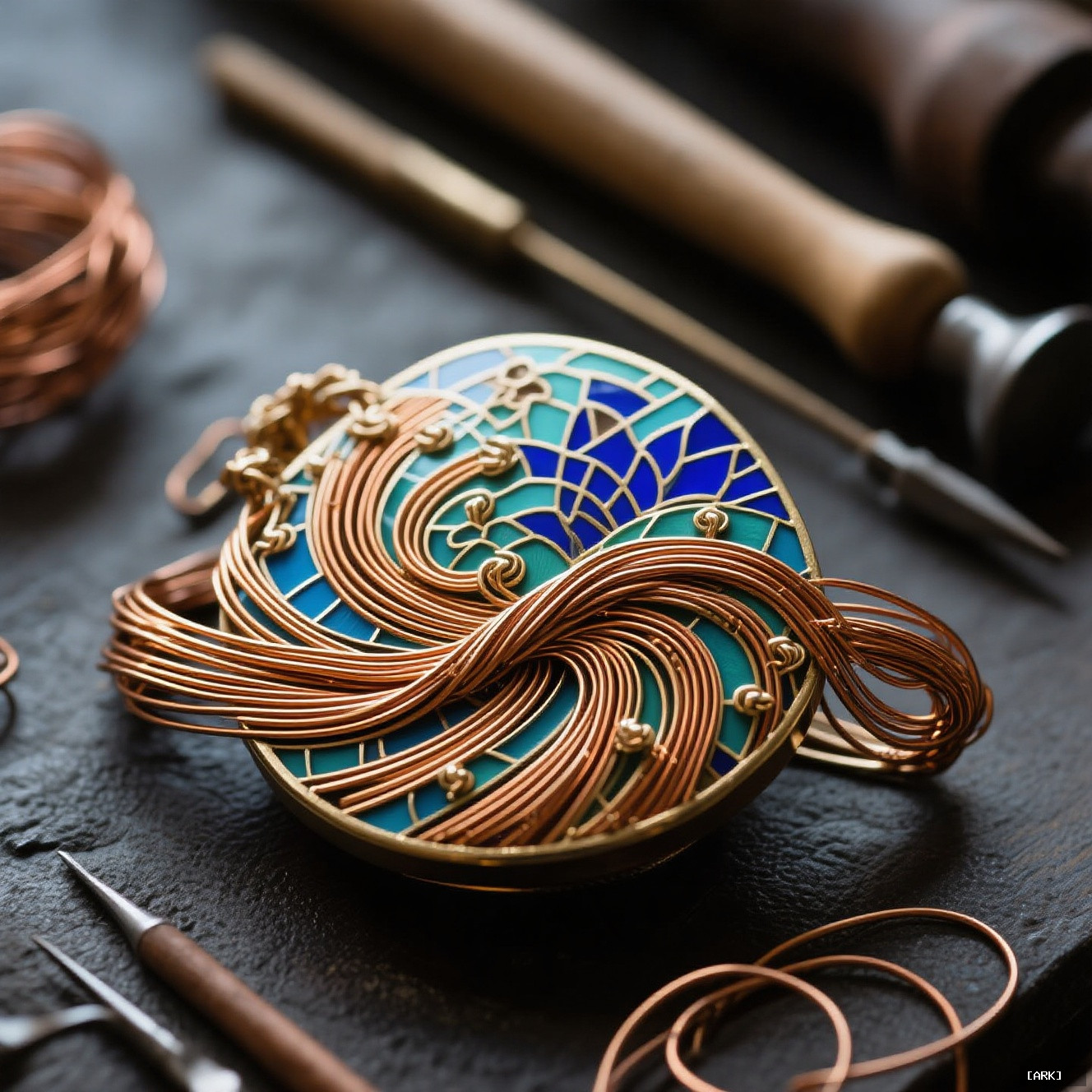
The process with cloisonné wire inlay techniques is endless. It starts with a single line of wire on a piece of local metal, a question of color, and the patient heat of the kiln. Your city, your space, your found materials—they all become co-authors in the work.
About Our Expertise
Our exploration of cloisonnu00e9 wire inlay techniques draws from decades of research into Chinese enamel artistry and hands-on collaboration with master artisans from Beijing and Jingdezhen. We've witnessed how traditional filigree wirework principles adapt to modern contexts while preserving the core craftsmanship that defines this centuries-old art form.
This guide reflects authentic Chinese cultural practices while addressing contemporary challenges. The techniques described here are grounded in both historical methods documented in Chinese imperial workshops and practical adaptations verified through our network of working enamel artists across China, ensuring you receive accurate, trustworthy guidance for your own practice.
✨ You Might Also Enjoy

You may also like
Herbal Bead Bracelet: Ancient Chinese Aromatherapy for Modern Wellness | HandMyth™
Original price was: ¥2,199.00.¥1,352.00Current price is: ¥1,352.00. Add to cartPremium Herbal Beads Bracelet: Traditional Medicine Meets Modern Jewelry | Shop HandMyth
Original price was: ¥874.00.¥608.00Current price is: ¥608.00. Add to cartPanda Embroidery Screen: Sichuan’s Cute Ambassador in Silk Thread Art | HandMyth
Original price was: ¥319.00.¥230.00Current price is: ¥230.00. Add to cartPanda Gift Set: Curated Chinese Treasures for Panda Lovers | HandMyth™ (Free Gift Wrap)
Original price was: ¥136.00.¥118.00Current price is: ¥118.00. Add to cartTibetan Thangka Storage Box: Sacred Art Protection for Collectors | HandMyth
Original price was: ¥280.00.¥219.00Current price is: ¥219.00. Add to cartPure Silk Handbag: Hangzhou’s Legendary Silk Weaving for Modern Elegance | HandMyth™
Original price was: ¥874.00.¥786.00Current price is: ¥786.00. Add to cartHand-Painted Silk Scarf: Wearable Art from China’s Silk Road | HandMyth (Artist Signed)
Original price was: ¥1,017.00.¥935.00Current price is: ¥935.00. Add to cartModern Qipao Dress: Timeless Chinese Elegance for Today’s Woman | HandMyth (Custom Fit)
Original price was: ¥2,459.00.¥2,240.00Current price is: ¥2,240.00. Add to cartEmbroidered Chinese Handbag: Suzhou Silk Embroidery Meets Modern Fashion | HandMyth™
Original price was: ¥680.00.¥646.00Current price is: ¥646.00. Add to cart























