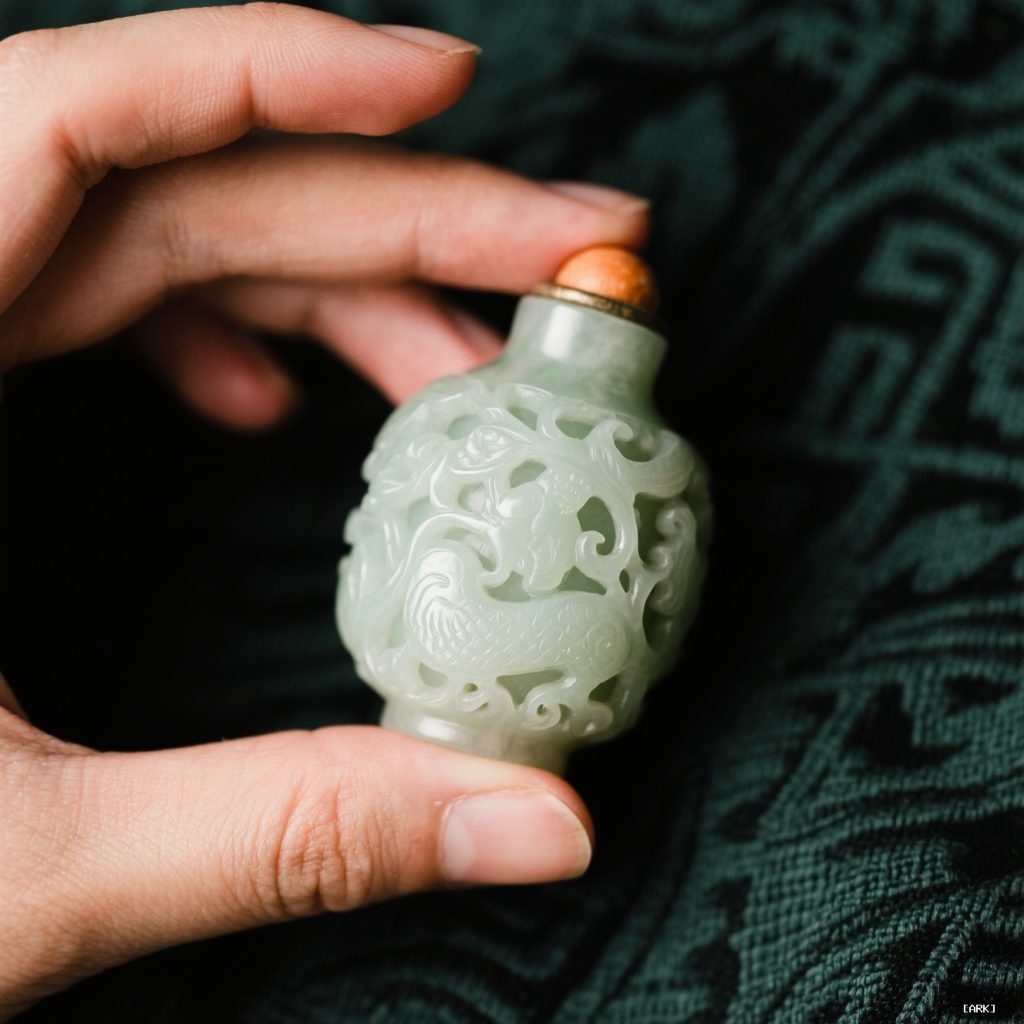
Chinese snuff bottles are miniature masterpieces that demand a specific, intimate kind of looking. This act of focused attention bridges centuries, making these tiny vessels resonate in our world of digital scrolls.
They are not merely containers. They are engineered experiences, compressed into the palm of your hand. The real magic happens when you hold one. You feel its deliberate weight, the cool texture of jade or the smoothness of glass against your skin. You peer into its mouth, discovering a universe within: a painted mountain landscape on the interior wall, a scene carved from the very flaws in a piece of agate. This is art designed for tactile, private contemplation, a portable heirloom meant to be physically engaged.
The Social Ritual of the Snuff Bottle
What was the social significance of the snuff bottle in 17th and 18th century China beyond being a status symbol?
In 17th and 18th century China, the snuff bottle evolved from a utilitarian container for powdered tobacco into a key object in social ritual. While exquisite bottles made of imperial jade or enamel were status symbols for the elite, the form transcended class. A scholar-official might carry a subtly carved bamboo bottle, valuing its artistic expression and personal refinement as much as its function. The bottle became a medium for cultural expression and a personal accessory that facilitated social interaction and demonstrated taste, moving beyond mere clichés of opulence.
In 17th and 18th century China, snuff—powdered tobacco inhaled through the nose—arrived via European traders and became a fashionable stimulant among the elite. The need for airtight containers to keep the powder dry gave rise to the snuff bottle. But the Chinese artistic tradition quickly transformed this utilitarian object into something far more profound.
While the finest examples, crafted from imperial jade, flawless crystal, or exquisite painted enamel, were clear status symbols, the form itself transcended class. A scholar-official might carry a bottle of subtly carved bamboo, valuing its understated virtue. A merchant might own a vibrant glass piece. The shared ritual of offering snuff created a unique social bridge. Presenting your bottle for admiration was an act of diplomacy; the object itself became a conversation starter, a shared point of aesthetic appreciation that could momentarily level social hierarchies.
A World in the Palm of Your Hand: Materials and Techniques
What materials and techniques were used to create the intricate designs on Chinese snuff bottles?
Chinese snuff bottles were crafted from a staggering variety of materials, showcasing immense creativity. Hardstones like jade, agate, quartz, and amber were prized, with masters collaborating with the stone's natural features—such as streaks or inclusions—to form landscapes like mountain paths or misty valleys. Glass was another key material, used for technically dazzling work like overlay glass, which involved casing one color over another. The bottle's final shape and design emerged from a dialogue between the artist's vision and the inherent character of the material.
The staggering variety of materials speaks to the creativity these constraints inspired. Artisans saw potential worlds in all manner of substances.
Hardstone: Jade, agate, quartz, and amber were prized. Masters didn’t just carve these materials; they collaborated with them. A russet streak in the stone becomes a winding mountain path. A clouded inclusion forms the mist in a valley. The bottle’s shape emerged from a dialogue between the artist’s vision and the stone’s inherent character.
Glass: This category includes some of the most technically dazzling work. Overlay glass involved casing one color of glass over another, then carving through the top layer to create a multi-colored design. Inside-painted bottles represent a pinnacle of miniature art. Using specially angled tools, artists painted intricate scenes in reverse on the interior of a glass or crystal bottle, working solely through the tiny neck opening. Each stroke was final; there was no room for error.
Organic Materials: Bamboo, ivory, lacquer, and even fruit pits like peach stones were meticulously carved. A peach stone bottle might feature an entire scene of figures in a pavilion, each detail smaller than a grain of rice, demonstrating that sublime artistry was not dependent on precious stone.
Porcelain and Enamel: Porcelain bottles allowed for brilliant painted decoration. Enamel work, both painted (on copper or glass) and in the intricate cloisonné technique, added vibrant, jewel-like color to the snuff bottle repertoire.
The Bottle as a Three-Dimensional Poem
How does the concept of yi jing connect Chinese snuff bottles to classical poetry?
The connection lies in the shared artistic principle of yi jing (意境), which is the creation of a boundless conceptual world within severe formal constraints. Just as a Tang dynasty poem could evoke a vast landscape in just twenty characters, a snuff bottle carver faced the same challenge within a two-inch circle of material. The depicted scenes, like a lone fisherman or a single blossom, are visual translations of this poetic ideal, making the bottle itself a three-dimensional poem.
The connection between Chinese snuff bottles and classical poetry is deep and fundamental. It goes beyond shared imagery of mountains, rivers, or scholars in retreat. It is about a shared artistic principle: yi jing (意境), the creation of a boundless conceptual “world” within severe formal constraints.
A Tang dynasty poem could evoke a vast, melancholic landscape in just twenty characters. A snuff bottle carver faced the same challenge within a two-inch circle of ivory or agate. The scenes depicted—a lone fisherman on a lake, a single blossom on a gnarled branch—are direct visual translations of poetic motifs. To the educated holder, the bottle wasn’t just a pretty picture. It was a text to be read, alluding to specific poems, philosophical ideals of solitude in nature, or auspicious symbols. The bottle became a three-dimensional poem, where form, material, and decoration were inseparable from the cultural knowledge it invoked.
Why They Captivate Us Today
Why do Chinese snuff bottles captivate us in the modern digital age?
Chinese snuff bottles captivate us today because they prefigure contemporary obsessions with miniaturized, shareable perfection. The intricately painted interior landscapes, viewable only through a tiny aperture, function as an 18th-century equivalent of a meticulously composed, zoomable digital photo. Both demand focused attention on a curated detail. Furthermore, the bottle was a personal treasure shared physically in a moment of connection, paralleling how we share curated glimpses of our lives online, though with a critical difference in the duration and intimacy of the interaction.
In an age of Instagram and infinite scrolling, the snuff bottle feels strangely, compellingly relevant. It prefigures our obsession with miniaturized, shareable perfection. That interior-painted landscape, viewable only through a tiny aperture, is the 18th-century equivalent of a meticulously composed, zoomable digital photo. Both demand you lean in, focus, and appreciate detail on a curated stage.
The bottle was a personal treasure, shared physically with a close companion in a moment of connection, much like we share curated glimpses of our lives online. The critical difference is duration and sensation. The digital image is fleeting, designed for rapid consumption. The snuff bottle asks for slow, tactile study. It has weight, temperature, and texture. It cannot be fully experienced through a screen. This very contrast—its demand for physical, patient engagement—is what makes it so magnetic to those seeking a tangible counterpoint to the digital ephemeral.
Beginning Your Appreciation: A Hands-On Guide
How can a beginner start appreciating Chinese snuff bottles without focusing on clichés?
Beginners should start by directly engaging with the physical objects, setting aside auction prices and historical dates. The best approach is to look at and, when possible, handle the bottles. Visit museum collections, such as those at the Smithsonian's Freer|Sackler or the Victoria and Albert Museum, to observe a variety of materials and techniques up close. Pay attention to how light interacts with different stones and try to discern how the artist worked with the material's natural features, like flaws or color variations. Identifying basic techniques, such as whether a bottle is carved from a single block, is a practical first step.
If you’re new to snuff bottle art, forget auction prices and dynastic dates at first. Start with the physical object. The best way to learn is to look, and whenever possible, to handle.
Visit museum collections, like those at the Smithsonian’s Freer|Sackler or the Victoria and Albert Museum, where you can see a range of materials and techniques up close. Notice how light passes through different stones. Try to spot the artist’s conversation with the material. How did they use a flaw or a color variation? See if you can identify one technique: is it carved from a single block, assembled from overlay glass, or painted from the inside?
When you have the chance to hold a bottle (in a secure setting with a reputable dealer or at a museum handling session), pay attention to how it feels. A well-made bottle has a pleasing, deliberate weight. It sits comfortably in the hand. The rim should be smooth, the carving crisp to the touch. This material-first approach builds a foundation of understanding that is far more valuable than memorizing reign marks.
Evaluating a Snuff Bottle: A Collector’s Eye
- Material & Workmanship: Is the material of high quality? Is the carving precise and detailed, or soft and worn? For inside-painted bottles, is the scene composed skillfully, with fine brushwork?
- Condition: Examine the bottle carefully in good light. Look for hairline cracks, chips, or repairs, especially on the delicate rim and inside the neck. Check if the original spoon (usually made of ivory or jade) is present.
- Artistic Merit: This is paramount. Does the design use the material’s natural features in a clever, inventive way? Does the overall composition feel balanced and intentional? Does it have aesthetic impact?
- Provenance: A documented history of ownership or exhibition in a reputable catalog adds context and can authenticate a piece, but it should not outweigh the object’s inherent artistry.
- The “Feel”: Never underestimate this. A great bottle feels right. It has a presence in the hand that is the culmination of its material, balance, and finish.
Navigating Common Questions
- Are all old snuff bottles valuable? No. Age alone is not a guarantee. Many 19th and 20th century bottles exhibit extraordinary artistry and are highly collectible. Value is driven by craftsmanship, material, condition, and rarity.
- What’s a classic beginner mistake? Chasing a reign mark or a specific dynasty at the expense of artistic quality. Fakes and later bottles often bear spurious marks. It’s safer to fall in love with the object’s beauty first.
- Can you use them for snuff? Technically, yes, but it is strongly discouraged for antique bottles. Modern snuff can damage delicate interior paintings or leave residue. These are now objects of art and history to be preserved.
- How is inside-painting even possible? It is a feat of extreme skill. Artists use tiny, L-shaped brushes or tools, inserting them through the bottle’s neck to paint in reverse on the interior wall. They work layer by layer, from foreground details to the background, seeing their composition develop through the glass.
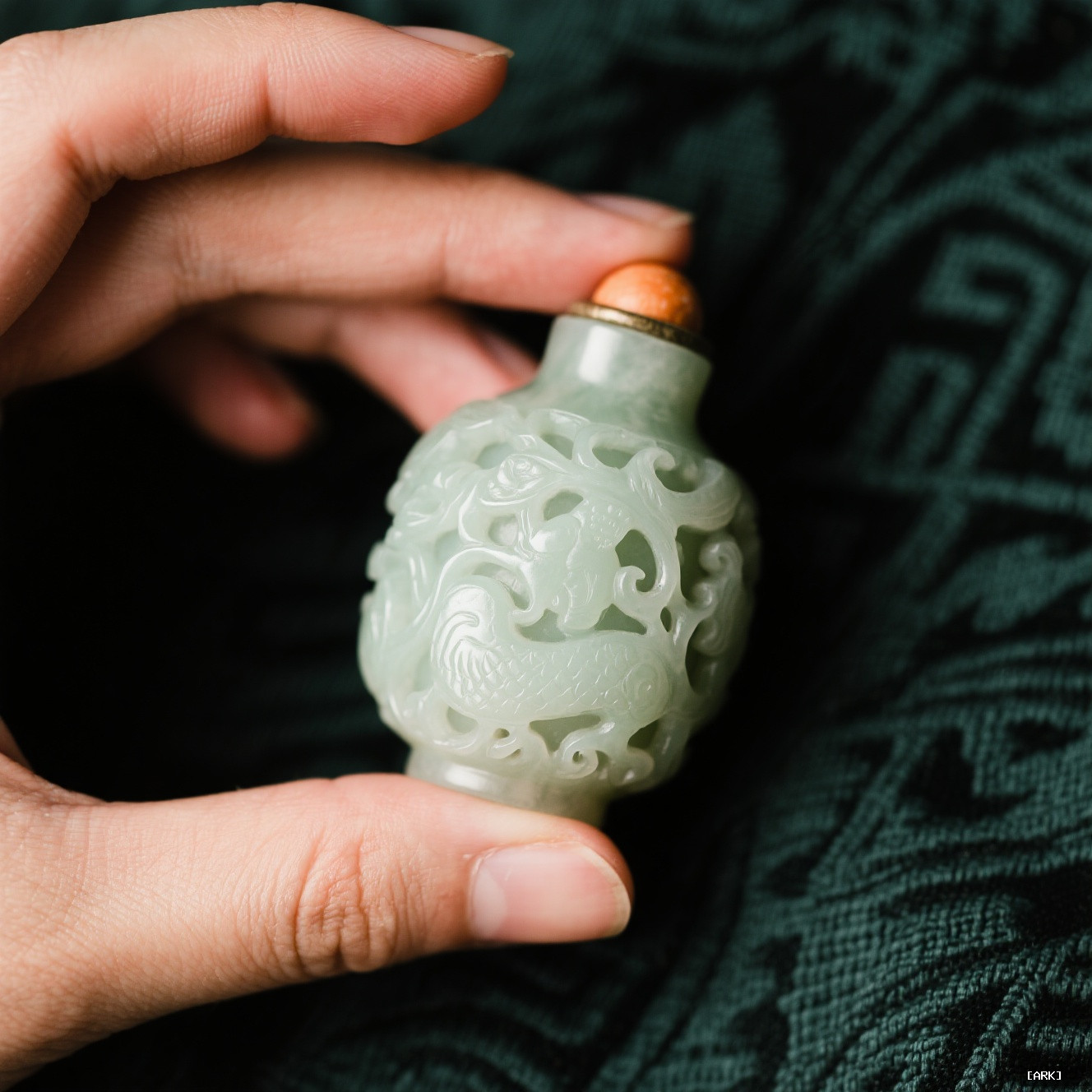
Chinese snuff bottle art is proof of the human impulse to create wonder within limits. In their constrained space, they hold vast landscapes, poetic allusions, and centuries of technical innovation. They remind us that true connection often requires us to slow down, to hold something precious in our hands, and to look closely—not just with our eyes, but with our full attention.
Sources & Further Reading
- The International Chinese Snuff Bottle Society: https://www.snuffbottle.org
- Victoria and Albert Museum, Snuff Bottles Collection: https://www.vam.ac.uk/articles/snuff-bottles
- Smithsonian Freer Gallery of Art: https://www.freersackler.si.edu/collections/chinese-snuff-bottles/
- Christie’s Collecting Guide: https://www.christies.com/features/Chinese-snuff-bottles-collecting-guide-10140-1.aspx
- The Metropolitan Museum of Art Heilbrunn Timeline: https://www.metmuseum.org/toah/hd/snuf/hd_snuf.htm
About Our Expertise
Our analysis draws on decades of expertise in Chinese traditional arts, with insights from museum collections like the Smithsonian's Freer|Sackler and authoritative sources such as the International Chinese Snuff Bottle Society. We provide authentic cultural context, such as the concept of yi jing linking these bottles to classical poetry, ensuring readers gain a trustworthy understanding beyond surface-level clichu00e9s.
This guide is crafted by specialists who have hands-on experience with materials like jade and overlay glass, offering practical advice for beginners on evaluating craftsmanship and artistic merit. We prioritize accuracy and depth, referencing reputable institutions to build trust and help you appreciate these miniature masterpieces as genuine artifacts of Chinese heritage.
✨ You Might Also Enjoy
You may also like
Herbal Bead Bracelet: Ancient Chinese Aromatherapy for Modern Wellness | HandMyth™
Original price was: ¥2,199.00.¥1,352.00Current price is: ¥1,352.00. Add to cartPremium Herbal Beads Bracelet: Traditional Medicine Meets Modern Jewelry | Shop HandMyth
Original price was: ¥874.00.¥608.00Current price is: ¥608.00. Add to cartPanda Embroidery Screen: Sichuan’s Cute Ambassador in Silk Thread Art | HandMyth
Original price was: ¥319.00.¥230.00Current price is: ¥230.00. Add to cartPanda Gift Set: Curated Chinese Treasures for Panda Lovers | HandMyth™ (Free Gift Wrap)
Original price was: ¥136.00.¥118.00Current price is: ¥118.00. Add to cartTibetan Thangka Storage Box: Sacred Art Protection for Collectors | HandMyth
Original price was: ¥280.00.¥219.00Current price is: ¥219.00. Add to cartPure Silk Handbag: Hangzhou’s Legendary Silk Weaving for Modern Elegance | HandMyth™
Original price was: ¥874.00.¥786.00Current price is: ¥786.00. Add to cartHand-Painted Silk Scarf: Wearable Art from China’s Silk Road | HandMyth (Artist Signed)
Original price was: ¥1,017.00.¥935.00Current price is: ¥935.00. Add to cartModern Qipao Dress: Timeless Chinese Elegance for Today’s Woman | HandMyth (Custom Fit)
Original price was: ¥2,459.00.¥2,240.00Current price is: ¥2,240.00. Add to cartEmbroidered Chinese Handbag: Suzhou Silk Embroidery Meets Modern Fashion | HandMyth™
Original price was: ¥680.00.¥646.00Current price is: ¥646.00. Add to cart