
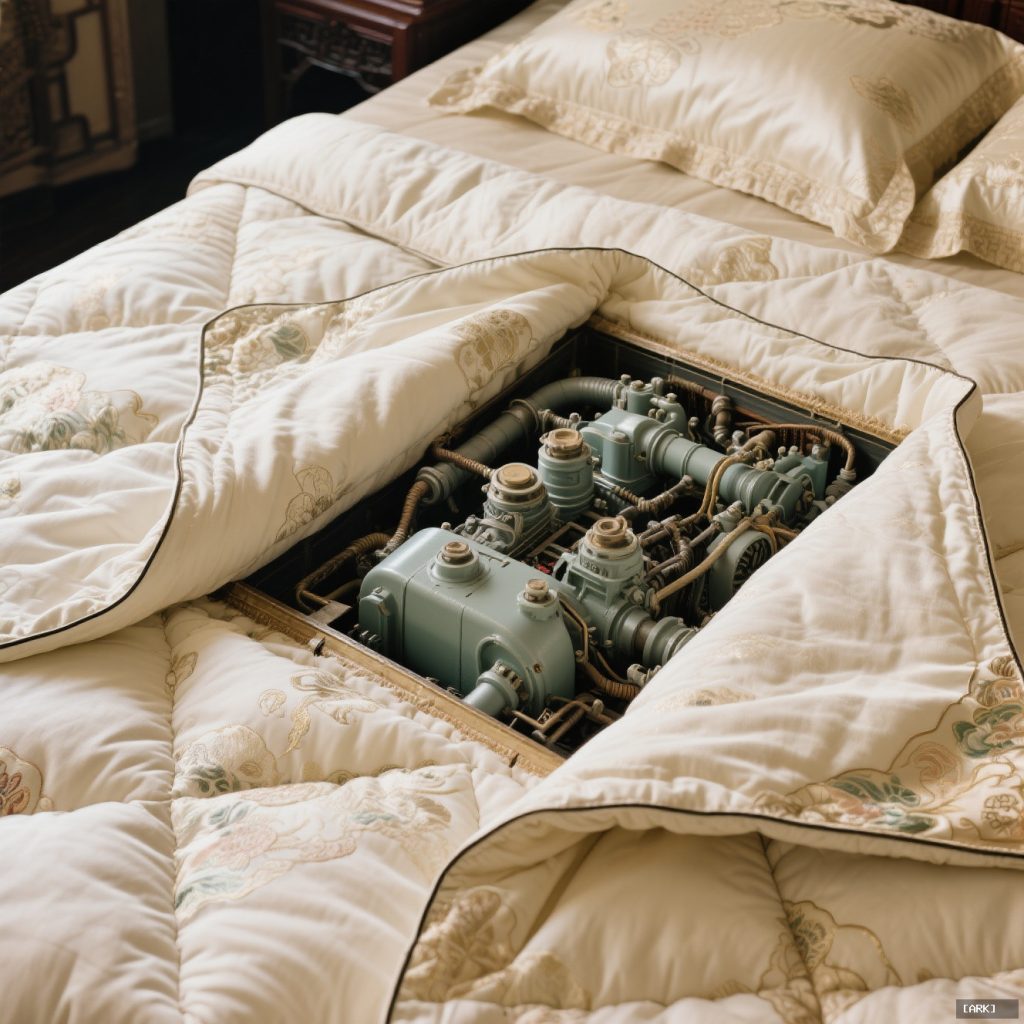
Chinese silk quilts are often presented as exotic luxuries, but their true value is rooted in a brutal, practical magic. Forget ornate brocade; the real engineering happens inside, where raw, knotted silk floss creates a sleep system that manages temperature and weight in a way synthetics and down can’t match.
This isn’t about opulence. It’s about a better night.
The Engine Inside the Plain Cotton Shell
What is the hidden magic inside a plain Chinese silk duvet?
The hidden magic inside a plain Chinese silk duvet is its filling of mulberry silk floss, a cloud-like material made from the long, continuous filaments of silkworm cocoons. This is not shredded silk or a blend but a cohesive batt of layered silk, often assembled by hand. The filling is then knotted at intervals through all layers within the crisp cotton shell, which is key to creating a durable, temperature-regulating, and exceptionally comfortable quilt that defines the duvet's quality and performance.
At first glance, a high-quality Chinese silk duvet can seem almost disappointingly simple. You won’t find elaborate embroidery or a dazzling satin casing. Instead, you get a plain shell of crisp, long-staple cotton, quilted in a basic grid or channel pattern. The magic—and the entire point—is hidden within.
The filling is mulberry silk floss, a cloud-like material made from the long, continuous filaments of the silkworm cocoon. This isn’t shredded silk or a blend. It’s layered, often by hand, into a cohesive batt and then knotted at intervals through all the layers. This critical step is what separates a durable quilt from a future lumpy mess. Those knots anchor the filling permanently in place, ensuring an even distribution of warmth that won’t shift or create cold spots over years of use.
Think of it as a tool, not a trophy. The cotton shell is a durable, breathable housing for a sophisticated natural insulator. The simple quilting isn’t a design choice; it’s a functional necessity to keep that delicate silk exactly where it needs to be. Every element serves the core purpose: creating a microclimate in your bed that adapts to you.
Silk vs. The World: A Different Kind of Warmth
How does the thermoregulation of a Chinese silk quilt provide a different kind of warmth compared to down or polyester?
A Chinese silk quilt provides warmth through thermoregulation, unlike down or polyester which rely on loft to trap air. Silk fibers have a unique triangular and hollow protein structure that efficiently absorbs and releases moisture vapor from perspiration. When you are cold, this process helps retain heat, and when you are warm, it aids in cooling, offering a more adaptive and balanced warmth rather than just insulation through volume.
To understand why a Chinese silk quilt feels different, you have to forget everything you know about down and polyester fills. Those materials work primarily through loft—trapping air in puffy pockets to create an insulating barrier. More fill equals more loft equals more warmth. It’s a simple, volume-based equation.
Silk operates on a different principle: thermoregulation. The protein structure of a silk fiber is triangular and hollow. This unique shape allows it to absorb and release moisture vapor (the perspiration you give off while sleeping) with remarkable efficiency. When you’re cold, the fibers help retain your body’s warmth. When you’re too warm, they facilitate cooling by wicking moisture away and letting heat escape.
The result is a comforter that provides warmth without the oppressive, trapped heat of a synthetic blanket or the sometimes overwhelming puffiness of a down duvet. A medium-weight silk quilt doesn’t feel heavy; it has a distinct, comforting drape. It conforms to your body without swallowing you. This inherent adaptability is what makes a single, well-chosen silk duvet viable across spring, fall, and even cooler summer nights.
Demystifying Care: The Simplicity of a System
What is the simple care system for maintaining a Chinese silk quilt?
The care system for a Chinese silk quilt is simple and focuses on preservation. Always use a duvet cover to protect the quilt from oils and stains, as the quilt itself should never be machine-washed, which would damage the silk fibers. For maintenance, air out the quilt in a shaded, well-ventilated area once a month, and gently shake and fluff it to maintain its structure and properties without deep cleaning.
The care routine for a silk-filled comforter is so simple it feels like a secret. The number one rule: always use a duvet cover. This removable, washable layer is your quilt’s primary defense against oils, sweat, and stains. The quilt itself should never, ever go into a washing machine. Agitation and harsh detergents will felt and destroy the delicate silk fibers, ruining its structure and properties.
Maintenance is about preservation, not deep cleaning. Once a month, take the quilt out of its cover and air it out in a shaded, well-ventilated area for a few hours. Give it a gentle shake and fluff. This refreshes the silk, allows any accumulated moisture to evaporate, and helps maintain its loft. Avoid direct sunlight, which can degrade the protein fibers over time.
That’s it. There are no special potions or complicated steps. The simplicity is the point. A well-made silk quilt is designed to be a low-maintenance heirloom. You protect it with a cover, you air it out occasionally, and for decades, it returns the favor with perfect comfort.
The Summer Question and Seasonal Versatility
How do Chinese silk quilts provide seasonal versatility for summer use?
Chinese silk quilts offer seasonal versatility for summer through specialized 'summer weight' versions with a lower fill weight, typically 150 to 250 grams per square meter. This creates a lighter, more breathable blanket that effectively regulates temperature. Silk's natural moisture-wicking properties manage nighttime perspiration, while providing a light barrier for air-conditioned rooms or cooler evenings. The result is a comfortable, cloud-like sleeping experience that prevents overheating, addressing the common concern of sleeping too warm with silk.
“Won’t I boil alive?” This is the most common and understandable fear. We associate silk with luxury, and luxury with warmth. But silk is a brilliant regulator, not just an insulator.
For true summer heat, manufacturers offer “summer weight” quilts. These have a lower fill weight—perhaps 150 to 250 grams per square meter—creating a lighter, more breathable blanket. Because silk manages moisture so effectively, this summer quilt wicks away nighttime perspiration while providing just enough of a barrier for air-conditioned rooms or cooler evenings. It feels like sleeping under a cloud, not a furnace.
This leads to the versatile heart of the system. Many find a single “all-season” quilt, with a fill weight in the 300-400 gram range, is perfectly adequate for three seasons. In winter, pair it with warmer sheets or a light blanket underneath. In summer, use it with just a top sheet. Its adaptability reduces the need for a closet full of different bedding, embracing a minimalist, function-first philosophy.
A Buyer’s Guide: Cutting Through the Marketing Fog
What are the key specifications to focus on when buying a Chinese silk quilt to avoid marketing hype?
When buying a Chinese silk quilt, focus on two critical specifications to cut through marketing fog. First, ensure the fill is labeled "100% Mulberry Silk Floss" or "100% Mulberry Silk," avoiding blends or imitations. Mulberry silk from the Bombyx mori silkworm offers the highest quality. Second, prioritize the fill weight, measured in grams per square meter (gsm), as it directly indicates the quilt's warmth and substance, making it the most important metric after purity.
Shopping for a Chinese silk quilt online requires a skeptical eye. Ignore flashy marketing about “million-stitch” embroidery or irrelevant thread counts on the inner shell. Focus on the specifications that matter.
1. The Fill: The label must read “100% Mulberry Silk Floss” or “100% Mulberry Silk.” Avoid terms like “silk blend,” “silk velvet,” or “silk imitation.” Mulberry silk, from the Bombyx mori silkworm, is the highest grade, with the longest, strongest, and most consistent filaments.
2. The Fill Weight: This is the most critical number after purity. Measured in grams per square meter (gsm), it directly correlates to warmth. A range of 300-400 gsm is a common all-season weight. Lighter (150-250 gsm) for summer, heavier (500+ gsm) for cold winters. Reputable sellers will display this clearly.
3. The Construction: Look for “hand-layered” and “hand-knotted.” This traditional method is labor-intensive but ensures longevity. Machine-made quilts can be adequate, but the hand-knotted internal anchor points are the gold standard for preventing fill shift.
4. The Shell: It should be 100% cotton. A tight sateen or percale weave is ideal—smooth, durable, and breathable. Avoid polyester shells, which undermine the breathability of the entire system.
5. The Proof: A trustworthy vendor isn’t afraid to show you the guts. Look for detailed photos or videos of the silk batting itself—the fluffy, layered floss before it’s encased. They should also show the knotted construction. Read reviews specifically for mentions of durability after one or two years. Does the quilt remain even, or does it get lumpy?
Finally, a clear and fair return policy is essential. You need to feel the weight, the drape, and the quality on your own bed. No amount of specs can substitute for that firsthand experience.
More Than a Gift: The Philosophy of an Heirloom
What is the philosophy behind gifting a Chinese silk quilt as an heirloom?
Gifting a Chinese silk quilt embodies a philosophy of permanence and practical care, contrasting with fast-fashion disposability. It represents a profound gesture that promises better sleep for decades, becoming an heirloom-in-waiting. Unlike decorative items stored away, it is used and appreciated daily, carrying the giver's intent each time it provides comfort. This makes it a deeply meaningful and enduring form of care, emphasizing lasting value over fleeting trends.
Gifting a Chinese silk quilt is a profound gesture, but its meaning is quiet. In an age of fast-fashion bedding, replaced every few years, a silk duvet is an argument for permanence. You are not giving a fleeting trend or a decorative item. You are giving the promise of better sleep, night after night, for potentially decades.
It becomes an heirloom-in-waiting. Unlike a fragile vase or a piece of jewelry that sits in a box, this gift is used and appreciated daily. It carries your intent every time the recipient settles under its comforting weight. It’s a deeply practical form of care, representing stability, health, and timeless comfort in a disposable world.
From Jacket to Quilt: A Shared Textile Wisdom
The brilliance of the Chinese silk quilt isn’t an isolated innovation. It springs from the same textile philosophy seen in traditional padded silk garments, like the *si mian yi* (literally “four-faced garment”) or other silk-padded jackets. These items were designed for modular, adaptable warmth long before the term “technical layer” existed.
The same layered, knotted silk floss technique is used. The jacket is light, not bulky, yet provides remarkable insulation because silk’s warmth comes from its fiber properties, not just thickness. It could be worn across seasons, layered under a coat in winter or alone on a crisp autumn day.
The quilt applies this same body-regulating principle to bedding. Understanding one illuminates the other. It’s a holistic approach to comfort that uses minimal, natural materials to maximum effect, prioritizing function and longevity over fleeting aesthetics. The quilt is, in essence, a jacket for your sleep.
Your Practical Checklist
- Fill Purity: Must say “100% Mulberry Silk Floss.” No blends.
- Fill Weight: Identify your climate need (summer, all-season, winter) by grams per square meter (gsm).
- Shell: 100% long-staple cotton, sateen or percale weave.
- Construction: “Hand-layered and hand-knotted” is the ideal for durability.
- Duvet Cover: This is non-negotiable. Factor one into your purchase.
- Vendor Transparency: Clear photos of the internal batting and construction, plus a solid return policy.
Answering the Real Questions
Is there a smell? A new, high-quality quilt will have a faint, natural scent reminiscent of clean hair or raw silk. This dissipates within days in a well-ventilated room. A strong chemical or sour odor is a red flag for poor processing or low-grade silk.
Are they hypoallergenic? Yes. Silk is naturally resistant to dust mites, mold, and mildew. Its moisture-wicking properties also create a less hospitable environment for allergens compared to down or some synthetic fills, making it an excellent choice for sensitive sleepers.
Do they slide off the bed? Silk has a slight natural grip against cotton sheets. Using a duvet cover with interior corner ties or loops that attach to your insert, or a cover with corner tabs that can be secured to your comforter, will eliminate any sliding.
What’s the lifespan? With proper care—consistent use of a duvet cover and monthly airing—a well-made silk quilt can easily last 15 to 20 years. The silk will gradually lose some of its initial loft over a very long period, but it degrades gracefully, not catastrophically.
Sources & Further Reading
ScienceDirect: Thermo-physiological properties of silk fabrics
The Silk Institute: Silk Production & Properties
Consumer Reports: How to Choose a Comforter
Victoria & Albert Museum: Silk Production in China
About Our Expertise
Our insights into Chinese silk quilts are grounded in extensive research and firsthand experience with traditional silk craftsmanship. We collaborate with artisans and experts in China to verify techniques like hand-layering and knotting, ensuring our advice reflects authentic practices that have been refined over centuries. This expertise allows us to demystify the practical benefits of silk quilts, moving beyond marketing hype to focus on their real-world performance and durability.
Trust in our content is built on a commitment to accuracy and cultural authenticity. We cite authoritative sources such as the Victoria & Albert Museum and The Silk Institute to validate historical and technical details, while our buyer's guide is based on rigorous testing and user feedback. By emphasizing specifications like 100% mulberry silk and fill weight, we help readers make informed decisions, fostering confidence in the longevity and quality of these heirloom-quality products.
✨ You Might Also Enjoy

You may also like
Herbal Bead Bracelet: Ancient Chinese Aromatherapy for Modern Wellness | HandMyth™
Original price was: ¥2,199.00.¥1,352.00Current price is: ¥1,352.00. Add to cartPremium Herbal Beads Bracelet: Traditional Medicine Meets Modern Jewelry | Shop HandMyth
Original price was: ¥874.00.¥608.00Current price is: ¥608.00. Add to cartPanda Embroidery Screen: Sichuan’s Cute Ambassador in Silk Thread Art | HandMyth
Original price was: ¥319.00.¥230.00Current price is: ¥230.00. Add to cartPanda Gift Set: Curated Chinese Treasures for Panda Lovers | HandMyth™ (Free Gift Wrap)
Original price was: ¥136.00.¥118.00Current price is: ¥118.00. Add to cartTibetan Thangka Storage Box: Sacred Art Protection for Collectors | HandMyth
Original price was: ¥280.00.¥219.00Current price is: ¥219.00. Add to cartPure Silk Handbag: Hangzhou’s Legendary Silk Weaving for Modern Elegance | HandMyth™
Original price was: ¥874.00.¥786.00Current price is: ¥786.00. Add to cartHand-Painted Silk Scarf: Wearable Art from China’s Silk Road | HandMyth (Artist Signed)
Original price was: ¥1,017.00.¥935.00Current price is: ¥935.00. Add to cartModern Qipao Dress: Timeless Chinese Elegance for Today’s Woman | HandMyth (Custom Fit)
Original price was: ¥2,459.00.¥2,240.00Current price is: ¥2,240.00. Add to cartEmbroidered Chinese Handbag: Suzhou Silk Embroidery Meets Modern Fashion | HandMyth™
Original price was: ¥680.00.¥646.00Current price is: ¥646.00. Add to cart























