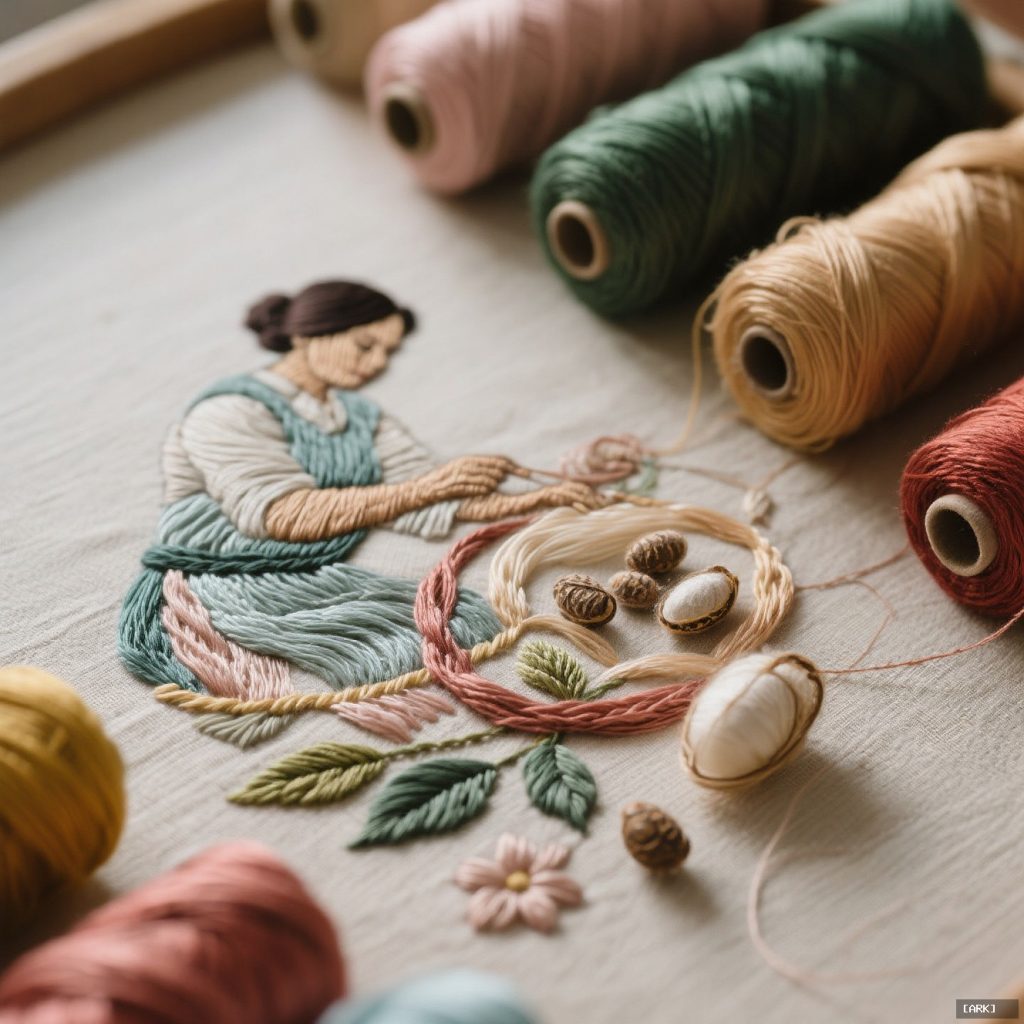
Embroidery silk threads carry a reputation wrapped in myth, but their true nature is bound by the stubborn physics of a protein filament. Forget princesses and secret gardens for a moment. The real story is about worm biology, tensile strength, and a luminous beauty that has captivated artisans for millennia.
That captivating sheen and strength start with a creature we rarely see: the silkworm. To understand the thread in your hand, you have to start with the spinner.
The Spinner: From Cocoon to Thread
Most commercial embroidery silk comes from the Bombyx mori, a moth domesticated over 5,000 years ago. This worm’s entire existence is a prelude to thread-making. It eats only mulberry leaves, spinning a continuous filament up to a kilometer long to form its cocoon. This filament, called a bave, is actually two strands of fibroin protein glued together by a gum called sericin. The uniformity of its diet and life results in a famously uniform, brilliantly white, and incredibly fine filament.
But Bombyx mori doesn’t hold a monopoly. ‘Wild’ silks, like Tussah or Dupioni, come from different species of silkworms—often Antheraea moths—that feast on oak and juniper leaves. Their filaments are thicker, coarser, and naturally tan or gold in color. The cocoons are often harvested after the moth has emerged, breaking the filament into shorter staples. This gives wild silk a characteristic slubby texture and a more matte, rustic appearance. The worm species, its diet, and its life cycle dictate the fundamental character of your thread before it’s ever reeled, twisted, or dyed.
Strength, Sheen, and the Steel Myth
You’ve likely heard the claim: silk is stronger than steel. It’s a dramatic, persistent exaggeration. While a single strand of raw silk filament has impressive tensile strength for its minuscule diameter, comparing it to a steel wire of the same size is a misleading party trick. Steel is orders of magnitude stronger in any practical sense.
The real, non-mythical advantage of silk floss is its sublime combination of properties. It offers moderate strength paired with immense flexibility and a glorious, light-catching sheen. It can withstand the repeated pull and twist of a needle through fabric without snapping, but its true power lies in its drape and luminosity. That famous shine isn’t a surface coating; it’s a structural trait. The triangular, prism-like structure of the silk fiber refracts light, giving it a depth and glow that synthetic threads strive to imitate. Its strength is in its beauty and resilience, not in mythical, metal-beating brawn.
The Art of the Twist: Thread Construction
Not all embroidery silk threads are created equal, and a major reason is twist. The way filaments are spun and plied radically changes how the thread behaves in your needle.
A tightly twisted thread, like cordonet or twist silk, is springy and firm. It resists fraying, creates crisp, raised lines, and is ideal for outline stitches like stem stitch or intricate blackwork. Its structure holds a sharp edge.
Conversely, a loosely twisted or flat silk floss has a languid, lustrous drape. It’s designed to lie smooth and flat on the fabric, providing perfect, seamless coverage for satin stitch or long-and-short stitch. It catches light across a broad plane, not a narrow cord.
Some threads are “strandable,” meaning you can separate the plies to vary weight. Others are “non-strandable,” acting as a single, cohesive unit. The myth is that silk is just silk. The reality is that its construction—from the reeled filament to the final ply—is a quiet masterclass in textile engineering, each type a specialized tool for a different effect.
A History in Color: The Dyer’s Art
There’s a profound, non-obvious connection between silk threads and the history of painting. It lives in the dye pot. For centuries before synthetic aniline dyes burst onto the scene in the 1850s, silk was colored with the very same mineral and organic pigments used by Renaissance painters: ochres for yellow and red, indigo for blue, madder root for red, cochineal insects for crimson.
The process was alchemical. Silk, a protein fiber, doesn’t readily accept most natural dyes. It requires a mordant—a metallic salt like alum, tin, or iron—to create a chemical bond between dye and fiber. This process of scouring, mordanting, and dyeing is nearly identical to preparing a canvas ground for tempera painting. The dyer’s workshop and the painter’s studio were branches of the same applied chemistry. When you work with hand-dyed silk threads today, you’re handling a lineage of applied pigment science. The color isn’t just on the fiber; it’s bonded into it, which contributes to its remarkable longevity.
Why Does the Silk Often Outlast the Fabric?
Visit a museum textile collection, and you’ll see a haunting phenomenon: vibrant, intact silk embroidery on a ground fabric that has shattered, decayed, or faded to fragments. The thread becomes the artifact’s skeleton, holding the ghost of the design together.
This isn’t magic; it’s molecular. Silk is a protein polymer with a dense, crystalline structure and a high degree of orientation. Plant-based fibers like linen and cotton are cellulose. These two materials degrade in fundamentally different ways. Cellulose is more susceptible to acid hydrolysis and oxidative damage from light. Silk, while vulnerable to prolonged sunlight and certain pests, is remarkably stable in dark, cool, dry conditions. Its dense structure simply weathers time differently. When protected, its life cycle can outpace the very cloth it decorates.
The Sustainability Question
Is embroidery silk yarn a sustainable choice? The answer is complex and depends on where you look in its lifecycle.
As a natural, biodegradable protein fiber, silk has a clear end-of-life advantage over petroleum-based polyester. It will decompose. The thornier questions reside at the beginning: traditional sericulture. Mulberry cultivation can be land and water-intensive. The standard process for reeling the longest, finest filament requires the Bombyx mori pupa to be killed inside its cocoon, usually with steam or boiling water.
This has led to alternatives like ‘peace silk’ or Ahimsa silk, where the moth is allowed to emerge naturally. This humane choice, however, breaks the continuous filament, resulting in shorter fibers that are spun like wool, often yielding a yarn with more texture and less sheen. Other considerations include the environmental impact of dyeing and the carbon footprint of global shipping.
For the conscientious stitcher, the most direct sustainable practice is mindful consumption: buying high-quality threads, using every precious meter, and creating work meant to last. Supporting smaller suppliers who are transparent about their sourcing and dye processes is another step. The sustainability of silk isn’t a simple yes or no; it’s a spectrum of choices from worm to workshop.
A Practical Guide to Choosing and Using Silk Threads
Stepping away from theory, let’s talk practice. How do you choose the right embroidery silk threads for your project?
First, know your types. Are you looking for a springy twist for fine lines, a flat floss for filling, or a textured wild silk for a rustic effect? Your stitch style should guide this choice.
Second, examine the thread in natural light</strong. Store LED lighting can flatten or distort its true color and sheen. Feel the twist. Does it feel supple or stiff? Unravel a short length. Does it separate easily (strandable) or hold tightly together?
Third, consider the project’s purpose. Is this an heirloom piece you hope will last a century, or a casual decorative item? For heirlooms, invest in the highest quality, colorfast threads you can find. For a coaster or a seasonal ornament, you might experiment with more affordable or blended options.
When you work with silk, remember it’s a living fiber. It can absorb moisture from your hands, sometimes feeling ‘sticky.’ Working with shorter lengths can help. It’s also fine to mix silk with cotton or linen threads in a piece, but always test first for shrinkage and tension differences during a wash.
Storage is simple but crucial: keep unused skeins away from direct sunlight, in a cool, dry place. Wrapping them in acid-free paper helps prevent yellowing over the decades.
The Silent Language of Thread
Embroidery silk threads are more than a material. They are a medium with a memory. They carry the history of the worm, the dyer’s craft, and the engineer’s twist. They speak a silent language of light, texture, and durability. Their value isn’t in mythical comparisons to steel, but in their very real, unparalleled ability to hold color, catch light, and trace a line of beauty that can, with care, outlast us all.
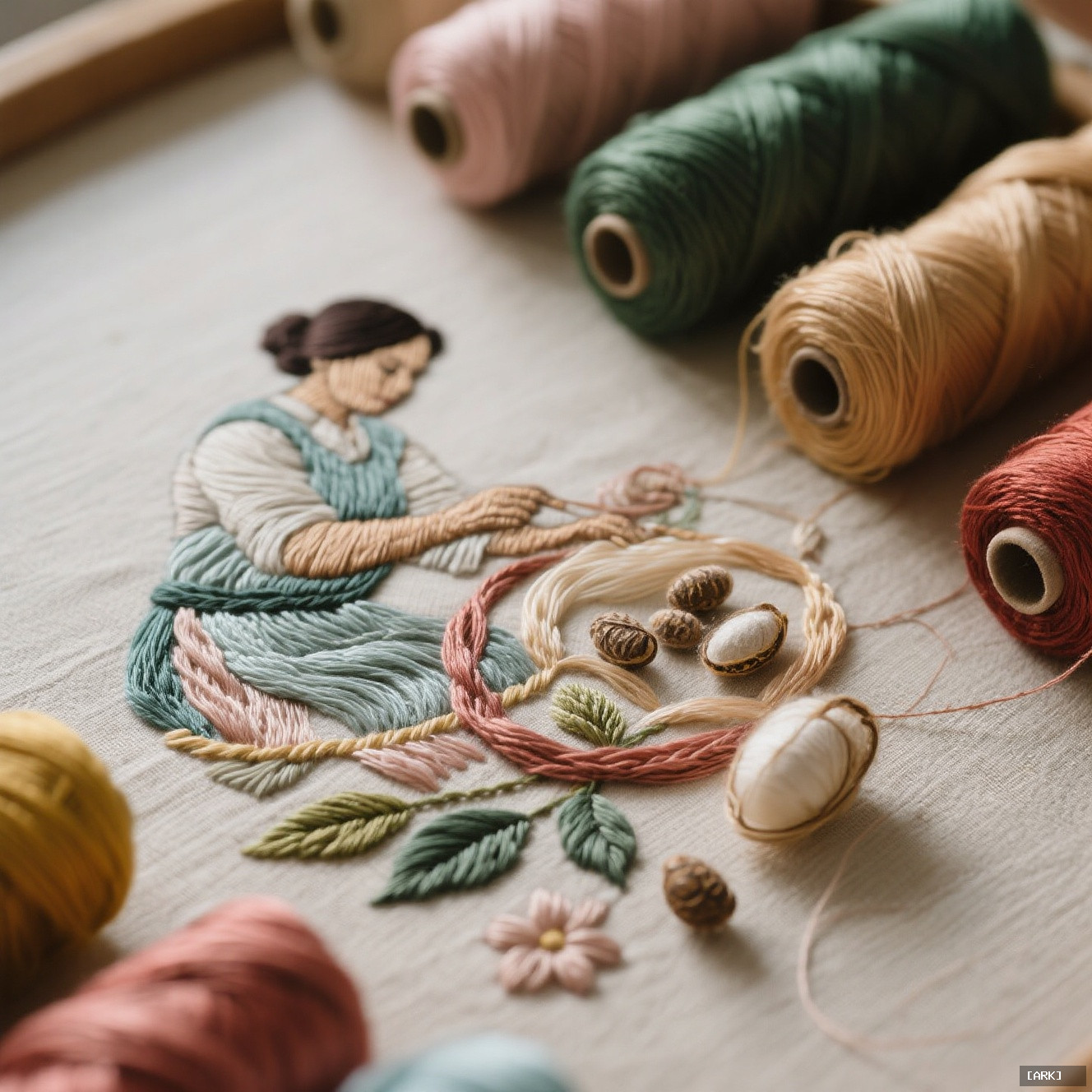
The next time you thread a needle with silk, you’re not just starting a stitch. You’re connecting to a chain of making that spans continents and centuries. You’re handling the remarkable, non-magical, and utterly fascinating product of biology, chemistry, and human ingenuity.
Sources & Further Reading
✨ You Might Also Enjoy

You may also like
Herbal Bead Bracelet: Ancient Chinese Aromatherapy for Modern Wellness | HandMyth™
Original price was: ¥2,199.00.¥1,352.00Current price is: ¥1,352.00. Add to cartPremium Herbal Beads Bracelet: Traditional Medicine Meets Modern Jewelry | Shop HandMyth
Original price was: ¥874.00.¥608.00Current price is: ¥608.00. Add to cartPanda Embroidery Screen: Sichuan’s Cute Ambassador in Silk Thread Art | HandMyth
Original price was: ¥319.00.¥230.00Current price is: ¥230.00. Add to cartPanda Gift Set: Curated Chinese Treasures for Panda Lovers | HandMyth™ (Free Gift Wrap)
Original price was: ¥136.00.¥118.00Current price is: ¥118.00. Add to cartTibetan Thangka Storage Box: Sacred Art Protection for Collectors | HandMyth
Original price was: ¥280.00.¥219.00Current price is: ¥219.00. Add to cartPure Silk Handbag: Hangzhou’s Legendary Silk Weaving for Modern Elegance | HandMyth™
Original price was: ¥874.00.¥786.00Current price is: ¥786.00. Add to cartHand-Painted Silk Scarf: Wearable Art from China’s Silk Road | HandMyth (Artist Signed)
Original price was: ¥1,017.00.¥935.00Current price is: ¥935.00. Add to cartModern Qipao Dress: Timeless Chinese Elegance for Today’s Woman | HandMyth (Custom Fit)
Original price was: ¥2,459.00.¥2,240.00Current price is: ¥2,240.00. Add to cartEmbroidered Chinese Handbag: Suzhou Silk Embroidery Meets Modern Fashion | HandMyth™
Original price was: ¥680.00.¥646.00Current price is: ¥646.00. Add to cart