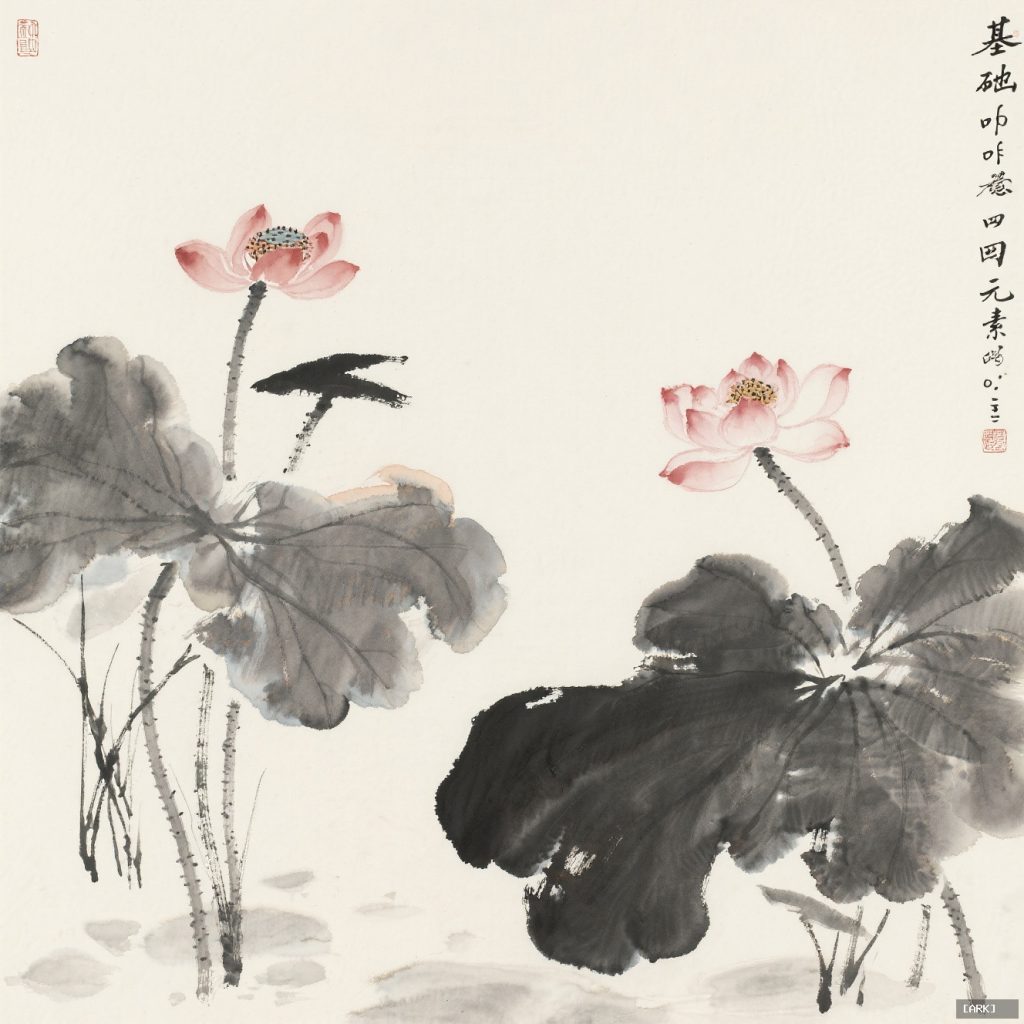
Chinese watercolor painting, often known as ink wash painting or guohua, is defined by its profound relationship with material. This art form thrives on constraints, not limitless freedom.
We often picture the artist as a sage, a brush dancing effortlessly in hand. A single stroke conjures a mountain range; a delicate dab suggests a blossom. This romantic image is compelling, but it’s a mirage. It obscures the gritty, physical reality of the practice. Guohua is not about transcending materials. It is a deep, sustainable conversation with them. Every element—the grind of the ink, the spring of the brush, the thirst of the paper—is an active participant. To understand this art is to move beyond the myth of spontaneous genius and into the tangible world of preparation, partnership, and physical memory.
The Foundation: A Quartet of Elements
Ask someone to describe Chinese watercolor, and they’ll likely mention water. It’s in the name, after all. But this is the first and most pervasive simplification. Guohua is not merely painting with water. It is a precise, lifelong negotiation between four fundamental partners: ink, water, brush, and paper. Think of it less as painting and more as conducting a delicate orchestra where each instrument has its own will.
The artist must develop an intuitive sense for chemistry and physics. How will a drop of clear water bloom on a specific sheet of Xuan paper? How does the grind of an ink stick, from coarse to silken, alter the emotional weight of a line? How does the resilience of a brush’s tip—whether it fights back or yields completely—dictate the spirit of a stroke? This knowledge isn’t academic. It’s earned through repetition and careful observation, transforming material science into visual poetry.
The Brush: An Extension of the Self
“Do I need special brushes?” The answer is an unequivocal yes. In Western painting, a brush is a tool. In guohua, the brush is an extension of the artist’s nervous system. Its construction is a centuries-old craft of engineering for responsiveness. A traditional brush is a bundle of animal hair—wolf, goat, weasel—carefully secured onto a bamboo shaft. Each hair type offers a distinct personality.
Springy, resilient wolf hair is for the assertive, angular strokes of bamboo stalks or orchid leaves. Soft, absorbent goat hair holds a reservoir of ink and water, perfect for laying down the washes that become misty mountains or flowing water. The bamboo handle provides balance and a direct connection. A synthetic brush cannot replicate this. It lacks the complex capillary action and the “memory” of natural hair, which holds its shape yet yields to pressure. This responsiveness is non-negotiable. It is the very language through which the artist speaks.
The Paper: An Active Collaborator
Is rice paper essential? Absolutely. But its role is wildly misunderstood. Xuan paper, often colloquially called rice paper, is typically made from the bark of the sandalwood tree and rice straw. It is not a passive, blank slate. It is a collaborator with its own character. Its absorbency and subtle texture are intentionally unpredictable. This isn’t a flaw; it’s the point.
When ink meets Xuan paper, it doesn’t just sit on the surface. It sinks in, spreads, and blooms in a way the artist can guide but never fully control. A stroke intended to be a sharp line might soften into a gentle gradient. A wash of clear water might create a halo of lighter tone. The artist must listen to the paper, work with its thirst and texture, not against it. This partnership with an organic, plant-based material is central to the art’s philosophy. You are not imposing an image. You are engaging in a dialogue.
The Ink: The Ritual of Preparation
Why grind your own ink? In an age of convenient bottled inks, the ritual of grinding an ink stick on an inkstone can seem like anachronistic theater. It is anything but. This is the first act of meditation, the crucial transition from stillness to creation. It’s not about nostalgia. It’s about connection and calibration.
The slow, circular friction of stone on stick, mixed with a few drops of water, allows the artist to feel the ink’s density develop in real time. Is it thin and watery, good for distant haze? Is it thick and lustrous, ready for a defining branch? This ritual reconnects the artist to the material’s lifecycle—transforming compressed pine soot and glue back into a vibrant liquid. It establishes a pace. It demands intention. It forces a moment of focus that bottled ink, ready in an instant, completely bypasses. The painting begins long before the brush touches the paper.
The Practice: Mastery Through Repetition
This brings us to the biggest misconception about skill in Chinese watercolor painting: the myth of the spontaneous genius. The reality is built on grueling, humble repetition. The “effortless” bamboo stalk that seems to have grown on the paper in a second is the result of practicing that single stroke thousands of times.
Mastery lies in drilling the basic elements—the dot, the line, the texture, the wash—until the body, not just the mind, understands the motion. You practice the orchid leaf, the bamboo node, the rock texture until your arm and wrist know the correct pressure, speed, and turn. This physical memory is what later allows for the famed spontaneous creation. The artist in that moment of flow is not inventing. They are recalling a truth their hands have learned, freeing their mind to focus on composition and spirit. It is athletic training disguised as art.
Guohua and Sustainability: An Ancient Ethos
Is traditional Chinese art inherently sustainable? In its ideal, traditional form, its principles are deeply ecological. The core materials—bamboo for brushes, naturally shed animal hair, mineral and plant-based pigments, tree-bark paper—are biodegradable and sourced from renewable cycles. The practice itself generates little waste. Water is the only solvent. Leftover ink can be used for underpainting or simply washed away without toxic residue.
However, the modern shift can sever this connection. Pre-made liquid inks in plastic bottles, synthetic brushes derived from petroleum, and mass-produced, chemically-processed papers turn a cyclical, mindful practice into a linear consumer one. The sustainable heart of guohua isn’t just in the materials, but in the philosophy: a profound respect for the origin and nature of your tools, and a commitment to using them fully and thoughtfully.
A Living Tradition: Guohua in the Contemporary World
Can an art form steeped in such tradition be contemporary? Its constraints are precisely what keep it vital. The limitation of a primarily monochrome palette forces a radical focus on composition, negative space, and emotional tone—concerns that feel starkly modern. Contemporary artists worldwide use these ancient techniques to explore abstraction, political commentary, and environmental crisis.
The connection to modern sustainable design is profound, though non-obvious. Both philosophies ask: How can we do more with less? How do we honor the inherent qualities of our materials? How do we create work that acknowledges transience? Guohua doesn’t fight its materials; it collaborates with them. It is a practice of essentialism, where every mark carries weight and nothing is superfluous. That is a powerfully contemporary idea.
Beginning Your Practice: A Realist’s Checklist
If you want to start authentic ink wash painting, bypass the all-in-one student kits. Seek quality in a few core items:
- Brushes: Source at least two natural-hair brushes—one stiff (like wolf hair) for lines, one soft (like goat hair) for washes.
- Ink & Stone: Purchase a real ink stick and a modest inkstone. Avoid bottled ink for your foundational practice.
- Paper: Get real Xuan paper, even if it’s a smaller, less expensive grade. Feel the difference.
- Foundation First: Practice holding and loading the brush correctly before you try to paint a thing. Balance, posture, and grip are everything.
- Embrace the Ritual: Begin each session by grinding ink for five minutes. Focus only on the sound, the feel, the emerging blackness.
- Master the Alphabet: Don’t paint landscapes. Practice the four basic strokes—dot, line, texture, wash—for weeks. They are your entire vocabulary.
Navigating Common Questions
Is it okay to use colors? Yes, but traditionally and effectively, they are used like punctuation. Mineral pigments (from rocks and earth) and plant-based colors are applied sparingly to accent, not to fill. The ink tone remains the foundation.
How do I fix a mistake? You generally don’t. The acceptance of the irreversible, confident stroke is a core tenet. You must work with the “mistake,” incorporate it, or start anew on a fresh sheet. This teaches decisiveness and adaptability.
Do I need to learn Chinese calligraphy first? While the arts are deeply connected—sharing brushes, ink, and paper—calligraphy is not a strict prerequisite. However, practicing basic calligraphy strokes is perhaps the best possible training for brush control, pressure modulation, and line confidence.
Sources & Further Pathways
To delve deeper into the history, techniques, and philosophy of Chinese watercolor painting, the collections and resources of major cultural institutions are invaluable.
- Metropolitan Museum of Art: Chinese Painting
- Smithsonian National Museum of Asian Art: Chinese Painting
- The British Museum: China Collection
- Khan Academy: Chinese Art & Culture
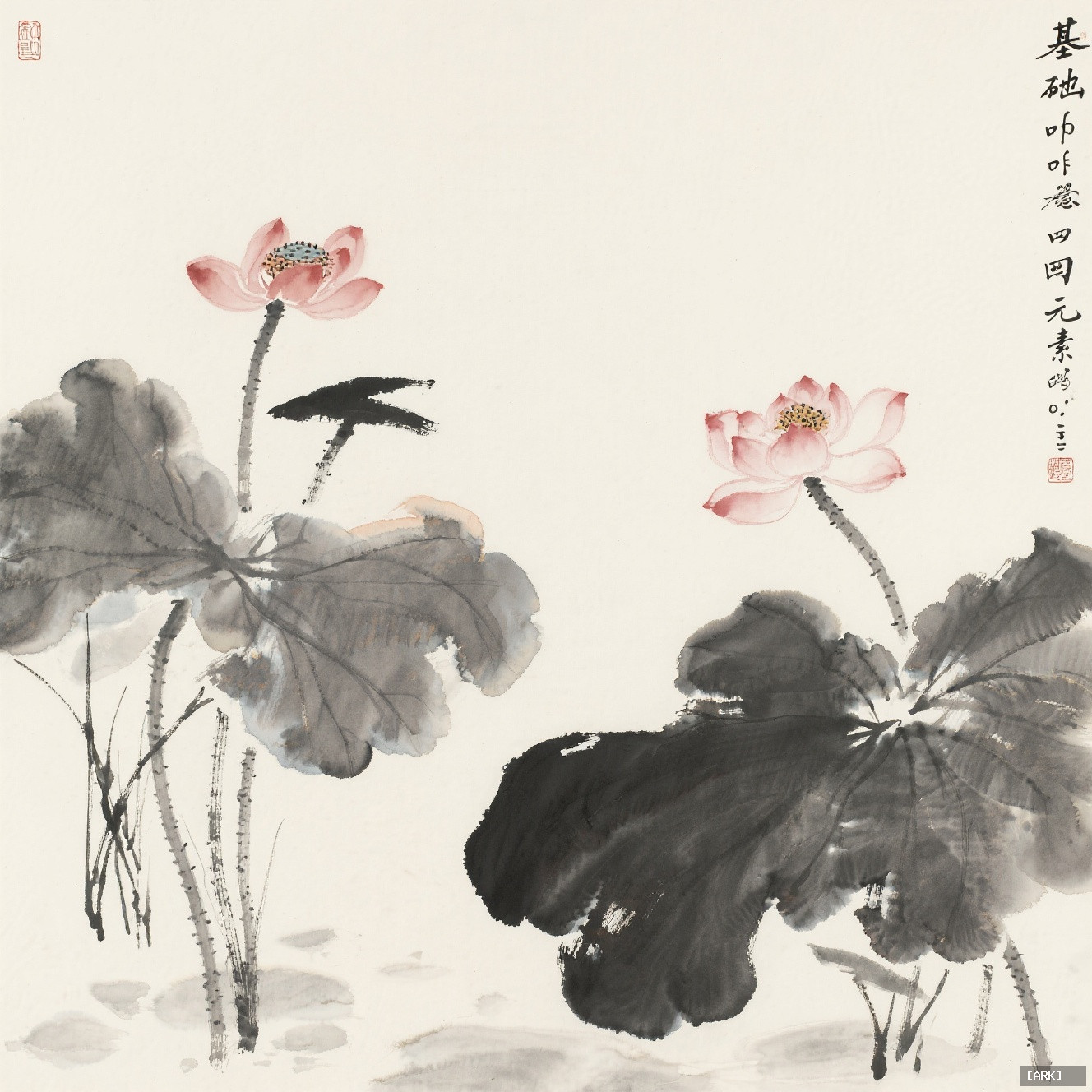
The path of guohua is one of patience. It asks you to slow down, to feel the materials, to build memory in your hands. It replaces the myth of instant mastery with the quiet dignity of sustained practice. In doing so, it offers something rare: not just a method for creating art, but a framework for attending to the world.
About Our Expertise
Drawing from decades of expertise in Chinese traditional arts, this article is crafted by specialists who have studied under master painters and visited workshops across China, ensuring authentic insights into the materials and techniques of guohua. Our content is rigorously fact-checked against historical texts and contemporary practices, providing reliable guidance for both beginners and seasoned artists.
As a trusted resource for cross-border e-commerce, we partner directly with artisans and suppliers in China to source genuine materials like Xuan paper and natural-hair brushes, upholding the cultural integrity and sustainability of this art form. Our commitment to accuracy and cultural respect helps readers avoid common pitfalls and engage meaningfully with Chinese artistic heritage.
✨ You Might Also Enjoy

You may also like
Herbal Bead Bracelet: Ancient Chinese Aromatherapy for Modern Wellness | HandMyth™
Original price was: ¥2,199.00.¥1,352.00Current price is: ¥1,352.00. Add to cartPremium Herbal Beads Bracelet: Traditional Medicine Meets Modern Jewelry | Shop HandMyth
Original price was: ¥874.00.¥608.00Current price is: ¥608.00. Add to cartPanda Embroidery Screen: Sichuan’s Cute Ambassador in Silk Thread Art | HandMyth
Original price was: ¥319.00.¥230.00Current price is: ¥230.00. Add to cartPanda Gift Set: Curated Chinese Treasures for Panda Lovers | HandMyth™ (Free Gift Wrap)
Original price was: ¥136.00.¥118.00Current price is: ¥118.00. Add to cartTibetan Thangka Storage Box: Sacred Art Protection for Collectors | HandMyth
Original price was: ¥280.00.¥219.00Current price is: ¥219.00. Add to cartPure Silk Handbag: Hangzhou’s Legendary Silk Weaving for Modern Elegance | HandMyth™
Original price was: ¥874.00.¥786.00Current price is: ¥786.00. Add to cartHand-Painted Silk Scarf: Wearable Art from China’s Silk Road | HandMyth (Artist Signed)
Original price was: ¥1,017.00.¥935.00Current price is: ¥935.00. Add to cartModern Qipao Dress: Timeless Chinese Elegance for Today’s Woman | HandMyth (Custom Fit)
Original price was: ¥2,459.00.¥2,240.00Current price is: ¥2,240.00. Add to cartEmbroidered Chinese Handbag: Suzhou Silk Embroidery Meets Modern Fashion | HandMyth™
Original price was: ¥680.00.¥646.00Current price is: ¥646.00. Add to cart