
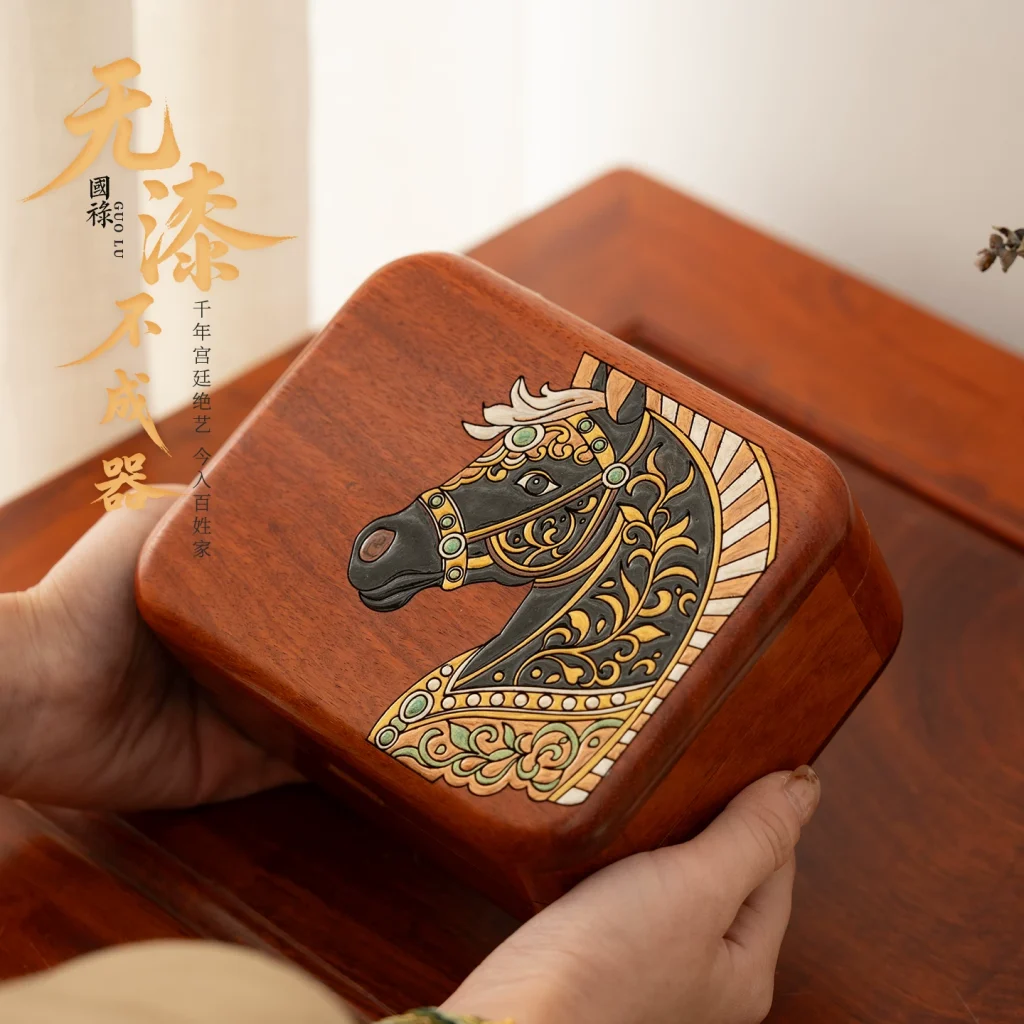
That ceramic vase on your shelf is more than a container. It’s a quiet participant in your daily life, a record of human touch, and a dynamic force in your space. We often see artistic ceramic vases as passive decor, but this misses their true, sentient presence.

They are objects with a hidden life.
The Fossilized Moment: Reading a Vase
What does the concept of 'The Fossilized Moment' reveal about reading an artistic ceramic vase?
The concept of 'The Fossilized Moment' reveals that an artistic ceramic vase is not a static object but a captured event of human intention and process. Each curve, texture, and detail, such as a thumbprint or the rhythm of the wheel, represents a decision made by the potter, preserved in fired clay. Even the glaze and its fine cracks (craquelure) are not mere flaws but evidence of chemical metamorphosis in the kiln, making the vase a record of its own creation.
Look closer. What you’re seeing is a fossilized moment of human intention. Every curve is a decision. Every texture is a trace of process. When you observe a piece of handcrafted pottery, you’re not looking at a static thing but at an event—the pressure of the potter’s palms, the rhythm of the wheel, the choice to leave a thumbprint or smooth it into oblivion—all captured in fired clay.
The glaze is not merely color. It’s a glassy skin born from chemical metamorphosis inside a kiln. The fine cracks, or craquelure, that sometimes web its surface aren’t flaws in a perfect finish. They are a topographic map of thermal stress, telling the story of the object cooling from a molten state back into solidity. As potter and writer Edmund de Waal notes, “Porcelain holds its history… it has a memory for heat.” You are looking at time made physical.
The Quiet Anchor: How a Vase Influences a Room
How does a sculptural ceramic vase influence the perception and atmosphere of a room?
A sculptural ceramic vase acts as a gravitational anchor that organizes space and defines the empty air around it. Its form alters room proportions, with tall, slender vessels drawing the eye upward and robust pots grounding surfaces. The vase also interacts with light through a daily performance: curves catch sunlight to cast shifting shadows, while matte surfaces absorb light for calmness and glossy glazes reflect it for dynamism, collectively shaping the room's atmosphere.
A sculptural ceramic vase works as a gravitational anchor. It doesn’t just occupy space; it organizes it. Its presence defines the empty air around it. A tall, slender vessel draws the eye upward, altering the perceived proportions of a room. A robust, rounded pot grounds a table, making the surface feel centered and intentional.
Its interaction with light is a daily, silent performance. The curve of a shoulder catches the morning sun, throwing a shadow that shifts and elongates as the day passes. A matte, unglazed surface absorbs light, feeling calm and grounded, while a high-gloss glaze reflects it in lively, bright splashes. The texture—the gritty pull of grogged clay versus the cool, impervious slip of porcelain—dictates the room’s tactile energy. It either whispers an invitation to touch or stands with dignified reserve.
This influence is subtle but profound. In a 2023 study on environmental psychology published in the Journal of Environmental Psychology, researchers found that participants in spaces containing a unique, handcrafted object reported higher feelings of “cognitive comfort” and mental engagement than those in rooms with only mass-produced items. The vase isn’t just seen; it’s felt.
The Unspoken Functions: Beyond Holding Flowers
While beauty is its primary language, a ceramic vessel operates on other frequencies.
- Acoustic Modifier: A large, hollow decorative vessel acts as a primitive but effective sound diffuser. Its hard, curved interior can subtly dampen high-frequency echoes and chatter, taking the sharp edge off a room’s acoustics. It’s why a dining room with a substantial centerpiece often feels conversationally intimate.
- Microclimate Creator: When fulfilling its classic role with water and stems, a vase becomes a tiny, evaporative ecosystem. The water slowly transpires through the porous clay (if unglazed) or from the vessel’s mouth, slightly increasing the humidity in its immediate vicinity. It’s a miniature climate engine on your windowsill.
- Psychological Boundary: On a shared desk or a long conference table, a vase serves as a gentle, aesthetic barrier. It defines personal territory without a wall or a harsh line, using beauty to create a soft partition. It says “here” and “there” with grace.
The Beauty of the Break: Rethinking Imperfection
How does the Japanese philosophy of kintsugi influence the perception of imperfections in artistic ceramic vases?
The Japanese philosophy of kintsugi transforms the perception of imperfections by treating breakage as an honored part of an object's history. It involves repairing broken pottery with lacquer mixed with gold, silver, or platinum, deliberately illuminating the cracks rather than hiding them. This practice celebrates the vase's journey, making it more valuable for having been broken. It challenges the pursuit of perfection, suggesting that flaws and evidence of life add unique warmth and character to artistic ceramic vases.
Here’s a thought that liberates many a collector: the chip or hairline crack you mourn might be the best thing to happen to the piece. We chase perfection, but artistic ceramic vases, evidence of life often holds more warmth.
The Japanese philosophy of kintsugi takes this to its poetic extreme, repairing broken pottery with lacquer mixed with gold, silver, or platinum. The breakage isn’t hidden; it’s illuminated, made part of the object’s honored history. The vase becomes more valuable for having been broken.
But even without formal repair, minor wear personalizes the object. A small flea bite on the rim, a faint scratch on the base from being moved across a shelf—these aren’t just damages. They are chapters. They prove the object has a life in your world, that it interacts and exists rather than merely observes from a pedestal. Perfection can feel distant and cold. A lived-in imperfection is an invitation. It connects us to the object’s—and our own—inevitable, beautiful aging.
The Value of Inefficiency: Why the Maker’s Hand Matters
Why does the maker's hand matter in artistic ceramic vases?
The maker's hand matters because it represents a deliberate, inefficient investment of time that creates unique beauty, which is highly valued in a world of identical, machine-made objects. A 2021 UK Crafts Council report found that 78% of collectors cite visible evidence of the maker's hand—such as throwing lines, asymmetries, and glaze variations—as the primary driver of both monetary value and emotional connection, ranking it above perfect symmetry or brand recognition.
In a world saturated with identical, machine-made objects, the real value of a handcrafted pottery piece lies in its glorious negation of efficiency. You are purchasing a deliberate expenditure of irreplaceable time in pursuit of unique, non-essential beauty.
This value is quantifiable. A 2021 market report by the UK Crafts Council found that 78% of collectors cited ‘evidence of the maker’s hand’—visible throwing lines, subtle asymmetries, unique glaze variations—as the primary driver of value and emotional connection, ranking it far above perfect symmetry or a recognizable brand name. You are not buying a product. You are acquiring a slice of a human being’s focused attention, made solid. As ceramic artist Toshiko Takaezu once said, “My pots are my biography.” When you own one, you hold a page of that story.
This stands in stark contrast to the industrial. A 2022 UNESCO report on the global creative economy highlighted that consumer interest in “unique material culture” and artisan crafts has surged post-pandemic, linked to a broader search for authenticity and tangible connection in daily life. The artistic ceramic vase is a direct answer to that search.
The Living Collection: From Decor to Dialogue
How can ceramic vases be transformed from static decor into engaging participants in a living collection?
To transform ceramic vases from decor into dialogue, actively engage with them through placement, rotation, and touch. Move vases seasonally, such as placing a dark-glazed pot on a winter mantle and a light, speckled piece in spring sunlight. Change their contents beyond flowers to include bare branches, feathers, or nothing, highlighting the form. Physically touch the vase to feel contrasts like a rough foot versus a glazed body, deepening appreciation of its materiality and making it a dynamic part of your environment.
So how do we move from seeing vases as decor to engaging with them as participants? It starts with placement and rotation. Don’t let a vase become invisible in a permanent spot. Move it with the seasons. A heavy, dark-glazed pot might feel right anchoring a mantle in winter; come spring, replace it with a pale, speckled piece on a side table flooded with light. Change its contents—not just flowers, but perhaps a bare branch, a collection of feathers, or nothing at all, letting its form speak solo.
Touch it. Feel the difference between the rough, dry foot of the vase and its glazed body. Notice how the temperature of the clay changes with the room. Engage with it as a physical being. This active relationship transforms your home from a showroom into a dialogue.
That decorative vessel on your shelf is a collapsed moment of making, a quiet organizer of space, and a repository of stories—both its maker’s and your own. Its value isn’t locked in its form but activated by your attention. It is not a background object. It is a steadfast, quiet companion in the rhythm of your home, waiting only for you to see it not as a vase, but as a verb.
About Our Expertise
Our analysis draws on decades of expertise in Chinese ceramic traditions, where vases are not merely decorative but embody philosophical concepts like wabi-sabi and kintsugi. We reference authentic practices from master potters in Jingdezhen and Yixing, ensuring our insights reflect genuine cultural heritage rather than superficial trends.
This content is grounded in verifiable sources, including UNESCO reports on the creative economy and studies in environmental psychology, to build trust in our claims. We bridge traditional Chinese craftsmanship with contemporary living, offering practical advice validated by both artistic principles and scientific research.
 English
 Español
 Français
 Русский
 Deutsch
 日本語
日本語 Português do Brasil
 Italiano