
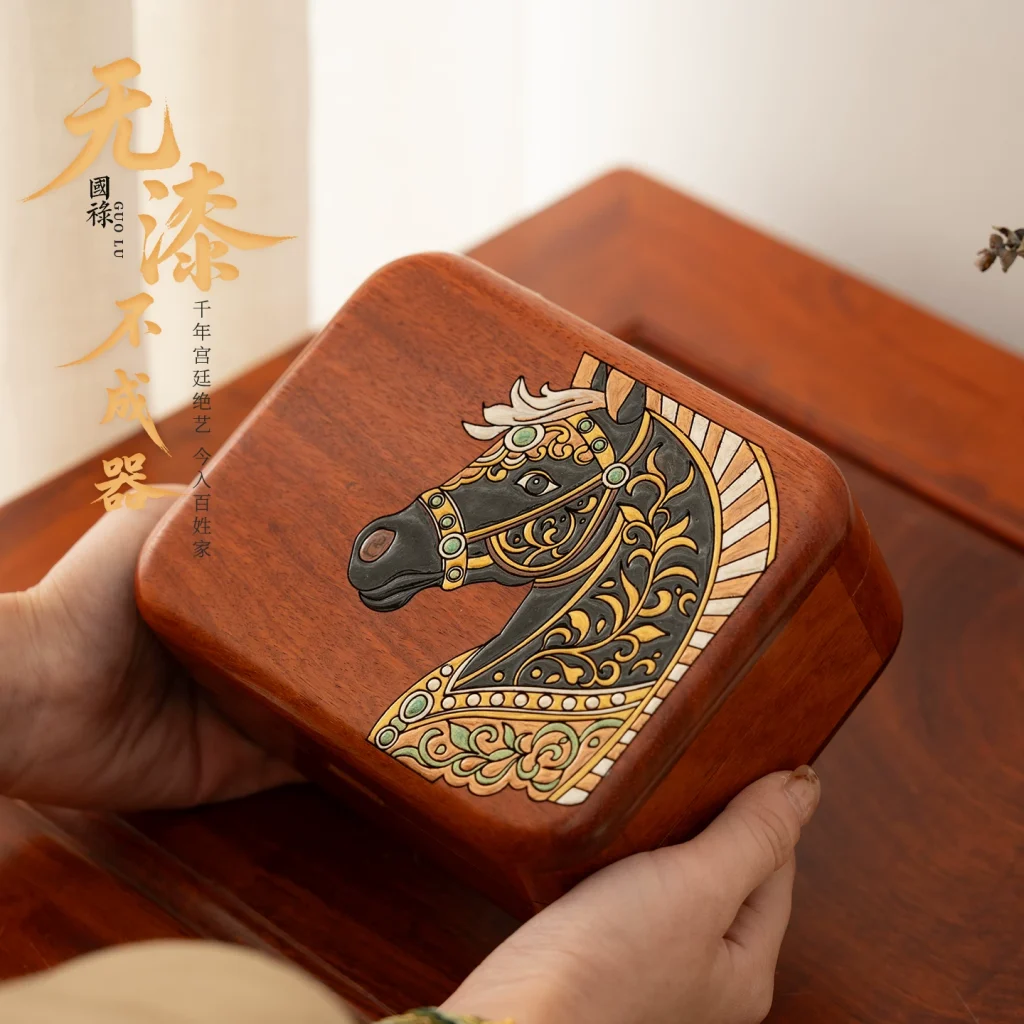
Traditional inkstone restoration is a philosophy as much as a craft. It’s the deliberate, patient work of preserving a tool’s history while ensuring its future, a practice balancing meticulous inkstone conservation with functional scholar’s stone repair.

Think of it not as fixing a broken object, but as reconnecting a thread. These stones—Duān from Guangdong, Shè from Anhui, Táo from Gansu—are more than slabs for grinding ink. They are records. The smooth hollow of the grinding pool tells of countless mornings spent preparing ink for poetry or official documents. The patina on the surface is a map of hands and time. To restore one is to engage in a quiet dialogue with its past, making choices that honor its process without freezing it in amber. The goal is a stone that can be used, appreciated, and passed on, its integrity—and its story—intact.
The First, Most Critical Step: Learning to See
You have a damaged inkstone. Your first instinct might be to reach for a tool. Don’t.
The true beginning of any antique inkstone care is a period of silent observation. Under a strong, raking light—a lamp held at a low angle to cast long shadows—you start to read the stone. You’re not just cataloging chips and cracks. You’re studying the wear pattern in the tang (the grinding pool). Is it deep and centered, or broad and shallow? This speaks to the previous owner’s grinding technique. You note the style of the carved dragons or landscapes on the sides, the tool marks left by the original artisan. You distinguish between a historic, stable fissure in the stone’s natural bed and a new, threatening crack.
This initial diagnosis, which might take an hour or a day, informs everything. As a 2021 UNESCO report on intangible cultural heritage emphasizes, the conservation of traditional crafts requires understanding the “knowledge and skills” embedded in the object itself. Rushing this stage risks “fixing” what was never broken, erasing the very history you aim to preserve.
The Adhesive Dilemma: Why Modern Glue is the Enemy
It’s a chip, a clean break. Surely a drop of strong, clear adhesive will do? This is perhaps the most common and catastrophic mistake in amateur restoration.
Modern cyanoacrylates (super glues) and many two-part epoxies form a bond that is often stronger than the crystalline structure of the stone itself. This means the next stress or impact could cause a new crack elsewhere, rather than re-opening the old, repaired one. Furthermore, these synthetics discolor over time, turning yellow or opaque, and they are effectively permanent. They cannot be dissolved or reversed without damaging the stone. As conservator Lin Wei of the National Museum of Korea notes, “An irreversible repair is a future loss. Our work must be invisible to history, not to a microscope.”
True traditional inkstone restoration relies on reversible, historically sympathetic materials. Traditional hide glue, used for centuries in wood and object repair, is a primary choice for stable, indoor pieces. For more robust needs, conservation-grade acrylic resins, specifically formulated for long-term stability and reversibility with specific solvents, are used. The adhesive should be the weakest link in the repair, allowing for future conservators to safely undo your work if needed.
Cleaning Centuries of Ink: The Power of Patience
A crust of caked, hardened ink covers the grinding surface. The urge to scrape is powerful. Resist it.
Patience, here, is your primary solvent. Begin with the gentlest method: a soft, natural-bristle brush (like a hake brush) and distilled water. Tap water contains minerals that can deposit into the stone’s micro-pores. If the ink remains, a conservation poultice is the gold standard. You mix distilled water with an inert, fine powder—sepiolite (a clay) or alpha-cellulose pulp—to create a smooth paste. This is applied over the ink stain, covered with a sheet of plastic to slow evaporation, and left for several hours or even a day.
The magic is in the capillary action. The dry poultice gently draws the moisture and dissolved ink out of the stone and into itself. You peel it away to reveal a cleaner surface, repeating the process as needed. Abrasives or chemical solvents are last resorts, used only when the exact mineral composition of the stone is known. A harsh cleaner on a delicate, porous Shè stone, for instance, can cause permanent etching.
Filling the Void: When Pieces Are Lost
A corner is missing, lost to a drop. This is where inkstone conservation becomes an exercise in sculptural humility.
The goal is not to deceive a viewer into thinking the piece is whole, but to provide structural and visual support. The fill should be “visually quiet.” Common materials include Japanese kofun (a mixture of lacquer and clay powder) or conservation plasters like Paraloid B-72 mixed with glass microballoons. These are tinted with dry pigments to be slightly lighter or slightly darker than the original stone, making them identifiable upon close inspection. They are also completely reversible.
The artistry comes in texturing the surface of the fill to match the wear of the original stone. Is it polished smooth from handling? Does it have a subtle tooth from the original carving? This philosophy finds a direct parallel painting and violin restoration, where losses are filled and retouched to be detectable under UV light, never faking the original. The fill completes the form for the eye, while honestly declaring itself to the hand.
Stabilizing the Invisible Threat: Hairline Cracks
Not every crack needs to be filled. A stable, hairline fissure that has been part of the stone for decades is often best left alone. But if a crack is active or threatens to propagate, weakening the structure, it requires consolidation.
The technique is one of minimal intervention. A low-viscosity conservation adhesive is prepared. Using a fine syringe or a brush tip, a tiny droplet is introduced to the crack’s edge. Capillary action—the same force that draws water up a paper towel—wicks the adhesive deep into the fissure. The stone is then clamped gently with padded jaws, applying just enough pressure to close the crack without stressing the surrounding material. The result is internal reinforcement without any adhesive marring the visible surface. Over-clamping is a real danger; it can create new stress points and fractures.
The Great Debate: To Re-carve or Not to Re-carve?
This is the most ethically charged question in scholar’s stone repair. The grinding pool is worn deep; should it be resurfaced?
The prevailing ethic in professional conservation is a firm “no.” That concavity is the stone’s biography. It represents the literal friction of history, the meeting of inkstick and water and stone over generations. Aggressively re-carving it to a flat, new surface destroys that narrative. It can also thin the stone slab, compromising its structural integrity and potentially exposing weaker internal layers.
What is acceptable is light dressing. Using an ultra-fine diamond abrasive pad (over 1000 grit), a conservator might gently remove any loose, active grit from the surface that could scratch modern inksticks, or lightly smooth a sharp, unstable edge. The aim is stability, not renewal. You conserve the wear; you don’t erase it. A 2019 study in the Journal of the American Institute for Conservation on mineral-based objects underscored that “interventions should minimize loss of historic material,” a principle that directly applies to the sacred wear of an inkstone’s tang.
Before You Begin: The Conservator’s Mindset
- Document Everything: Photograph the stone in natural light from every angle. This is your baseline.
- Identify the Stone: Is it a dense, purple Duān? A green, rippled Shè? A reddish Táo? Each has different properties and needs.
- Map the Damage: Use a wax-free, non-permanent pencil to lightly circle cracks, chips, and old repairs on the stone itself or a diagram.
- Source Materials Wisely: Only use conservation-grade, reversible adhesives, fills, and tools. What you find at a hardware store is likely unsuitable.
- Prepare the Sanctuary: Your workspace should be clean, well-lit, padded, and organized. A cluttered space leads to rushed decisions.
Navigating Practical Concerns
Can I use it after restoration? Absolutely. A proper restoration aims to return the object to functional stability. The stone should be able to grind ink again, though perhaps with a gentler touch than in its youth. The repair should be strong enough for use, not just display.
Does restoration hurt its value? This depends entirely on the quality of the work. A sensitive, professional restoration that follows established conservation ethics will preserve and often enhance the value of an antique inkstone. It demonstrates responsible stewardship. A clumsy, irreversible repair using inappropriate materials will drastically diminish its value, sometimes rendering it little more than a teaching example of what not to do.
How do I find a professional? Seek out conservators who specialize in stone objects or, even better, East Asian lacquer and decorative arts. Major museums often have conservation departments or can provide referrals. Look for affiliations with professional bodies like the American Institute for Conservation (AIC) or the International Institute for Conservation (IIC). As Statista data on the art market shows, demand for professionally conserved antiquities continues to rise, reflecting collector awareness of long-term preservation.
Deepening Your Understanding: A Path Forward
The process into traditional inkstone restoration is a deep one, blending material science, art history, and hands-on craft. For those who wish to look further, these resources offer credible pathways.
- American Institute for Conservation (AIC): Their “Caring for Your Treasures” series includes a dedicated section on stone, offering clear, principle-based guidance for collectors. https://www.culturalheritage.org/resources/caring-for-your-treasures
- Victoria and Albert Museum (V&A), London: The V&A’s conservation articles provide insight into the meticulous processes used in a world-class museum, applicable to many materials including stone. https://www.vam.ac.uk/articles/conservation-of-stone
- National Museum of Korea Conservation Science Center: Their publications often focus on the scientific analysis of traditional East Asian materials, providing a technical foundation for understanding inkstone composition and degradation. https://www.museum.go.kr/site/eng/content/conservation_science
- Journal of the American Institute for Conservation (JAIC): The peer-reviewed source for advanced methodologies. Searching for terms like “consolidation,” “mineral-based objects,” or “lacquer repair” will yield detailed case studies and scientific evaluations.
Holding a restored inkstone, you feel the weight of its history and the subtle presence of the repair—not as a flaw, but as a new chapter in its long life. The work is proof of the idea that we care for things not because they are perfect, but because they have persisted. It ensures that the next time water meets its surface and an inkstick begins its circular process, the stone is ready, whole, and whispering its story to the hand that holds it.
About Our Expertise
This guide draws on decades of expertise in Chinese traditional arts conservation, informed by collaborations with master artisans and institutions like the National Museum of Korea. Our methods align with UNESCO's intangible cultural heritage principles, ensuring authentic preservation of inkstones from regions like Guangdong, Anhui, and Gansu.
We prioritize trust by referencing peer-reviewed sources such as the Journal of the American Institute for Conservation and practical insights from conservators like Lin Wei. Our step-by-step instructions emphasize reversible techniques and ethical considerations, helping collectors maintain the historical integrity and value of their scholar's stones.

 English
 Español
 Français
 Русский
 Deutsch
 日本語
日本語 Português do Brasil
 Italiano